← Beijing

Beijing · 北海公园

Beihai Park

🎫 Ticket 20 / 5 RMB
🕘 Opening Hours 06:30–21:00
🚇 Metro Metro Line 6, Beihai North Station
📍 Address No. 1 Wenjin Street, Xicheng District, Beijing (northwest side of the Forbidden City, west side of Shichahai) Map ↗
🎧 11 audio walking guides for Beihai Park — listen on the spot in the YOLO HAPPY app. →

Inside Beihai Park

South Gate & Circular City · 南门与团城

🎧 In app
South Gate & Circular City

The South Gate is the principal entrance to Beihai Park, framed by a spacious plaza and towering ancient trees that immediately convey a regal atmosphere. Just inside the gate lies the Circular City (Tuancheng), a round platform first built in the Jin dynasty and expanded under the Yuan. Though barely four thousand square metres, it packs extraordinary architectural and cultural value. The Chengguang Hall on the platform houses a white jade Buddha carved from a single block of jade in the Yuan dynasty, and the Jade Urn Pavilion before it displays the Dushan Great Jade Sea, a wine vessel from Kublai Khan's reign—both national treasures. Ancient pines ring the platform, whose grey-brick walls are a rare military-architectural remnant within a garden; climbing up affords a panoramic view of the entire Beihai lake and park.
Yong'an Bridge · 永安桥

🎧 In app
Yong'an Bridge

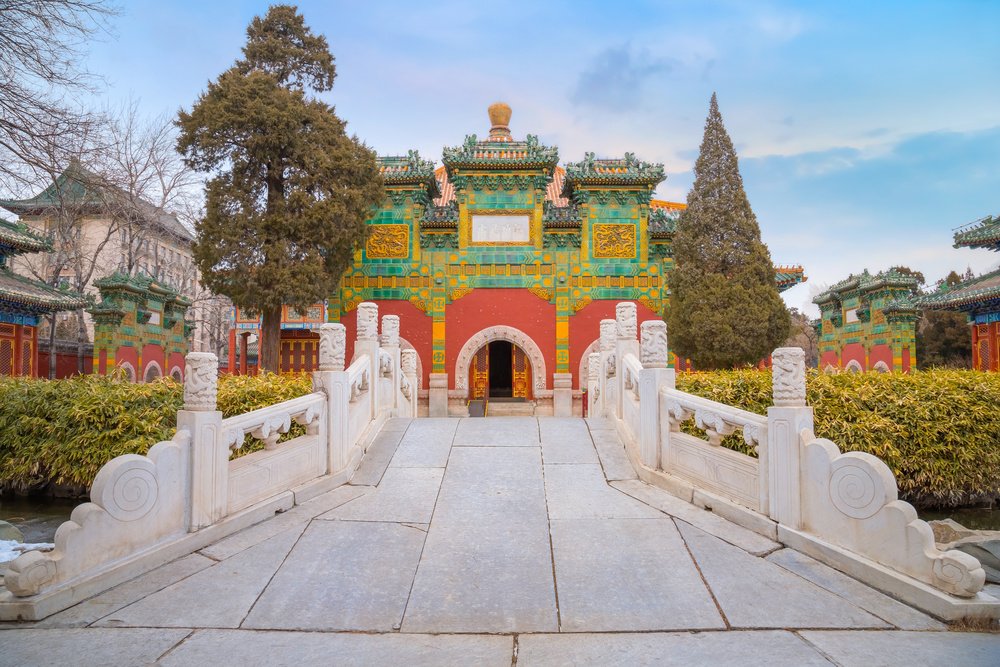
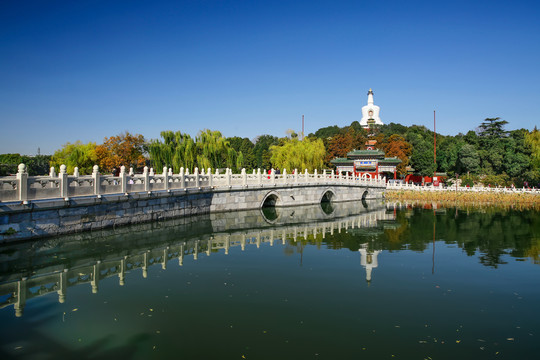
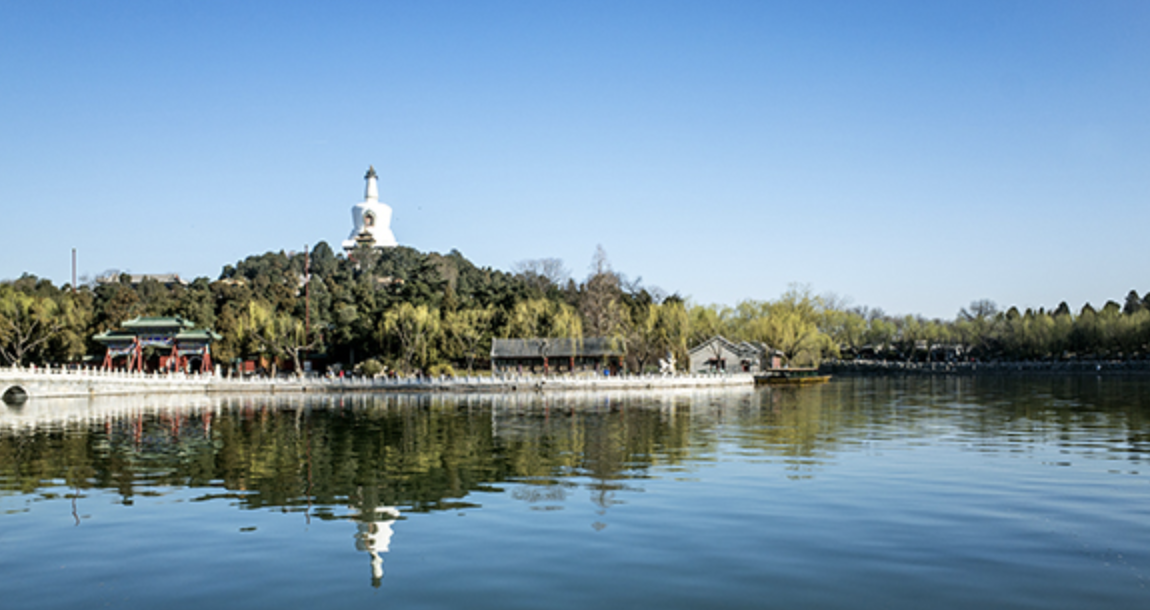
Yong'an Bridge, first built in the Yuan dynasty and rebuilt in the Qing, is the park's most iconic bridge. Over forty metres long and nearly nine metres wide, it features three graceful arches constructed entirely of white marble; the balustrade posts are carved with lotus-petal motifs, and the deck arches gently like a rainbow. The south end connects the Circular City, while the north end leads directly into the mountain gate of Yong'an Temple on Jade Flower Island—both a practical crossing and a superb viewing platform. Standing on the bridge, one looks south to ancient pines on Tuancheng, north to the towering White Dagoba, and east and west across rippling lotus-dotted waters—the quintessential Beihai composition. After snowfall the white-marble bridge merges with the snow into a fairyland, earning the phrase "Yong'an Snow Clearing."

Jade Flower Island · Yong'an Temple & White Dagoba · 琼华岛·永安寺与白塔

🎧 In app
Jade Flower Island · Yong'an Temple & White Dagoba

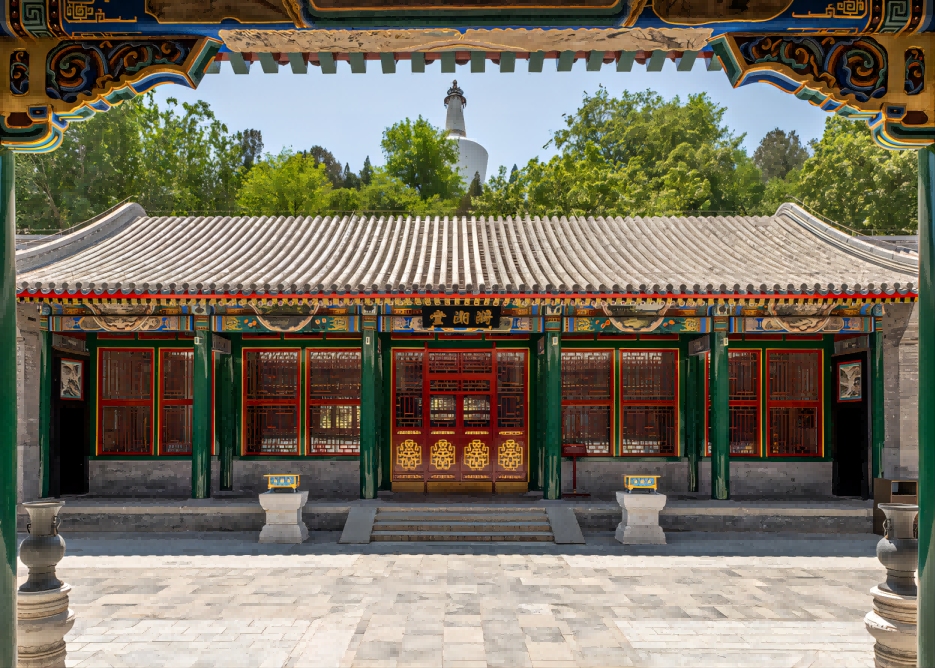
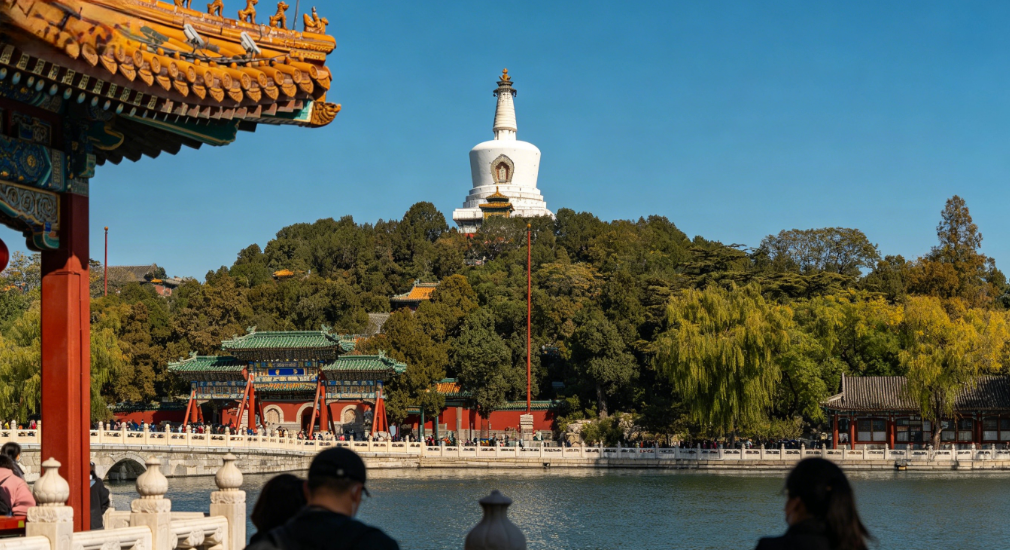
Jade Flower Island is the lake-centred hill and the park's highest point and visual anchor. Yong'an Temple on the island was founded in 1651 (Shunzhi 8) and expanded under Qianlong, ascending the slope in layered courtyards—from the Falun Hall at the mountain gate to the Zhengjue Hall above, the halls are solemn and incense has burned here for centuries. The White Dagoba at the summit stands 35.9 metres tall in Tibetan stupa form; its gleaming white body is crowned by a bronze canopy and gilded sun-and-moon finials that flash in sunlight. It was first erected to welcome the Fifth Dalai Lama to Beijing, bearing both political and religious significance. From the top, sweeping views capture the Forbidden City's red walls and yellow roofs, the entire central axis, and the Western Hills—one of the most magnificent urban panoramas in Beijing.

Jade Flower Island · Qiong Island Spring Shade Stele & Yuegu Tower · 琼华岛·琼岛春阴碑与阅古楼

🎧 In app
Jade Flower Island · Qiong Island Spring Shade Stele & Yuegu Tower

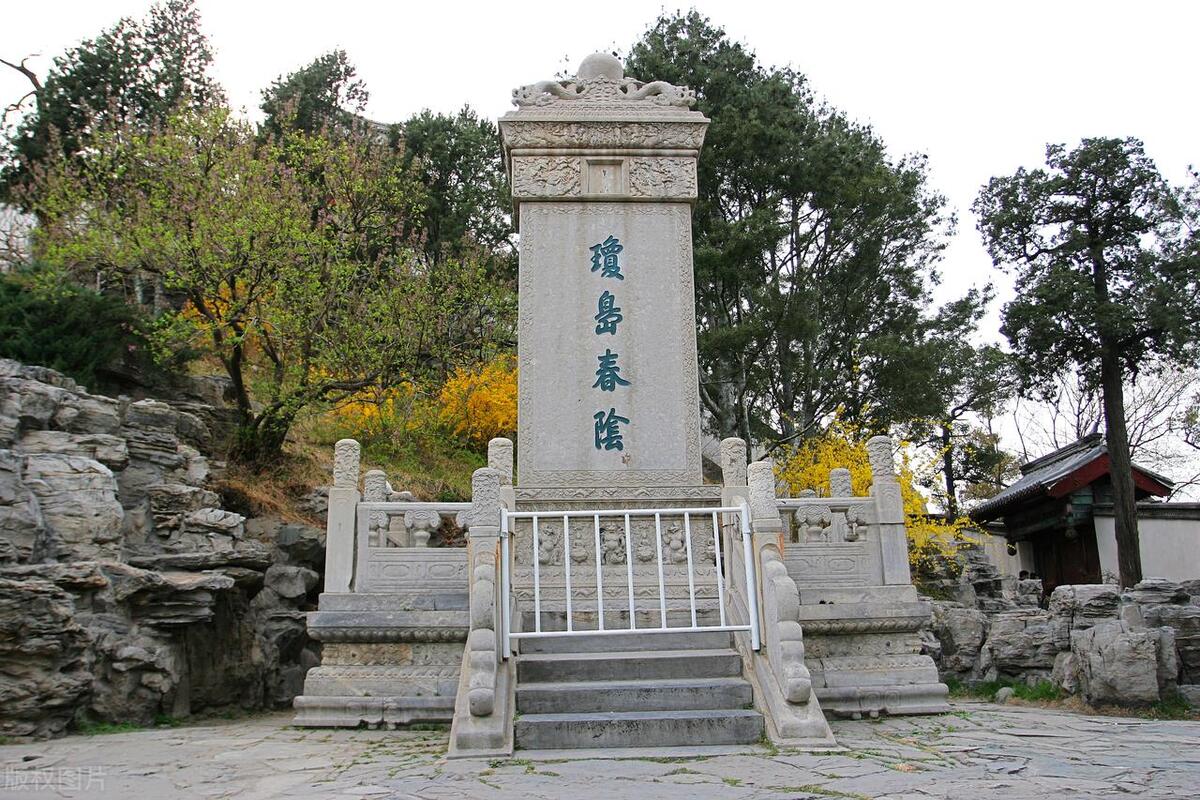
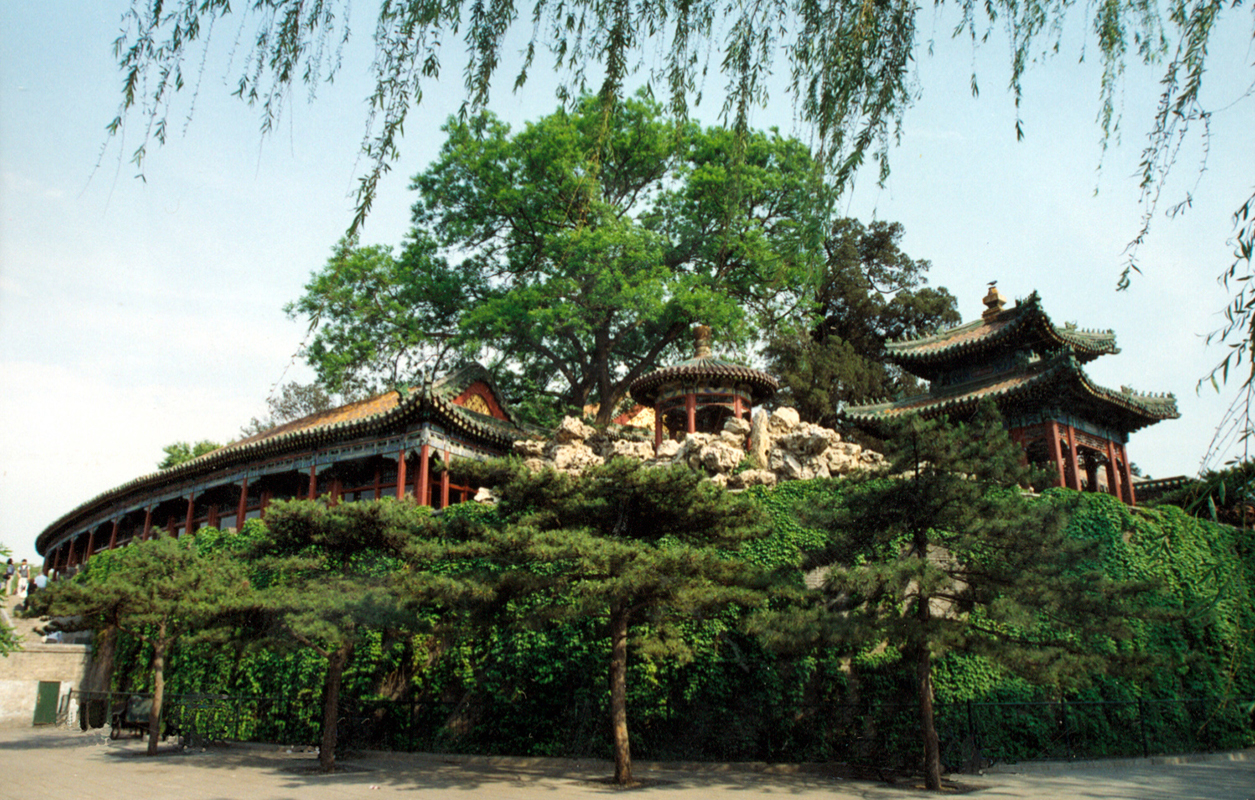
The Qiong Island Spring Shade Stele stands on the mid-slope of Jade Flower Island's east side. Its tall shaft bears four characters "Qiong Island Spring Shade" in Emperor Qianlong's own hand, with his poem on the reverse. This scene originates from the "Eight Views of Yanjing" of the Jin dynasty, depicting the island's dappled tree shadows and veiling mists in spring—the oldest landscape-aesthetic tradition in Beijing. Ancient trees cast deep shade around the stele, and in spring blooming crabapples and flowering peaches echo the inscription's mood. Yuegu Tower, on the island's northwest side, is a semi-circular two-storey pavilion built under Qianlong to house the Three Rarities Hall Model Calligraphy (Sanxitang Fatie) in stone. The collection gathers works by over 340 master calligraphers from Wei-Jin to late Ming, carved on 495 stone tablets—the largest engraved calligraphy anthology in Chinese history, a true treasury of brush and ink.

Jade Flower Island · Yilan Hall, Daoning Studio & Bronze Immortal Holding Dew Plate · 琼华岛·漪澜堂、道宁斋与铜仙承露盘

🎧 In app
Jade Flower Island · Yilan Hall, Daoning Studio & Bronze Immortal Holding Dew Plate

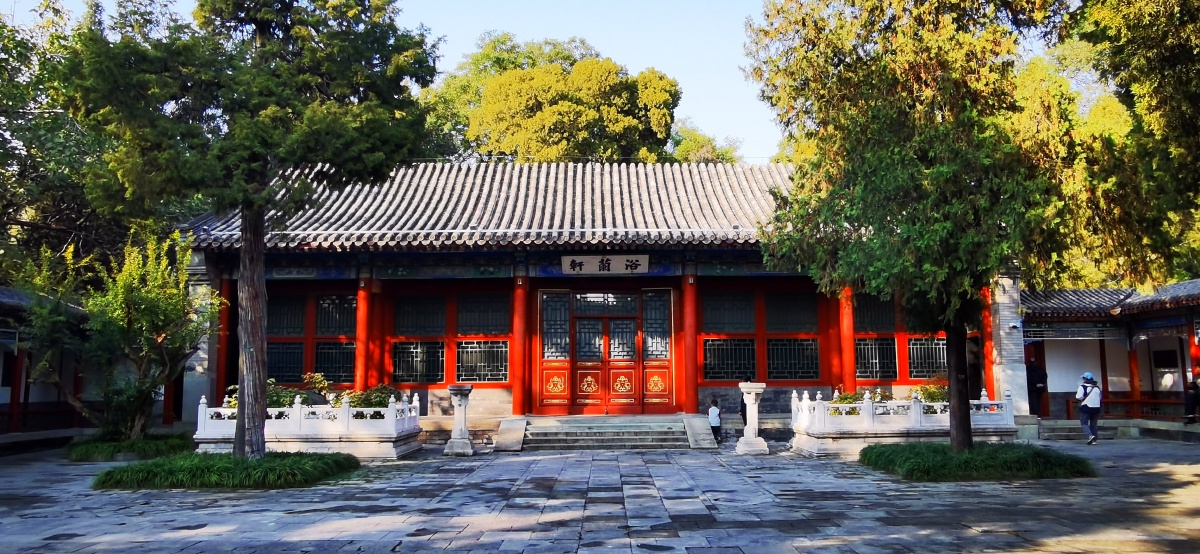
Yilan Hall and Daoning Studio sit on Jade Flower Island's north slope directly above the lake, forming the island's most important palatial complex. Yilan Hall, five bays wide with a waterfront veranda, was where Emperor Qianlong often reviewed memorials and enjoyed the scenery over tea; Daoning Studio was his study, its name meaning "the Way lies in tranquillity"—quiet and refined. Both halls imitate Jiangnan garden style, blending imperial scale with literati sensibility. Behind them, on a higher terrace, stands the Bronze Immortal Holding a Dew Plate—a copper figure with both hands raised holding a plate, mounted on a stone column, replicating the Han-dynasty Jianzhang Palace dew-receiver. Legend says Emperor Wu of Han used such a figure to gather heavenly dew for elixirs; Qianlong recast it as a symbol of communion between heaven and man, receiving divine grace. The figure is fully gilded, blazing in sunlight, and is Beihai's most mystically charged landmark.

East Shore · Haopu Retreat & Painted Boat Studio · 东岸·濠濮间与画舫斋

🎧 In app
East Shore · Haopu Retreat & Painted Boat Studio

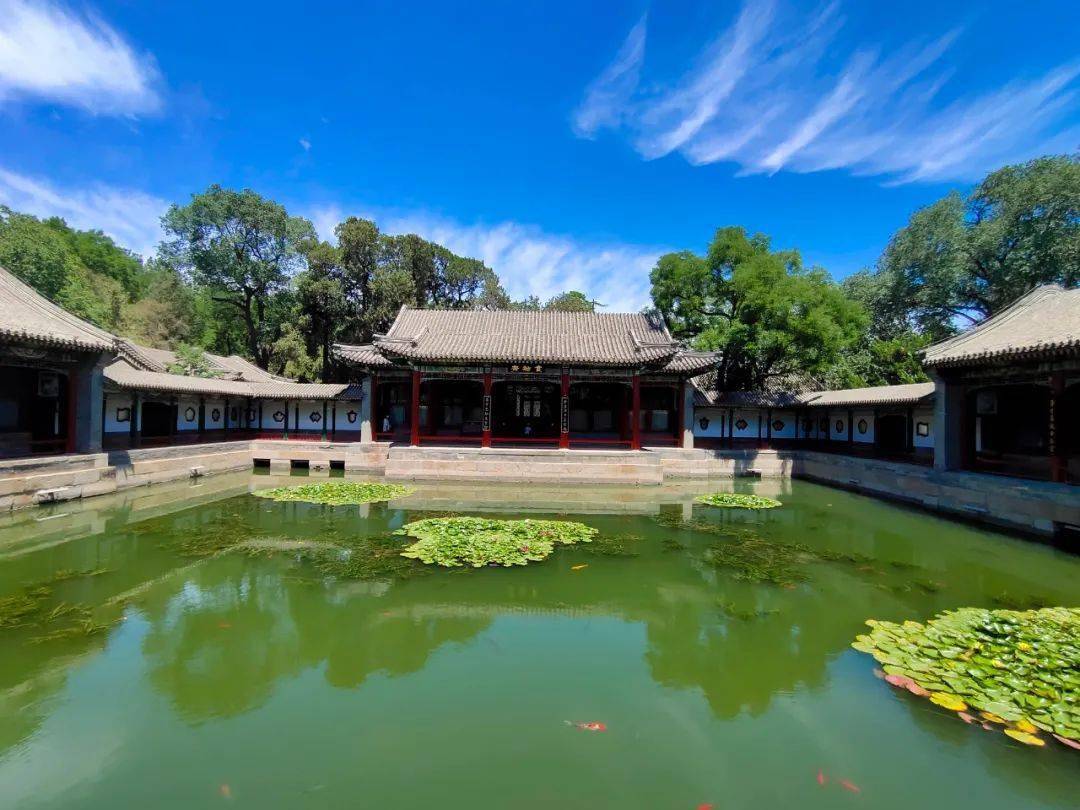
Haopu Retreat lies mid-way along Beihai's east shore—an exquisitely crafted enclosed water courtyard. A winding path leads through artificial rockwork and a festooned gate before revealing a pool ringed by corridors, a tiny stone bridge at its centre, and the Haopu plaque in Qianlong's calligraphy. "Haopu" references Zhuangzi's debate on the Hao Bridge and his fishing by the Pu River, evoking detachment and fish-happy self-sufficiency. Remote from palatial noise, this is the garden's most literati-hermitic corner. The Painted Boat Studio (Huafang Zhai) sits just north of Haopu, its main building shaped like a boat moored on water, yet its interior follows a scholar's layout—the front room named "Spring Rain on the Pond," the rear "Observing Wonder." Qianlong often read and composed poetry here. Winding corridors outside, draped in old vines, bring cool lotus-scented breezes in summer—an ideal retreat from heat.

Jingxin Studio (Quiet Heart Studio) · 静心斋

🎧 In app
Jingxin Studio (Quiet Heart Studio)

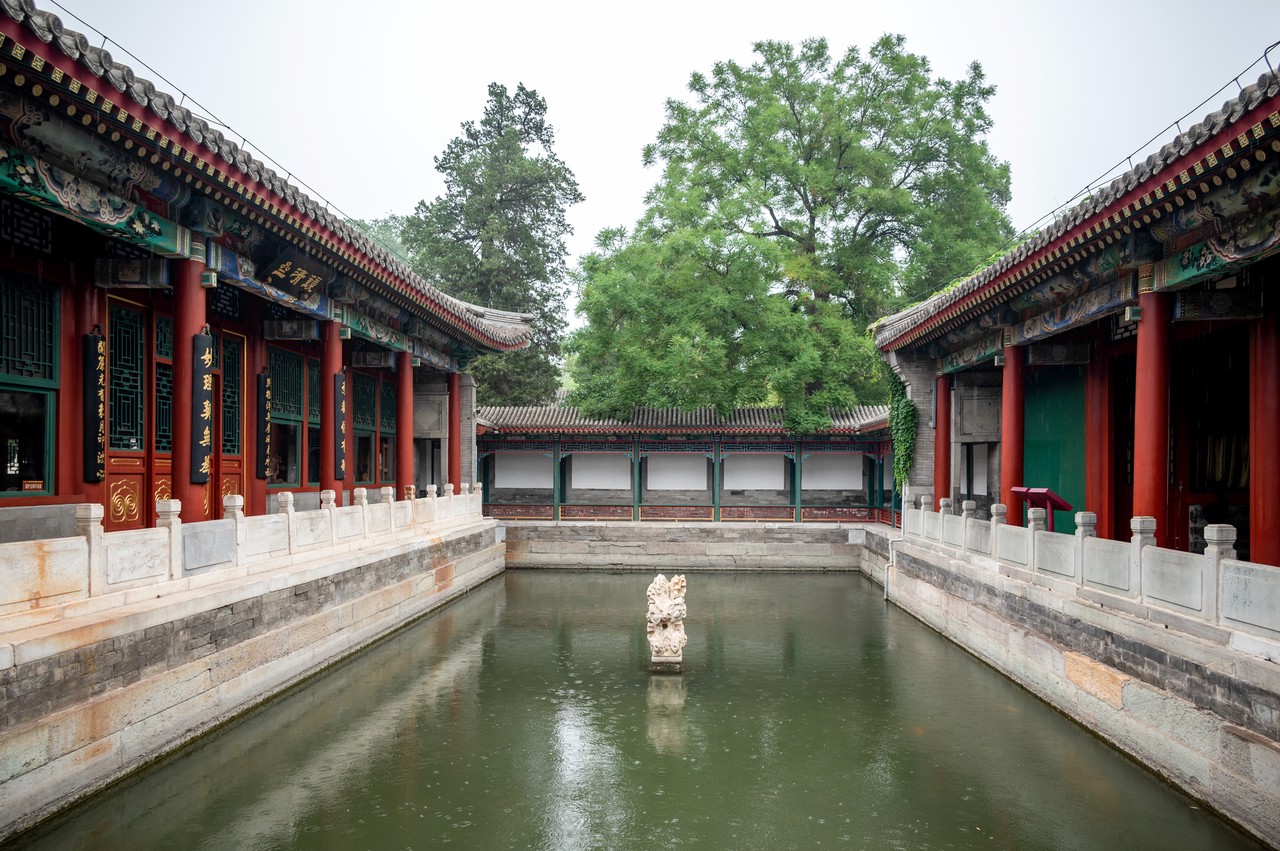
Jingxin Studio occupies the northwest corner of Beihai's north shore. Founded in 1757 (Qianlong 22) as "Jingqing Studio" and later renamed, it was the emperor's personal reading-and-resting retreat, modelled on Jiangnan private gardens. Though only about eight thousand square metres, it contains rockwork hills, winding pools, cloistered corridors, pavilions, tiny bridges and flowing water—every garden element packed into a "small yet vast" masterclass. The Qinquan Corridor spans the water; Diedie Tower crowns the artificial hill; the Bake-Tea Hut and String-Music Studio scatter among rich spatial layers. Taihu limestone crags are jagged and varied, their caves deep, shifting vistas with every step. Empress Dowager Cixi summered and governed here; Yuan Shikai used it for diplomatic talks—proof that this garden's magic has enchanted every era.

Western Heavenly Paradise & Nine-Dragon Wall · 西天梵境与九龙壁

🎧 In app
Western Heavenly Paradise & Nine-Dragon Wall

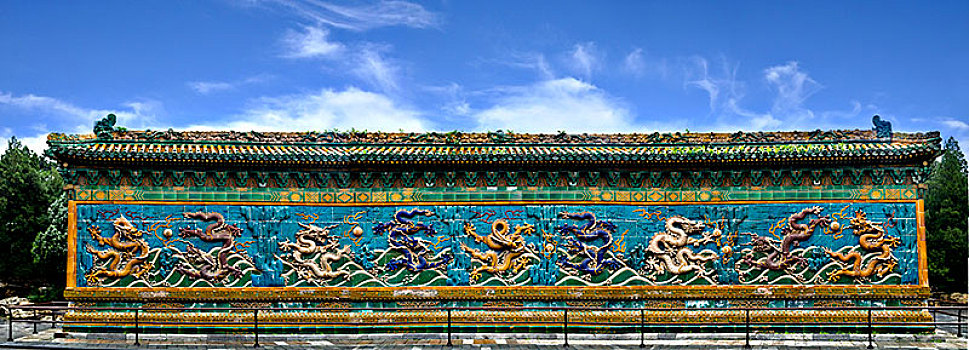
Western Heavenly Paradise (also called Great Western Heaven) sits mid-section of Beihai's north shore. Founded in the Ming and rebuilt in the Qing, it served as the imperial family's private Buddhist temple. The Mahavira Hall inside enshrines the Three Buddhas; the stone pillars and incense burners before it are Qing masterworks. The hall's yellow-glazed tiles with green trim denote a rank just below the palace itself. Behind the temple once stood a grand stupa courtyard, now partially lost yet still hinting at its former majesty. The Nine-Dragon Wall stands immediately east of the temple, built in 1756 (Qianlong 21). It measures 25.86 m long, 6.65 m high, and 1.42 m thick, with nine glazed dragons on each face—18 in total—in yellow, green, blue, purple and white. Each dragon poses differently, leaping through cloud-seas and wave-crests. This is the best-preserved and most skillfully crafted of China's three surviving double-sided Nine-Dragon Walls; every scale is delineated, every whisker flies—a supreme achievement of Qing glazed-tile art.

Kuai Xue Tang (Quick Snow Hall) & Iron Shadow Wall · 快雪堂与铁影壁

🎧 In app
Kuai Xue Tang (Quick Snow Hall) & Iron Shadow Wall

Kuai Xue Tang sits on Beihai's north shore between Western Heavenly Paradise and Chanfu Temple, founded in 1779 (Qianlong 44). Obsessed with Wang Xizhi's brushwork, the emperor ordered this hall built in pine-wood Jiangnan style to house engraved reproductions of the "Quick Snow Clearing" letter and other master calligraphy rubbings in stone. Fine nanmu woodwork graces the interior; the courtyard is open and airy—an imperial building that radiates literati refinement, another bastion of calligraphy culture in the park. The Iron Shadow Wall, a Yuan-dynasty relic originally at Desheng Gate, was later moved here. Carved from volcanic rock (locally called "iron stone"), it is so hard it earned the name "Iron Shadow Wall." Relief carvings of lions and rhinoceroses on its faces are bold and archaic, preserving the rugged vigour of Yuan sculpture—one of Beijing's few surviving Yuan stone-carving artefacts. Its stark power contrasts vividly with Kuai Xue Tang's delicate grace—one martial, one literary, mirroring each other across time.

Chanfu Temple & Little Western Heaven · 阐福寺与小西天

🎧 In app
Chanfu Temple & Little Western Heaven

Chanfu Temple stands on the west segment of Beihai's north shore, founded in 1760 (Qianlong 25) as Emperor Qianlong's votive offering for his mother's longevity. The main hall spans seven bays under yellow glazed tiles—a lofty rank—and once housed a bronze Thousand-Armed Thousand-Eyed Avalokiteshvara, now lost. The bell tower, drum tower and mountain gate remain intact, still conveying the solemnity of an imperial Buddhist sanctuary. Little Western Heaven (Xiao Xitian) lies just north of Chanfu Temple, built in 1770 (Qianlong 35) for the empress dowager's eightieth birthday, mimicking the South Sea Bodhisattva realm. Its central "Pure Land" square pavilion measures 52.23 m wide and 42.32 m deep—the largest square-pavilion structure in China. Inside, the four walls carry suspended sculptures of Avalokiteshvara rescuing sentient beings; five hundred arhats crossing the sea are vividly alive. Outside, multicoloured glazed tiles blaze against the lake light—a vision of staggering grandeur.

Five Dragon Pavilions · 五龙亭

🎧 In app
Five Dragon Pavilions

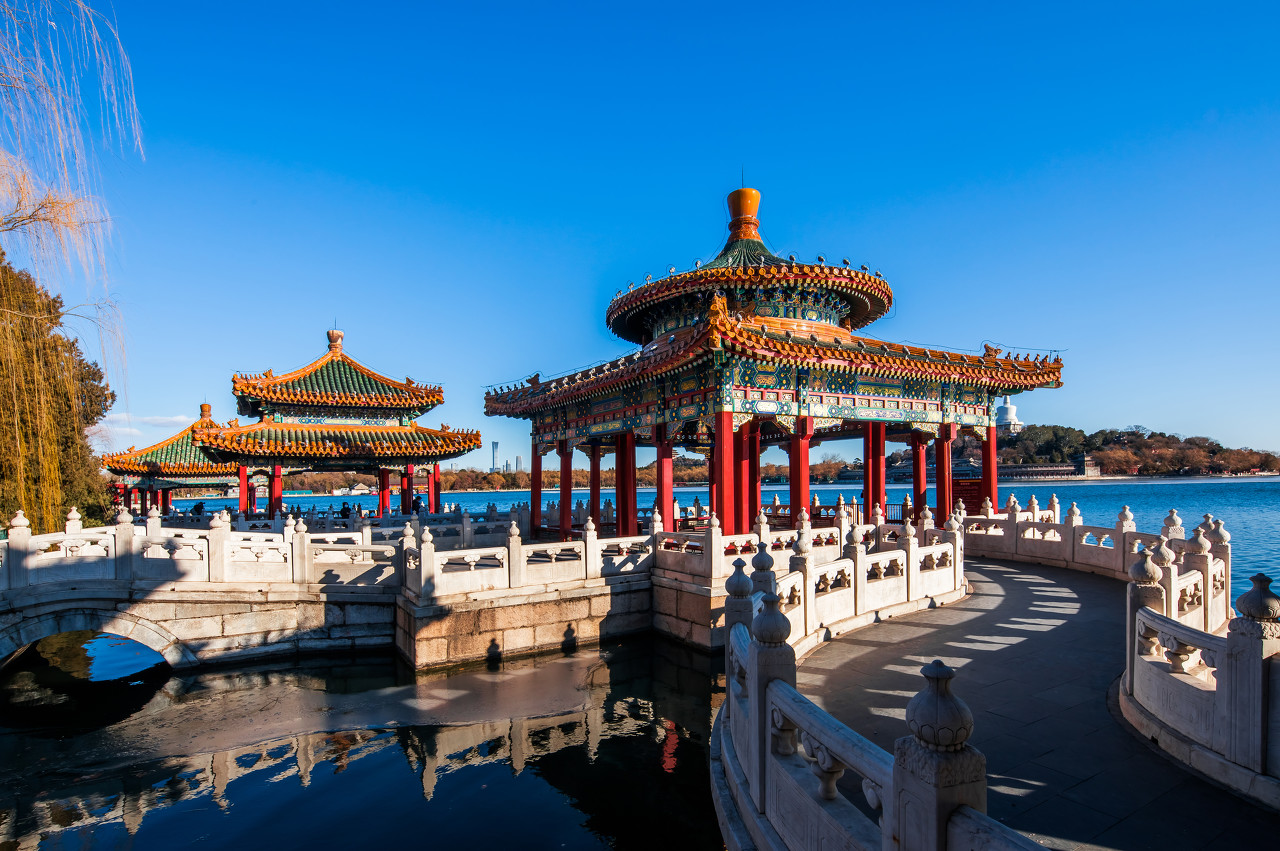
The Five Dragon Pavilions jut into the lake from the mid-section of Beihai's north shore, built under Ming Emperor Jiajing and rebuilt in the Qing. Five pavilions line up in a row extending into the water: the central one, Dragon-Blessing Pavilion (Longze), is largest; flanking it are Clear-Blessing (Chengxiang) and Nourishing-Fragrance (Zixiang), with two smaller outer pavilions beyond. Stone bridges link them, and the ensemble resembles five dragons floating on water—hence the name. The central pavilion is a double-eaved square structure under yellow glazed tiles (highest rank); the others step down in size under green tiles, creating a tiered, hierarchically clear waterside cluster. Dragons and phoenixes adorn the eaves; limitless blue waves spread below. Spring and autumn for lotus, winter for snow, mid-autumn for moonlight—every season offers a scene. Qing emperors and empresses often fished and moon-watched here; Empress Dowager Cixi especially loved mid-autumn banquets with lanterns—the most romantically evocative complex in Beihai.

Get the app

The tool solved one problem. The app handles the whole trip.

Per-trip visa judgements, audio guides, prep checklists, and a real human concierge — offline-ready, in your language.

Download for iPhoneFree to download · No OTA upsells