← Beijing

Beijing · 故宫

The Forbidden City (Palace Museum)

🎫 Ticket 60 / 40 RMB
🕐 Duration 3–4 hours
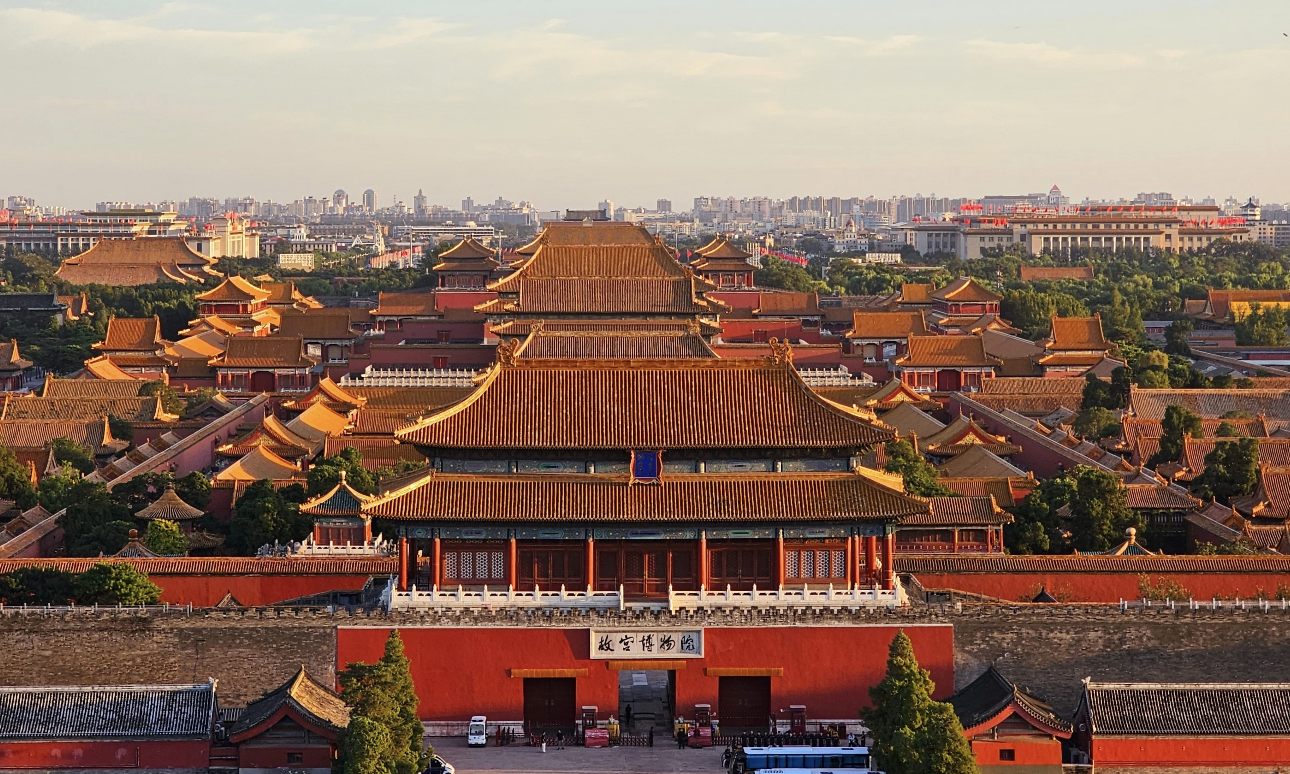
🕘 Opening Hours - Peak season (April 1-October 31): 08:30-17:00 (last entry at 16:00) - Off season (November 1-March 31 next year): 08:30-16:30 (last entry at 15:30) - Closed on Mondays (except for legal holidays) - Note: Visiting the Forbidden City requires at least 3-4 hours; if you want to savor it carefully, it is recommended to allow a full day; recommended visiting route: Meridian Gate (entrance) → Wumen Square → Hall of Supreme Harmony → Hall of Central Harmony → Hall of Preserving Harmony → Palace of Heavenly Purity → Hall of Union → Palace of Earthly Tranquility → Imperial Garden → Gate of Divine Might (exit); it is recommended to arrange visiting the Treasure Gallery and Clock and Watch Gallery in the afternoon
❌ Closed Closed on Mondays (except for legal holidays)
🚇 Metro Metro Line 1, Tiananmen East Station
📍 Address No. 4 Jingshan Front Street, Dongcheng District, Beijing (north side of Tiananmen Square) Map ↗
⚠️ BookingAdvance reservation required
🎧 11 audio walking guides for The Forbidden City (Palace Museum) — listen on the spot in the YOLO HAPPY app. →

Inside The Forbidden City (Palace Museum)

Meridian Gate and Golden Water Bridge · 午门与金水桥

🎧 In app
Meridian Gate and Golden Water Bridge

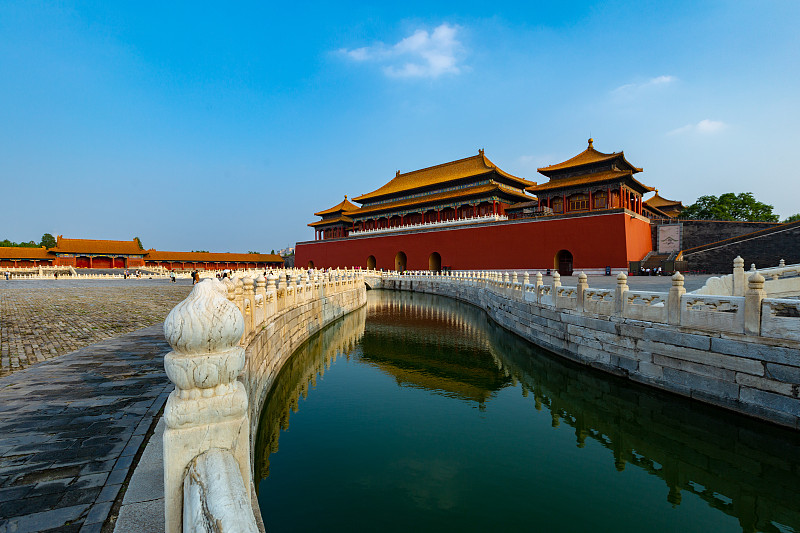
The Meridian Gate is the highest-ranking of the Forbidden City's four gates and the principal southern portal. Five pavilions crown the gate tower, their layered heights and upturned eaves resembling a phoenix in flight, hence the name "Five-Phoenix Tower." The gate contains five passageways: the central portal reserved for the emperor, the lateral ones for princes and officials, and the side doors for daily traffic. In front, the Golden Water River curves like a drawn bow, spanned by five white marble bridges symbolizing the five Confucian virtues — benevolence, righteousness, propriety, wisdom, and trustworthiness. During the Ming and Qing dynasties, ceremonies such as the annual issuance of the imperial calendar and the presentation of war captives were staged here. The recessed U-shaped plan formed by the flanking gates and walls imparts a profound sense of awe to every visitor entering this threshold.
Gate of Supreme Harmony and East-West Wings of Outer Court · 太和门与外朝东西路

🎧 In app
Gate of Supreme Harmony and East-West Wings of Outer Court

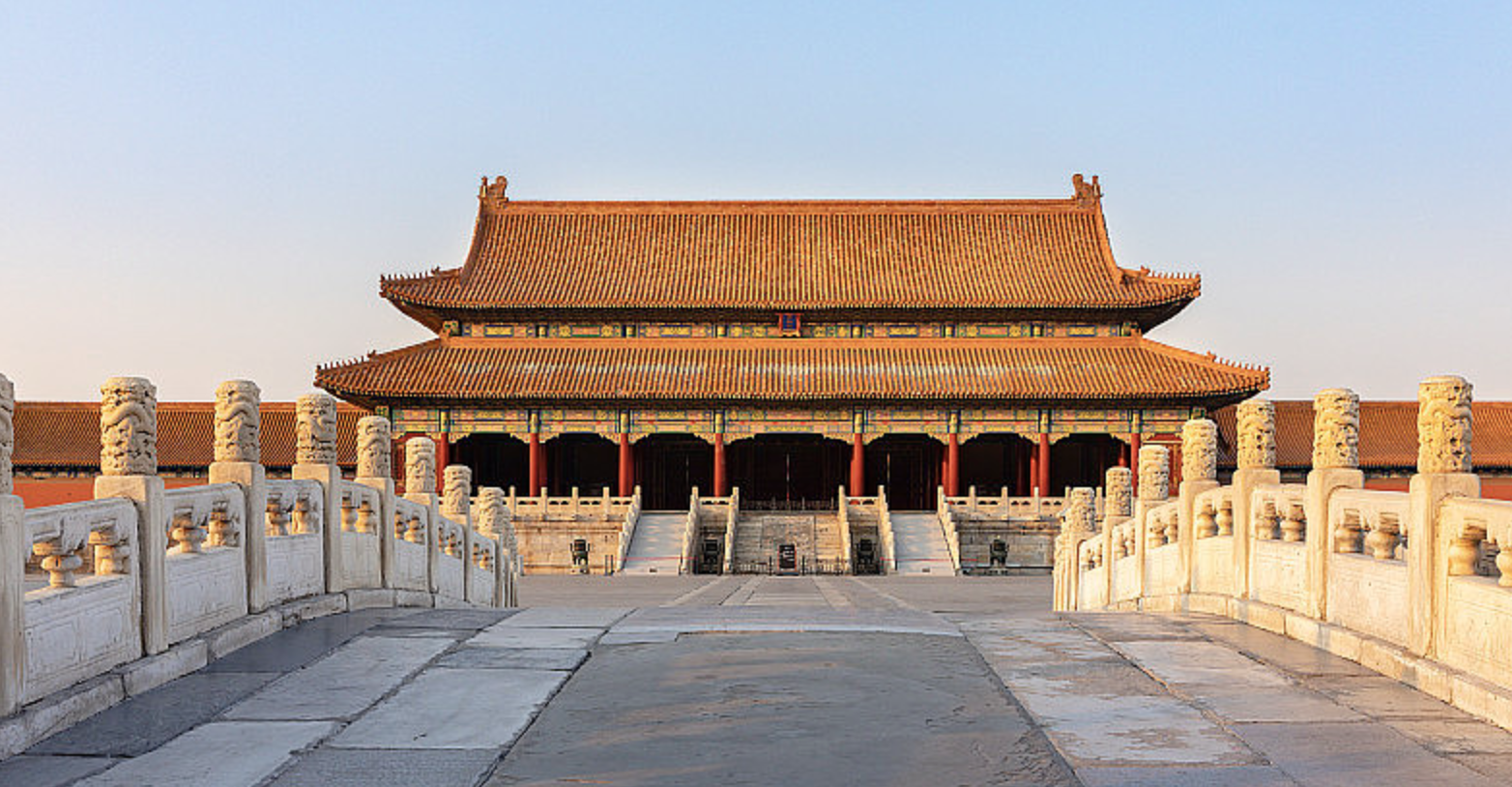
The Gate of Supreme Harmony is the main entrance to the Three Great Halls of the Outer Court. Measuring nine bays wide and four bays deep, with a double-eaved hip roof, it spans over 1,300 square meters — the highest-ranking and largest palace gate in the Forbidden City, truly the "king of gates." Here Ming emperors held "gate-side audiences" at dawn, receiving officials and deliberating state affairs. In the square before the gate stand a pair of Ming-dynasty bronze lions: the male to the east with a paw resting on an embroidered ball, the female to the west caressing a cub — symbols of imperial majesty and dynastic continuity. Flanking the gate, the West Wing houses the Hall of Martial Valor (Wuying Dian), formerly an imperial study and book-compilation hall, while the East Wing contains the Hall of Literary Glory (Wenhua Dian), venue for imperial classical lectures. The colonnaded corridors and side halls lining the central axis once served as offices for the various ministries, forming the grand prelude to China's largest wooden palatial complex.

Hall of Supreme Harmony · 太和殿

🎧 In app
Hall of Supreme Harmony

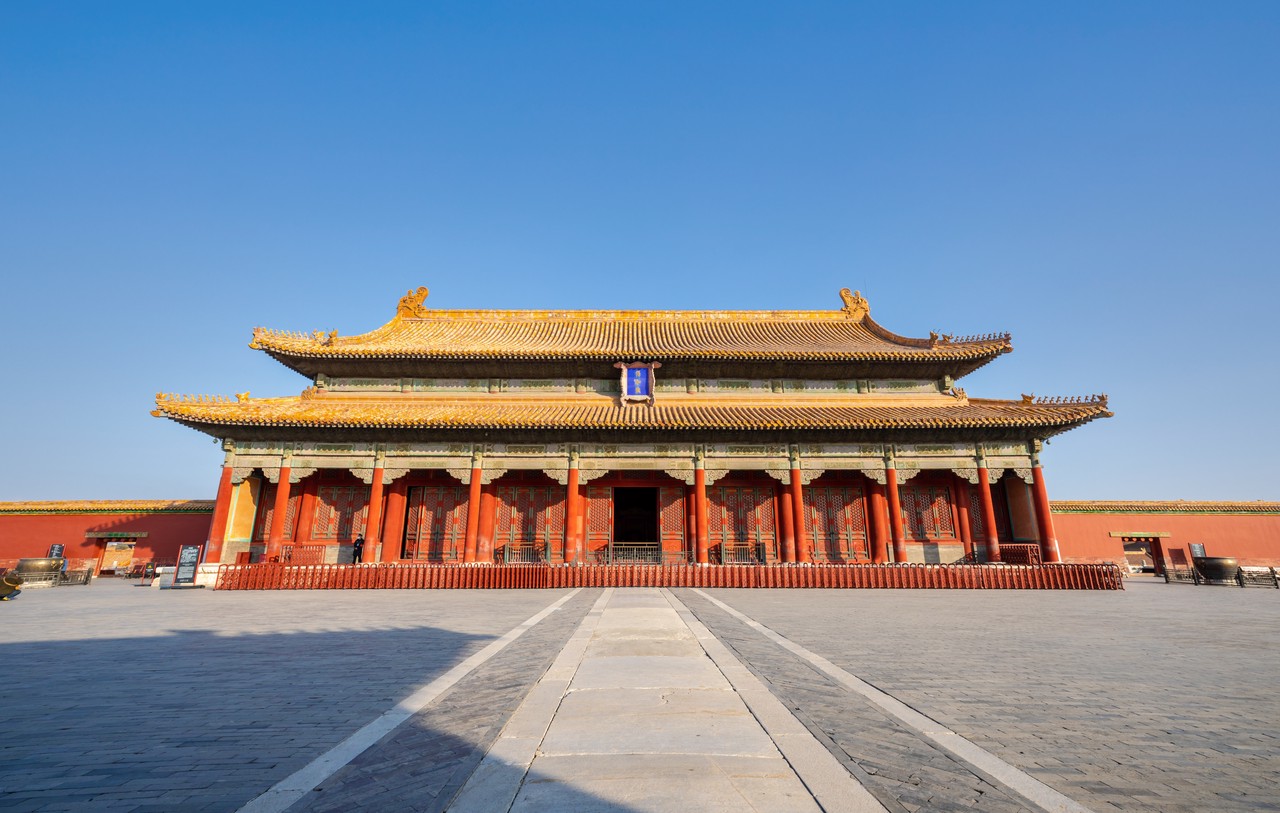
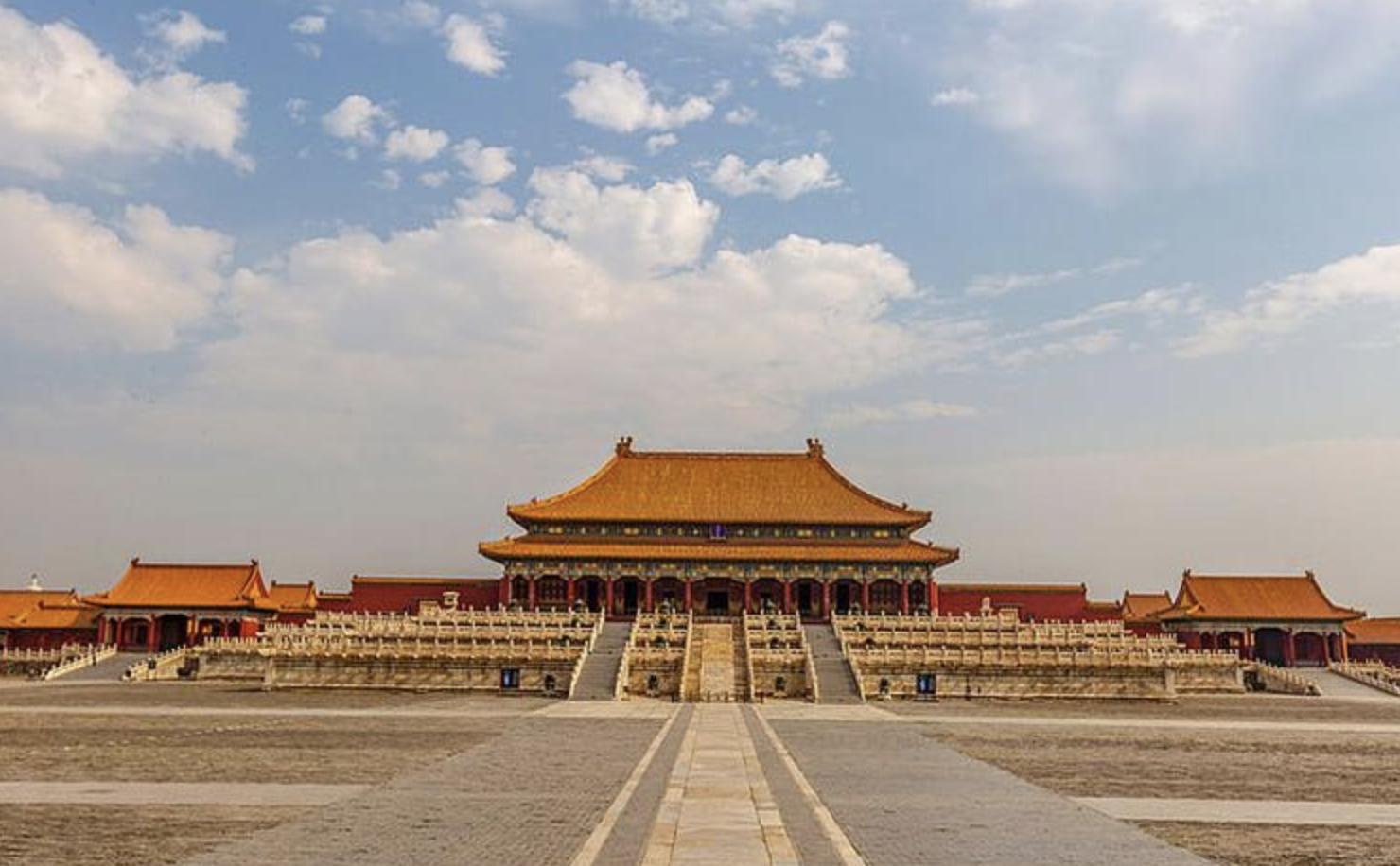
The Hall of Supreme Harmony rises from a three-tiered white marble terrace, reaching a total height of 35.05 meters. Measuring eleven bays wide and five bays deep, its double-eaved hip roof with yellow glazed tiles and golden dragon painted decoration marks the highest architectural rank in the entire complex. Seventy-two massive nanmu columns support the sweeping roof; at the center, a seven-tier gilded throne platform bears a carved dragon throne, beneath a plaque reading "Jian Ji Sui You" (Establish the Ultimate and Follow the Way) in the Qianlong Emperor's own calligraphy. Before the throne stand auspicious ornaments — treasure elephants, luduan mythical beasts, cranes, and incense pavilions — symbolizing eternal sovereignty and universal peace. The terrace features a sundial and a grain measure, signifying imperial mastery over time and standards. The vast square before the hall could accommodate 100,000 courtiers for grand audiences. On New Year's Day, the winter solstice, the emperor's birthday, and at enthronement and wedding ceremonies, bells and drums resounded amid resplendent honor guards, fully manifesting the majesty of the Son of Heaven.

Hall of Central Harmony and Hall of Preserving Harmony · 中和殿与保和殿

🎧 In app
Hall of Central Harmony and Hall of Preserving Harmony

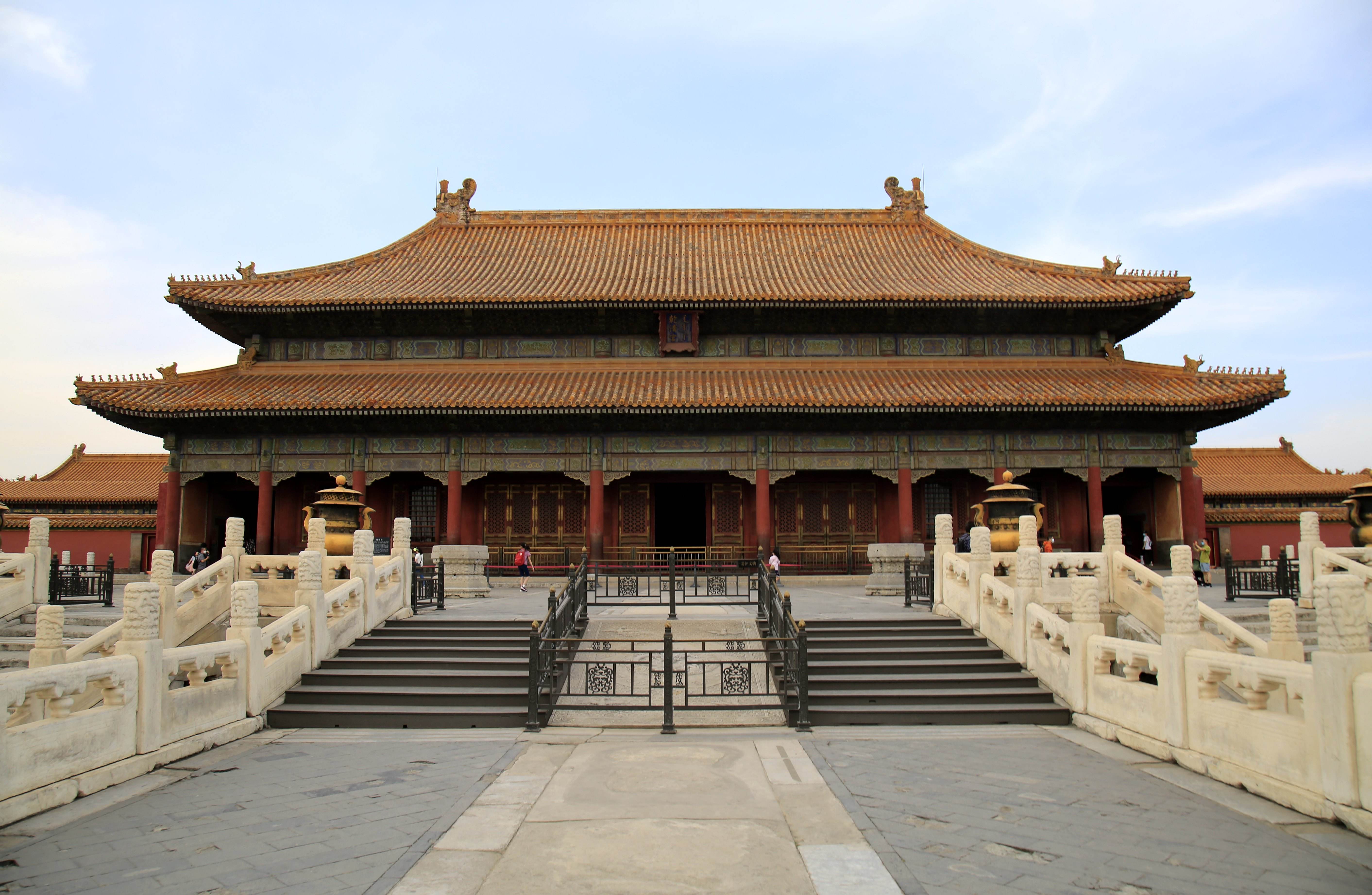
The Hall of Central Harmony, positioned between the other two halls, is square in plan — three bays wide and deep — with a single-eaved pyramidal roof topped by a gilded finial. It is the smallest yet most refined of the three halls. Before grand ceremonies at the Hall of Supreme Harmony, the emperor would rest here, reviewing prayers and protocols, and receiving the respects of ritual officials. Its interior, simple yet elegant, bears the Qianlong Emperor's inscription "Yun Zhi Jue Zhong" (Hold Fast to the Mean) — a statement of governance through the Doctrine of the Mean. The Hall of Preserving Harmony lies to the north, nine bays wide and five bays deep, with a double-eaved hip roof — second only to the Hall of Supreme Harmony in scale. Ming emperors changed robes here before ceremonies honoring empresses and crown princes. Starting in 1789, the Qing dynasty moved the Palace Examination, the highest level of the imperial civil service exam, to this hall, where the fates of countless scholars were decided. Before the hall lies the Forbidden City's largest stone carving — a 16.57-meter-long, 3.07-meter-wide cloud-dragon marble slab weighing approximately 250 tons, depicting nine coiling dragons soaring through clouds and waves.

Three Rear Palaces: Palace of Heavenly Purity, Hall of Union, and Palace of Earthly Tranquility · 后三宫·乾清宫、交泰殿与坤宁宫

🎧 In app
Three Rear Palaces: Palace of Heavenly Purity, Hall of Union, and Palace of Earthly Tranquility

The Palace of Heavenly Purity, the foremost of the Three Rear Palaces, measures nine bays wide and five bays deep with a double-eaved hip roof — a rank second only to the Hall of Supreme Harmony. From the Yongle reign of the Ming to the Kangxi reign of the Qing, it served as the emperor's private quarters. Above the central throne hangs the Shunzhi Emperor's calligraphy "Zheng Da Guang Ming" (Open and Aboveboard), behind which secret succession edicts were once stored, determining the imperial line. Bronze tortoises, cranes, a sundial, and a grain measure stand on the front terrace, echoing those at the Hall of Supreme Harmony. Passing northward through the palace, one arrives at the Hall of Union — a square, single-eaved building housing the plaque "Wu Wei" (Effortless Governance) and twenty-five imperial seals displayed in a row, embodying supreme sovereignty. At the northernmost end, the Palace of Earthly Tranquility, nine bays wide, was the Ming empress's bedchamber. In the Qing dynasty, its eastern half was converted into the imperial wedding chamber, while the western half became a shamanic ritual hall — a unique fusion of Manchu religious tradition with Han palatial architecture, unmatched anywhere in the Forbidden City.

Hall of Mental Cultivation and Grand Council · 养心殿与军机处

🎧 In app
Hall of Mental Cultivation and Grand Council

The Hall of Mental Cultivation, situated west of the Palace of Heavenly Purity, became the de facto center of daily governance and imperial residence from 1729. Its I-shaped layout comprises a front hall for audiences and document review, a rear bedchamber, and a connecting corridor. The front hall, with a throne at its center, features east and west warming chambers for confidential deliberations and rest. Most famously, the East Warm Chamber was the site of "governance behind the curtain" — from behind a gauze screen, Empress Dowagers Cixi and Ci'an controlled the late Qing empire for nearly half a century during the Tongzhi and Guangxu reigns. The hall bears the Yongzheng Emperor's inscription "Zhong Zheng Ren He" (Justice, Uprightness, Benevolence, and Harmony). To the south of the hall lies the Grand Council, originally established by Yongzheng for swift handling of northwestern military affairs and later evolved into the Qing empire's supreme decision-making body. A single edict from this modest office could marshal entire armies, profoundly shaping the course of modern Chinese history.

Six Eastern and Western Palaces · 东西六宫

🎧 In app
Six Eastern and Western Palaces

The Six Eastern and Six Western Palaces, arrayed on either side of the Three Rear Palaces, represent the twelve terrestrial branches and twelve double-hours of the cosmic order in Chinese cosmology. The eastern group encompasses Jingren, Chengqian, Zhongcui, Yanxi, Yonghe, and Jingyang Palaces; the western group includes Yongshou, Yikun, Chuxiu, Xianfu, Changchun, and Qixiang (Taiji) Palaces. Each is a two- or three-courtyard siheyuan compound, its main hall, side halls, annexes, covered corridors, and gate forming a self-contained yet interconnected living space. Among them, Chuxiu Palace is famed as the early residence of Empress Dowager Cixi; Chengqian Palace housed Consort Donggo, beloved of the Shunzhi Emperor; Yanxi Palace saw an unfinished attempt at Western-style reconstruction in the late Qing. Today, some compounds function as themed galleries displaying bronzes, ceramics, and jades that quietly speak of millennia of craftsmanship; others preserve original furnishings depicting daily life in the imperial household, offering visitors a rare glimpse into the authentic world behind the vermilion walls.

Palace of Compassion and Tranquility - Sculpture Gallery · 慈宁宫·雕塑馆

🎧 In app
Palace of Compassion and Tranquility - Sculpture Gallery

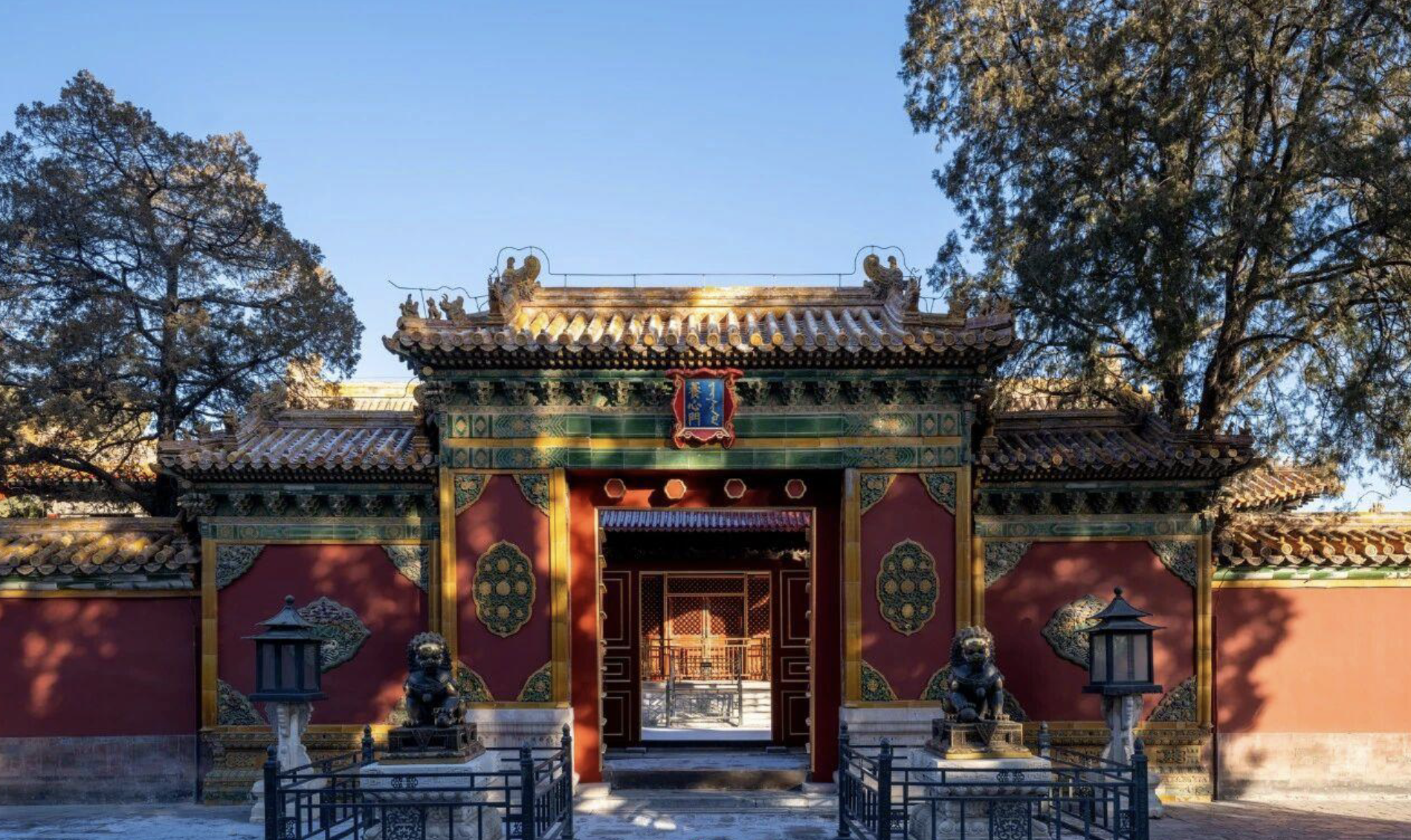
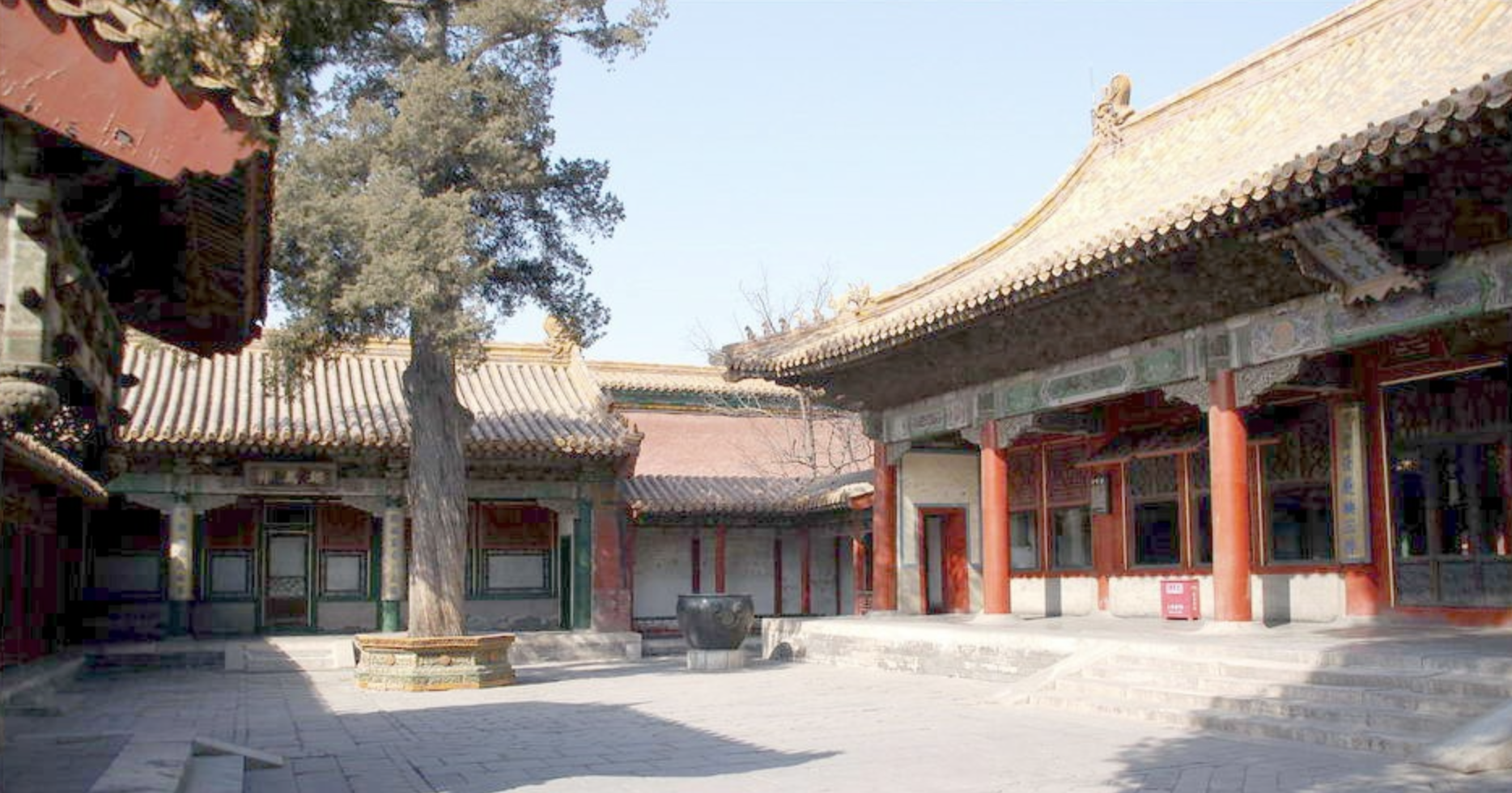
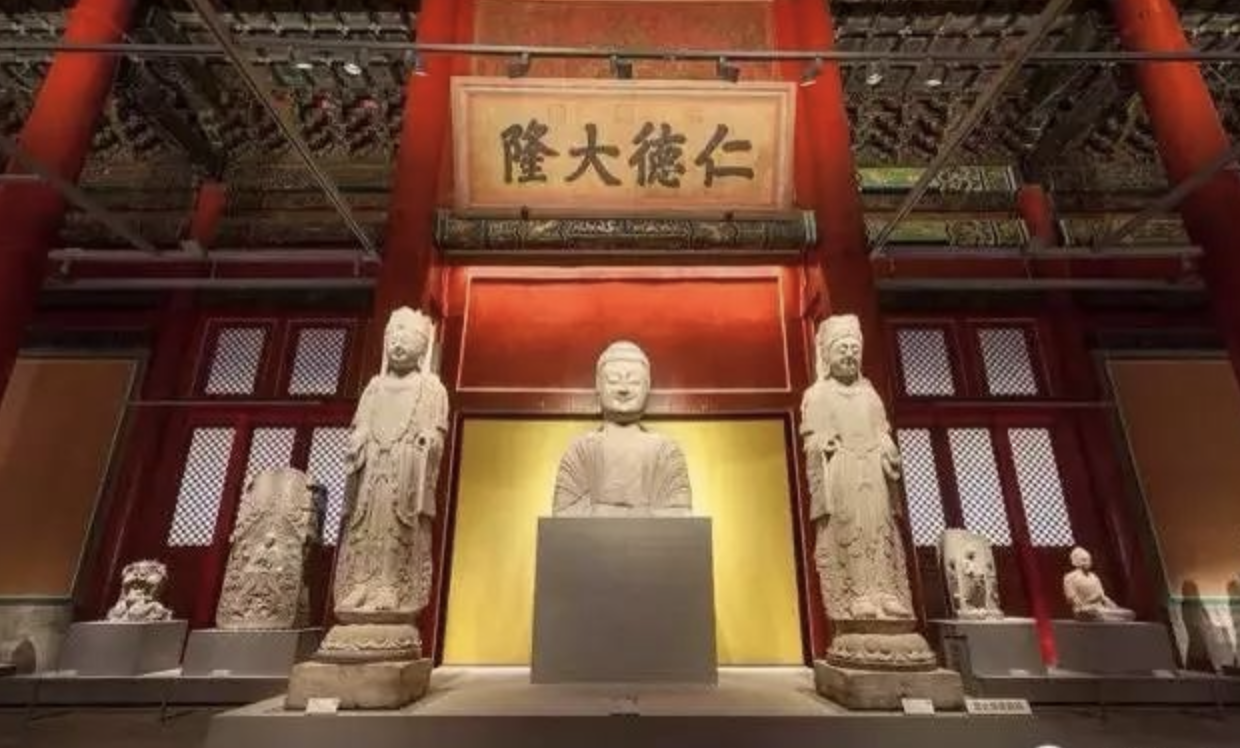
The Palace of Compassion and Tranquility, built in 1536 west of Longzong Gate on the western route, was purpose-built as a retirement residence for empress dowagers and former consorts, the highest-ranking "women's palace" in the Forbidden City. Empress Dowager Xiaozhuang, mother of the Shunzhi Emperor, spent her later years here, and Emperor Kangxi would hold grand birthday banquets for his grandmother in this very palace — a display of filial devotion celebrated throughout the realm. The palace features east and west gates, a seven-bay main hall with a double-eaved hip roof, and an ancient cypress-filled courtyard of solemn tranquility. Since 2015, the Great Buddha Hall and surrounding buildings to the east have been transformed into the Palace Museum Sculpture Gallery, showcasing over 400 precious sculptural artifacts ranging from Qin-dynasty terracotta warriors to Ming and Qing Buddhist statues. Monumental stone carvings stand in the courtyards, while pottery figurines, stone reliefs, and bronze Buddhist images line the exhibition halls chronologically, forming a three-dimensional history of Chinese sculpture. The adjacent Cining Garden preserves its original Qing landscaping, where ancient pavilions and flowering trees create the most serene retreat within the Forbidden City.

Hall of Ancestral Worship - Clock Gallery & Palace of Tranquil Longevity - Treasure Gallery · 奉先殿·钟表馆与宁寿宫·珍宝馆

🎧 In app
Hall of Ancestral Worship - Clock Gallery & Palace of Tranquil Longevity - Treasure Gallery

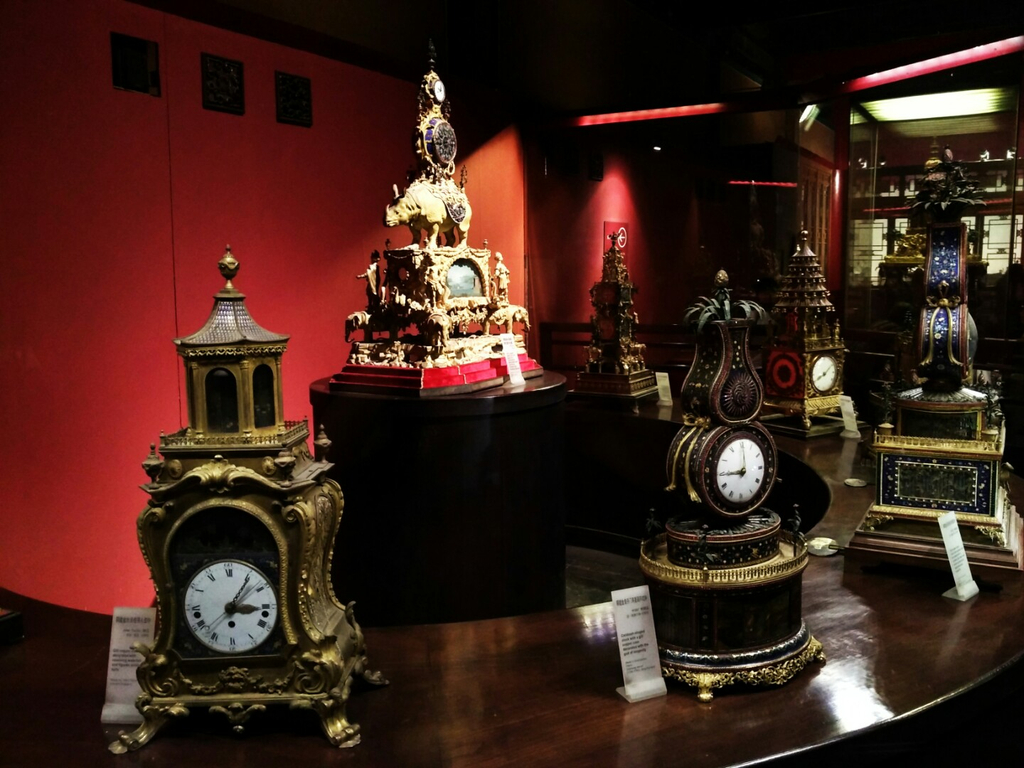
The Hall of Ancestral Worship, south of the Six Eastern Palaces and dating from the Yongle reign, served as the imperial family's private ancestral temple. Its nine-bay hall with a double-eaved hip roof, gold-brick flooring, and nanmu columns exudes solemn magnificence. The Qing court's clock collection, numbering over a thousand pieces, includes diplomatic gifts from Britain, France, and Switzerland alongside timepieces crafted by the palace workshops. Today the hall is the Clock Gallery, where selected timepieces are demonstrated — at the stroke of the hour, bells chime, birds sing, and water-driven automata spring to life, reawakening two-century-old mechanical marvels. The Palace of Tranquil Longevity, spanning the eastern Outer and Inner Courts, was built by the Qianlong Emperor as his retirement palace. Its layout mirrors the central axis, encompassing the Hall of Imperial Supremacy, the Palace of Tranquil Longevity, the Hall of Character Cultivation, the Hall of Joyful Longevity, and the famous Qianlong Garden. The Hall of Imperial Supremacy, the main building, hosted the emperor's "Banquet of a Thousand Elders." The Treasure Gallery is distributed across these halls, exhibiting Qing court goldwork, jades, jewelry, ritual bronzes, and imperial attire. Highlights include the Gold Chalice of Eternal Stability, the Jade Mountain of Yu the Great Taming the Waters, and dragon robes with court beads — all national treasures. Together, the Clock Gallery and Treasure Gallery form two glittering chapters of the Palace Museum's thematic collections.

Qianlong Garden and Imperial Garden · 乾隆花园与御花园

🎧 In app
Qianlong Garden and Imperial Garden

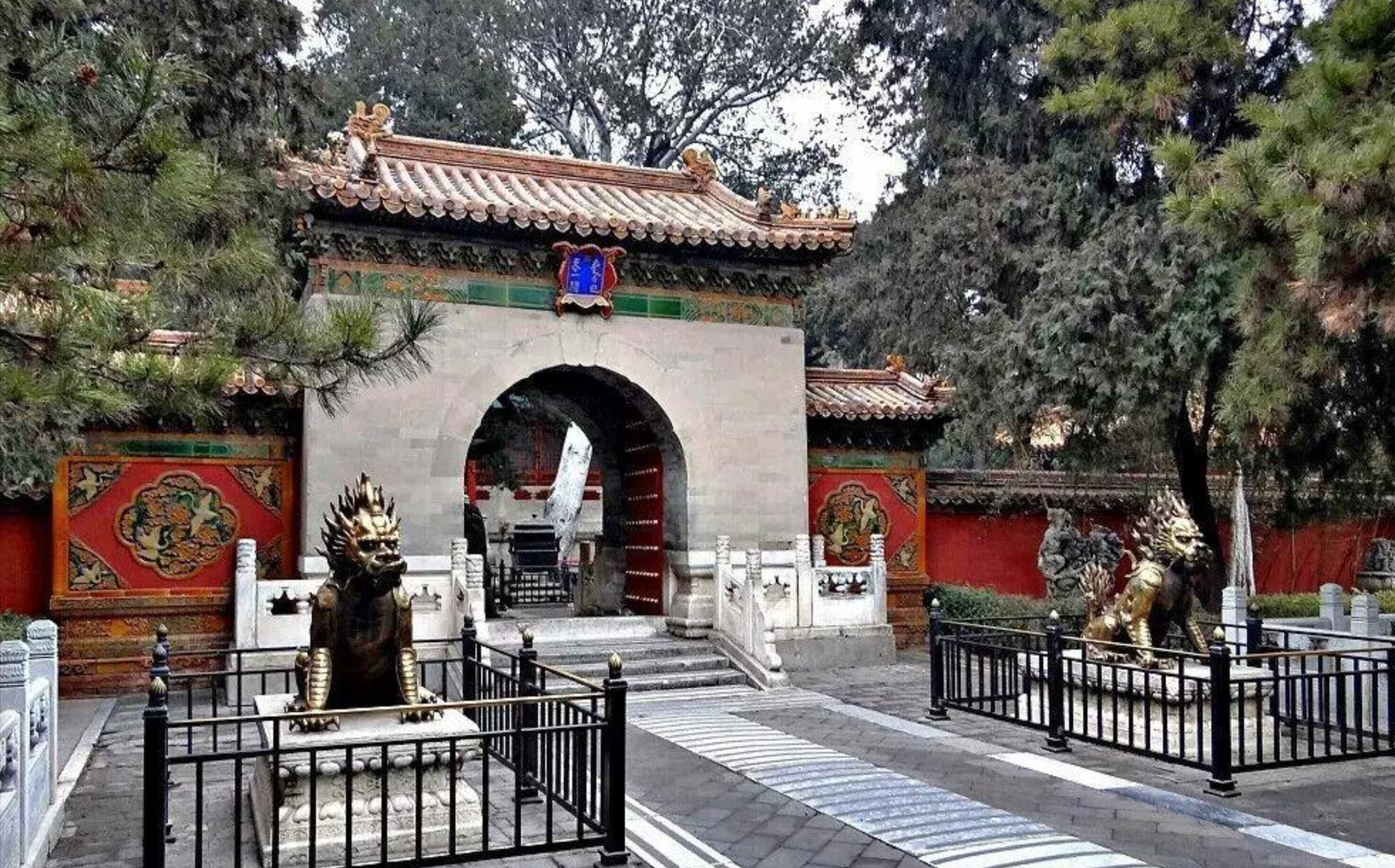
The Qianlong Garden, west of the Palace of Tranquil Longevity complex, was a decade-long labor of love by the Qianlong Emperor before his abdication. Despite its modest size, it masterfully employs the Jiangnan garden technique of "creating grandeur within a small space." Its four sequential courtyards house the Pavilion of Ancient Splendor, the Hall of Fulfilling Original Wishes, the Pavilion of Assembled Beauty, and the Pavilion of Expectations Fulfilled, culminating in the celebrated Lodge of Retired Diligence (Juanqin Zhai). Within Juanqin Zhai lies the emperor's beloved private theater and panoramic mural screens — an unassuming exterior concealing a hidden realm, the most intimate artistic sanctum in the Forbidden City. The Imperial Garden, at the northern terminus of the central axis beyond the Palace of Earthly Tranquility, was laid out during the Ming Yongle reign and spans approximately 12,000 square meters — the largest garden in the Forbidden City. Ancient cypresses planted over six centuries ago still stand verdant. The garden centers on the Hall of Imperial Peace (a Daoist shrine), with over twenty pavilions and gazebos — including the Pavilion of Myriad Springs and the Pavilion of a Thousand Autumns — arranged symmetrically to the left and right. The Hill of Accumulated Elegance and the Sea-Cucumber Rock create a delightful contrast, while the gilded bronze xiezhi (mythical unicorn) before Tianyi Gate adds solemn dignity. With meandering paths, flowering shrubs, and shaded arbors, it is the perfect place to unwind after the solemn grandeur of the palaces and to savor the beauty of an imperial garden.

Gate of Divine Might, Corner Towers, and East-West Prosperity Gates · 神武门、角楼与东西华门

🎧 In app
Gate of Divine Might, Corner Towers, and East-West Prosperity Gates

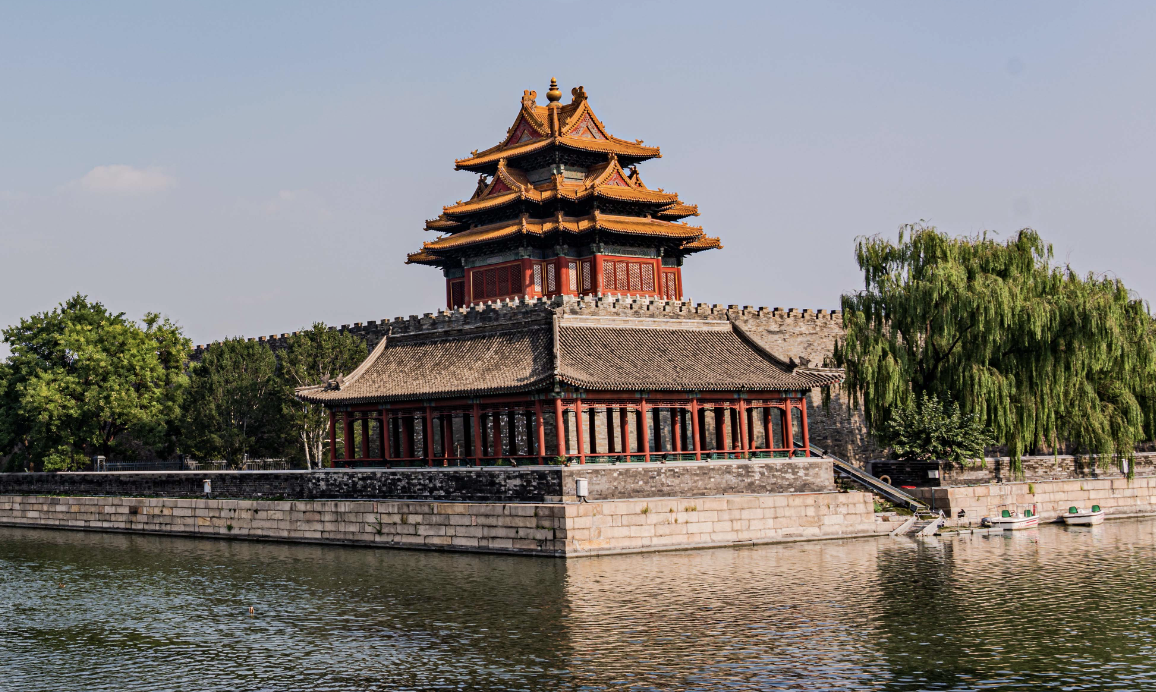
The Gate of Divine Might, the northern gate, was completed in 1420 and originally named Xuanwu Gate — renamed to avoid the Kangxi Emperor's personal name Xuanye. Its five-bay tower with a double-eaved hip roof once housed bells and drums that marked dawn and dusk; each evening, 108 strokes of the bell would echo across the Forbidden City, ending the day for the thousand-year-old palace. Today it is the exit for most visitors — beyond it rises the Wanchun Pavilion atop Jingshan Hill, the classic vantage point for panoramic views of the palace complex. The four corner towers of the Forbidden City are masterpieces of ancient Chinese timber construction. Each tower, spanning three bays with triple eaves and a cross-shaped ridge, comprises nine beams, eighteen columns, and seventy-two ridges — assembled entirely through mortise-and-tenon joinery without a single nail. At sunset, their golden-glazed tiles reflected in the clear moat waters form one of Beijing's most iconic silhouettes. The East and West Prosperity Gates stand midway along the eastern and western walls respectively. The East Prosperity Gate has eight rows of door nails rather than the standard nine, believed to be related to the passage of imperial coffins during Ming funerals; the West Prosperity Gate served as the Qing emperors' and empresses' gateway to the Western Gardens (today's Zhongnanhai) and the Summer Palace.

Get the app

The tool solved one problem. The app handles the whole trip.

Per-trip visa judgements, audio guides, prep checklists, and a real human concierge — offline-ready, in your language.

Download for iPhoneFree to download · No OTA upsells