← Beijing

Beijing · 雍和宫

Yonghe Temple (Lama Temple)

🎫 Ticket 25 RMB
🕘 Opening Hours 09:00–16:30
🚇 Metro Metro Line 2, Yonghe Temple Station
📍 Address No. 12 Yonghe Temple Street, Dongcheng District, Beijing (Beixin Bridge area, south side of Ditan Park) Map ↗
🎧 9 audio walking guides for Yonghe Temple (Lama Temple) — listen on the spot in the YOLO HAPPY app. →

Inside Yonghe Temple (Lama Temple)

Archway Courtyard and Zhaotai Gate · 牌楼院与昭泰门

🎧 In app
Archway Courtyard and Zhaotai Gate

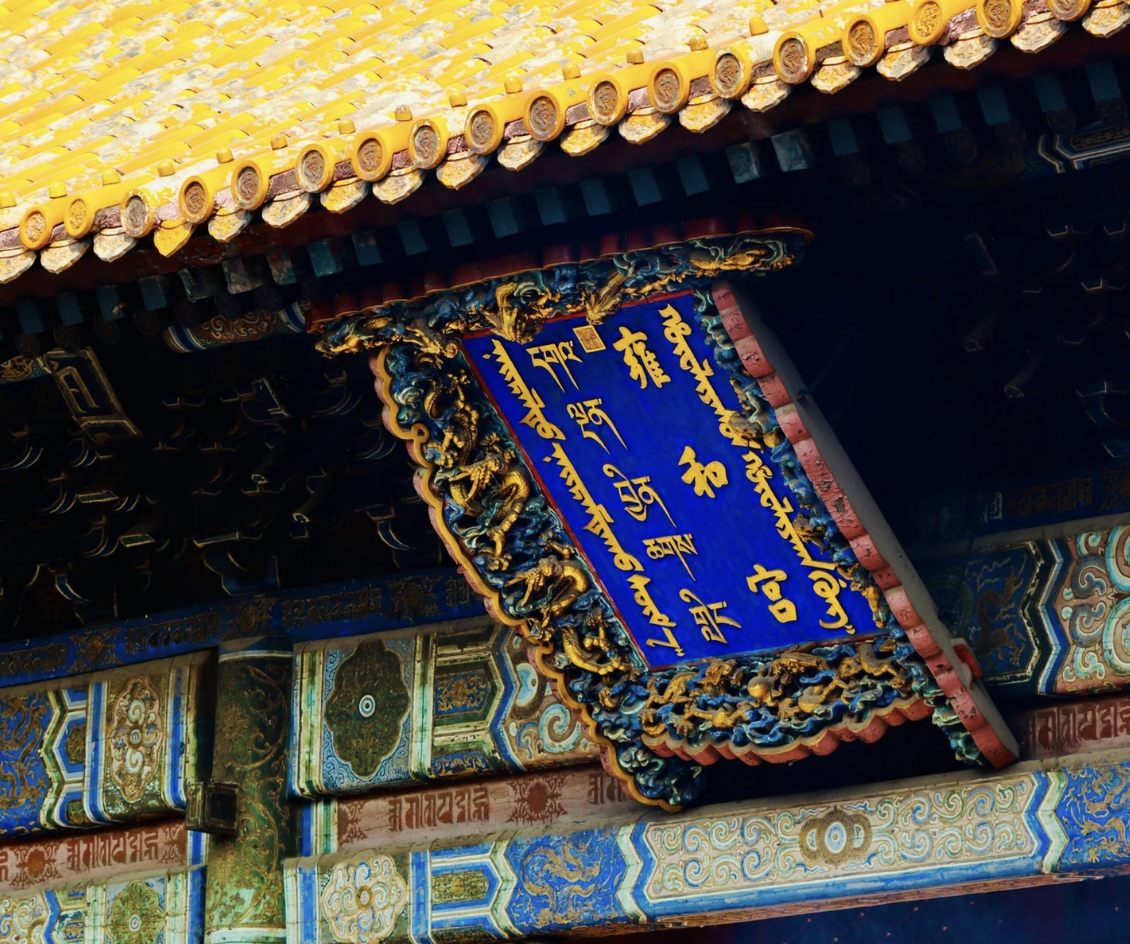
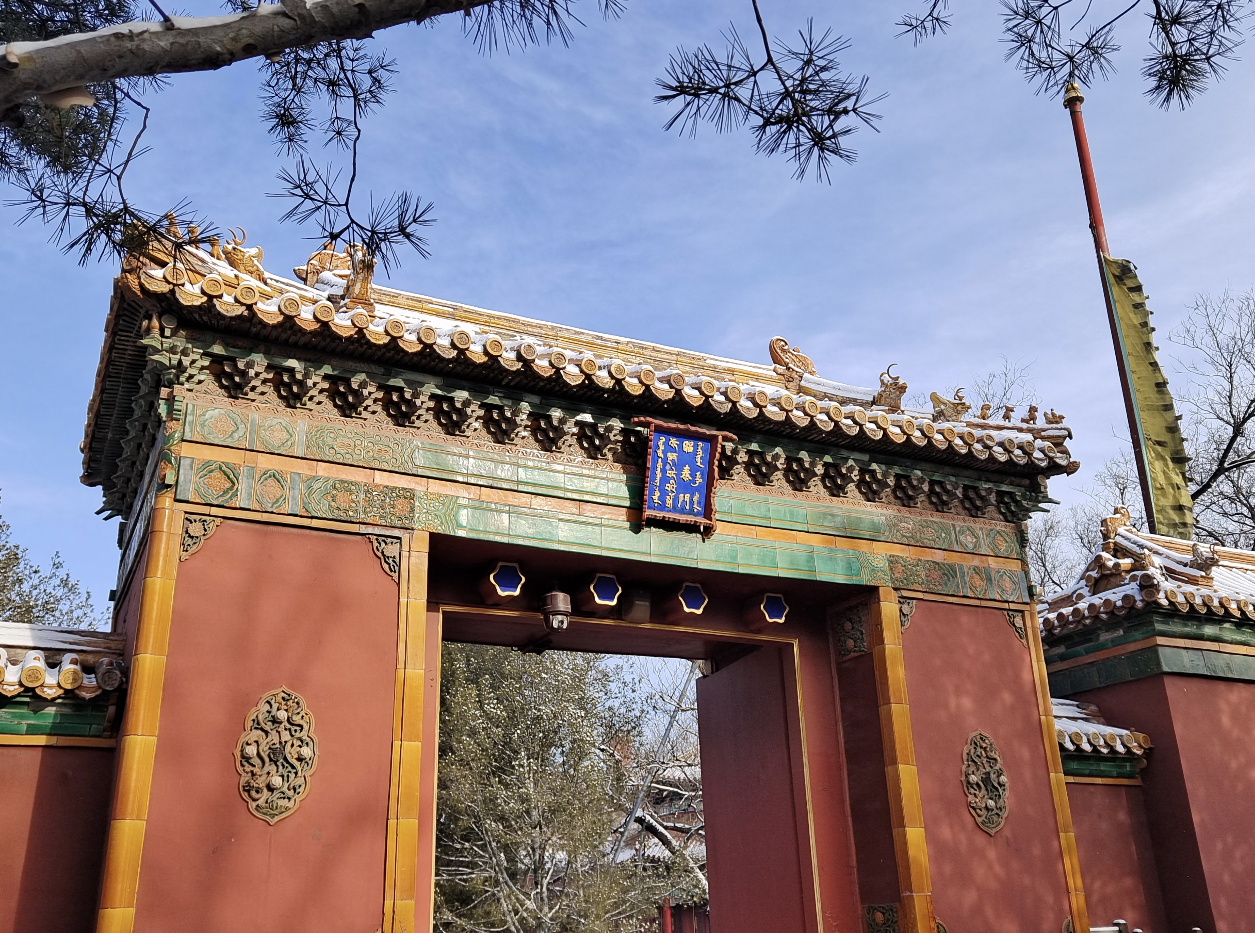
The archway courtyard at the southernmost end of the Lama Temple serves as the processional forecourt of the entire complex. It comprises three grand glazed-tile archways: the central one inscribed "Revered by All within the Four Seas" and the flanking ones inscribed "Compassionate Majesty" and "Blessings Flowing to the Sands," all in the calligraphy of the Qianlong Emperor. Crowned with yellow and green glazed tiles, the archways feature intricate bracket sets, flying eaves and painted beams that proclaim the dignity of a royal monastery. Passing northward through the courtyard, visitors reach Zhaotai Gate, hung with a plaque reading "Yonghe Gate," the first threshold into the heart of the temple. The ground rises gently from south to north, creating a sequence that leads from the secular to the sacred, so that the moment one steps through Zhaotai Gate a solemn and serene religious atmosphere is felt.
Bell and Drum Towers and the Hall of the Heavenly Kings · 钟鼓楼与天王殿

🎧 In app
Bell and Drum Towers and the Hall of the Heavenly Kings

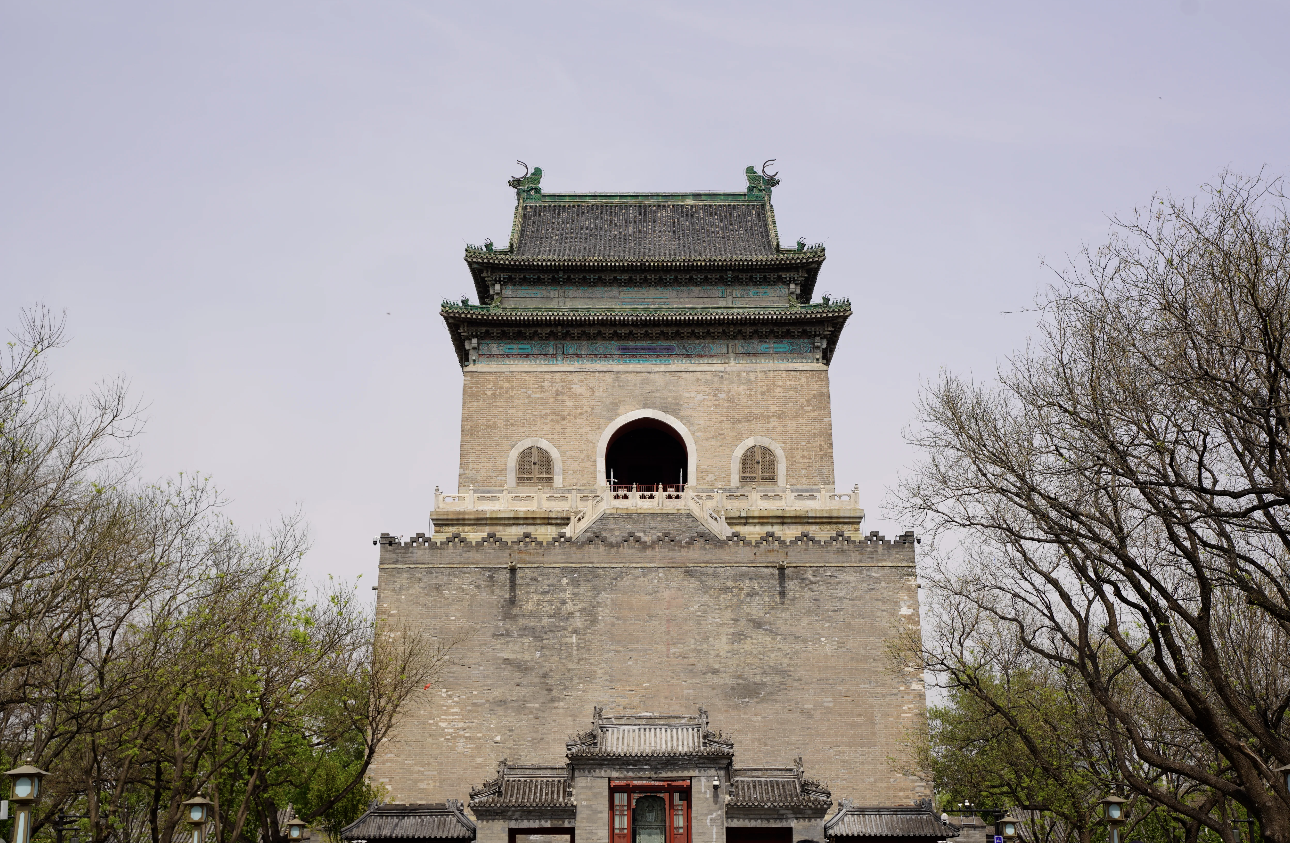
After entering Zhaotai Gate, the Bell Tower stands to the east and the Drum Tower to the west, marking the traditional "morning bell and evening drum" timekeeping of Buddhist monasteries. A bronze bell hangs in the Bell Tower and a large drum stands in the Drum Tower, continuing the layout inherited from Han-Chinese Buddhist temples. Directly to the north between the two towers stands the Hall of the Heavenly Kings. At its centre is enshrined the Cloth-Sack Maitreya, the pot-bellied Buddha with a beaming smile, symbolising the boundless capacity to embrace what is difficult to embrace. Behind Maitreya stands Skanda, the Dharma-protecting general holding a demon-subduing staff. Along the east and west walls are the Four Heavenly Kings—Virudhaka of the East, Virulaka of the South, Virupaksa of the West and Vaisravana of the North—each grasping a ritual implement, awe-inspiring and majestic, guardians of the four directions of Mount Sumeru and the core of the temple's protective sequence.

Stele Pavilion of "On Lamaism" and the Bronze Mount Sumeru · 喇嘛说碑亭与铜铸须弥山

🎧 In app
Stele Pavilion of "On Lamaism" and the Bronze Mount Sumeru

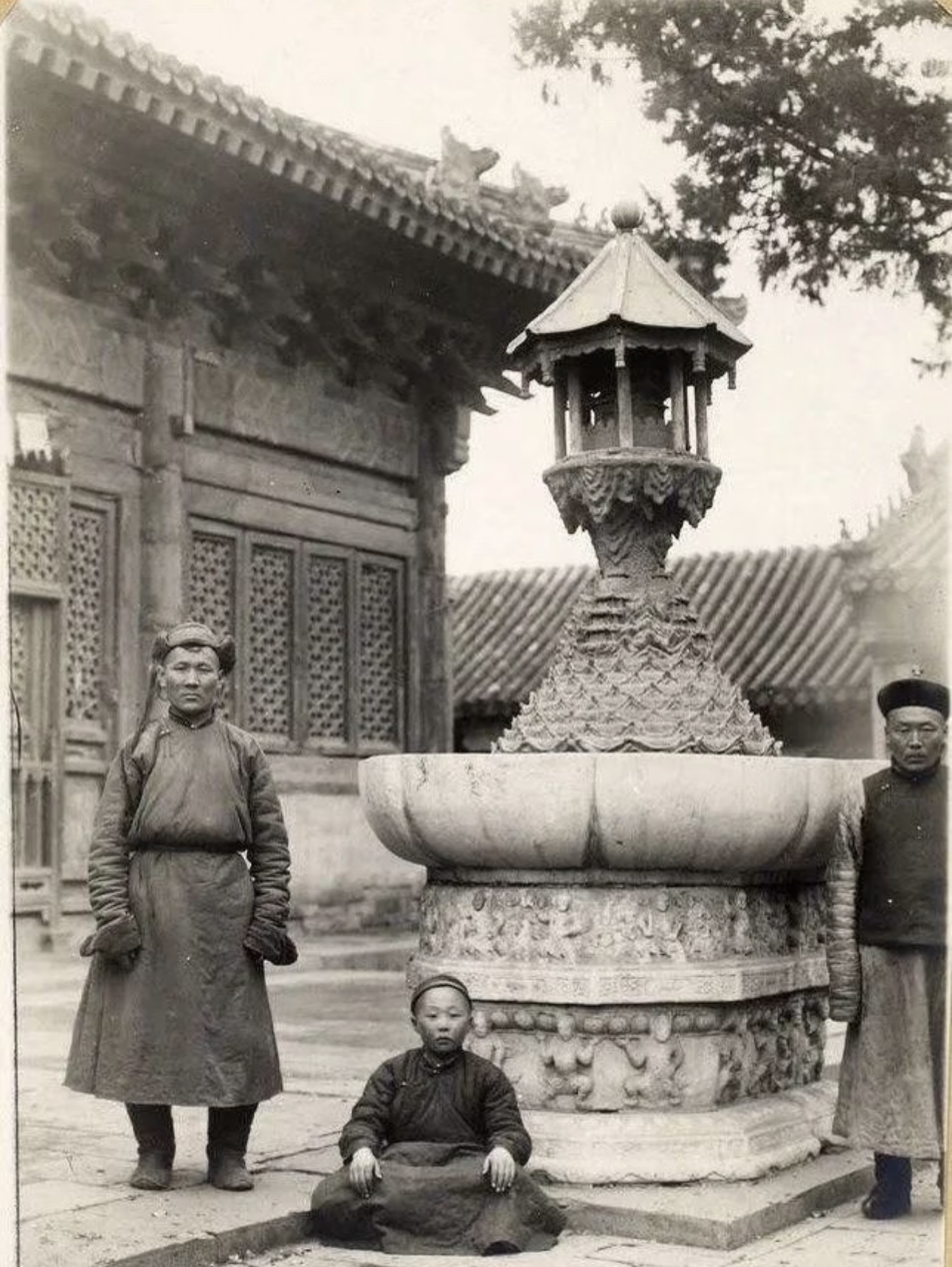
Beyond the Hall of the Heavenly Kings stands the Imperial Stele Pavilion, housing a stone stele inscribed in 1792 (the fifty-seventh year of Qianlong) with the emperor's essay "On Lamaism." Carved in Manchu, Chinese, Mongolian and Tibetan on its four faces, the text articulates Qing policy toward Tibetan Buddhism and the governing strategy that "promoting the Yellow Teaching pacifies the Mongols," making it a crucial document for the study of Qing ethnic and religious policy. North of the pavilion stands a bronze Mount Sumeru, believed to date from the Ming dynasty. Modelled on the Buddhist cosmos, it represents Mount Sumeru at the centre, encircled by the sun and moon, with the four great continents and eight minor continents arranged around it. Exquisitely crafted and rich in symbolism, it is a three-dimensional distillation of the Tibetan Buddhist worldview.

Yonghe Palace (Mahavira Hall) · 雍和宫殿·大雄宝殿

🎧 In app
Yonghe Palace (Mahavira Hall)

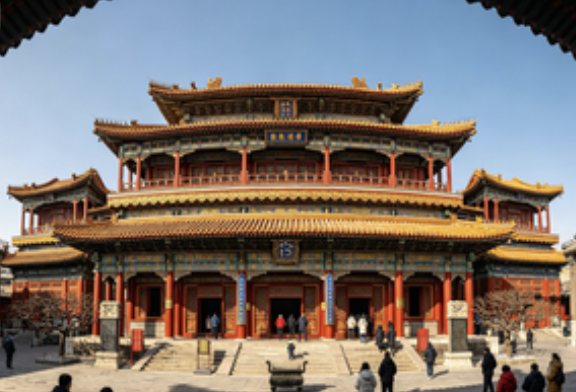
Yonghe Palace is the main hall of the temple, originally the Silver An Hall of Prince Yong's mansion before its conversion into a Buddhist sanctuary. It thus combines the grand scale of princely architecture with the solemnity of a Buddhist hall. At its centre are enshrined the Three Buddhas of the Three Times: Dipankara (the past), Shakyamuni (the present) and Maitreya (the future), their golden images serene and majestic. Along the sides stand the Eighteen Arhats, each in a distinct and lifelike posture. The spacious moon terrace in front is flanked by side halls dedicated to Guan Yu and Guanyin, reflecting the fusion of Han and Tibetan culture. The roof is covered with yellow glazed tiles trimmed in green—the imperial rank of roofing—and the painted beams are ornamented throughout with dragon and phoenix motifs, proclaiming the royal splendour of this "blessed land of the dragon."

Yongyou Hall · 永佑殿

🎧 In app
Yongyou Hall

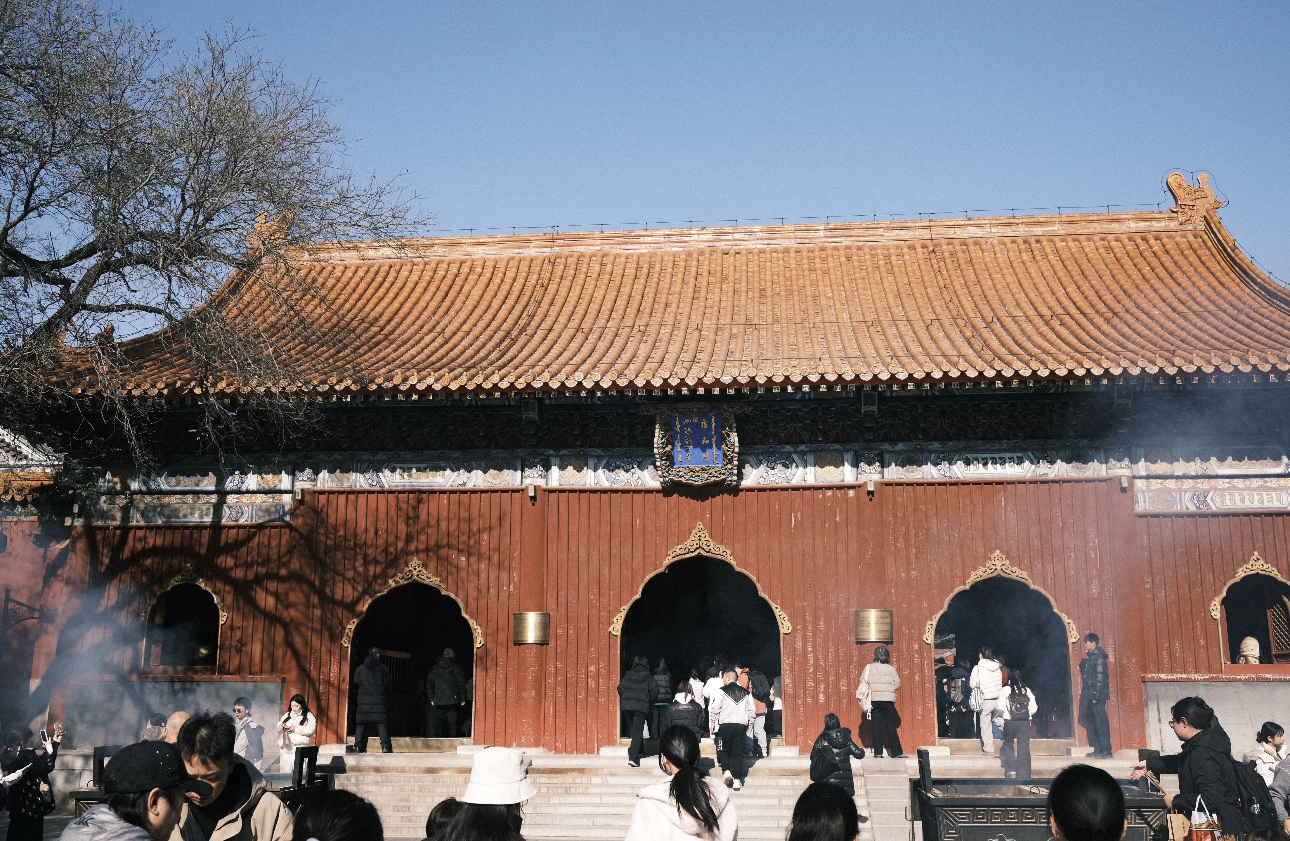
Yongyou Hall was originally the bedchamber of Prince Yong's mansion. After the Yongzheng Emperor's death his coffin rested here, and the name "Yongyou," meaning "eternal blessing," expresses the imperial family's remembrance and prayers for the late emperor. At the centre of the hall is Amitayus (Amitabha), flanked by the Medicine Buddha and the Lion's Roar Buddha. The images are solemn and exquisitely crafted, all fine works of Qing court sculpture. Also displayed are a "Fu" (blessing) character brushed by the Qianlong Emperor for his father and sandalwood arhat figures. As one of the temple's central halls, Yongyou preserves the layout of a princely bedchamber and bears witness to the transformation of the mansion into a monastery, while remaining a place where the faithful gather to chant and pray.

Four Monastic Colleges (Dratsang) · 四大扎仓

🎧 In app
Four Monastic Colleges (Dratsang)

As the central Gelugpa monastery in the capital, the Lama Temple houses four dratsang (monastic colleges): the Exoteric College for the study of sutra, the Esoteric College for tantra and ritual, the Medical College for Tibetan medicine and pharmacology, and the Kalacakra College for astronomy and calendrical calculation. Set within the side halls on the east and west of the temple, each college enshrines its respective tutelary deity and displays scriptures, ritual implements and teaching materials. Historically, monks studied here for many years, and after rigorous debate examinations were awarded the Geshe degree, making the temple a key institution for training senior Tibetan Buddhist clergy. This tradition continues today, so that the temple is not merely a royal monastery but an important centre of Tibetan Buddhist scholarship and religious education.

Falun Hall (Wheel of the Law Hall) · 法轮殿

🎧 In app
Falun Hall (Wheel of the Law Hall)

Falun Hall is the ritual centre of the Lama Temple, where major religious ceremonies are held. Its architecture fuses Han and Tibetan styles, and the roof is crowned with five skylight pavilions symbolising the five major schools of Tibetan Buddhism. At the centre is a six-metre bronze statue of Tsongkhapa, founder of the Gelug school, flanked by his two chief disciples, Khedrup Je and Gyaltsab Je. To the west stands Shakyamuni, and to the east, Avalokitesvara. The hall's most celebrated treasure is the "Mountain of Five Hundred Arhats," carved from red sandalwood into a landscape of layered peaks populated by five hundred arhats—sitting or standing, meditating or debating—each with a distinct expression, a triumph of craftsmanship counted among the "Three Wonders" of the temple. In front of the hall is displayed the Golden Bumpa Vase, presented by the Qianlong Emperor and used in the golden urn lot-draw to identify reincarnated lamas, a key artefact of Qing Tibet policy.

Pavilion of Ten Thousand Blessings (Wanfu Pavilion) · 万福阁

🎧 In app
Pavilion of Ten Thousand Blessings (Wanfu Pavilion)

Wanfu Pavilion, the principal building at the northern end of the Lama Temple, was built in 1750 (the fifteenth year of Qianlong). Rising about twenty-five metres with triple flying eaves, it is the tallest structure in the complex. At its centre stands a statue of Maitreya carved from a single piece of white sandalwood gifted by Nepal. The figure is twenty-six metres tall in total—eighteen metres above ground and eight metres below—with a girth of eight metres, making it one of the largest single-log Buddhist carvings in the world and an entry in the Guinness World Records, the foremost of the temple's "Three Wonders." Flanking the pavilion, flying galleries connect it to the Yongkang and Yanning pavilions, creating a spectacular tripartite complex. Gazing up at the colossal Maitreya from the foot of the hall, its overwhelming and awe-inspiring presence marks the climax of any visit to the Lama Temple.

Guanyin Grotto and Suicheng Hall (Epilogue) · 观音洞与绥成殿(结束语)

🎧 In app
Guanyin Grotto and Suicheng Hall (Epilogue)

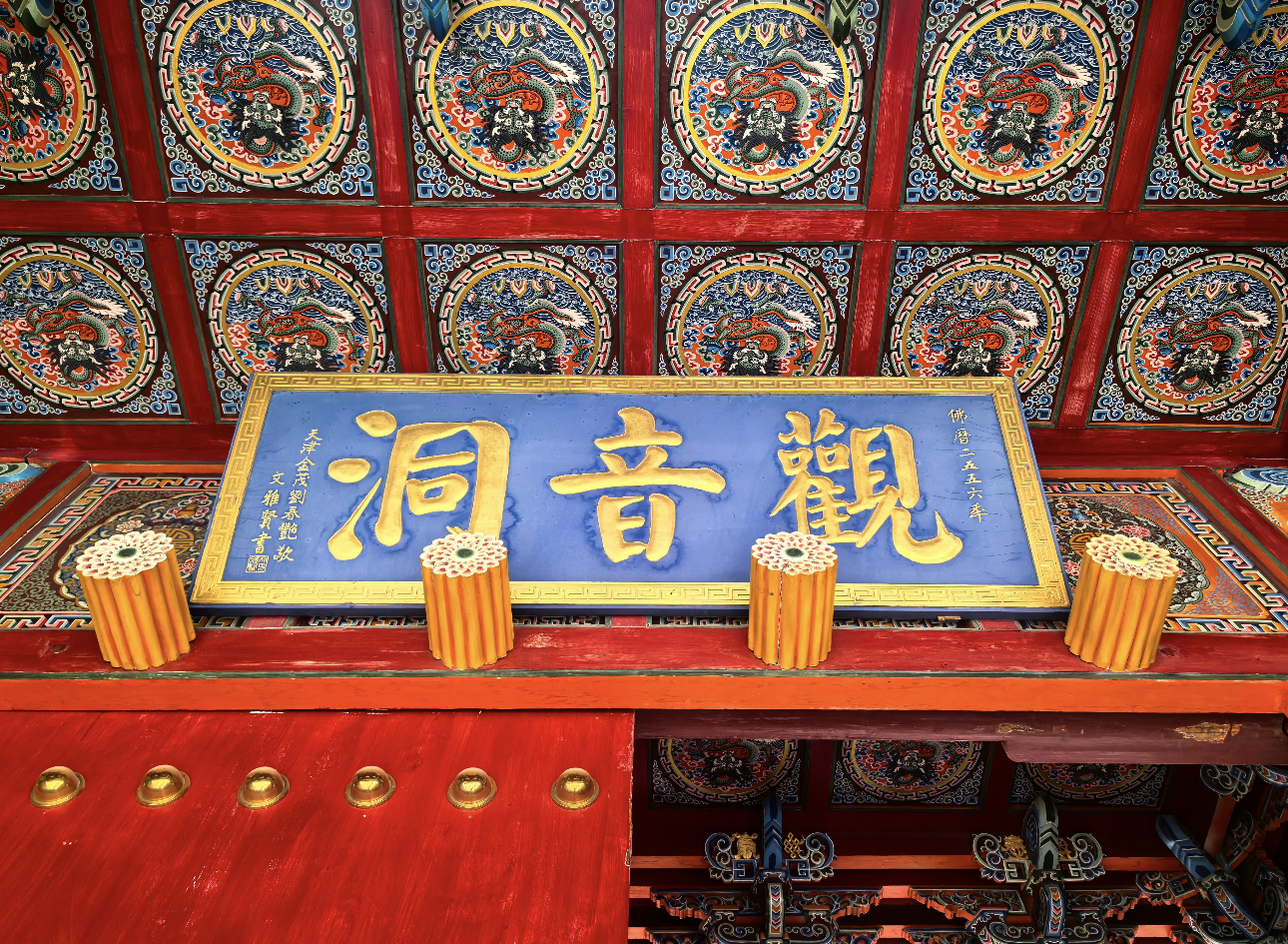
Beneath Wanfu Pavilion lies the Guanyin Grotto, also called the underground palace of the pavilion. Inside is enshrined a white sandalwood statue of Avalokitesvara, surrounded by Buddhist murals and reliefs in a hushed and solemn atmosphere that makes it a sacred place for the faithful to pray and make vows. The grotto gives Wanfu Pavilion a three-dimensional devotional structure—"Maitreya above, Guanyin below." At the northernmost end of the temple stands Suicheng Hall, originally named the Yamantaka Tower, the final hall of the complex, enshrining esoteric deities such as Vajrabhairava. The name "Suicheng" means "pacification and accomplishment." As the "epilogue" of the visit, the journey from the archway courtyard in the south to this hall in the north—entering through "Zhaotai" and concluding at "Suicheng"—completes not only a south-to-north passage through space but also a spiritual ascent from prayer to fulfilment, bringing the pilgrimage through this royal Tibetan Buddhist monastery to a perfect close.

Get the app

The tool solved one problem. The app handles the whole trip.

Per-trip visa judgements, audio guides, prep checklists, and a real human concierge — offline-ready, in your language.

Download for iPhoneFree to download · No OTA upsells