← Beijing

Beijing · 颐和园

Summer Palace

🎫 Ticket 60 / 20 RMB
🕘 Opening Hours 06:30–18:00
🚇 Metro Metro Line 4, Xiyuan Station
📍 Address No. 19 Xinjiangongmen Road, Haidian District, Beijing (central part of Haidian District, outside the Fourth Ring Road) Map ↗
🎧 10 audio walking guides for Summer Palace — listen on the spot in the YOLO HAPPY app. →

Inside Summer Palace

East Palace Gate and Hall of Benevolence and Longevity · 东宫门与仁寿殿

🎧 In app
East Palace Gate and Hall of Benevolence and Longevity

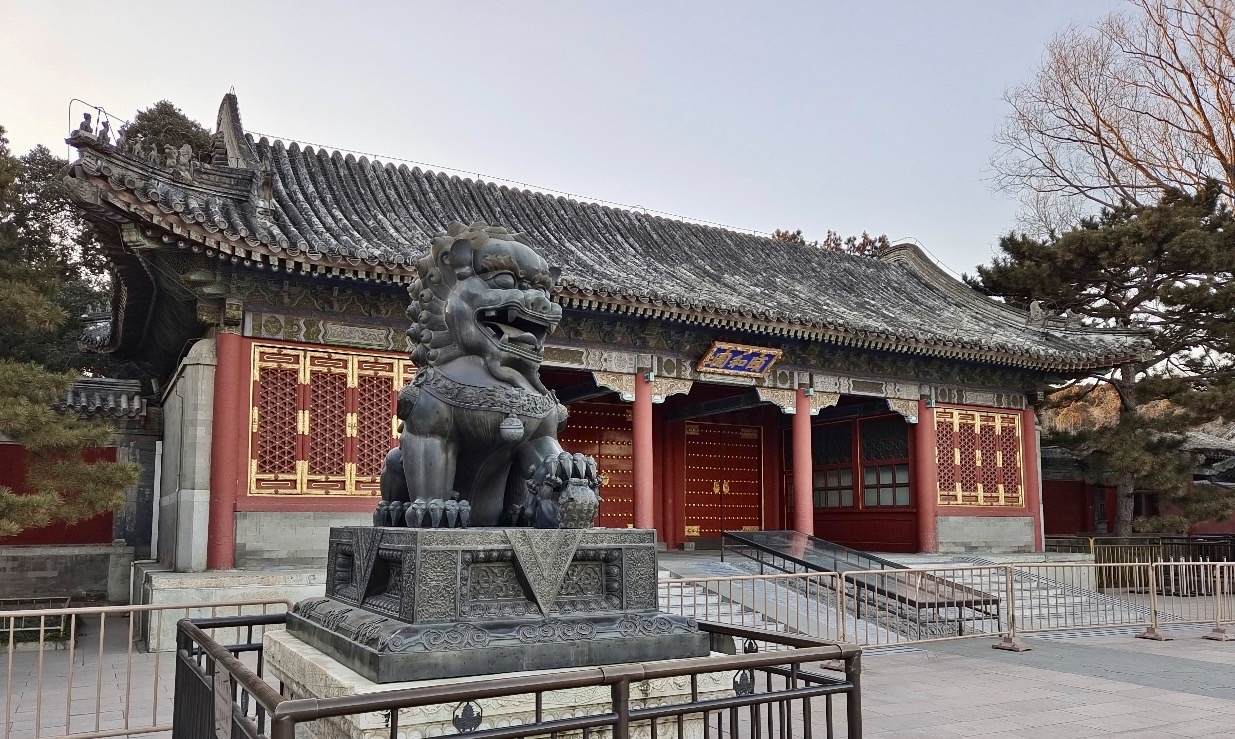
The East Palace Gate is the main entrance to the Summer Palace, built in 1750 during the Qianlong reign. Bronze lions, stone steps, and cloud-dragon carvings flank the entrance, and the gate bears a plaque reading "Yiheyuan" (Summer Palace), said to be calligraphed by Emperor Guangxu. Inside stands the Hall of Benevolence and Longevity (Renshou Dian), originally called the "Hall of Diligent Administration." Destroyed by Anglo-French forces in 1860 and rebuilt, Empress Dowager Cixi renamed it, drawing from the Confucian Analects: "the benevolent enjoy longevity." The hall contains a nine-dragon throne, screens, and enamel cranes and deer. It was the central venue where Cixi and Emperor Guangxu held audiences and conducted state affairs. Bronze dragons, phoenixes, tripods, and Taihu stones decorate the courtyard, flanked by symmetrically arranged side halls, projecting imperial authority within the garden.
Garden of Virtue and Harmony · 德和园

🎧 In app
Garden of Virtue and Harmony

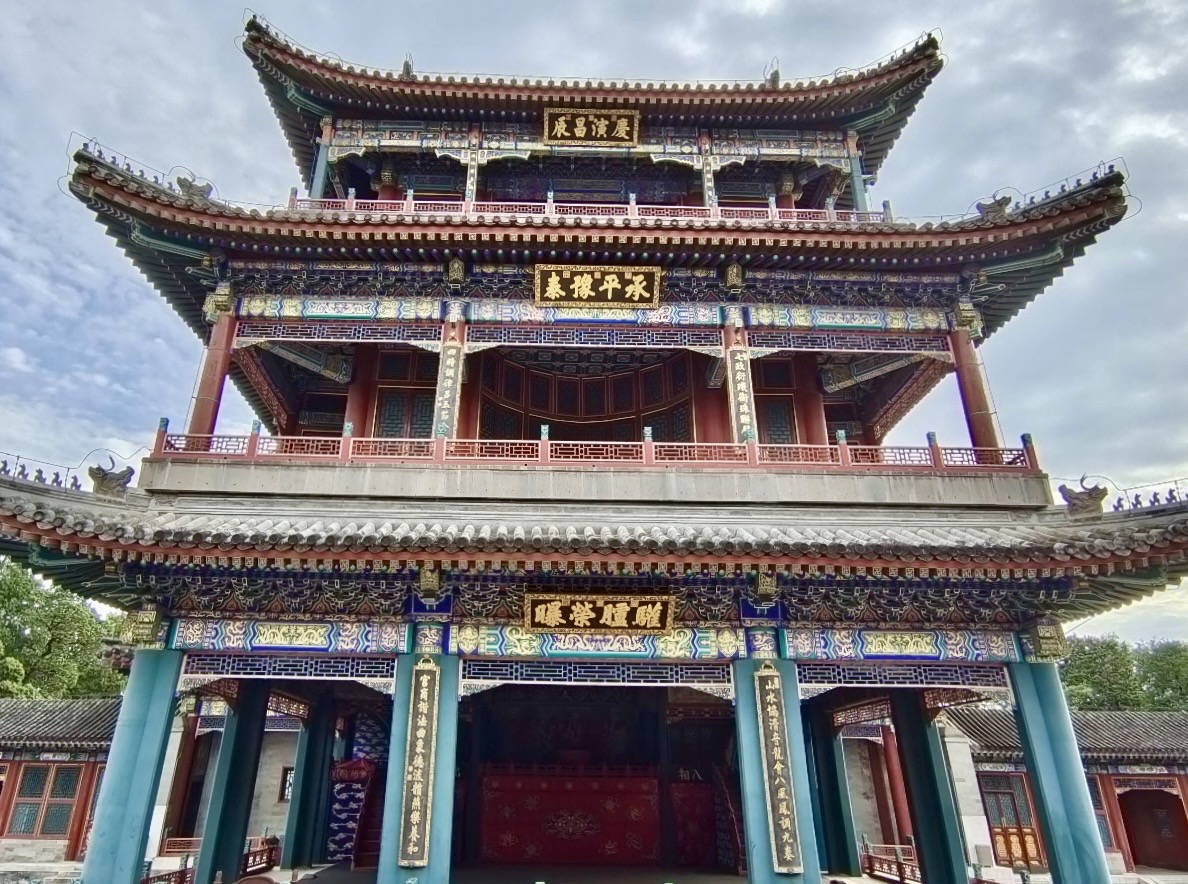
Built in 1891 and located northwest of the Hall of Benevolence and Longevity, the Garden of Virtue and Harmony (Dehe Yuan) was a garden-within-a-garden dedicated to opera performances for Empress Dowager Cixi, constructed at a cost of 710,000 taels of silver. Its centerpiece is the Grand Theater Building, 21 meters tall with three upturned eaves. The ground-floor stage spans 17 meters, and the three-tiered stage features mechanical devices for spectacular effects—deities ascending to heaven and demons descending underground. It is the largest and most ingeniously structured surviving imperial theater in China. Cixi was an avid Peking Opera enthusiast, staging performances for days during birthdays and festivals. The complex also includes a backstage dressing area and the Yile Hall (viewing hall), preserving Cixi's opera-viewing throne and precious Peking Opera artifacts.

Hall of Jade Ripples and Hall of Joyful Longevity · 玉澜堂与乐寿堂

🎧 In app
Hall of Jade Ripples and Hall of Joyful Longevity

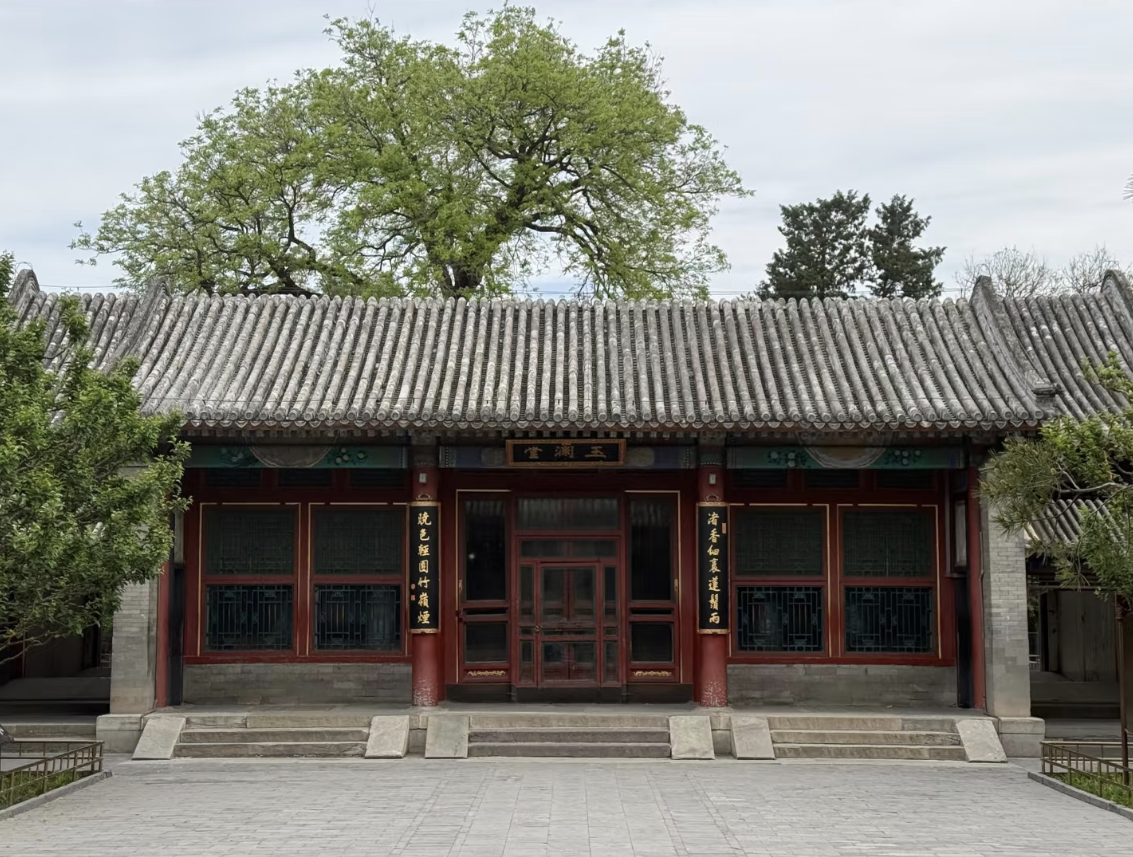
The Hall of Jade Ripples (Yulan Tang), on the northeastern shore of Kunming Lake, was originally built during the Qianlong reign as a resting place for the imperial family. After the failure of the 1898 Hundred Days' Reform, Empress Dowager Cixi placed Emperor Guangxu under house arrest here. The east and west side rooms were sealed with brick walls to isolate him—traces of which remain visible today, making the hall a historical witness to a political tragedy in modern China. The Hall of Joyful Longevity (Leshou Tang), immediately west, was Cixi's residential quarters in the Summer Palace. Its name means "the wise find joy, the benevolent enjoy longevity." The central room contains Cixi's throne and an agarwood screen, where she received congratulations, dined, and took tea. Bronze deer, cranes, and vases in the courtyard symbolize universal peace, while magnolia, crabapple, and peony represent "wealth and honor in the jade hall."

Long Corridor · 长廊

🎧 In app
Long Corridor

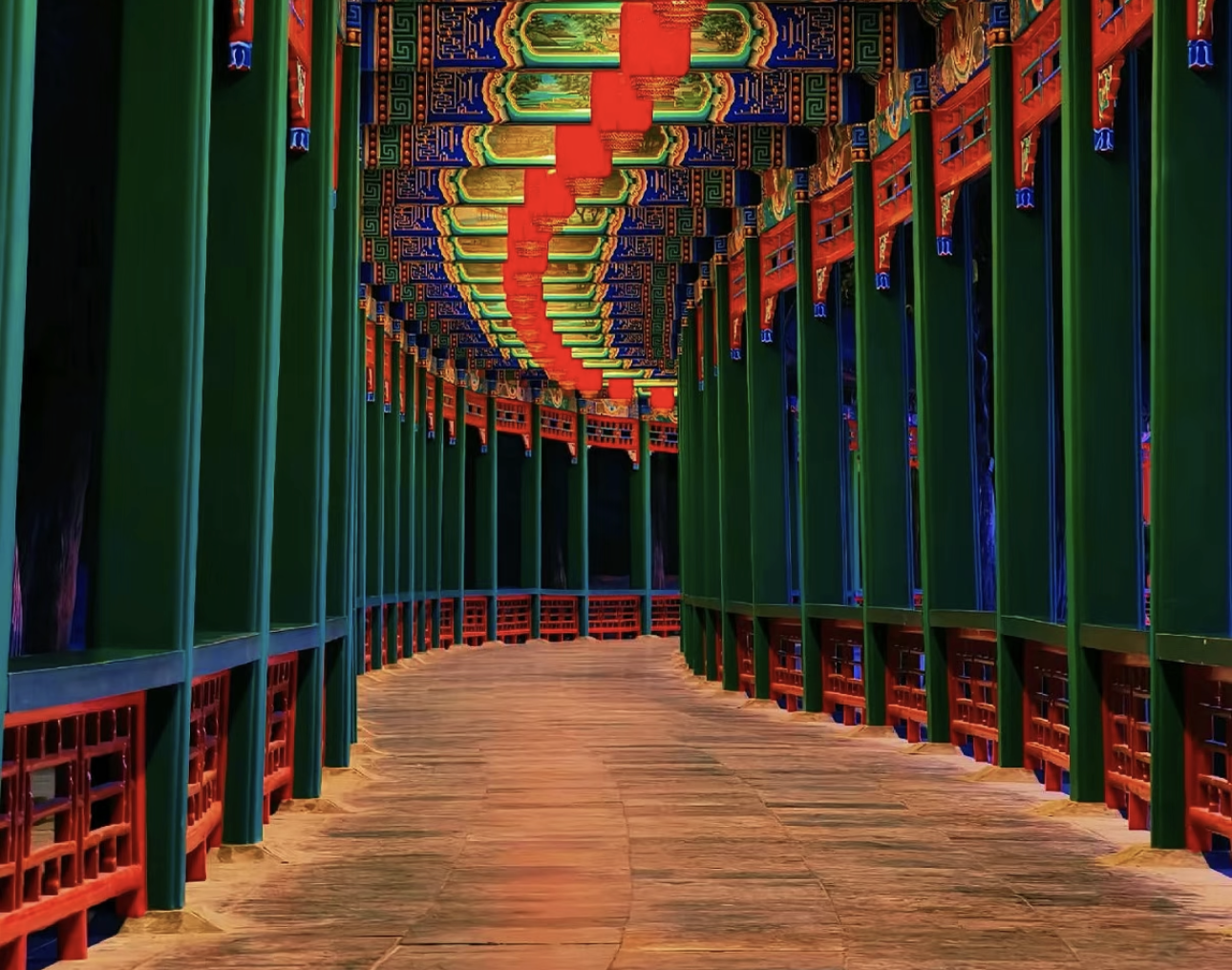
Stretching from the Moon-Inviting Gate in the east to the Stone Old Man Pavilion in the west, the Long Corridor (Changlang) is 728 meters long with 273 bays. It is the longest and most richly painted garden corridor in China, earning a Guinness World Record in 1992. Originally built in 1750 during the Qianlong reign, it was destroyed by Anglo-French forces in 1860 and rebuilt during the Guangxu reign. Over 14,000 Suzhou-style paintings decorate the beams, depicting landscapes, flora and fauna, historical figures, classical literature scenes from "Journey to the West," "Romance of the Three Kingdoms," and "Dream of the Red Chamber," and folk legends—an open-air museum of Chinese traditional painting. The corridor runs between mountain and water with seasonal views. Four octagonal double-eave pavilions—Liujia, Jilan, Qiushui, and Qingyao—mark the four seasons along its length.

Hall of Dispelling Clouds, Tower of Buddhist Incense and Sea of Wisdom · 排云殿、佛香阁与智慧海

🎧 In app
Hall of Dispelling Clouds, Tower of Buddhist Incense and Sea of Wisdom

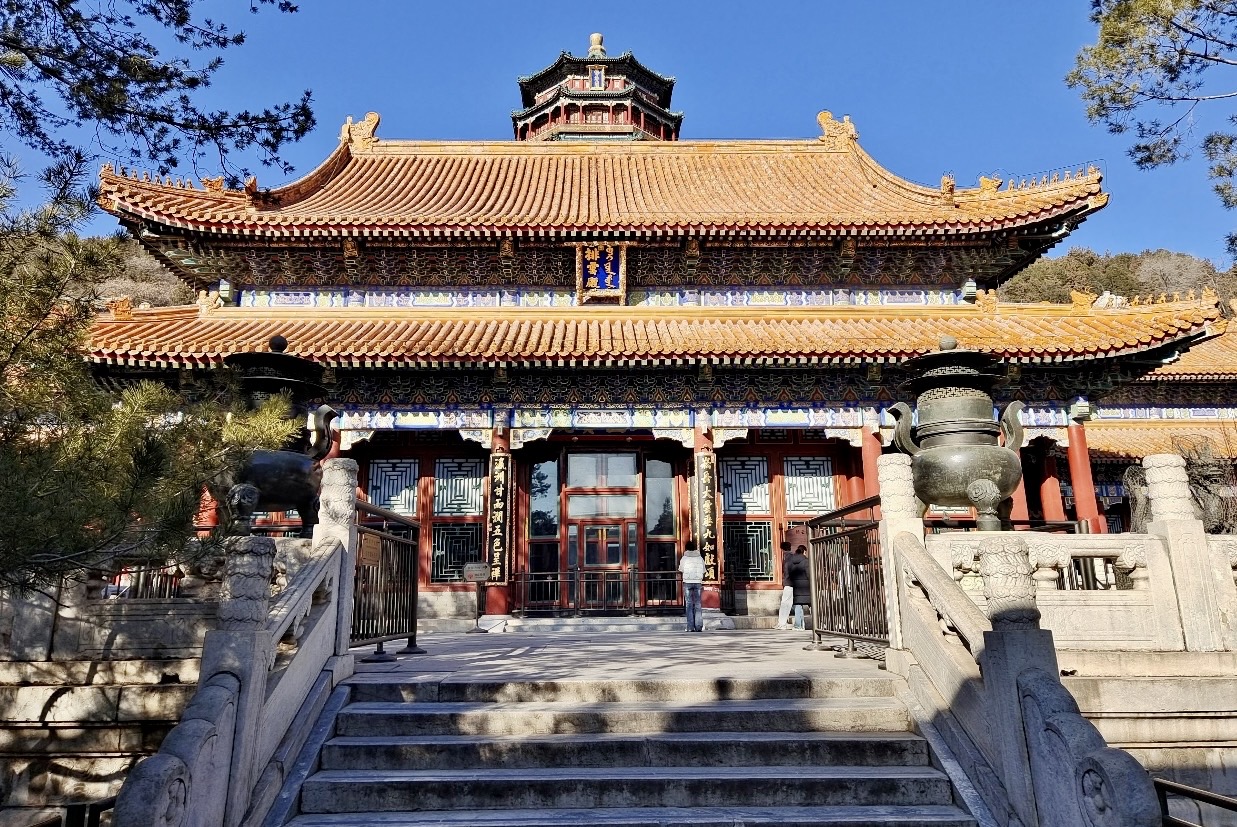
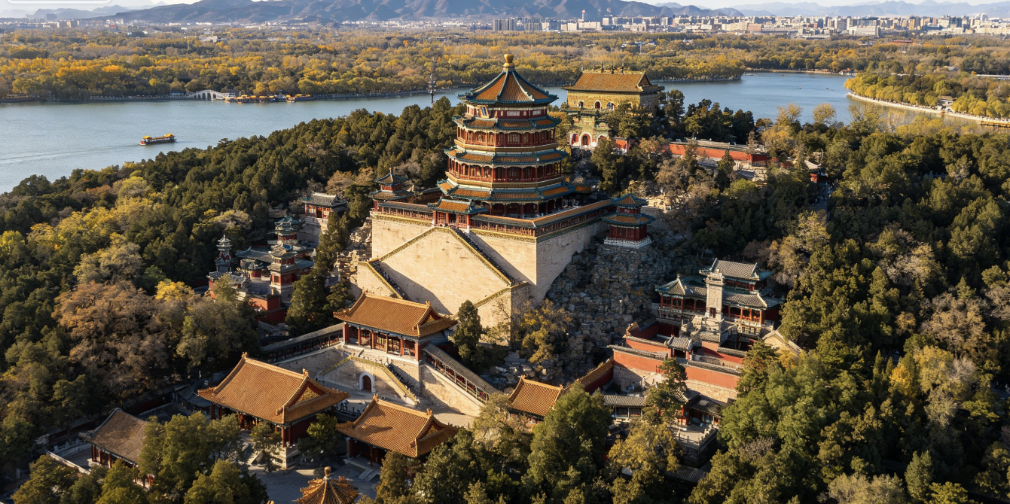
These three structures form the central complex ascending from south to north along Longevity Hill's central axis. The Hall of Dispelling Clouds (Paiyun Dian) occupies the lower section. Originally the "Great Temple of Repaying Kindness and Extending Longevity," it was converted into a ceremonial hall by Cixi, named after a line by poet Guo Pu: "immortals emerge from the clouds, revealing halls of gold and silver." Its throne was used for Cixi's birthday celebrations. The Tower of Buddhist Incense (Foxiang Ge) stands on a 21-meter stone platform mid-hill—a three-tiered, four-eave octagonal tower 36.44 meters tall, the iconic landmark of the Summer Palace. Inside is a Ming Dynasty bronze Thousand-Handed Guanyin, five meters tall. The Sea of Wisdom (Zhihui Hai) crowns the hilltop, a beamless hall built entirely of multicolored glazed tiles with embedded Buddha images, meaning "the Buddha's wisdom is as vast as the sea." As the highest point, it offers panoramic views of Kunming Lake.

Marble Boat · 石舫

🎧 In app
Marble Boat

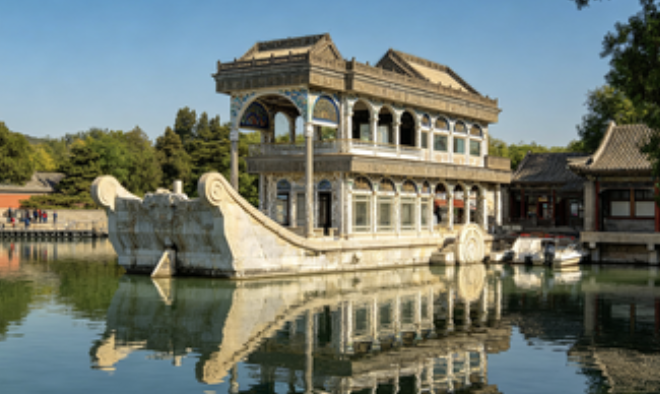
The Marble Boat (Qingyan Fang, "Boat of Purity and Peace") stands at the western end of the Long Corridor on the shore of Kunming Lake. Built in 1755 during the Qianlong reign, it is the largest surviving ancient stone boat-shaped garden structure in China. Carved entirely from massive stone blocks, it measures 36 meters long. The hull is made of grey stone, while the cabin was originally wood, combining Western stained-glass windows with a traditional Chinese gabled roof, reflecting the Qianlong era's fusion of Chinese and Western aesthetics. According to legend, Emperor Qianlong drew on the classical admonition by Tang minister Wei Zheng—"water can carry a boat, but can also overturn it"—using the stone boat to symbolize the eternal, unshakeable stability of the Qing Empire. The cabin was burned by Anglo-French forces in 1860 and rebuilt in 1893 with its current marble patterns and decorative tiles. The Marble Boat is a visual focal point of the western lake area and a classic photo landmark.

Kunming Lake · 昆明湖

🎧 In app
Kunming Lake

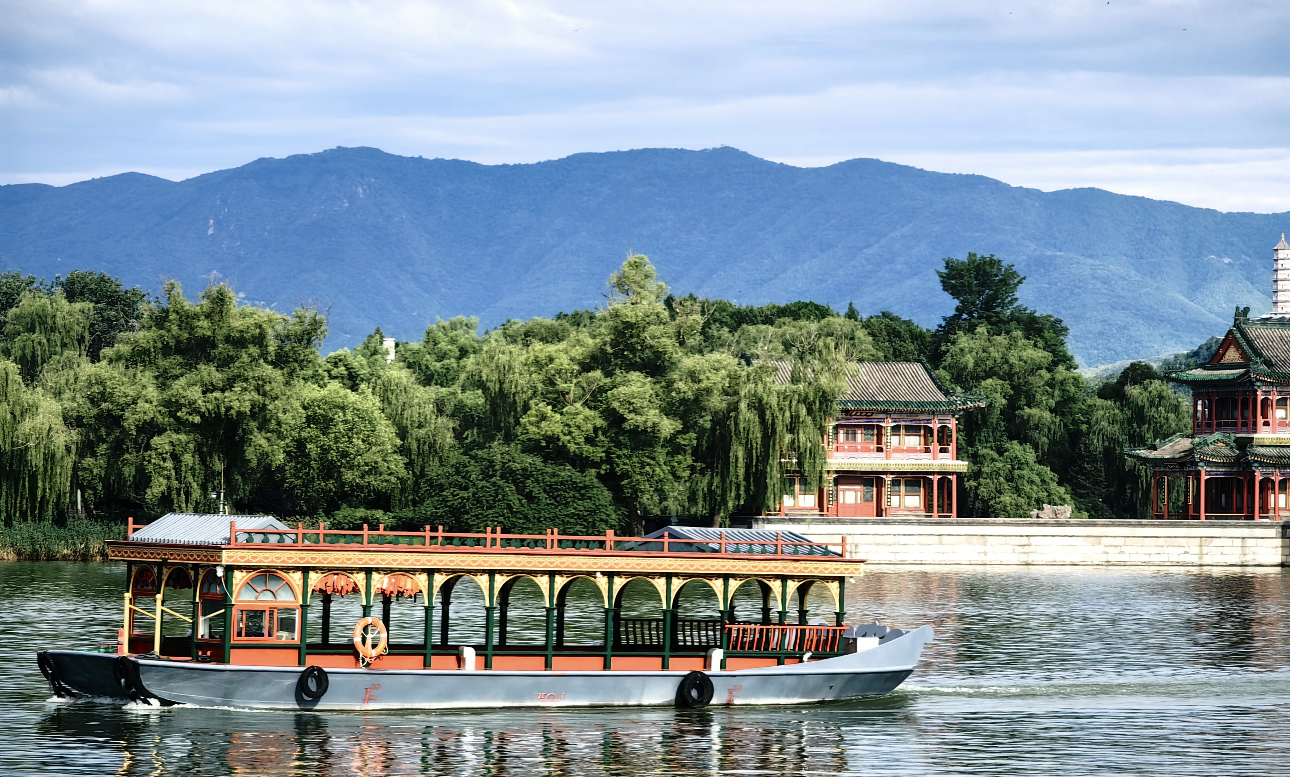
Kunming Lake is the core water body of the Summer Palace, covering 220 hectares—three-quarters of the total park area—and is the largest artificial lake in Beijing. Fed by springs from Yuquan Mountain and Wengshan Lake, it was dredged and expanded in 1750. Emperor Qianlong named it after the Kunming Pool that Emperor Wu of Han dug in Chang'an to train his navy. With Longevity Hill as its backdrop, the lake is divided into three zones: East Lake, West Lake, and North Lake. The West Causeway with its six bridges imitates the Su Causeway of West Lake in Hangzhou, lined with peach and willow trees, evoking the misty charm of Jiangnan. The lake shimmers in every season—lotus blooms in summer, reeds sway in winter. Visitors can take painted boats to cruise the lake and experience the grandeur of the imperial garden from the water.

Seventeen-Arch Bridge and South Lake Island · 十七孔桥与南湖岛

🎧 In app
Seventeen-Arch Bridge and South Lake Island

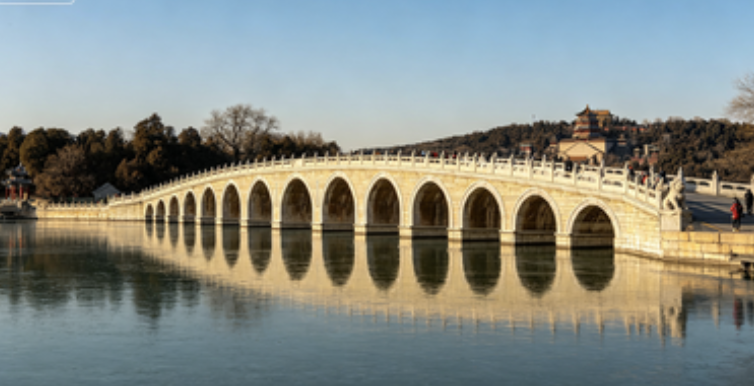
The Seventeen-Arch Bridge spans from the East Causeway to South Lake Island on Kunming Lake, built during the Qianlong reign (1736–1795). It is 150 meters long and 8 meters wide, with 17 arches. The arch count derives from the number nine—the supreme yang number—with nine arches on each side of the central arch, symbolizing imperial supremacy. The bridge is built of white marble, and its railings are carved with 544 stone lions in diverse postures—more than the Marco Polo Bridge—each vividly rendered. Stele pavilions and a bronze ox stand at the east and west ends. South Lake Island, at the center of Kunming Lake, symbolizes Penglai, the immortal isle of Eastern Sea legend. Buildings on the island include the Hanxu Hall and Dragon King Temple, where the imperial family viewed the lake and worshipped the Dragon King. Around the winter solstice, the setting sun shines through the bridge arches, creating the spectacular "Golden Light through the Arches" phenomenon that draws countless visitors and photographers.

Bronze Ox · 铜牛

🎧 In app
Bronze Ox

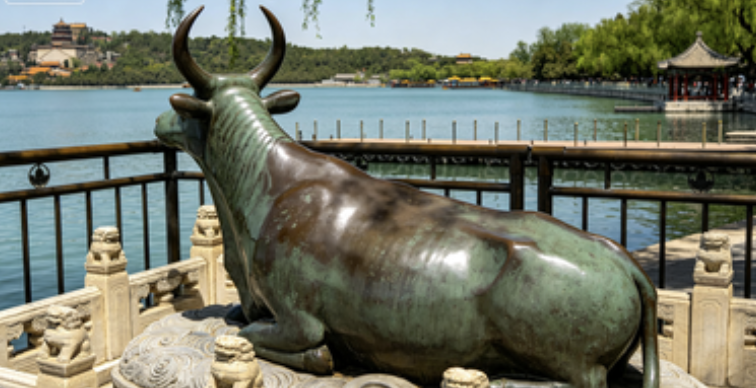
The Bronze Ox stands on the eastern shore of Kunming Lake, north of the Seventeen-Arch Bridge. Cast in 1755 during the Qianlong reign, it is a reclining bronze ox measuring 1.75 meters long, 0.8 meters wide, and 1.15 meters high. It lies on a stone base with head raised, lifelike and masterfully crafted. An 80-character inscription in seal script, the "Golden Ox Inscription" composed by Emperor Qianlong, is carved on its back, recording the reason for casting and the emperor's prayers. It follows the ancient tradition of using iron oxen to suppress floods. Qianlong compared Kunming Lake to the Milky Way and the bronze ox to the Altair star, expressing his wish for favorable weather and a peaceful realm. The ox complements Longevity Hill and Kunming Lake, serving as both a guardian spirit of the imperial garden and an important witness to Chinese hydraulic culture.

Newly Built Palace Gate · 新建宫门

🎧 In app
Newly Built Palace Gate

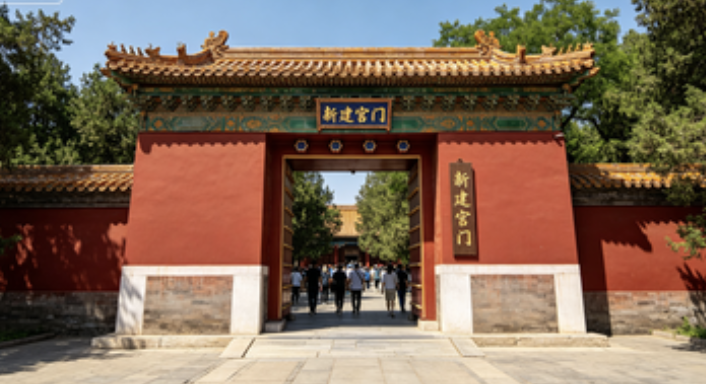
The Newly Built Palace Gate (Xinjiangongmen) is the South Gate of the Summer Palace, constructed during the Guangxu reign. It was named for being built later than the East Palace Gate and other entrances. The gate has three bays with a gabled roof and front and rear corridors. Though less grand than the East Palace Gate, its open foreground offers one of the best vantage points for viewing Kunming Lake and the Seventeen-Arch Bridge. It is a key portal for the circular lake tour: heading north along the East Causeway leads to the Bronze Ox, Seventeen-Arch Bridge, and South Lake Island, while heading west along the West Causeway's six bridges evokes the scenery of Hangzhou's West Lake. Arriving here, looking back at the tiered pavilions of the Tower of Buddhist Incense on Longevity Hill and the vast expanse of Kunming Lake, the magnificent synthesis of garden art is fully revealed. As the final stop, this gate is not merely an entrance or exit, but a fond farewell to centuries of history and culture.

Get the app

The tool solved one problem. The app handles the whole trip.

Per-trip visa judgements, audio guides, prep checklists, and a real human concierge — offline-ready, in your language.

Download for iPhoneFree to download · No OTA upsells