← Beijing

Beijing · 天坛

Temple of Heaven

🎫 Ticket 15 / 10 RMB
🕘 Opening Hours 06:00–21:00
🚇 Metro Metro Line 5, Tiantan East Gate Station
📍 Address No. 7 Tiantan Neidong Li, Dongcheng District, Beijing (east side of Yongdingmen Inner Street) Map ↗
🎧 5 audio walking guides for Temple of Heaven — listen on the spot in the YOLO HAPPY app. →

Inside Temple of Heaven

Circular Mound Altar · 圜丘坛

🎧 In app
Circular Mound Altar

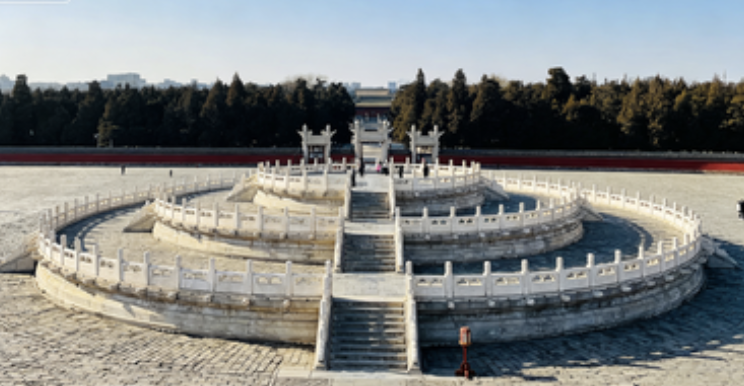
The Circular Mound Altar is the core sacrificial structure in the southern part of the Temple of Heaven, first built in 1530 (Jiajing 9) and expanded in 1749 (Qianlong 14). It is a three-tiered open-air circular stone platform constructed entirely of white marble; the number of balustrade panels and steps on each tier is always nine or a multiple of nine—the supreme yang number symbolizing the highest authority of the Lord of Heaven. At the centre of the top tier lies a round "Heart of Heaven" stone; speaking from it, sound waves reflect from the surrounding balustrades and converge back, creating a startling amplification as if Heaven itself replies. Two concentric enclosure walls surround the altar—inner circular, outer square—echoing the ancient cosmology of "round heaven, square earth." At dawn on the winter solstice the emperor conducted the grand sacrifice, burning offerings and reading prayers with solemn reverence. Though roofless, the altar expresses awe and understanding of Heaven through pure geometry and number—the pinnacle of Chinese ritual architecture.
Imperial Vault of Heaven & Echo Wall · 皇穹宇与回音壁

🎧 In app
Imperial Vault of Heaven & Echo Wall

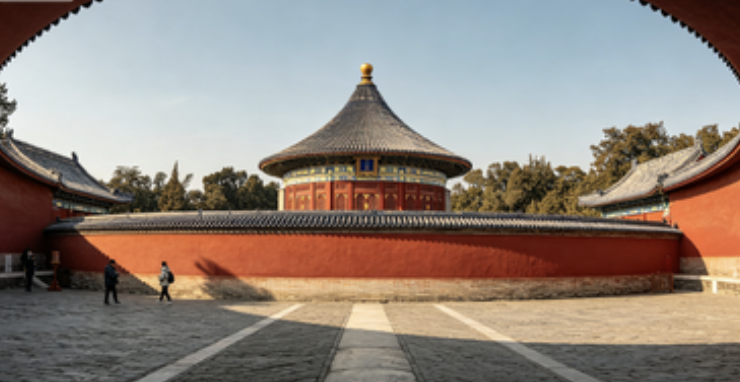
The Imperial Vault of Heaven stands north of the Circular Mound Altar, first built in 1530 (Jiajing 9) and rebuilt in 1752 (Qianlong 17). It is the hall where the tablet of the Lord of Heaven and ancestral spirit tablets were stored. A single-eaved circular structure with a conical roof under blue glazed tiles, it rises from a round stone platform—delicate and graceful, just 15.6 m in diameter yet displaying the sacred imagery of the celestial vault through perfect proportion and colour. The interior dome is beamless and columnless, supported entirely by intricate bracket sets—a masterwork of timber engineering. The circular enclosing wall outside is the celebrated Echo Wall—3.72 m high, 0.9 m thick, 195.2 m in circumference, with a triple-arched glazed doorway on each side. If two people stand at the rear of the east and west side halls and whisper against the wall, sound waves propagate along the smooth surface by successive reflection, and each hears the other clearly as though conversing across the wall—an acoustic analogue of optical reflection, a serendipitous masterpiece of ancient Chinese construction. The courtyard also contains "Three-Sound Stones"—clapping on them yields three echoes, adding further wonder.

Danbi Bridge (Sacred Way Bridge) · 丹陛桥

🎧 In app
Danbi Bridge (Sacred Way Bridge)

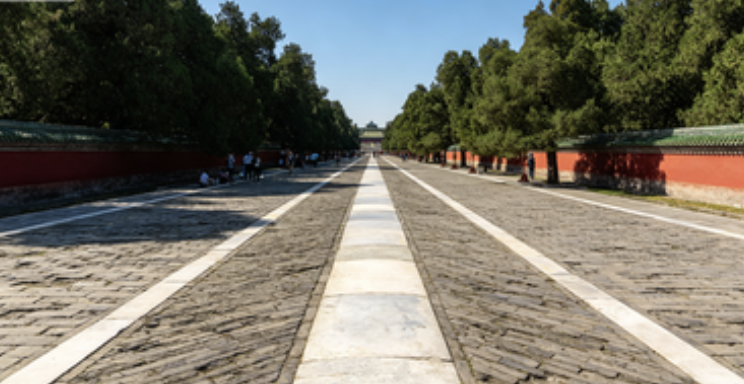
Danbi Bridge is the most prominent passageway on the Temple of Heaven's central axis, running from the Circular Mound Altar's north gate to the Hall of Prayer's south gate—about 360 m long and 28 m wide, paved in three parallel stone strips. The highest, central strip is the "Spirit Way," reserved for the tablet of the Lord of Heaven; the eastern strip is the "Imperial Way" for the emperor; the western is the "Princes' Way" for nobles and ministers—strict hierarchy, no trespassing. The surface rises gradually from south to north, symbolizing step-by-step ascent from the human realm toward heaven; walking it truly induces a sense of looking up at the sky with reverent awe. Ancient cypress trees flank both sides, centuries old, canopying like umbrellas—solemnity enriched by verdant vitality. Though called a "bridge," it is actually an elevated road rising 4 m above ground; beneath it ran a passage for sacrificial animals—a clever design. The entire sacred way, like a dragon's spine running north-south, binds the Circular Mound Altar and the Hall of Prayer into one ritual whole, the core axis of the Temple of Heaven's ceremonial space.

Hall of Prayer for Good Harvests · 祈年殿

🎧 In app
Hall of Prayer for Good Harvests

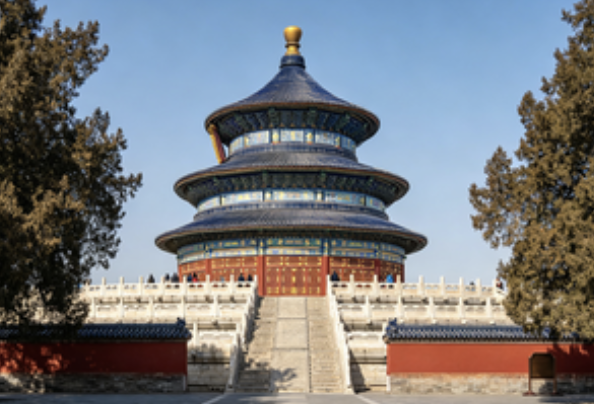
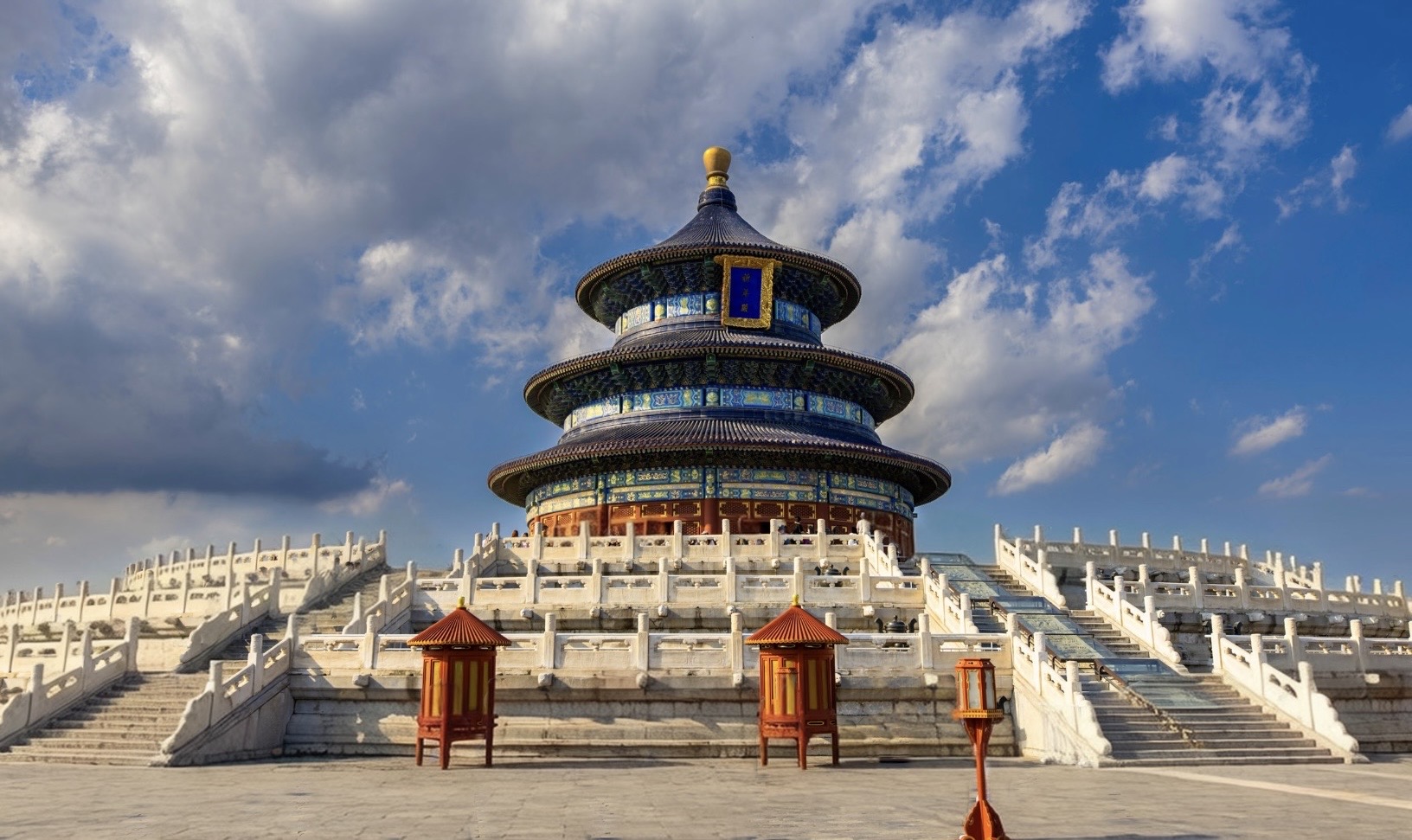
The Hall of Prayer for Good Harvests is the main hall in the northern part of the Temple of Heaven and its visual soul. First built in 1420 (Yongle 18) as "Great Sacrifice Hall," renamed "Great Offering Hall" under Jiajing, and given its present name in 1751 (Qianlong 16). It is a triple-eaved circular structure with a conical roof under blue glazed tiles, standing on a three-tiered white-marble circular platform—about 38 m high and 32 m in diameter. The interior is a structural marvel: 28 nanmu columns carry the dome without beams or nails, relying on mortise-and-tenon joints and bracket sets rising tier by tier. The inner ring of four "Dragon Well" columns symbolizes the four seasons; the middle ring of twelve "Golden" columns symbolizes the twelve months; the outer ring of twelve "Eave" columns symbolizes the twelve double-hours; the total of 28 implicitly echoes the twenty-four solar terms—space is time, building is cosmos. At the centre stands the tablet of the Lord of Heaven; on the first sin day of the first lunar month the emperor held the Praying-for-Harvest ceremony here, beseeching abundant crops. With its perfect circle, blue dome and ingenious structure, the Hall has become the symbol of Chinese ancient architecture and one of the most recognizable Chinese images among World Heritage sites.

North Gate · 北门

🎧 In app
North Gate

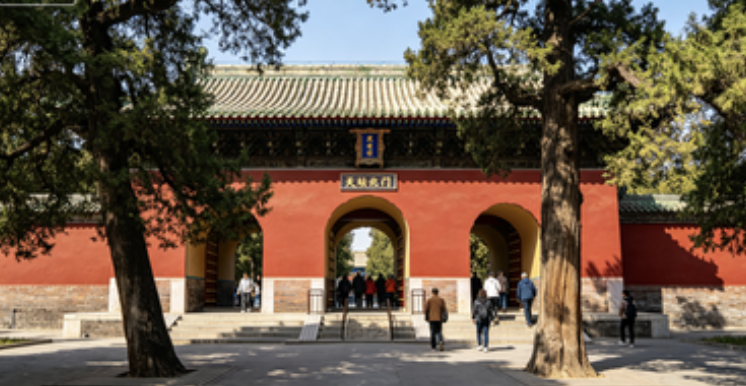
The North Gate sits on the park's north side, one of the main access points for the Hall of Prayer precinct. Its classical style features red walls and grey tiles; outside, ancient cypresses tower, their shade dense, seamlessly extending the park's landscape. Positioned close to the Hall of Prayer, exiting here after visiting the Hall is most convenient—no need to retrace southward. The path outside continues through a cypress grove, the air fragrant with pine and cedar; in spring blooming locust trees scent the whole approach. Walking east about 10 minutes from the gate reaches Subway Line 5's Tiantan East Gate station; west about 15 minutes reaches Qianmen Street and Tiananmen Square—prime positioning for connecting to other central-axis landmarks. Though less bustling than the East or West Gates, its quiet antiquity underscores the Temple's solemn character, a perfect finale to the visit.

Get the app

The tool solved one problem. The app handles the whole trip.

Per-trip visa judgements, audio guides, prep checklists, and a real human concierge — offline-ready, in your language.

Download for iPhoneFree to download · No OTA upsells