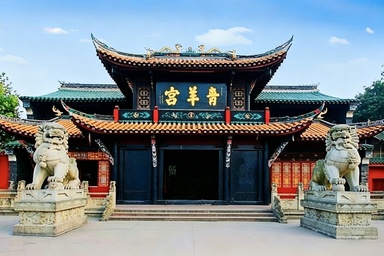
← Chengdu

Chengdu · 青羊宫

Qingyang Palace

🎫 Ticket ¥10 per person
🚇 Metro Take Metro Line 5 to Qingyang Palace Station, exit at Exit C (or Exit D), about 100 meters' walk
🕐 Duration Summer (April 1 – October 31): 8:00–18:00, last entry at 17:30
🕐 Duration Winter (November 1 – March 31): 8:00–17:30
📍 Address No. 9, West Second Section, First Ring Road, Qingyang District, Chengdu, Sichuan Province Map ↗
🎧 11 audio walking guides for Qingyang Palace — listen on the spot in the YOLO HAPPY app. →

Inside Qingyang Palace

Main Gate (Front Gate) · 正门

🎧 In app
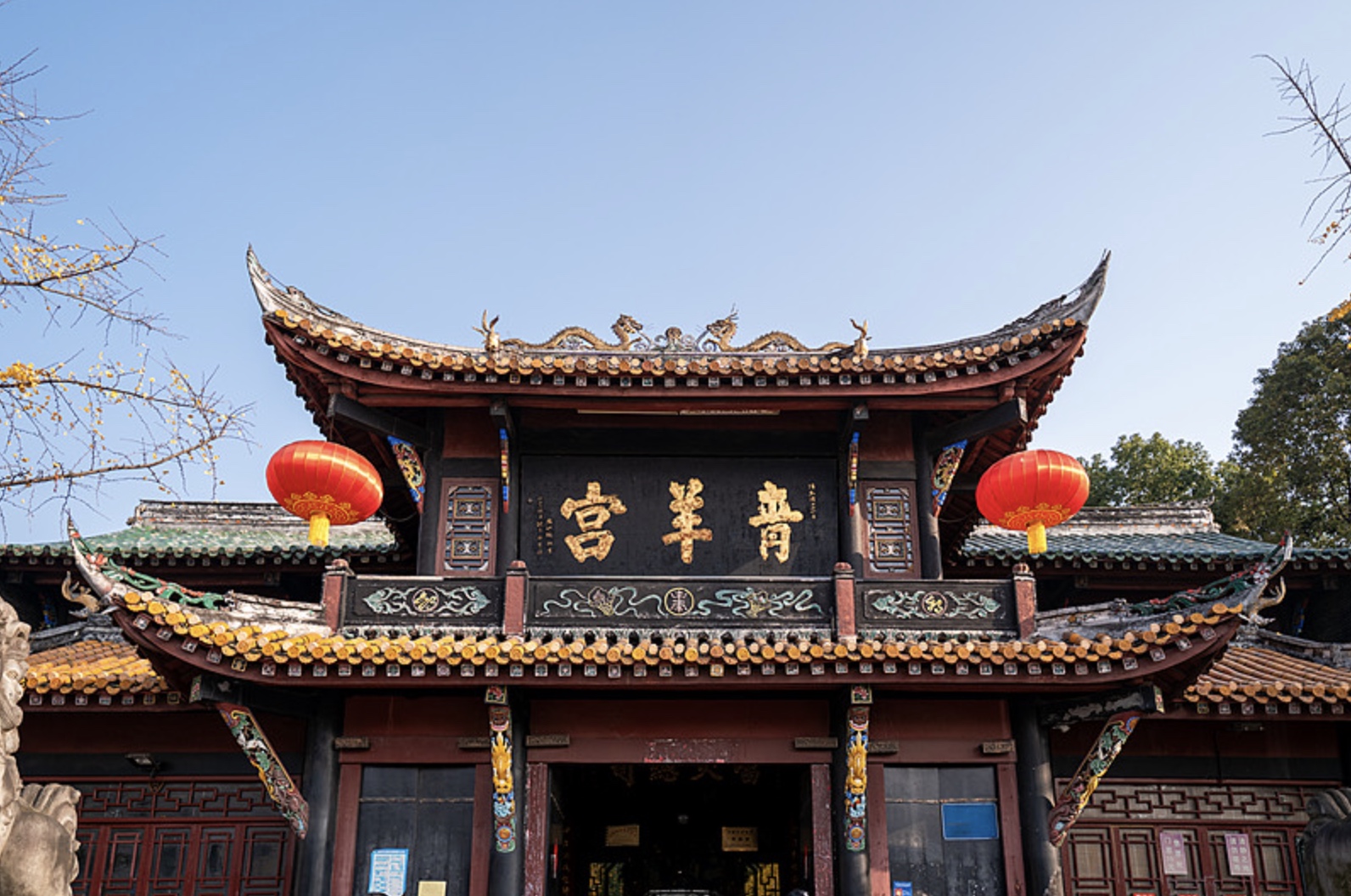
Main Gate (Front Gate)

The Main Gate is the formal entrance of the Chengdu Qingyang Palace, located on the south side of the west section of the First Ring Road, facing the city's main road, and is magnificent. The main gate is a three-bay imitation of the official Ming and Qing style archway building, the main body is built of green bricks, covered with gray tiles and flying eaves, and the lintel has the three gilded characters "Qingyang Palace" hanging high, vigorous and simple. On both sides of the gate stands a stone carved green sheep - this is the origin of the name of Qingyang Palace: according to legend, when Laozi rode the green ox through Hangu Pass, he said "Find me in Chengdu Qingyang Market a thousand days later", and the Tang Dynasty built the temple here based on this legend. In front of the gate, the square is filled with curling incense and a crowd of visitors, and pilgrims often stop here to burn incense and pay their respects. Stepping into the main gate, you enter the outer altar area of Qingyang Palace, and you can successively pass through the Mountain Gate, Lingzu Hall, Hunyuan Hall, Bagua Pavilion, Sanqing Hall, Doumu Hall, Jade Emperor Hall and other main halls, with the central axis being symmetrical and progressive layer by layer, creating a solemn and sacred ceremonial sense of the traditional Chinese Taoist temple. The main gate is open all day, and buying a ticket to enter the park is the standard starting point for visiting Qingyang Palace.
Mountain Gate (Temple Gate) · 山门

🎧 In app
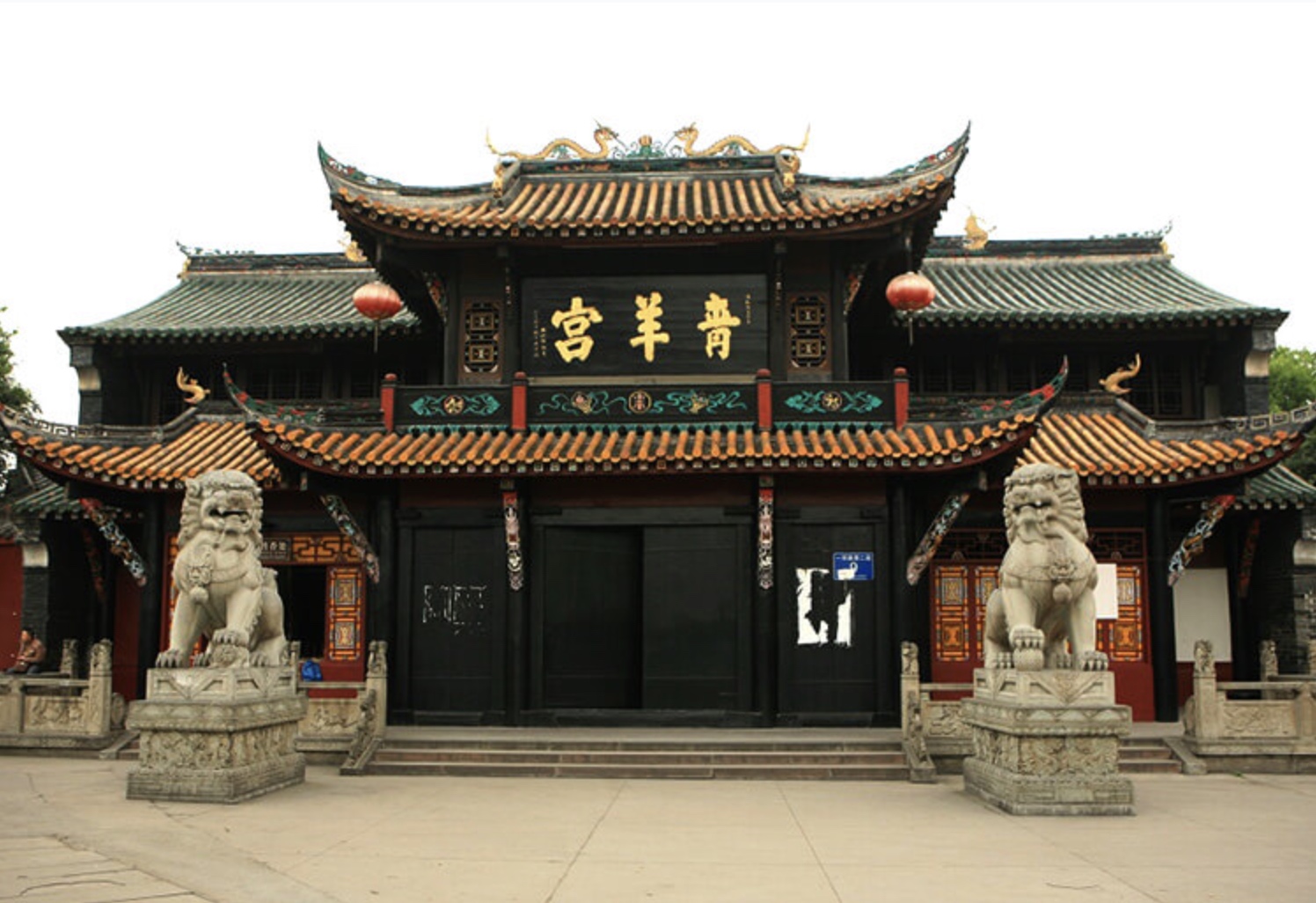
Mountain Gate (Temple Gate)

The Mountain Gate is the first hall-style gate after the main gate in Qingyang Palace, located between the main gate and the Lingzu Hall, and is the first gate for visitors to enter the core sacrificial area of Qingyang Palace. The Mountain Gate is a single-eave Xieshan-style building, with gray tube tile roof and vermilion red door panels, and the ridge is decorated with Taoist-style chiwen ridge beasts. The four gilded characters "Purple Air Comes from the East" are hung high on the lintel - the allusion comes from the "Liexian Zhuan" (Biographies of Immortals) in which Laozi rode the green ox westward through Hangu Pass, and Guan Ling Yinxi saw the purple air coming from the east, which is in line with the core legend of Qingyang Palace's "Laozi's Transformation into a Barbarian". On both sides of the gate stands a majestic stone lion, male on the left and female on the right, symbolizing the guardianship and majesty of the Taoist temple. In front of the gate, you can often see traces of men and women burning incense and paper on the floor tiles, and the air is filled with the sandalwood and the unique ancient atmosphere of the temple. The mountain gate has the ceremonial significance of "separating the secular from the sacred" in the architectural pattern of the Taoist temple. Crossing the mountain gate, you will officially enter the altar area of Qingyang Palace, and visitors should keep quiet and respect religious etiquette here. The mountain gate itself does not have a separate hall, but on both sides there are often drum towers and bell towers standing symmetrically, making it an important ceremonial space node in Qingyang Palace.

Lingzu Hall (Patriarch Hall) · 灵祖殿

🎧 In app
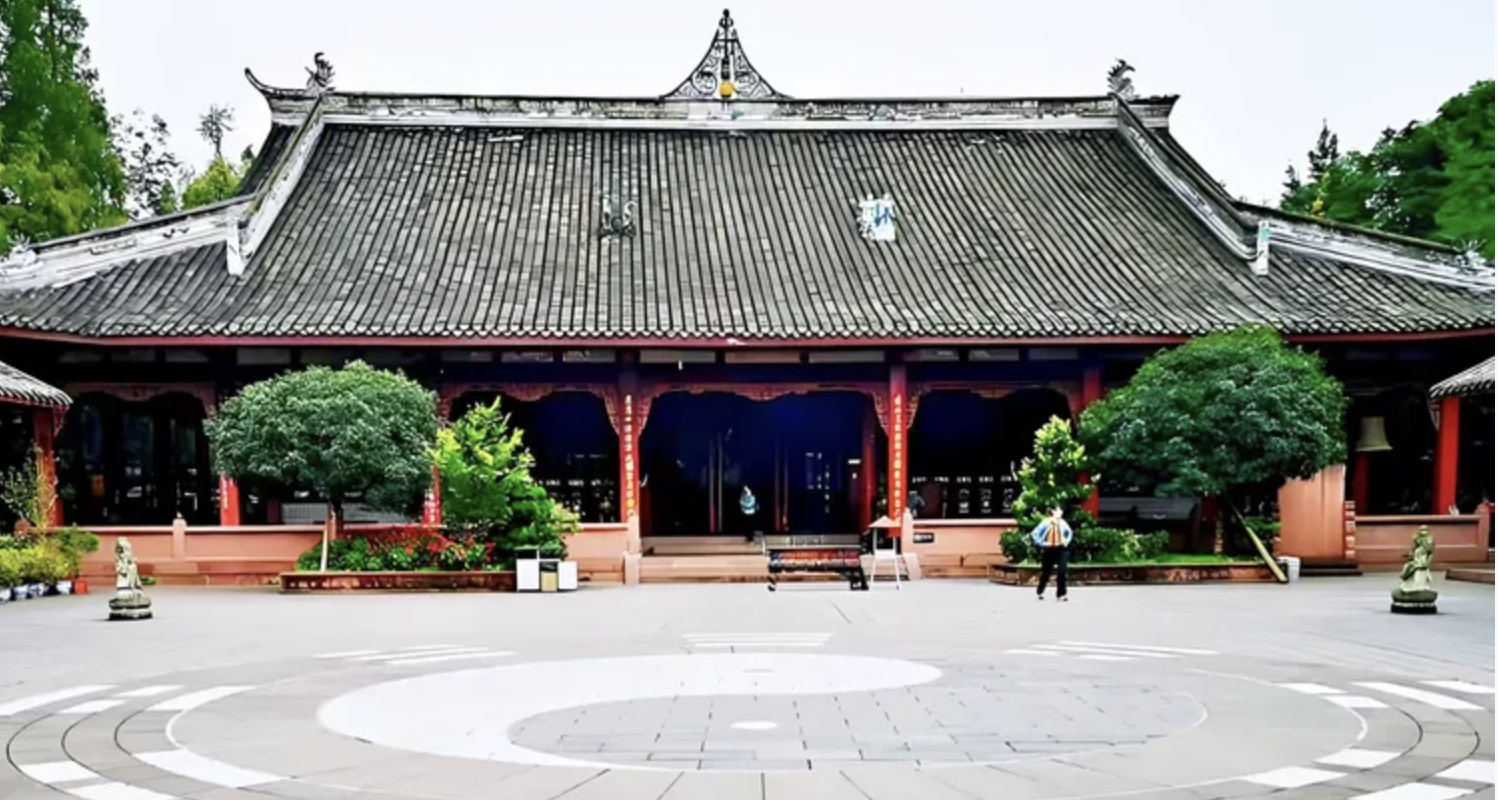
Lingzu Hall (Patriarch Hall)

The Lingzu Hall is located after the Mountain Gate and before the Hunyuan Hall, and is the first main hall on the central axis of Qingyang Palace, as well as the first large hall that visitors see after entering the core sacrificial area of Qingyang Palace. The Lingzu Hall is a single-eave Xieshan-style brick and wood structure, with gray tiles, red walls, flying eaves, five bays wide, and a solemn atmosphere. The main worship in the hall is the Taoist "Sanqing" one of the "Lingbao Tianzun" (Heavenly Worthy of Spiritual Treasure), also known as "Shangqing Lingbao Tianzun", one of the highest deities in Taoism. The two sides of the Lingzu Hall are often accompanied by Taoist Dharma protector generals, with various shapes and exquisite painted statues. In front of the hall, there is a large incense burner, where pilgrims and visitors burn incense to worship and pray for blessings. The Lingzu Hall plays a transitional role in the overall architectural pattern of Qingyang Palace - it not only continues the "separation of secular and sacred" of the mountain gate, but also paves the way for the rituals of the Hunyuan Hall, Sanqing Hall and other main halls behind. The plaques and couplets inside and outside the hall are mostly written by famous Qing dynasty calligraphers, containing rich Taoist cultural connotations. The Lingzu Hall has been bustling with incense all year round, and is an important place to experience the Taoist atmosphere of Qingyang Palace and understand Taoist etiquette.

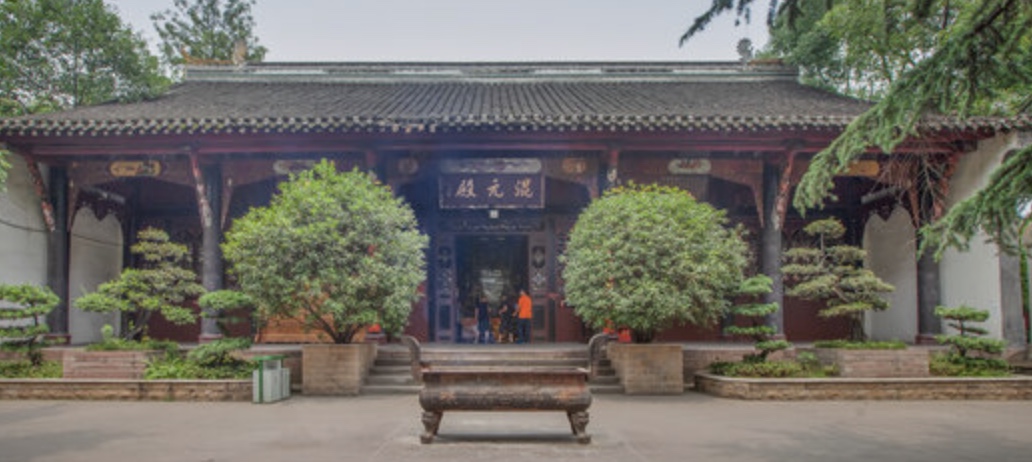
Hunyuan Hall (Primordial Chaos Hall) · 混元殿

🎧 In app
Hunyuan Hall (Primordial Chaos Hall)

The Hunyuan Hall is located after the Lingzu Hall and before the Bagua Pavilion, and is the second main hall on the central axis of Qingyang Palace. The Hunyuan Hall was first built in the Ming Dynasty and rebuilt during the Kangxi period of the Qing Dynasty. It is one of the oldest and most historically valuable halls in Qingyang Palace. The word "Hunyuan" comes from the Taoist classic "Dao De Jing" (Tao Te Ching) "The Tao gives birth to one, one gives birth to two, two gives birth to three, three gives birth to all things" cosmology, symbolizing the original state of heaven and earth not yet divided and chaos at the beginning. The main deity in the hall is the "Dao De Tianzun" (Heavenly Worthy of the Way and its Virtue), one of the "Sanqing" in Taoism, i.e. Laozi Li Er, the philosopher of the Spring and Autumn Period. In the center of the hall, a bronze statue of Laozi is enshrined, holding a ruyi in his left hand and pressing his knee with his right hand, looking peaceful. The statue of Laozi is one of the treasures of Qingyang Palace, and it is said that on the 15th day of the second lunar month, the birthday of Laozi, a grand birthday ceremony will be held in the palace. The Hunyuan Hall is a single-eave Xieshan-style building, with exquisite Taoist ridge beasts on the roof, and the wood carvings, brick carvings and stone carvings inside and outside the hall are exquisite, integrating the architectural aesthetics of the Ming and Qing dynasties. In front of the Hunyuan Hall, Taoists often chant sutras and confess here, which is an important place to experience the core connotation of the Taoist culture of Qingyang Palace.

Bagua Pavilion (Eight Trigrams Pavilion) · 八卦亭

🎧 In app
Bagua Pavilion (Eight Trigrams Pavilion)

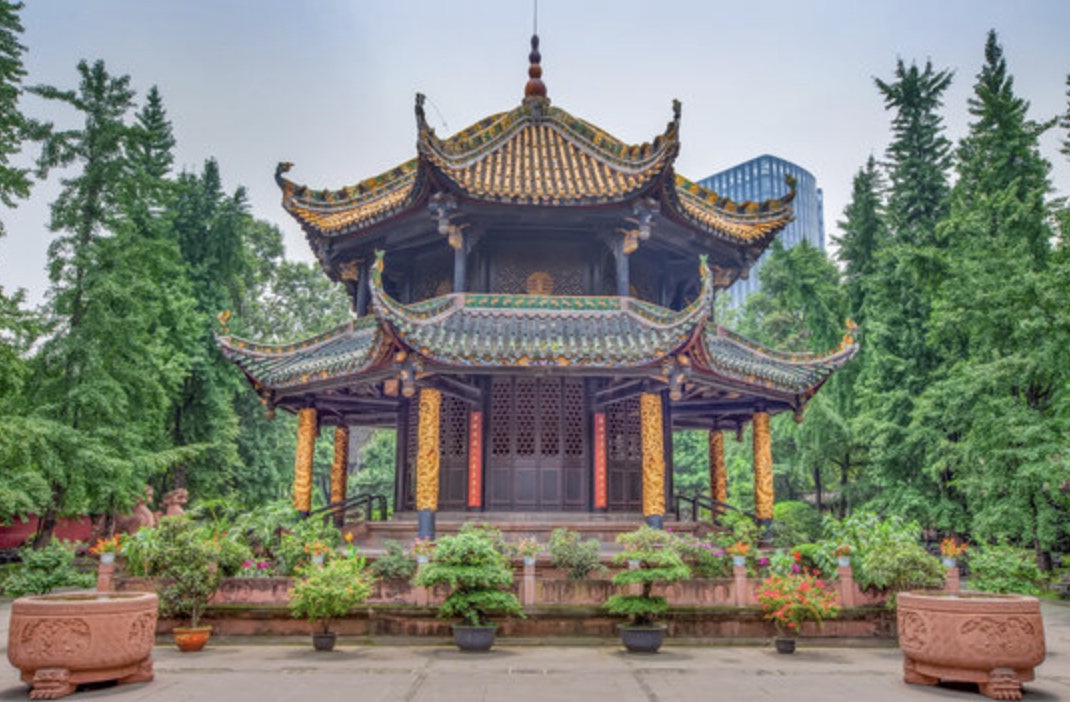
The Bagua Pavilion is located after the Hunyuan Hall and before the Sanqing Hall, and is one of the most iconic buildings in Qingyang Palace, as well as a perfect combination of the architectural art and Taoist philosophy of Qingyang Palace. The Bagua Pavilion is a double-eave octagonal pyramidal building, and the body of the pavilion is mainly decorated with green glazed tiles - the eight sides of the pavilion roof and the eight sides of the pavilion body correspond to the eight trigrams of Qian, Kun, Zhen, Xun, Kan, Li, Gen and Dui. The center of the pavilion roof is a black and white Taiji diagram, with the Yin and Yang fish of the Taiji embracing and rotating, symbolizing the cosmic evolution of "The Tao gives birth to one, one gives birth to two, two gives birth to three, three gives birth to all things". The whole Bagua Pavilion has a unique shape and elegant color, the green glazed tiles shine in the sun, forming a sharp contrast with the surrounding red walls and gray tiles, and is a masterpiece of traditional Chinese Taoist temple architectural art. The pavilion originally enshrined a bronze statue of Laozi riding a green ox through Hangu Pass (which was moved to another place during some periods), which is the core cultural symbol of Qingyang Palace. The Bagua Pavilion is not only the visual "commanding height" of Qingyang Palace, but also carries the Taoist cosmology of "the unity of heaven and man" - visitors standing under the pavilion and looking up at the Taiji diagram can intuitively feel the core idea of "Tao follows nature" in Taoism. The square in front of the pavilion often hosts Taoist cultural exhibitions and Tai Chi performances, making it a must-visit place to experience the Taoist culture of Qingyang Palace.

Sanqing Hall (Three Pure Ones Hall) · 三清殿

🎧 In app
Sanqing Hall (Three Pure Ones Hall)

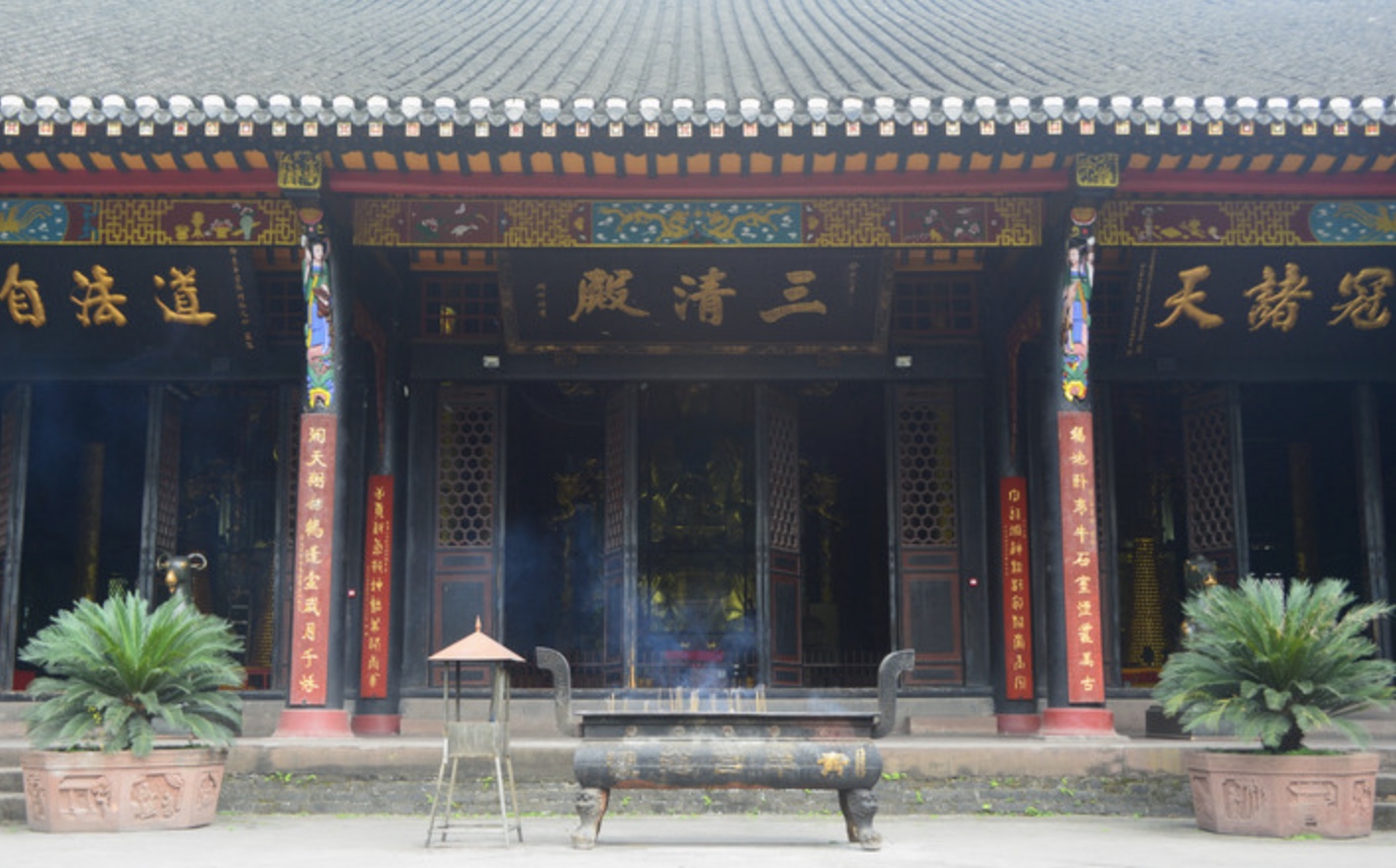
The Sanqing Hall is located after the Bagua Pavilion and before the Doumu Hall, and is the largest and most prestigious hall in Qingyang Palace, as well as the core main hall of the entire Qingyang Palace building complex. The Sanqing Hall is a large double-eave Xieshan-style brick and wood structure, with gray tiles, red walls, carved beams and painted rafters, magnificent and solemn. The main deities in the hall are the highest Taoist gods "Sanqing": Yuqing Yuanshi Tianzun (Heavenly Worthy of the Primordial Beginning), Shangqing Lingbao Tianzun (Heavenly Worthy of Spiritual Treasure), and Taiqing Dao De Tianzun (Heavenly Worthy of the Way and its Virtue, i.e. Laozi). The three pure ones sit side by side on a lotus platform, each Tianzun statue is several meters tall, with a peaceful expression and deep eyes. The plaque "Sanqing Hall" in the hall is written by a famous calligrapher in the Qing Dynasty, vigorous and powerful. The stone steps, moon platforms and railings in front of the Sanqing Hall are all carved from white marble, echoing the Taoist statues and painted murals in the hall, forming the most solemn and sacred sacrificial space in Qingyang Palace. Every year during major Taoist festivals such as the Spring Festival and the birthday of the Sanqing, a grand Zhaijiao ceremony will be held in front of the Sanqing Hall, which is the most concentrated place for Taoist cultural activities in Qingyang Palace. The Ming and Qing wood carvings, stone carvings and paintings inside and outside the hall are of high artistic value, and are precious objects for studying the history of Chinese Taoist architecture and art. The Sanqing Hall is the core place for visitors to understand Qingyang Palace and the highest deity system of Taoism. Visitors are advised to keep quiet and respect religious etiquette when visiting.

Doumu Hall (Mother of the Big Dipper Hall) · 斗姥殿

🎧 In app
Doumu Hall (Mother of the Big Dipper Hall)

The Doumu Hall is located after the Sanqing Hall and before the Jade Emperor Hall, and is one of the core halls on the central axis of Qingyang Palace. The Doumu Hall is a single-eave Xieshan-style brick and wood structure, with gray tiles, red walls, and a solemn atmosphere. The main deity in the hall is Doumu Yuanjun, also known as "Doumou Yuanjun", the highest goddess in the Taoist star worship system, who is in charge of the constellations in the sky, fertility and longevity in the mortal world. The image of Doumu Yuanjun is unique, with three faces and four heads, or three faces and eight heads, holding the sun and moon in her hands or holding the sun and moon beads, symbolizing her supreme divine power over the stars of the heavens. On both sides of the Doumu Hall are often accompanied by the "Big Dipper Seven Star Lords" - the statues of the seven star lords Tianshu, Tianxuan, Tianji, Tianquan, Yuheng, Kaiyang and Yaoguang. The Doumu Hall has a very high status in folk beliefs, and it is said that Doumu Yuanjun is one of the incarnations of the "Goddess of Child Giving", and pilgrims often pray here for offspring, health and longevity. Every year on the ninth day of the ninth lunar month, the birthday of Doumu, a grand blessing ceremony will be held in front of the hall. The Taoist statues and painted murals in the Doumu Hall are exquisite, and the stone and wood carvings outside the hall are exquisite. The Doumu Hall is a representative place to experience the Taoist star worship and female deity belief in Qingyang Palace, and is also a popular hall for visitors to pray and make wishes.

Jade Emperor Hall (Fu-Lu-Shou Screen Wall) · 玉皇殿(福禄寿照壁)

🎧 In app
Jade Emperor Hall (Fu-Lu-Shou Screen Wall)

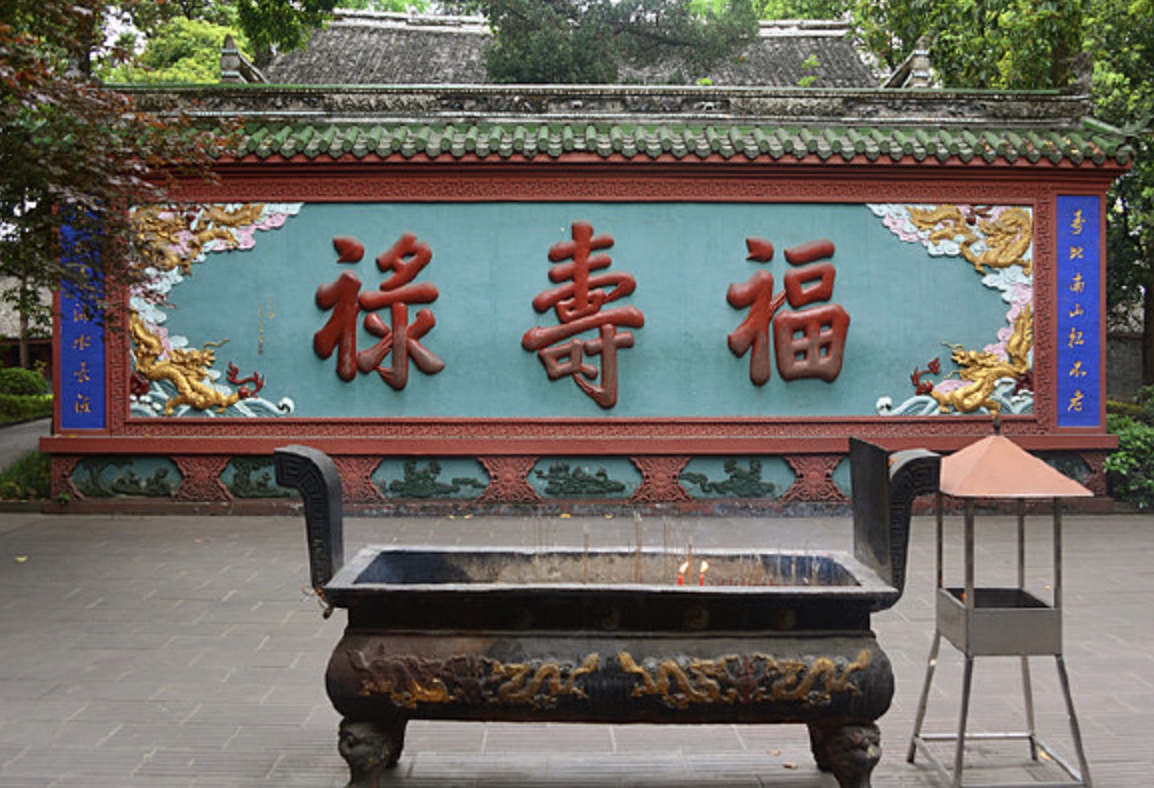
The Jade Emperor Hall is located after the Doumu Hall and before the Descent Birth Platform and Preaching Platform, and is the last main hall on the central axis of Qingyang Palace. The Jade Emperor Hall is a double-eave Xieshan-style brick and wood structure, with gray tiles, red walls and a grand scale. The main deity in the hall is the Jade Emperor - one of the highest deities in the Taoist pantheon, second only to "Sanqing", who is in charge of the three realms and ten directions, the master of all gods, so it is also called "Tiangong" (Lord of Heaven). In front of the Jade Emperor Hall is an exquisite screen wall called the "Fulu Shou Screen Wall", which is the most popular blessing check-in landscape in Qingyang Palace. The screen wall is built of green bricks, with the three characters "Fulu Shou" inlaid in the center. "Fu" represents good fortune and well-being, "Lu" represents fame and salary, and "Shou" represents longevity and well-being - the three characters together represent the three most simple and beautiful wishes of the Chinese people. The three characters "Fulu Shou" use the same late Qing dynasty blue and white porcelain fragment inlay technique as the "Caotang" Screen Wall of Du Fu Thatched Cottage. Craftsmen cut and polished hundreds of blue and white porcelain fragments and then inlaid them together. The blue and white porcelain fragments shine in the sun, which is an outstanding representative of late Qing folk craft. Many visitors queue up here to take photos and touch the word "Fu" to pray for good luck. The Jade Emperor Hall is the "finale" of the Qingyang Palace building complex, and a grand birthday ceremony will be held every year on the ninth day of the first lunar month, the birthday of the Jade Emperor.

Descent Birth Platform and Preaching Platform · 降生台与说法台

🎧 In app
Descent Birth Platform and Preaching Platform

The Descent Birth Platform and Preaching Platform are located after the Jade Emperor Hall and before the Purple Gold Platform, and are two commemorative buildings with profound cultural connotations in Qingyang Palace. The Descent Birth Platform is a commemorative building in Qingyang Palace for the birth of Laozi. According to legend, Laozi Li Er was born in Ku County, Chu State (now Luyi, Henan). In order to commemorate this "Taoist Master" and promote Taoist culture, the Taoists of later generations specially built this platform in Qingyang Palace. The Descent Birth Platform is a high platform built of green bricks, on which there were originally sculptures or murals on the theme of the birth legend of Laozi, some of which were lost due to age, but the platform base and pattern are still clearly visible, and it is an important part of the "Laozi's Transformation into a Barbarian" cultural narrative of Qingyang Palace. The Preaching Platform is adjacent to the Descent Birth Platform, built to commemorate Laozi's westward journey through Hangu Pass and his writing of the 5,000-character Tao Te Ching at the request of Guan Ling Yinxi. The platform originally had a statue of Laozi riding a green ox out of the pass with "purple air coming from the east" or related stone carvings, symbolizing the spread and dissemination of Taoist thought. The two platforms stand side by side in the east and west, complementing each other, and together tell the complete narrative of Laozi from birth, cultivation to the creation of Taoist philosophy, which is the core memorial space of the Taoist history and culture of Qingyang Palace. Visitors can stop here and deeply feel the philosophical mood of "Tao follows nature" and "do nothing and everything is done", which is a must-visit place to experience the deep connotation of the Taoist culture of Qingyang Palace.

Purple-Gold Terrace (Tang King Hall) · 紫金台(唐王殿)

🎧 In app
Purple-Gold Terrace (Tang King Hall)

The Purple Gold Platform, also known as the Tang King Hall, is located after the Descent Birth Platform and Preaching Platform, and is one of the most historically legendary commemorative buildings at the westernmost end of Qingyang Palace. The origin of the Purple Gold Platform is closely related to Emperor Xuanzong of Tang Li Longji: it is said that during the Anshi Rebellion (after 755 AD), Tang Xuanzong took refuge in Shu, once stayed in Qingyang Palace, and dreamed of Laozi appearing at night in the palace, telling him an omen of peace in the world. Tang Xuanzong, in gratitude for Laozi's kindness, ordered the rebuilding of Qingyang Palace and built the Purple Gold Platform here in commemoration. The Purple Gold Platform is a high-platform building built of green bricks, on which there were originally portraits or statues of Tang Xuanzong, some of which were lost due to age, but the platform base, steps and pattern are still clearly visible. In front of the platform, there are often stone inscription steles recording the legend of Tang Xuanzong's visit to Shu and the historical evolution of Qingyang Palace. The Purple Gold Platform has a "finale" status in the architectural pattern of Qingyang Palace - it is not only the end of the Taoist cultural narrative of Qingyang Palace (the spread of Laozi's thought), but also the node of the historical narrative of Qingyang Palace (Tang Xuanzong's visit to Shu), connecting the Taoist legend and historical truth. The Purple Gold Platform is often visited by tourists, and is a representative place in Qingyang Palace to understand the history of the Tang Dynasty and the interaction between emperors and Taoism. The whole Purple Gold Platform is not large in scale but has profound cultural connotations, and is the "finale" scenic spot on the tour route of Qingyang Palace.

Tea Garden and Laozhuang Academy (Lao-Zhuang Academy) · 茶园与老庄书院

🎧 In app
Tea Garden and Laozhuang Academy (Lao-Zhuang Academy)

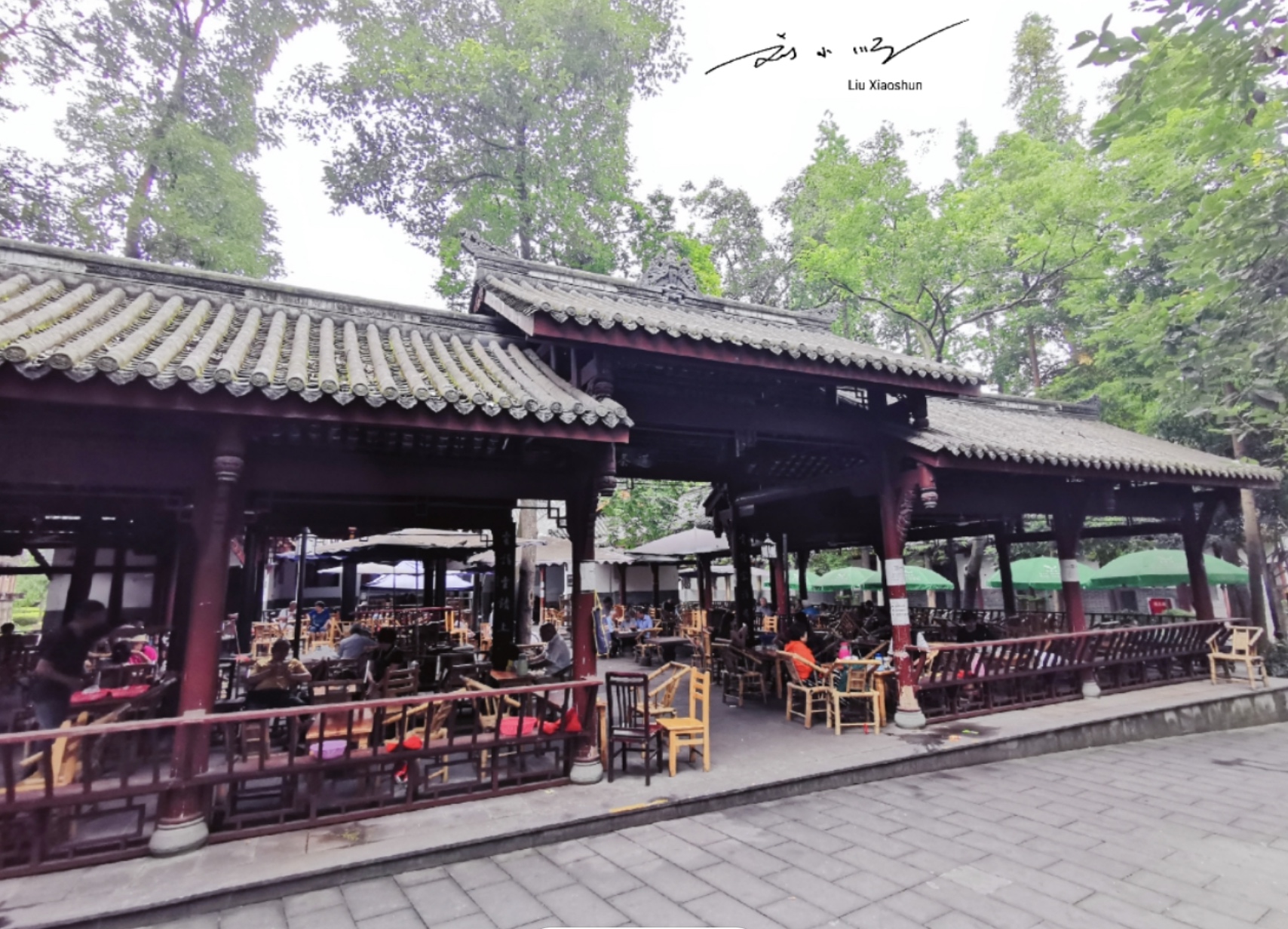
The Tea Garden and Laozhuang Academy are located in the middle and rear of the Qingyang Palace building complex, near the back gate of Qingyang Palace, and are the most leisurely characteristic cultural space in Qingyang Palace. The Tea Garden is a typical Sichuan-Western folk-style teahouse building, with green bricks, gray tiles, rattan chairs, bamboo tables, and green plants. The tea garden provides authentic Chengdu gaiwan tea (Bitan Piaoxue, Zhuyeqing, etc.), Sichuan-Western snacks (San Da Pao, Zhong Dumplings, Lai Tangyuan, Fuqi Feipian, etc.), Sichuan-style cold dishes and health tea. Visitors can rest in the tea garden after visiting the halls, brew a pot of tea, taste some snacks, listen to a section of Sichuan opera Qingyin, watch a tea art performance, and experience the most authentic "teahouse culture" in Chengdu. The Laozhuang Academy is adjacent to the tea garden and is a special academic space for displaying, researching and disseminating Taoist culture in Qingyang Palace. The academy is named after the two representative figures of Taoism - Laozi (Li Er) and Zhuangzi (Zhuang Zhou). The academy has a collection of Taoist classic versions such as the "Tao Te Ching" and "Zhuangzi", Taoist calligraphy stone inscriptions and rubbings from past dynasties, and books on Taoist culture research. The cloister outside the academy often has calligraphy exhibitions, displaying calligraphy works of famous Taoist articles. The Tea Garden and the Laozhuang Academy together form a "dynamic-static" combination of leisure and cultural system in Qingyang Palace - the halls are "dynamic" religious and cultural spaces, and the tea garden and academy are "static" cultural leisure spaces, allowing visitors to find a quiet place in the hustle and bustle of the city after pilgrimage and worship, and experience the "Taoist slow life".

Get the app

The tool solved one problem. The app handles the whole trip.

Per-trip visa judgements, audio guides, prep checklists, and a real human concierge — offline-ready, in your language.

Download for iPhoneFree to download · No OTA upsells