← Chengdu

Chengdu · 四川博物院

Sichuan Museum

🎫 Ticket Free
🕐 Duration Tuesday to Sunday 9:00–17:00, last entry at 16:00
❌ Closed Mondays (except public holidays)
🚇 Metro Line 5 to Qingyang Palace Station, Exit B, about 900 meters' walk - Line 4 to Caotang North Road Station, Exit B, about 15 minutes' walk - Line 4 to Chengdu University of TCM & Sichuan Provincial People's Hospital Station, Exit K, about 1.3 kilometers' walk
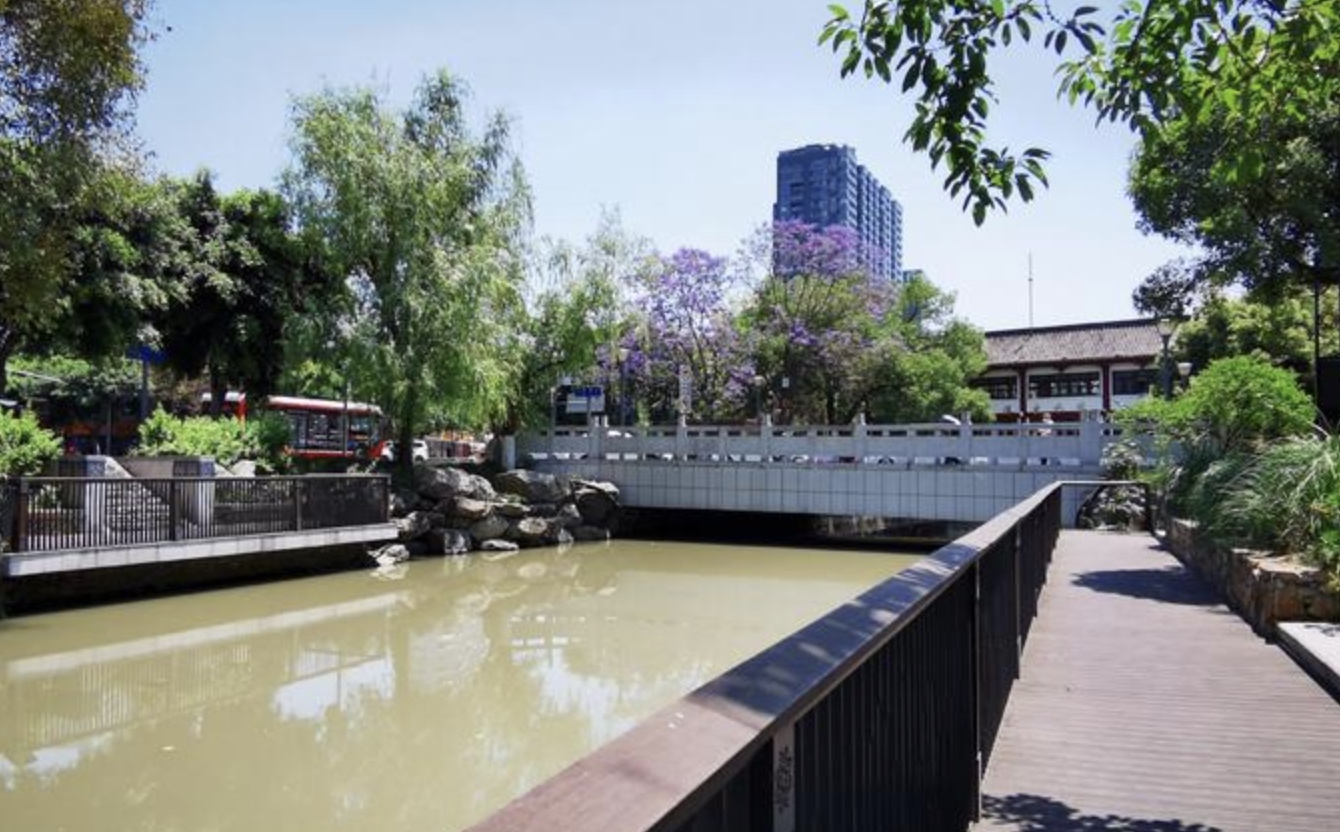
📍 Address No. 251 Huanhua South Road, Qingyang District, Chengdu, Sichuan Province (by Huanhua Stream, adjacent to Du Fu Thatched Cottage) - North Gate: No. 5 Qinghua Road - Southeast Gate: No. 251 Huanhua South Road Map ↗
🎧 13 audio walking guides for Sichuan Museum — listen on the spot in the YOLO HAPPY app. →

Inside Sichuan Museum

Main Entrance & Lobby (Chengdu Museum) · 正门与大厅(成都博物院)

🎧 In app
Main Entrance & Lobby (Chengdu Museum)

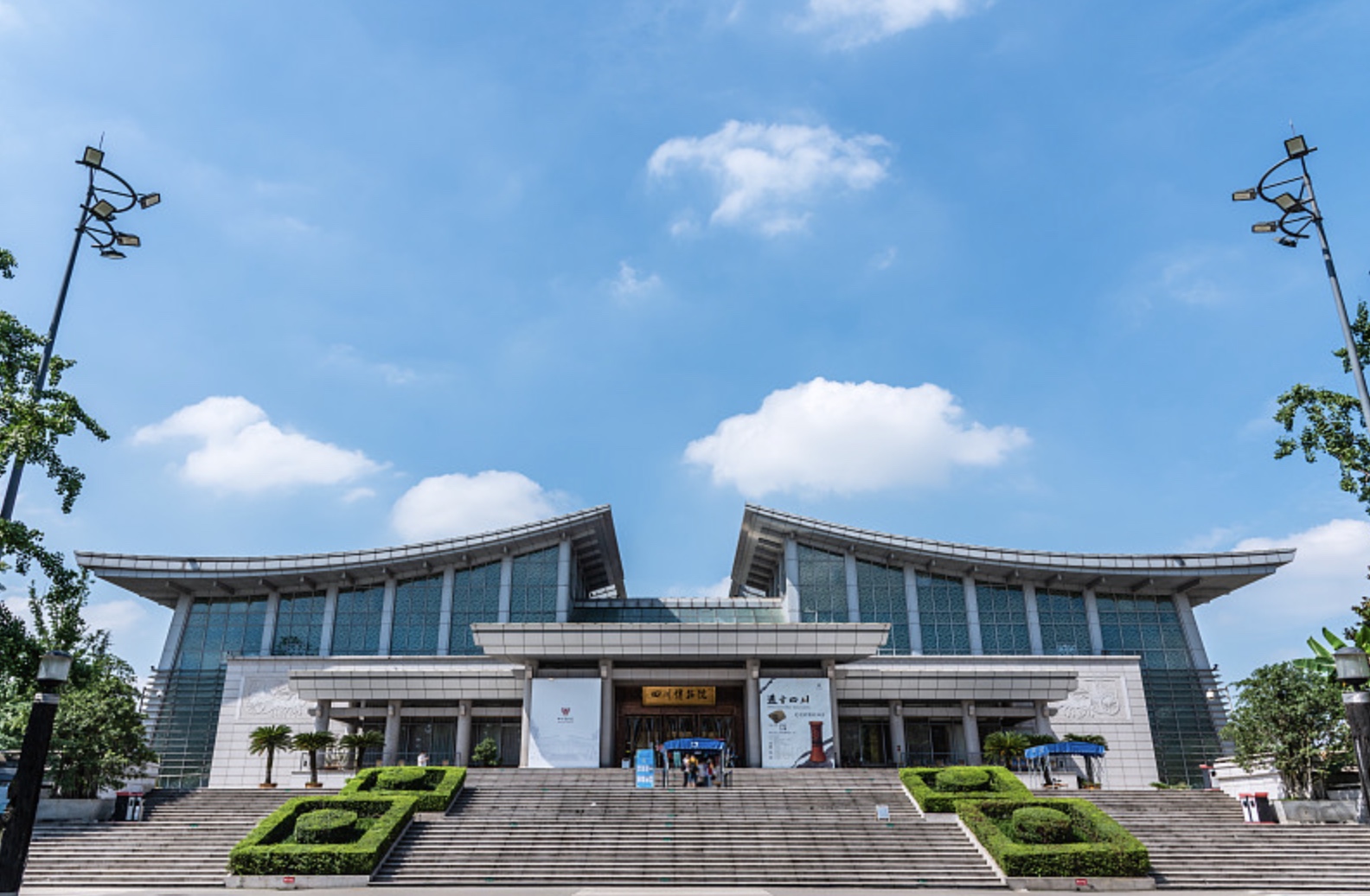
The main entrance and lobby deliver the Chengdu Museum's first impression. Designed by master architect Xu Shanggui under the "gold-inlaid-jade" concept, the facade merges Han-dynasty pictorial-brick motifs with a modern glass curtain wall. Two Han-style stone beasts (Shiyi & Bixie) flank the entry. The atrium's central relief, "Hua Chong Jin Guan Cheng – A Historical Journey through Chengdu," unfolds Chengdu's urban evolution from Sanxingdui–Jinsha through Qin-Han, Tang-Song, and Ming-Qing. Dougong brackets, caisson ceilings, and Shu-brocade patterns abstract the western-Sichuan sloped roofline—turning the architecture itself into the museum's first exhibit. Here visitors collect audio guides, store luggage, and scan in to begin their tour.
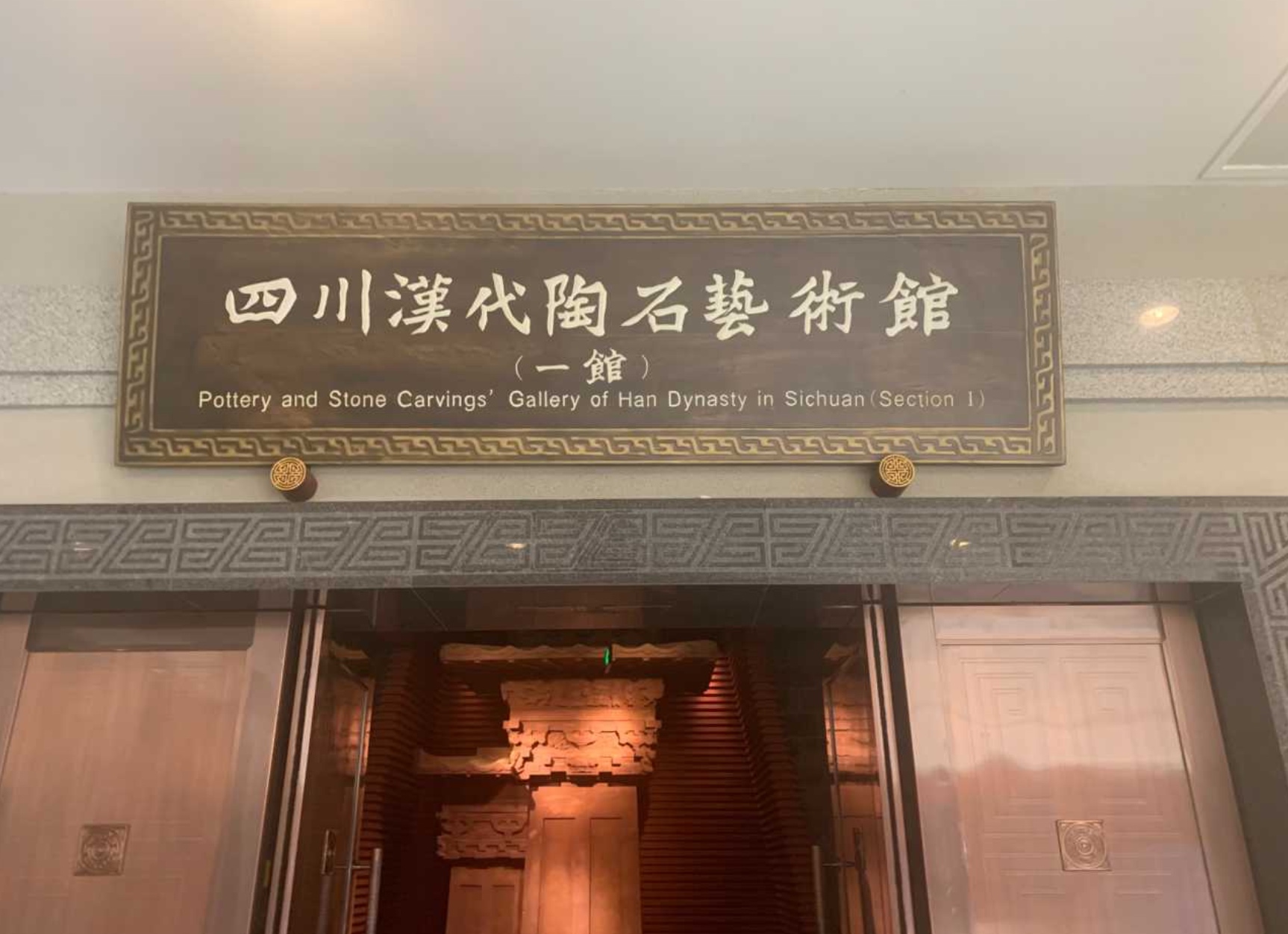
Sichuan Han Dynasty Ceramic & Stone Art Gallery (Chengdu Museum, 1F) · 四川汉代陶石艺术馆(成都博物院一楼)

🎧 In app
Sichuan Han Dynasty Ceramic & Stone Art Gallery (Chengdu Museum, 1F)

Located on the museum's 1F core, this is China's only gallery dedicated to Sichuan Han-dynasty pictorial bricks and carved stones. Hundreds of masterpieces from Pengshan, Xinjin, Pixian, and Xindu are organized into four zones: manor-farming and archery-harvest, markets and salt-wells, mythic auspiciousness, and chariots-banquets. The iconic "Archery and Harvest" brick captures a hunter, startled wild geese, and rippling rice fields; the "Salt Well" brick documents the deep-well brine extraction at Linqiong (home of Zhuo Wenjun), the world's earliest visual record of salt production. Smiling storytellers, drummers, and qin-players in the pottery zone are evidence of Han-era Sichuan's cheerful, secular folk spirit. Multimedia stations let visitors zoom into brick details and hear expert commentary.

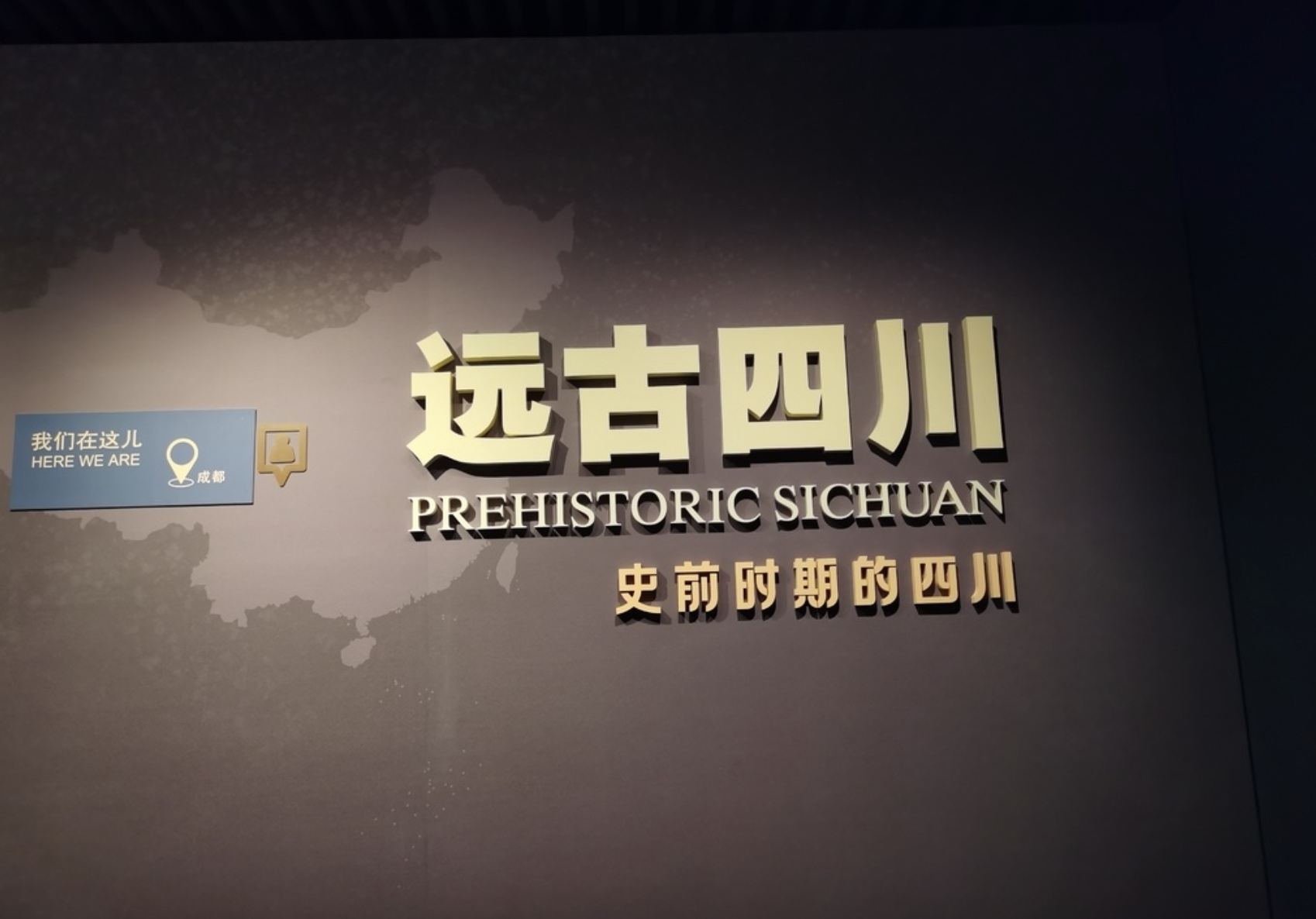
Ancient Sichuan – Prehistoric Era Hall (Chengdu Museum, 2F) · 远古四川·史前时期展厅(成都博物院二楼)

🎧 In app
Ancient Sichuan – Prehistoric Era Hall (Chengdu Museum, 2F)

This hall is the prologue of the "Hua Chong Jin Guan Cheng" chronological exhibition. The trail begins with the 2.04-million-year-old Wushan Man tooth fossil, moves through Ziyang Man (Palaeolithic), Gaoshan Ancient City, the Baodun culture, and culminates in the Sanxingdui–Jinsha sites—revealing how the Chengdu Plain nurtured China's earliest, largest, and most imaginative ancient Shu civilization. Highlights include a section model of Baodun's city wall (~2700 BCE), 4,500-year-old paddy-field remains, and replicas of face-painted pottery pots, bird-head ladle handles, and jade yazhang ritual blades. Immersive projections let visitors "enter" ancient Shu sacrificial grounds, understanding Sanxingdui–Jinsha not as alien imports but as the indigenous pinnacle of Sichuan's own civilizational arc.

Ancient Sichuan – Pre-Qin to Qin-Han-Three Kingdoms Hall (Chengdu Museum, 2F) · 古代四川·先秦至秦汉三国展厅(成都博物院二楼)

🎧 In app
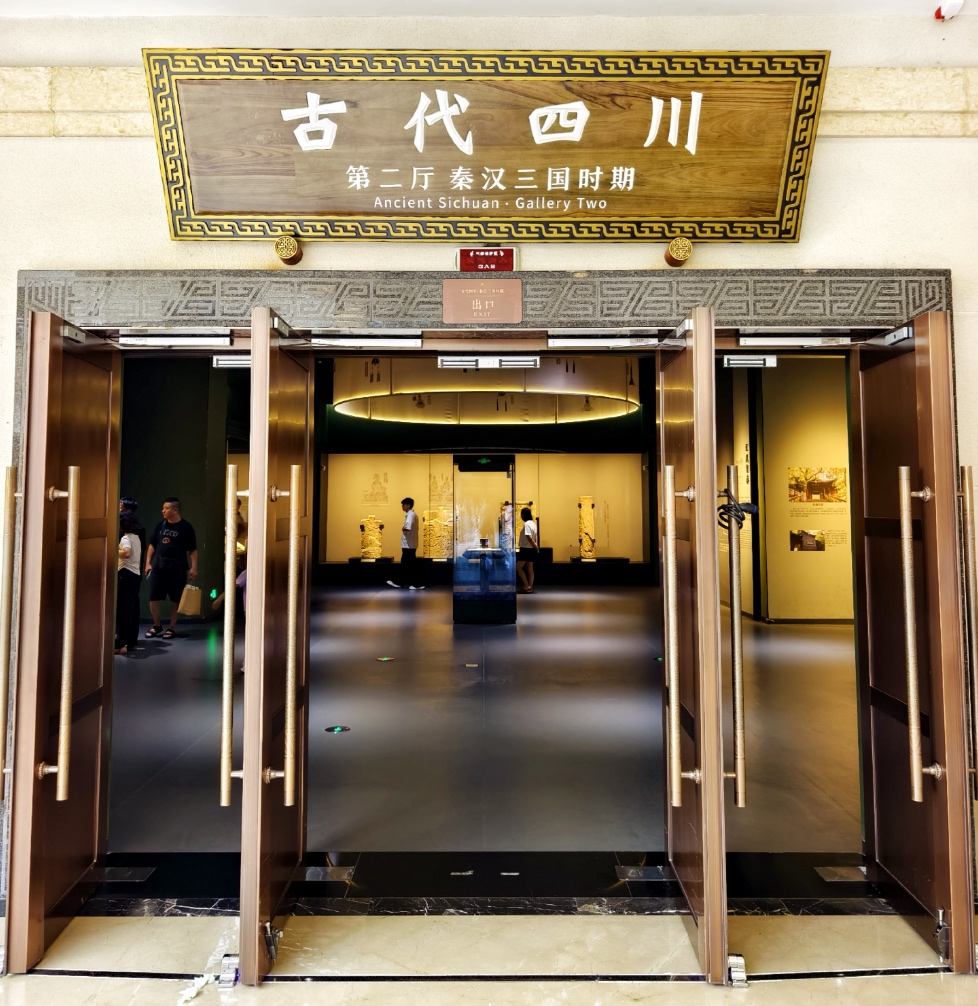
Ancient Sichuan – Pre-Qin to Qin-Han-Three Kingdoms Hall (Chengdu Museum, 2F)

This hall is Chapter 2 of the "Hua Chong Jin Guan Cheng" chronological exhibition. The narrative moves from the legendary Twelve Shu Kings (Cancong, Du Yu, Kaiming) to the Qin conquest of Ba and Shu (316 BCE), the "colonization of Shu" policies, Li Bing's construction of Dujiangyan (256 BCE), Wen Weng's schools, and Han-era artifacts—the Li Bing stone statue, storyteller figurines, and cliff-tomb models. A Dujiangyan sand-table with dynamic water projection reveals the engineering genius of Yuzui, Feishayan, and Baopingkou. The finale explores Three Kingdoms Shu—Shu brocade, Zhuge crossbow, and the zhi-bai coin—showing how the "Land of Abundance" moved from periphery to center stage in the Han–Three Kingdoms era. Allow at least 40 minutes for the dense exhibits.

Ba-Shu Bronze Ware Gallery (Chengdu Museum, 2F) · 巴蜀青铜器馆(成都博物院二楼)

🎧 In app
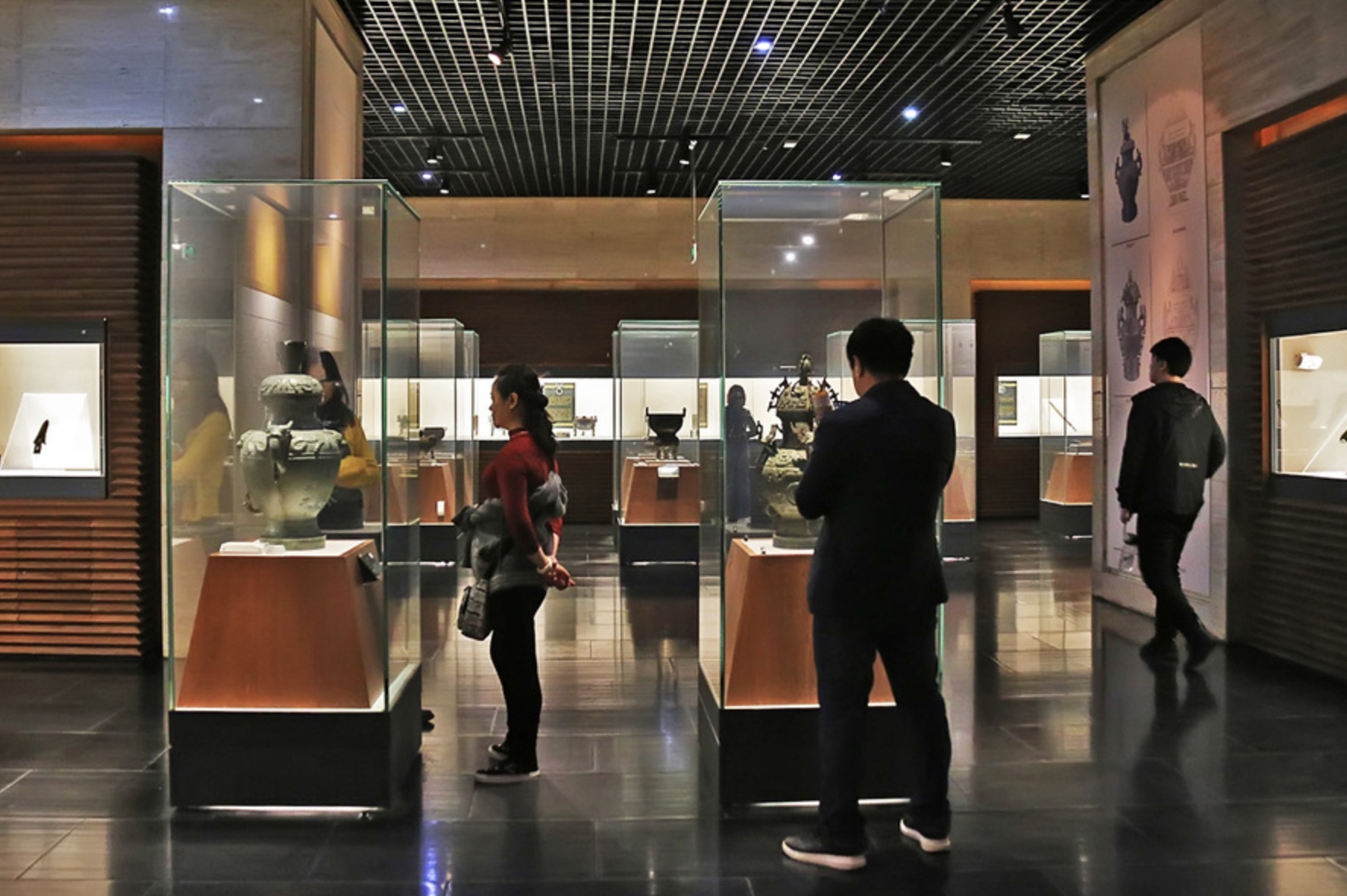
Ba-Shu Bronze Ware Gallery (Chengdu Museum, 2F)

This is one of the most academically rich galleries in the museum. The collection focuses on late Warring States to early Western Han Ba-Shu bronzes, organized into ritual, weapon, musical, daily-use, and coin categories. The headline piece—the "Inlaid Bronze Pot with Banquet, Music, Water and Land Battle Scenes"—stands ~40 cm tall and uses metal inlay to depict five scenes (mulberry-picking, archery, feasting, water battle, land battle) with nearly 200 miniature figures, hailed as "the earliest bronze War and Peace." Tiger-pattern ge-daggers, willow-leaf swords, and boat-coffin bronze plaques reflect Ba-Shu's tiger worship and fishing-hunting culture. Multimedia stations let visitors rotate 3D models, zoom inlay details, and compare the lineage differences between Ba-Shu and Central Plains bronzes.

Ceramics Gallery (Chengdu Museum, 2F) · 陶瓷馆(成都博物院二楼)

🎧 In app
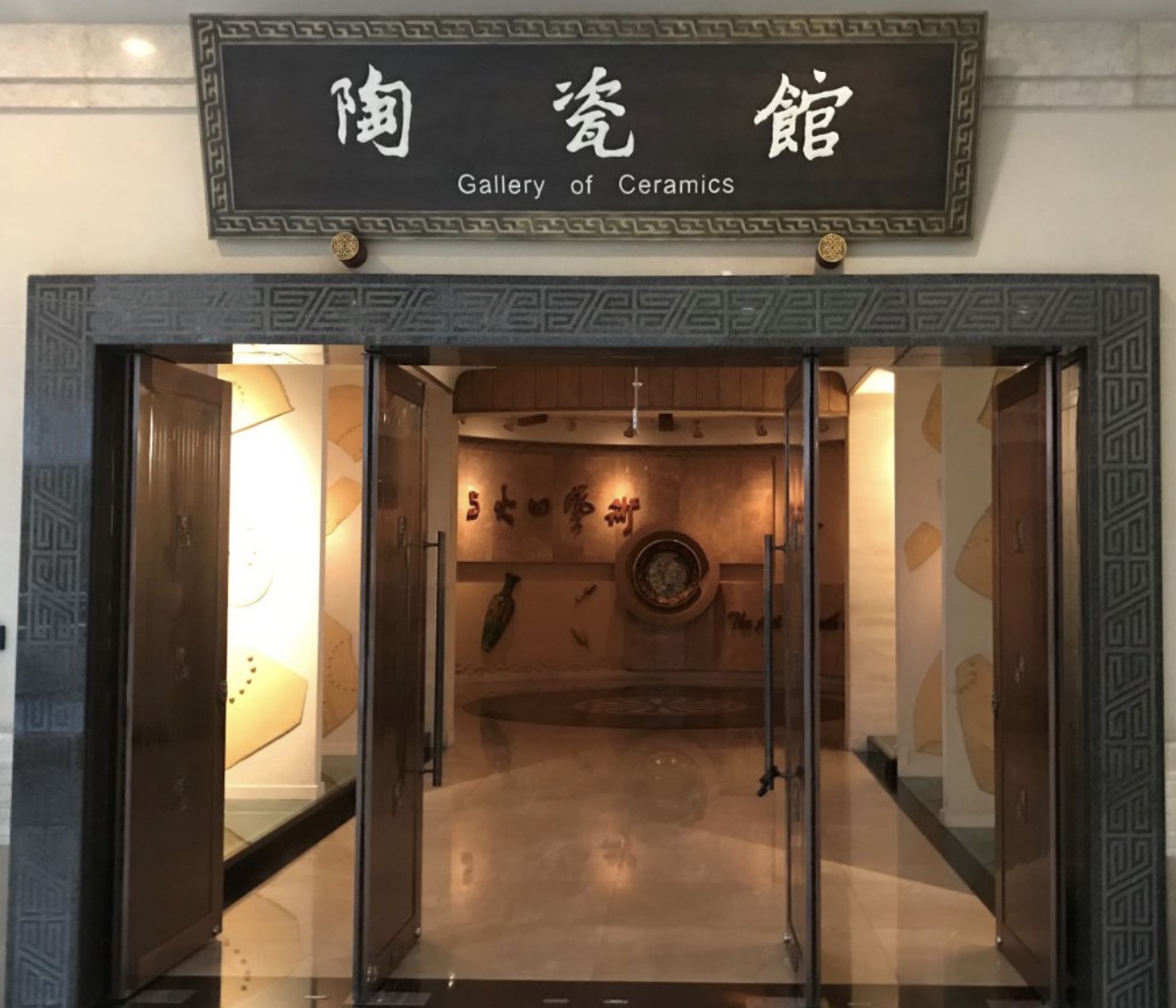
Ceramics Gallery (Chengdu Museum, 2F)

Located on 2F East Wing, the gallery chronologically presents ~400 representative pieces: Han green-glazed pottery, Tang Qingyao tri-colors, Song-Yuan Jingdezhen bluish-white porcelain, Ming-Qing blue-and-white and wucai, and late-Qing/Republic qianjiang enamels. The Qionglai (Qingyao) kiln takes center stage—China's largest southwestern folk kiln system, whose oil-saving lamps, stamped stem-cups, and flambé-glaze bowls were praised by Lu You's "Laoxue'an Notes." A multimedia reconstruction of the Shifangtang kiln site lets visitors follow clay-purifying, throwing, glazing, firing, and unloading steps. The finale showcases "export porcelain" from Chengdu customs and the Ya'an Tea-Horse Road, revealing Chengdu's role as a tea-horse corridor and Southern Silk Road hub in East-West ceramic trade.

Zhang Daqian Painting & Calligraphy Gallery – Dafengtang (Chengdu Museum, 2F) · 张大千书画馆·大风堂(成都博物院二楼)

🎧 In app
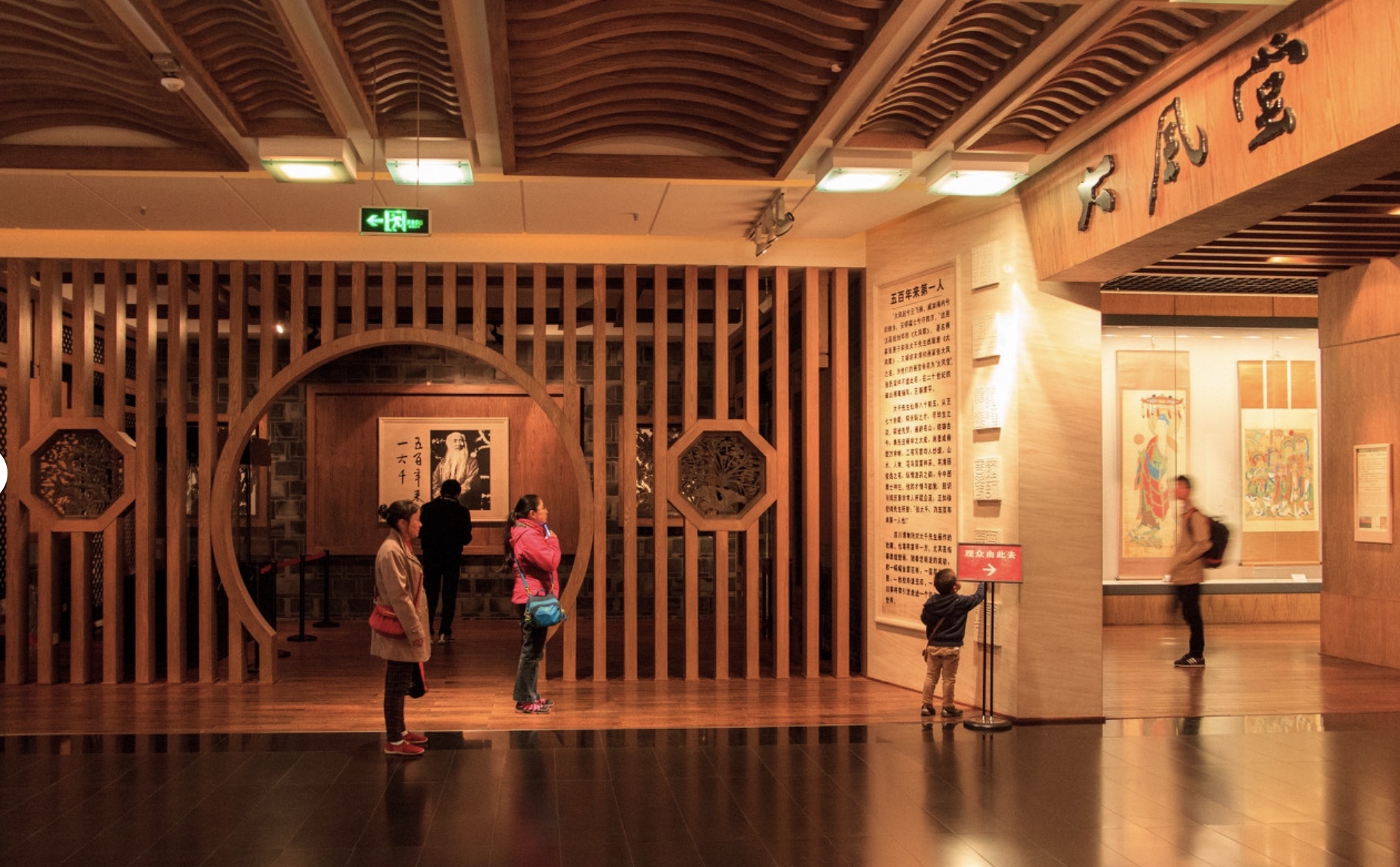
Zhang Daqian Painting & Calligraphy Gallery – Dafengtang (Chengdu Museum, 2F)

Zhang Daqian (1899–1983) is one of the 20th century's most internationally influential Chinese painters. The museum—located in his long-time creative base of Chengdu—hosts the Dafengtang memorial hall, displaying his artistic evolution in three phases. Early works like "Lotus" and "Imitation of Shitao Landscape" reveal literati elegance; the mid-period features 1:1 copies of Dunhuang Mogao frescoes and previously unpublished sketch drafts from his 1941–43 pilgrimage; the late-period showcases splash-ink and splash-color masterpieces such as "Ten-Thousand Li of the Yangtze," "Peach Blossom Spring," and "Love-Traces Lake." The gallery's vitrine also displays Daqian's personal brushes, seals, palette, and Panama hat—primary sources for biographical research.

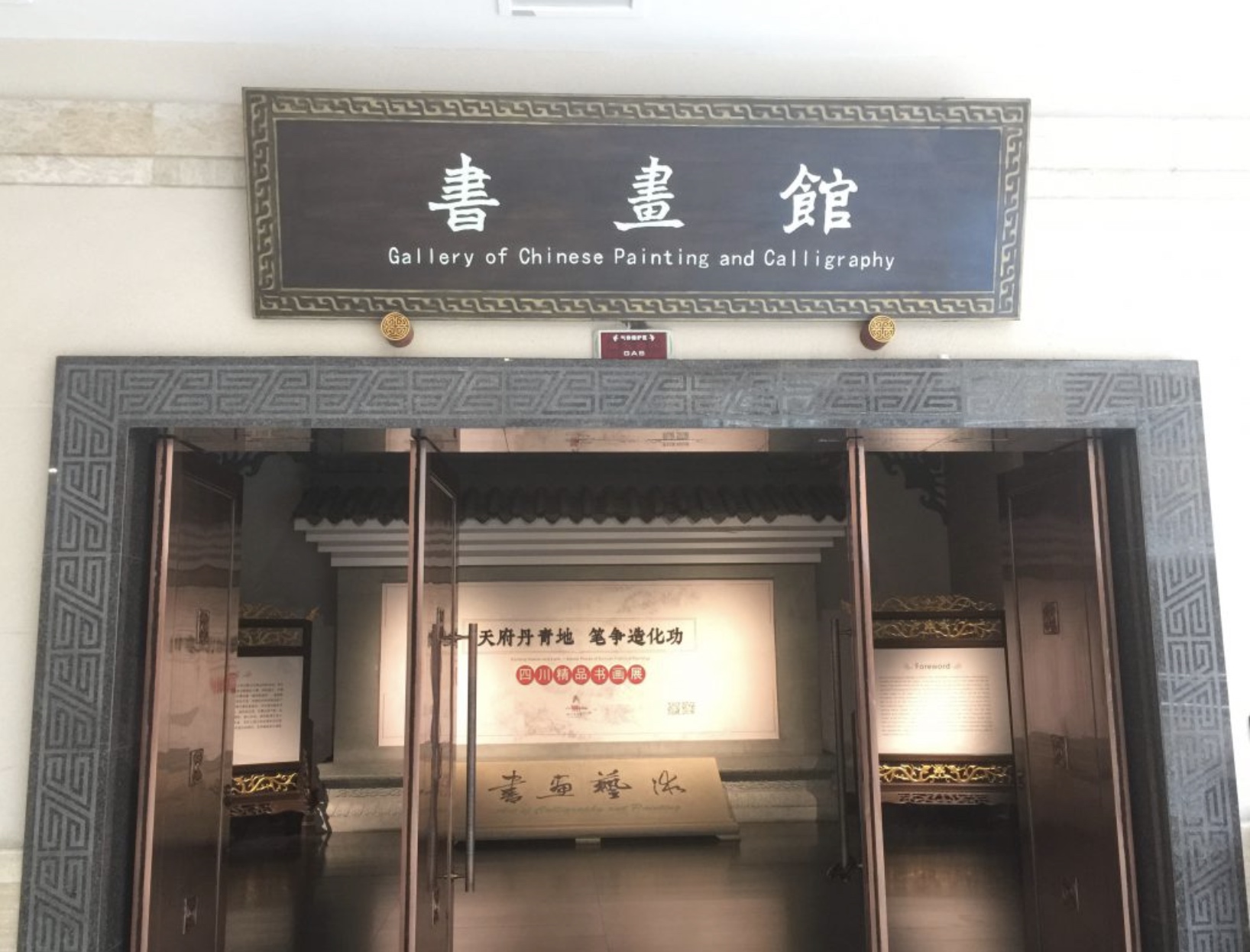
Painting & Calligraphy Gallery (Chengdu Museum, 2F) · 书画馆(成都博物院二楼)

🎧 In app
Painting & Calligraphy Gallery (Chengdu Museum, 2F)

Echoing the Zhang Daqian hall, this gallery is organized into four themes: Song academic style, Yuan literati, Ming-Qing Ba-Shu masters, and modern Shu-connected artists. Highlights include rubbing-and-original editions of Su Shi's "Gongfu Tie," Wen Tong's "Huzhou Bamboo School" ink-bamboos, Yang Shen's running-script, works by Tang Yin, Wen Zhengming, Dong Qichang, plus modern masters with Shu ties—Kang Youwei, Liang Qichao, Yu You-ren, Guo Moruo, Xu Beihong, Qi Baishi, and Huang Binhong. Museum-grade temperature-controlled vitrines rotate exhibits seasonally: Spring Festival couplets, Duanwu fan paintings, and an autumn Ba-Shu master show. Digital kiosks allow searching the museum's full calligraphy and painting archive by dynasty, author, or theme.

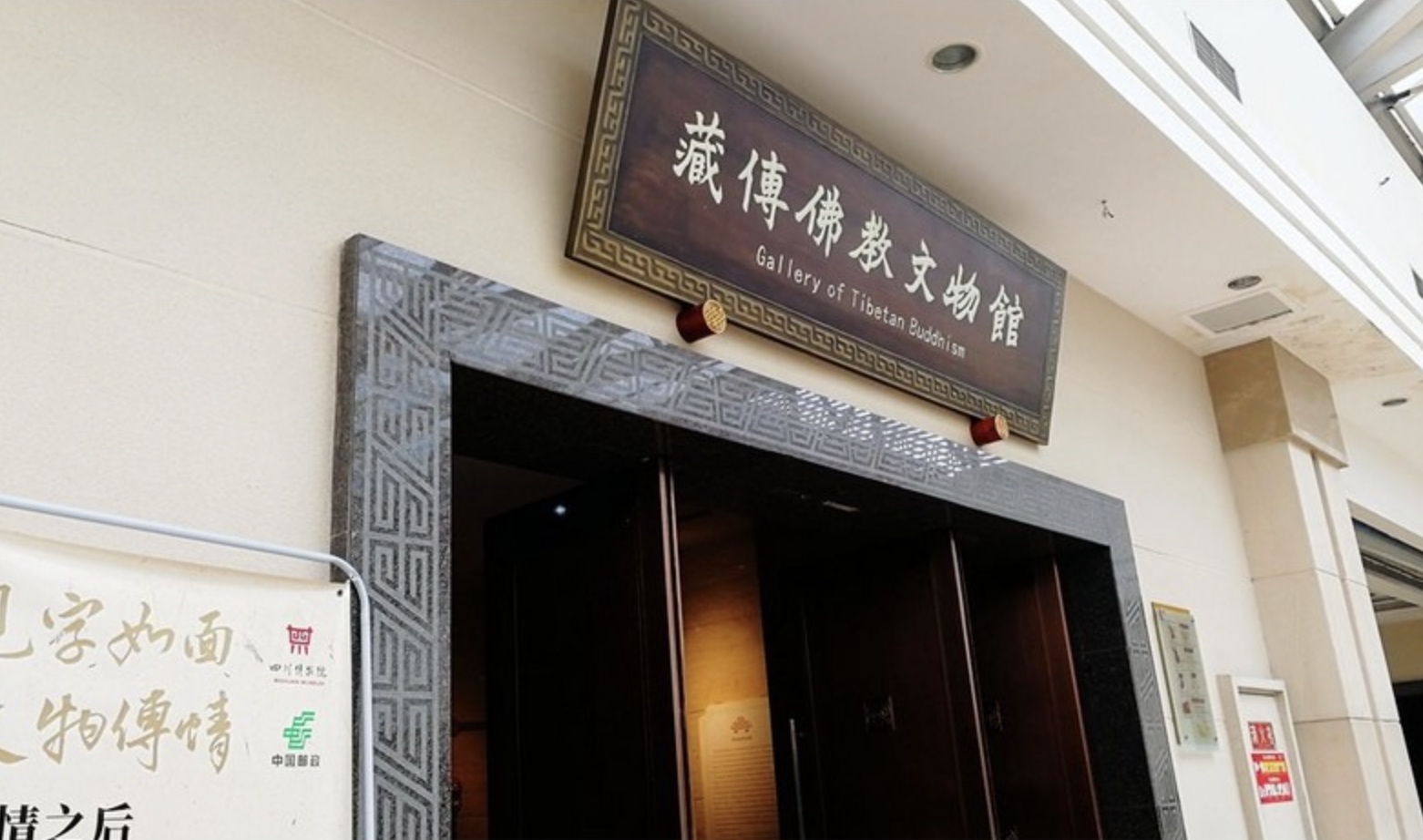
Tibetan Buddhist Artifacts Gallery (Chengdu Museum, 3F) · 藏传佛教文物馆(成都博物院三楼)

🎧 In app
Tibetan Buddhist Artifacts Gallery (Chengdu Museum, 3F)

Located on 3F West Wing, this hall reflects Sichuan's role as a Sino-Tibetan cultural hub. The collection centers on Ming-Qing gilt-bronze statues, thangkas, mandalas, ritual implements, dharma bells, gyaling horns, and Tibetan sutra woodblocks, organized by five major schools: Tsongkhapa lineage, Gelug, Nyingma, Sakya, and Kagyu. The highlight is an ~80 cm Yongle-era (Ming) imperial gilt-bronze Buddha of extraordinary craftsmanship; alongside a set of 13 ~1.5m × 1m thangkas depicting the Life of Shakyamuni, still vibrant after five centuries. An interactive "mani wheel" wall lets visitors spin carved wooden prayer wheels and experience daily Tibetan Buddhist practice. The hall is the best window into western Sichuan Tibetan-region culture and history.

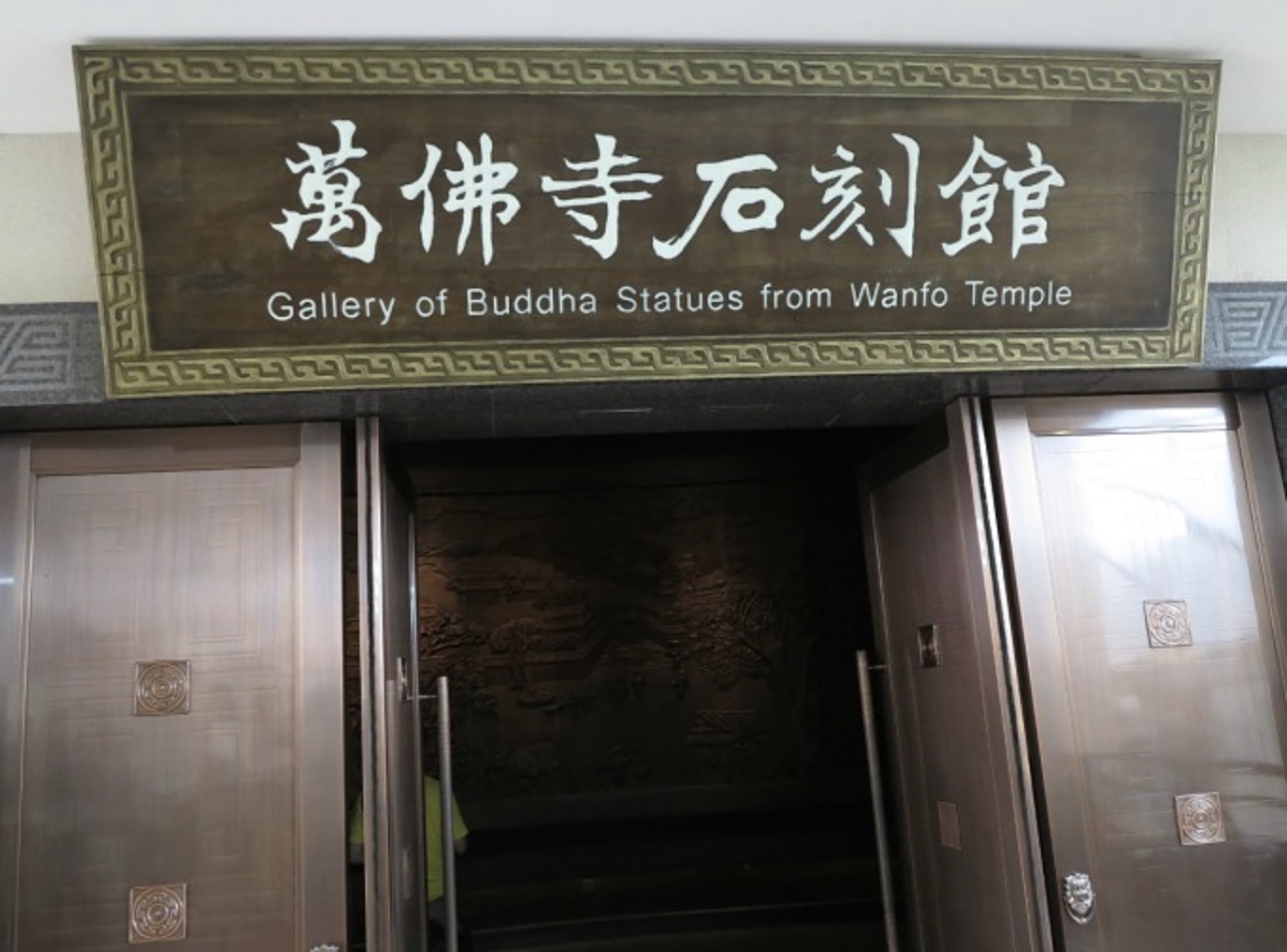
Wanfo Temple Stone Sculpture Gallery (Chengdu Museum, 3F) · 万佛寺石刻馆(成都博物院三楼)

🎧 In app
Wanfo Temple Stone Sculpture Gallery (Chengdu Museum, 3F)

Wanfo Temple, near Tongjin Bridge outside Chengdu's west gate, was one of the city's most important official temples from the Southern Dynasties through the Tang. Excavated in four campaigns between 1882 and 1953, the site yielded hundreds of sculpture fragments—the most important Southern Dynasties Buddhist stone-carving discovery in southern China after Yungang and Longmen. The gallery is organized into five periods: Liang, Northern Zhou, Sui, Early Tang, and High Tang. Highlights include a 523 CE Liang Pingtong-4 statue, Ashoka-style pagodas, a Sui Daye Amitabha, an Early Tang yab-yum Buddha, and a High Tang guardian figure. Wanfo carvings uniquely merge the "Cao Yi Chu Shui" (Cao-style flowing-drapery) and "Wu Dai Dang Feng" (Wu-style fluttering-ribbon) styles—key evidence for the "Southern Dynasties sinicization" of Chinese Buddhist sculpture.

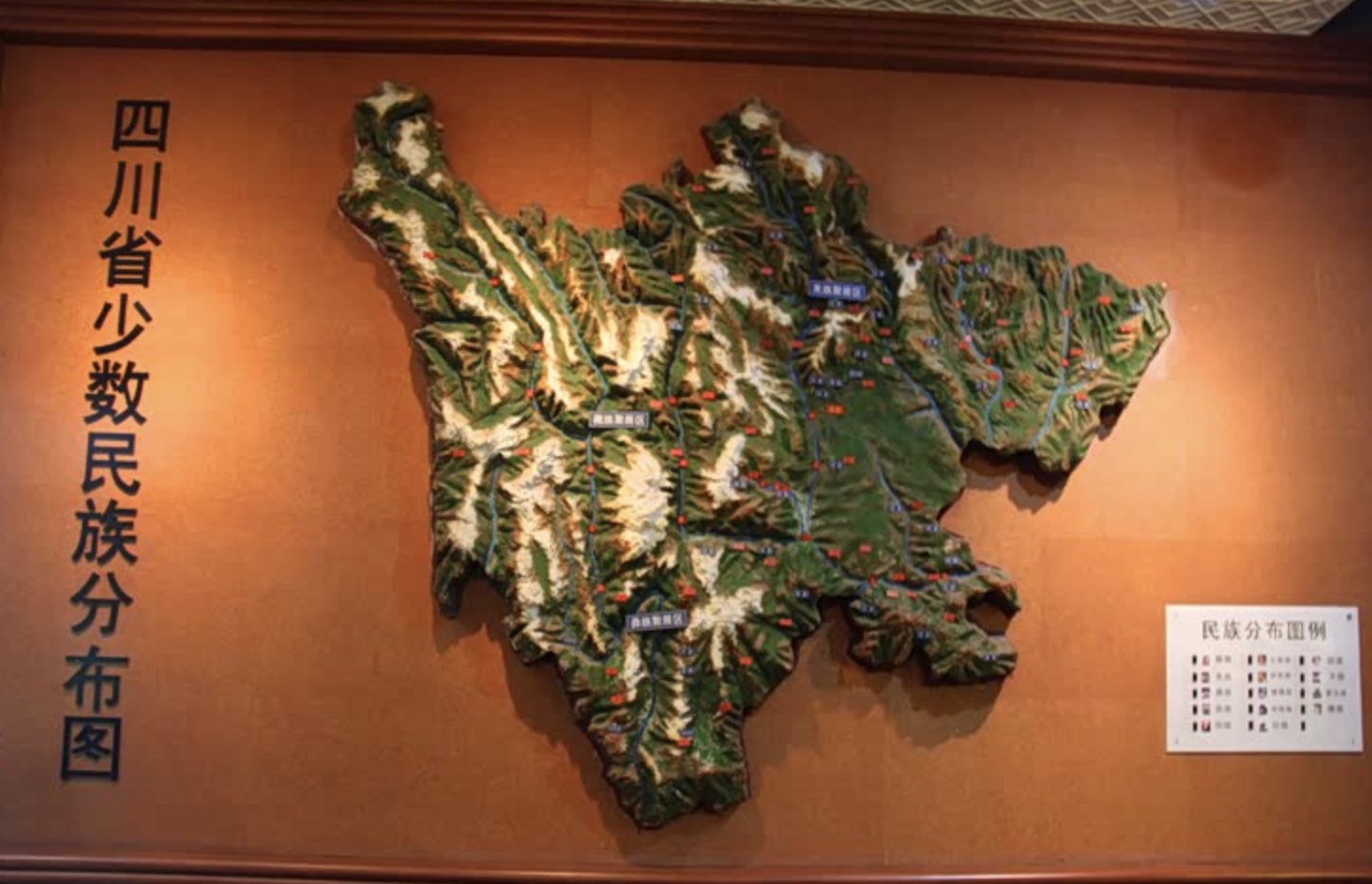
Sichuan Ethnic Cultural Relics Gallery (Chengdu Museum, 3F) · 四川民族文物馆(成都博物院三楼)

🎧 In app
Sichuan Ethnic Cultural Relics Gallery (Chengdu Museum, 3F)

This gallery is the museum's premier window into the "diverse yet unified" Chinese nation on Sichuan soil. Sections cover Tibetan (Jiarong, Amdo, Khampa), Qiang, Yi (Liangshan), Miao, Tujia, Naxi, Lisu, Mongol, Hui, and Manchu groups. Costumes are the highlights: Jiarong Tibetan women's colorful robes with turquoise-coral-amber headdresses, Liangshan Yi men's "chaerwa" woolen cloaks and "tianbaba" hero-knot, Qiang cross-stitch embroidery and silver plaques, Miao pleated skirts and batik, and Tujia "Xilankapu" brocade. The gallery also displays ethnic musical instruments (Qiang flute, mouth harp, long-necked qin, mabu), ritual objects (Bon-buddhist butter flowers, Bimo divining cylinders, Dongba scriptures), tools, and wedding items. The closing "ethnic unity" relief wall embodies the vision of a Chinese national community.

Arts & Crafts Gallery (Chengdu Museum, 3F) · 工艺美术馆(成都博物院三楼)

🎧 In app
Arts & Crafts Gallery (Chengdu Museum, 3F)

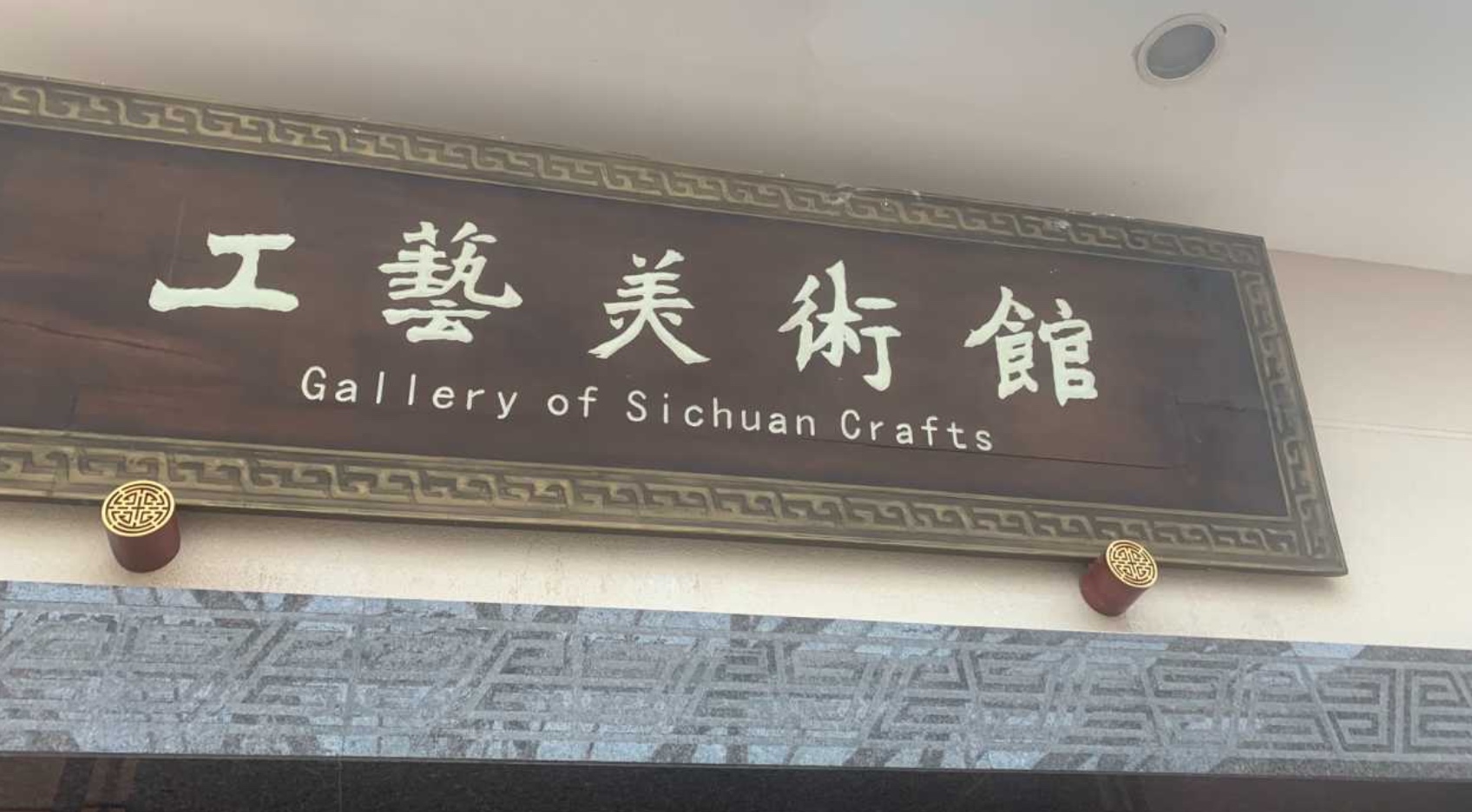
Located at the end of 3F East Wing, the gallery brings together over ten Ba-Shu craft genres: Shu brocade, Shu embroidery, Chengdu lacquerware, silver filigree, bamboo weaving, porcelain-bamboo composite, ivory and jade carving, gold-silver inlay, paper-cut, shadow puppetry, and masks. The center stage replicates a late-Qing Shu-brocade "great-flower-loom" wooden machine—heritage inheritors demonstrate "picking-and-tying pattern cards" at scheduled times, letting visitors watch "wanzi" and "bing-mei" patterns take form. The double-sided Shu-embroidered panda won the Hundred Flowers Gold Award; the silver-filigree showcase displays "flat-fill" filigree of intricate complexity; the porcelain-bamboo pieces wrap hairlike bamboo strips around thin porcelain. The closing "Intangible Heritage Experience Zone" offers Shu-embroidered fans, silver filigree, and paper-cut classes—reserve at the service desk.

Exit & Surroundings (Chengdu Museum) · 出口与周边(成都博物院)

🎧 In app
Exit & Surroundings (Chengdu Museum)

The museum's exit integrates with the "Qinghua Road Museum Cluster" master plan. From the south gate, walking ~800m south leads to Dufu Thatched Cottage (5A scenic area); the opposite side of the road opens onto Huanhuaxi Park and the "Poetry Avenue" stone corridor; 1.5 km east reaches Sichuan University's West China campus (bell tower, Maode Hall, old library); another 2 km east brings you to Sichuan Provincial Library, Sichuan Science & Technology Museum, and Tianfu Square—Chengdu's dense cultural core. The exit plaza hosts a cultural-creative shop and "Chengdu Gifts" souvenir store, with replica artifacts, Shu-brocade ties, panda plush, and Sichuan-opera mask toys. Adjacent F&B includes Starbucks, %Arabica, and Bread Talk. In late autumn, photograph the golden ginkgo leaves along Qinghua Road—a perfect Chengdu-style farewell contrasting the museum's solemnity.

Get the app

The tool solved one problem. The app handles the whole trip.

Per-trip visa judgements, audio guides, prep checklists, and a real human concierge — offline-ready, in your language.

Download for iPhoneFree to download · No OTA upsells