← Chongqing

Chongqing · 十八梯

Shiba Ti (Eighteen Steps)

🎫 Ticket Free
🕘 Opening Hours 10:00–23:00
🚇 Metro Metro Line 1, Jiaochangkou Station
📍 Address No. 1 Zhongxing Road, Yuzhong District, Chongqing (Shiba Ti Traditional Customs Area, near Jiaochangkou) Map ↗
🎧 4 audio walking guides for Shiba Ti (Eighteen Steps) — listen on the spot in the YOLO HAPPY app. →

Inside Shiba Ti (Eighteen Steps)

Shiba Ti Grand Archway · 十八梯大牌坊

🎧 In app
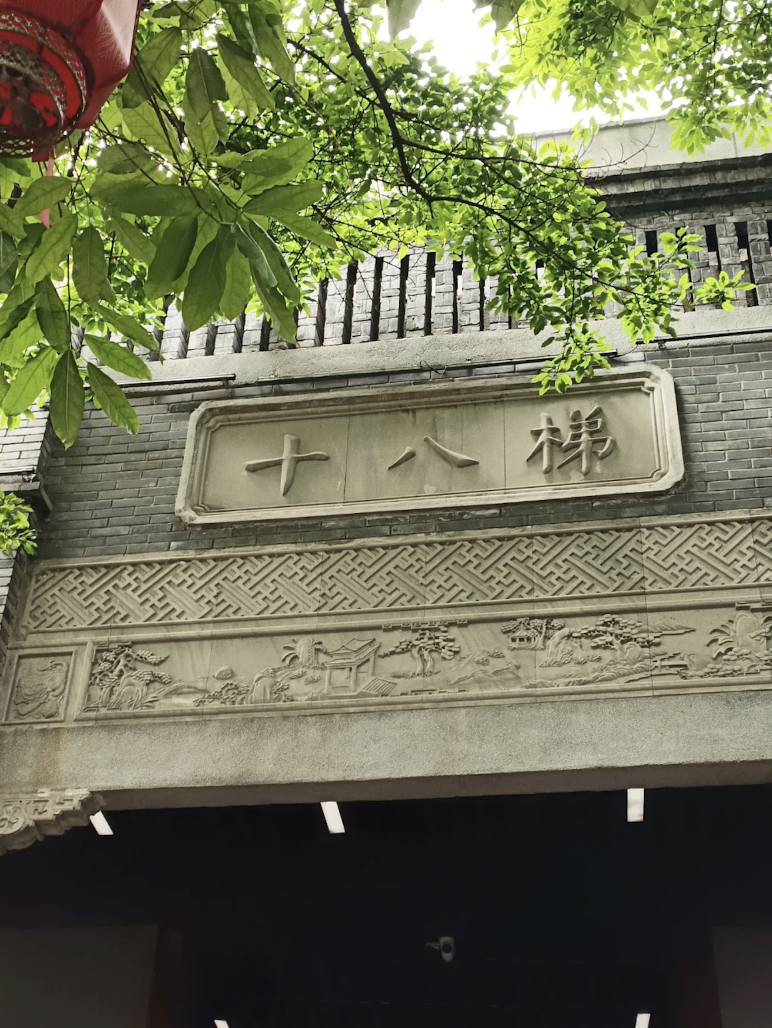
Shiba Ti Grand Archway

The Shiba Ti Grand Archway stands at the southern entrance of the Shiba Ti Traditional Heritage District, serving as the first landmark for visitors entering this century-old street. Built from blue stone in a four-pillar, three-bay sky-reaching style, it stands over ten meters tall—imposing yet refined and elegant. The central plaque is inscribed with three gold-leaf characters reading "Shiba Ti," while the crossbeams feature relief carvings of bats, auspicious clouds, and ruyi patterns. The stone-drum pillar bases are finely carved, combining the robustness of Ba-Yu stone carving with the gracefulness of southern Chinese archways. A small plaza surrounds the archway with faux-antique stone paving, ficus bonsai, and decorative lamp posts. After dark, warm yellow lights illuminate the stone structure, creating a rich atmosphere of old Yuzhou charm. Looking north from here, the main street of Shiba Ti unfolds in cascading stone steps descending the hillside, with stilt-house-style shops lining both sides, and modern skyscrapers in the distance overlapping with tiled eaves nearby. A guide map and electronic touch screen beside the archway mark all attractions and recommended routes, making it an essential stop for planning visits and taking photos.
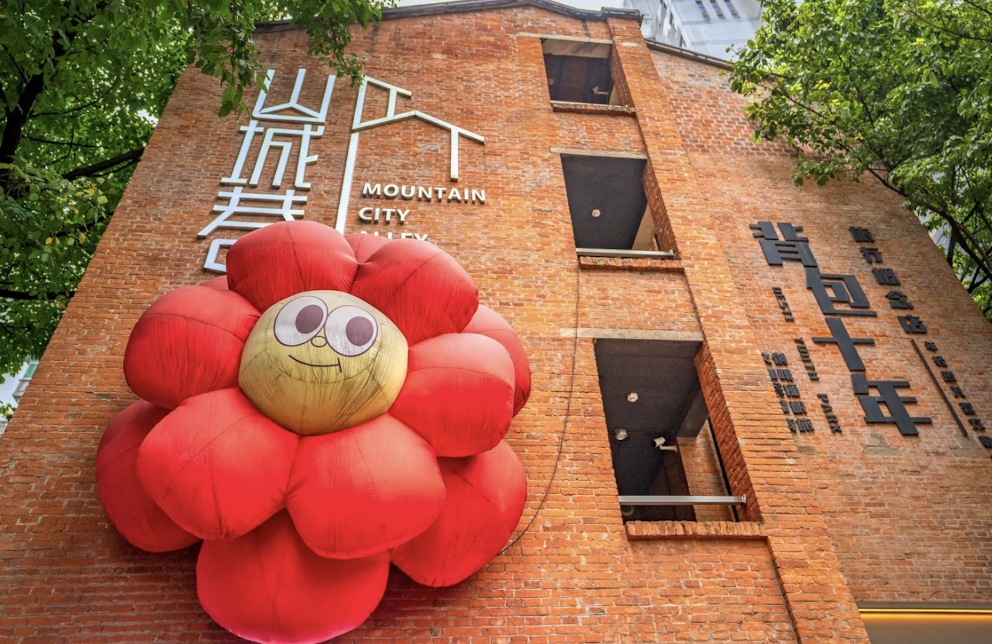
Shanguo Lane and Mountain City Memory Hall · 善果巷与山城记忆馆

🎧 In app
Shanguo Lane and Mountain City Memory Hall

Shanguo Lane is a historic stone-step alley within the Shiba Ti Heritage District. Its name originates from the Shanguo Temple that once stood here during the Qing Dynasty, carrying forward the spirit of charity and goodwill. The alley is about two meters wide, bordered by old brick walls and stone embankments intertwined with ficus tree roots, covered in moss and draped with vines—walking through it feels like traveling back to the slow-paced old Chongqing. Within the lane sits the Mountain City Memory Hall, a micro-museum converted from a traditional residence. With its grey tiles, white walls, and wooden windows, the exterior is understated, yet stepping inside reveals a hidden world. The hall uses "Upper City and Lower City" as its theme, presenting through old photographs, vintage objects, oral history videos, and interactive installations the century-long evolution of Shiba Ti—from the bustling pier trade of the late Qing and early Republic, through the wartime capital's population surge, to modern urban renewal. Exhibits include old kerosene lamps, bamboo-woven thermos flasks, hand-written street signs, and yellowed household registers—everyday objects full of warmth that bear authentic witness to ordinary Chongqing residents' lives. A "sound wall" features recordings of street hawker cries, work chants, and riverboat whistles—put on the headphones and listen to the vanishing sounds of the mountain city.

Yuetai Ba (Mountain Courtyard) · 月台坝(山地院落)

🎧 In app
Yuetai Ba (Mountain Courtyard)

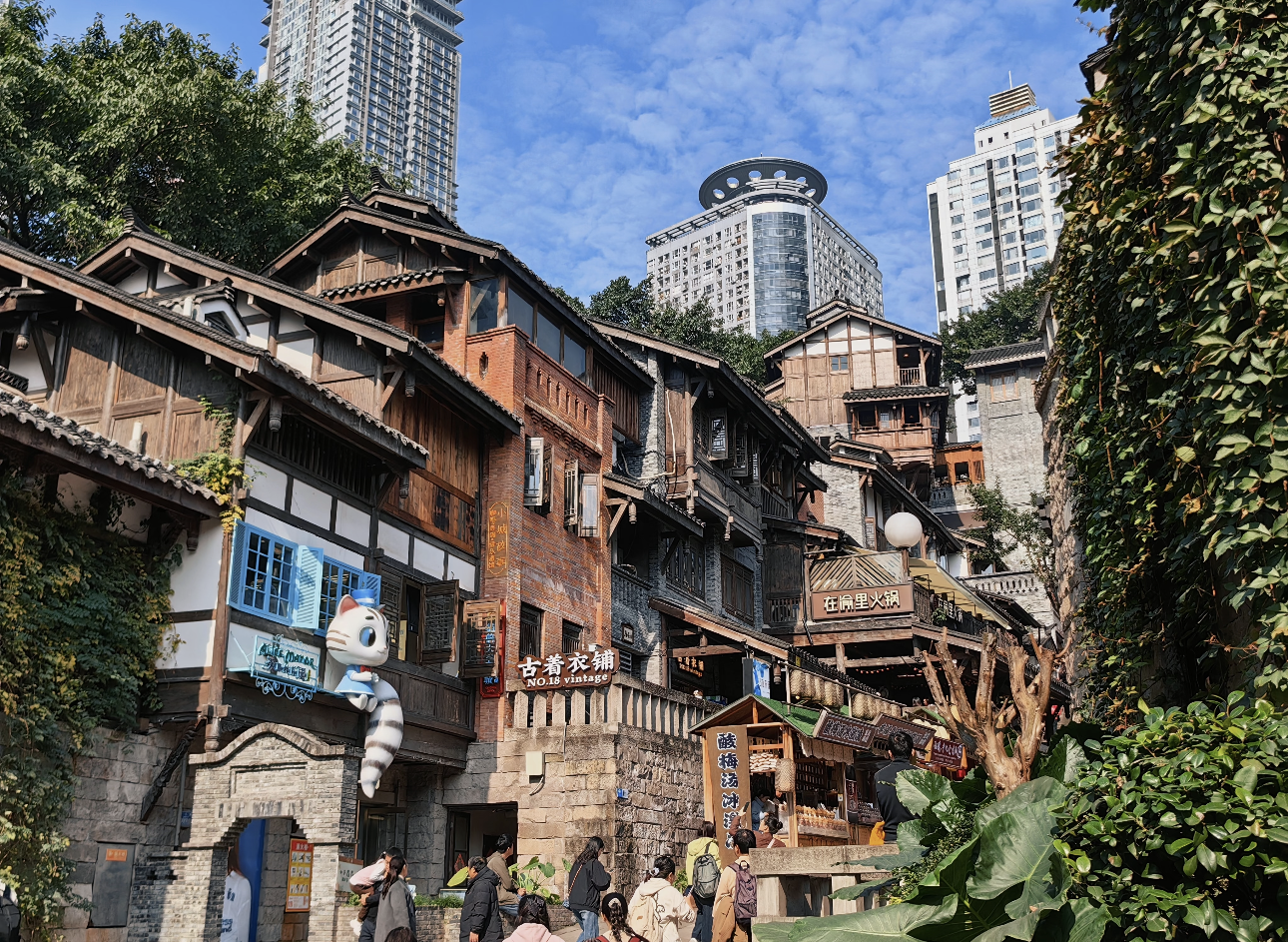
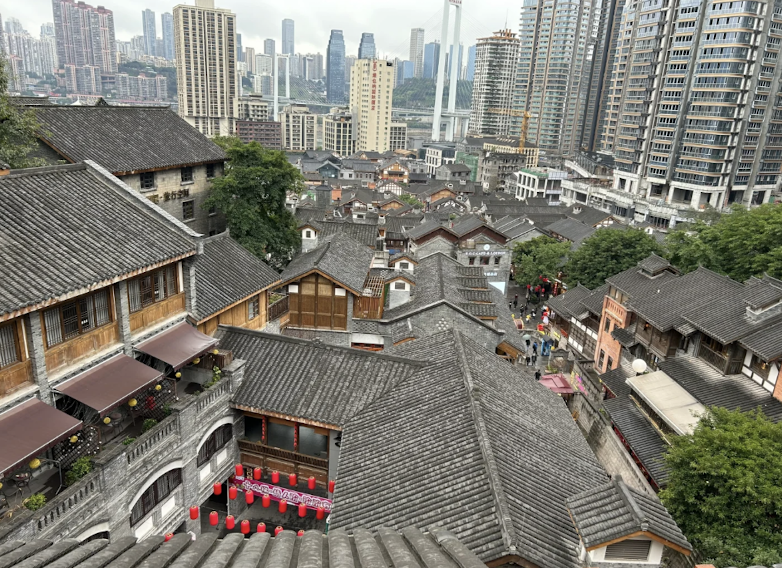
Yuetai Ba is located mid-way along Shiba Ti—a cluster of terraced courtyard residences naturally formed by the hillside gradient, and one of the nodes that best embodies Chongqing's mountain architecture within the entire heritage district. The name "Yuetai" (Moon Platform) comes from the broad, flat stone platform in front of the courtyards, shaped like a moon terrace. In the past, residents gathered here to cool off, chat, dry laundry, and let children play—it was the heart of neighborhood social life. The courtyard complex features timber frame structures with blue brick and stone walls, stepping down the slope in successive terraces. Looking up from below, rows of grey-tiled eaves rise like steps; looking down from above, courtyards, skylights, and stone stairs interlock in rich spatial layers. After renovation, Yuetai Ba retains its original architectural bones and spatial fabric, with damaged components restored using traditional craftsmanship, while new businesses—creative shops, teahouses, and craft workshops—have been introduced. Narrow stone-step alleys connect the courtyards, with stone water vats and ficus bonsai at corners, revealing the old Chongqing philosophy of "climbing slopes and turning corners" everywhere. Sitting in a bamboo chair on the moon platform with a bowl of covered tea, overlooking the half-cityscape and distant river views, is the most authentic way to experience the slow life of the mountain city.

Great Tunnel Relics · 大隧道遗址

🎧 In app
Great Tunnel Relics

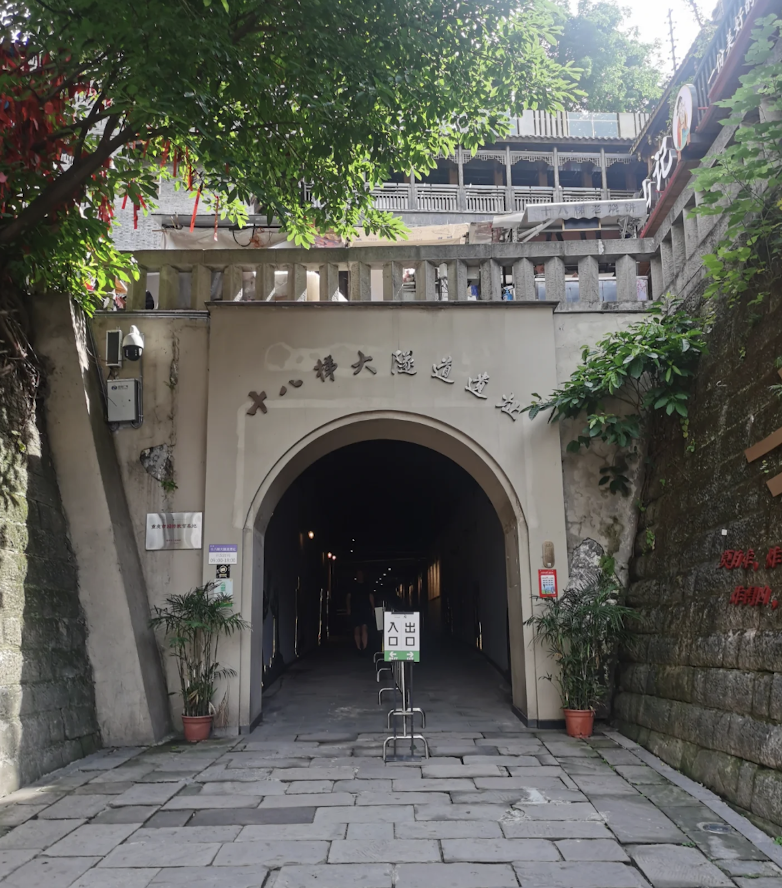
The Shiba Ti Great Tunnel Relics are a vital part of Chongqing's WWII air defense engineering. After the Nationalist Government relocated the capital to Chongqing in 1937, Japanese forces conducted indiscriminate strategic bombing of the city for five and a half years. To protect civilian lives, Chongqing mobilized the entire city to excavate a massive network of air-raid shelter tunnels. The Shiba Ti Great Tunnel was one of these, approximately 2 km long, carved by hand into sandstone hillside. The interior stands about 2 meters high and 2–3 meters wide, capable of sheltering thousands simultaneously. The tunnel was equipped with ventilation shafts, drainage channels, rest areas, and rudimentary medical stations—crude conditions that nonetheless saved countless lives during the darkest years. The now-open section has been safety-reinforced and scenically restored. Chisel marks and smoke stains from the era remain visible on the walls. Information panels and multimedia installations inside detail the historical background of the Chongqing Bombing, the tunnel construction process, and civilian shelter life. Walking through, one hears simulated air-raid sirens and infants' cries, creating a profound sense of the resilience and survival spirit of the Chongqing people during those fiery years—a historically educational immersive site.

Get the app

The tool solved one problem. The app handles the whole trip.

Per-trip visa judgements, audio guides, prep checklists, and a real human concierge — offline-ready, in your language.

Download for iPhoneFree to download · No OTA upsells