🎫 (Ticket)Separate charges Sightseeing cruise (day tour approx. 80 RMB, night tour approx. 100 RMB), Water Bus Line 1 at 3 RMB, Xiangji Temple 20 RMB
🎫 (Ticket)Canal waterway and waterfront blocks are free all day: Free: Gongchen Bridge, Qiaoxi Straight Street, Xiaohe Straight Street, D Dou Road, riverside greenway, China Grand Canal Museum / Knife, Scissors and Sword / Umbrella / Fan Museums (free, closed on Mondays)
🕘 Opening Hours Canal banks: 24/7. Water bus: approx. 7:00-18:00 (varies by route). Museums: Tue-Sun 9:00-16:30.
🚇 Metro Gongchen Bridge / Qiaoxi Block (landmark, museum cluster): Line 5 → Gongchen Bridge East Station Exit B / Grand Canal Station Exit D, walk to Gongchen Bridge and Qiaoxi Straight Street
🚇 Metro D Dou Road / Xiangji Temple: Line 3 → Xiangji Temple Station Exit C, walk to D Dou Road Historic Block and Xiangji Temple
🚇 Metro Wulinmen Pier (water bus starting point, city center): Lines 1/3 → Wulin Square Station Exit B, walk to Wulinmen Pier
📍 Address No.226 Huancheng North Road, Gongshu District, Hangzhou, Zhejiang (Wulinmen Pier) Map ↗ Inside Beijing-Hangzhou Grand Canal (Hangzhou Section)
Wulinmen Dock (Wulinmen Matou) · 武林门码头
🎧 In app 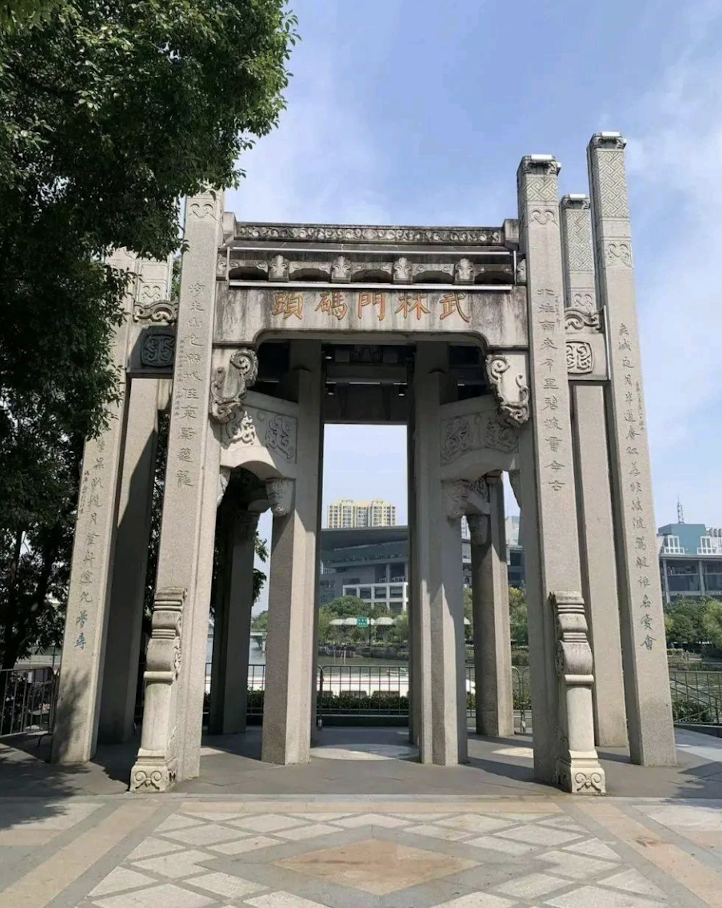
Wulinmen Dock is located on the north side of Wulin Square in Gongshu District, Hangzhou, on the bank of the Beijing-Hangzhou Grand Canal. It is the largest cruise ship dock with the most complete facilities on the Hangzhou section of the canal, and also the main departure station for Hangzhou water buses and canal sightseeing cruise ships. The dock is equipped with a modern passenger waiting hall, complete with air conditioning, seating, electronic display screens, and ticket windows, dispatching over a million passengers annually. Departing from Wulinmen Dock, visitors can take the water bus (about 3 RMB/stop) southward along the canal, passing scenic spots such as Xinyi Square, Fuyi Granary, and Gongchen Bridge, covering a total distance of about 12 kilometers——hailed as the "Oriental Venice" water bus line. During traditional festivals such as Dragon Boat Festival and Mid-Autumn Festival, the dock also hosts folk activities such as "Canal Dragon Boat Race" and "Canal Moon Appreciation," bustling with excitement.
West Lake Cultural Square (Xihu Wenhua Guangchang) · 西湖文化广场
🎧 In app 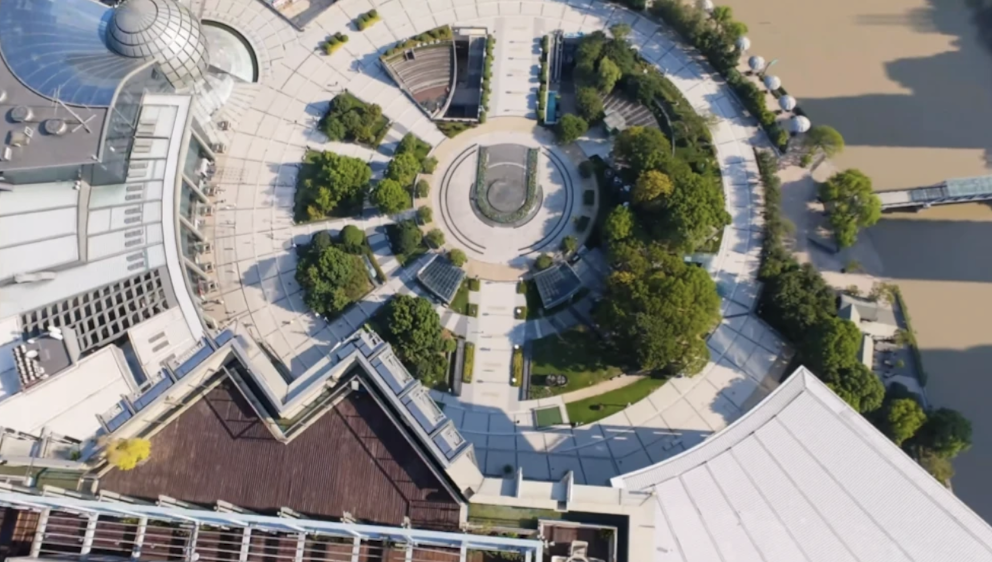
West Lake Cultural Square is located in Gongshu District, Hangzhou, facing Wulin Square across the river at the southernmost end of the Beijing-Hangzhou Grand Canal section in Hangzhou. It is one of Hangzhou's most important urban cultural squares. The square covers an area of about 13.3 hectares and consists of four parts: the main square, musical fountain, canal landscape belt, and cultural venue cluster. Standing at the center of the square is the Global Center, about 100 meters high (one of Hangzhou's supertall buildings). To the north are arranged in order the three major provincial-level cultural venues: Zhejiang Provincial Museum, Zhejiang Museum of Natural History, and Zhejiang Science and Technology Museum, making it the area with the densest cultural facilities in Hangzhou. The main fountain of the square is one of Hangzhou's largest musical fountains, operating on a regular schedule daily with coordinated lighting and music, with water jets reaching up to 60 meters high——the night view is especially spectacular.
Xinyi Square (Xinyifang) · 信义坊
🎧 In app 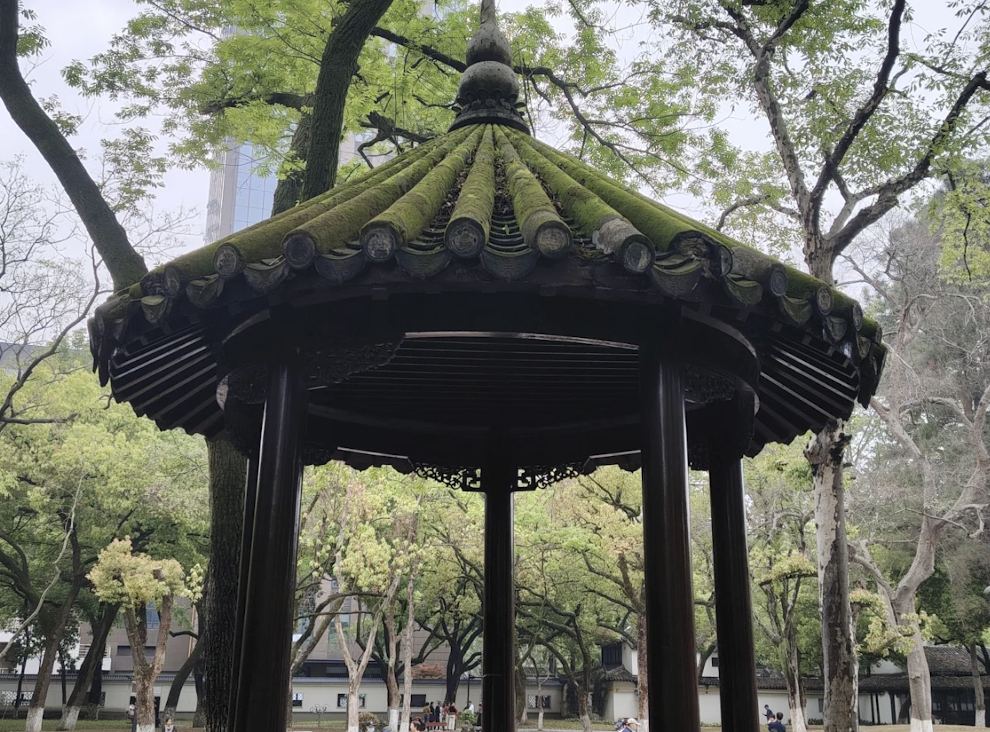
Xinyi Square is located on the west bank of the northern section of the Beijing-Hangzhou Grand Canal in Gongshu District, Hangzhou, south of Daguan Bridge. It is a waterfront cultural leisure block transformed from historical streets and lanes. The block relies on the old street and lane layout on the west bank of the canal, preserving a large number of residential buildings from the late Qing Dynasty and early Republican period, while introducing modern cultural creativity, dining, and leisure businesses, forming a unique character of "old Hangzhou negatives, new city living room." Xinyi Square Water Street is the main axis of the block, with a total length of about 500 meters, built along the canal. On one side are restored black-tiled and white-walled residential buildings, and on the other side is the open canal water surface, with occasional sculling boats gliding by——the scenery is full of Jiangnan watertown charm. The block regularly hosts cultural events such as "Canal Culture Market" and "Xinyi Square Music Festival." Compared to the bustling Qiaoxi Historical and Cultural Block, Xinyi Square appears more tranquil.
Fuyi Granary (Fuyicang) · 富义仓
🎧 In app 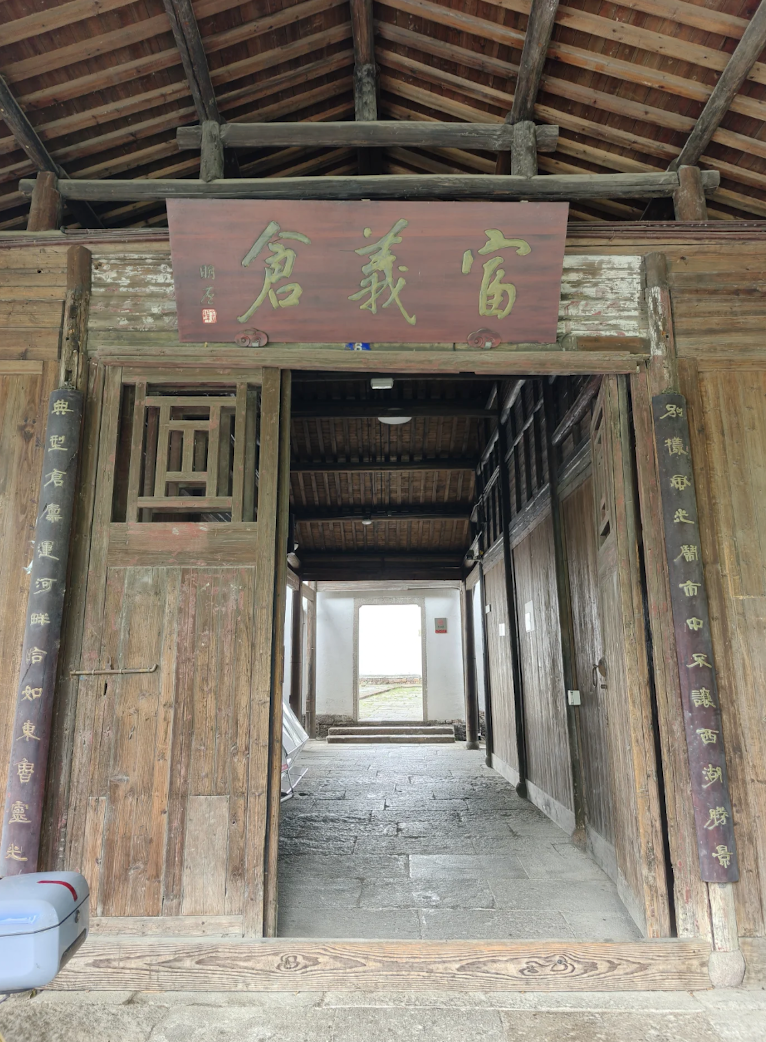
Fuyi Granary is located at the southern section of the Hangzhou segment of the Beijing-Hangzhou Grand Canal, within Xiawan Lane. It was first built in 1880 during the Qing Dynasty and served as an important granary site in the canal shipping system, hailed alongside Beijing's Nanxincang as the "Twin Gems of Granaries Under Heaven." The granary covers an area of about 8,000 square meters, originally consisting of four rows and five sections totaling sixty rooms. The existing building complex is currently the only well-preserved Qing Dynasty granary architectural cluster in Hangzhou. The entire complex adopts a traditional courtyard-style layout with black-tiled hard-mountain roofs, thick walls, and small windows, incorporating functions of thermal insulation, moisture prevention, and theft protection, reflecting the wisdom of ancient granary architecture. In 2007, Fuyi Granary completed protective renovation and was transformed into a canal culture exhibition center and cultural creative space. The interior houses a permanent exhibition themed "The Canal and Hangzhou," narrating the close relationship between the Grand Canal and Hangzhou's urban development through texts, images, artifacts, and multimedia. Fuyi Granary is one of the heritage sites for the Grand Canal's application for UNESCO World Heritage status.
Xiaohe Straight Street (Xiaohe Zhijie) · 小河直街
🎧 In app 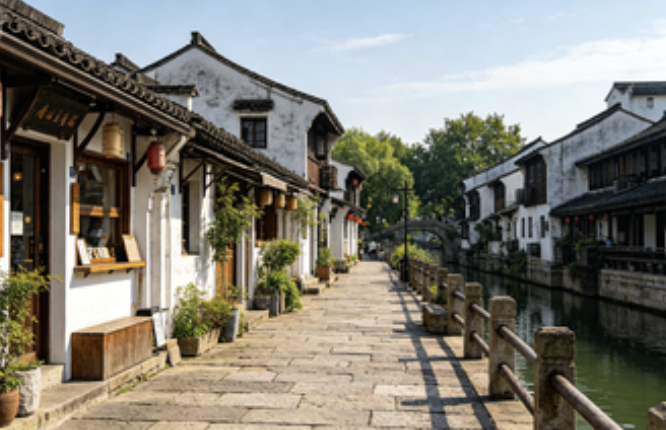
Xiaohe Straight Street is located at the convergence of the Beijing-Hangzhou Grand Canal and Xiaohe Creek in Gongshu District, Hangzhou. It is the main axis of the Xiaohe Historical and Cultural Block and one of the best-preserved historical blocks of canal civilian life in Hangzhou. The block was built along Xiaohe Creek, with a total length of about 500 meters. Both sides retain a large number of canal residential houses from the late Qing Dynasty and early Republican period——mostly in the layout of "front shop, back residence" or "lower shop, upper residence," with black tiles, white walls, wooden doors, and stone steps, authentically presenting the living conditions of canal-side common people a century ago. Unlike other overly commercialized historical blocks, Xiaohe Straight Street still has a large number of original residents living there. The block regularly hosts canal culture events and is an important node of the Hangzhou Canal Cultural Belt. Visitors can experience sculling boat rides, taste canal-side tea, listen to old Hangzhou residents tell stories, and feel the unique charm of a "living historical block."
Xiaohe Park (Xiaohe Gongyuan) · 小河公园
🎧 In app 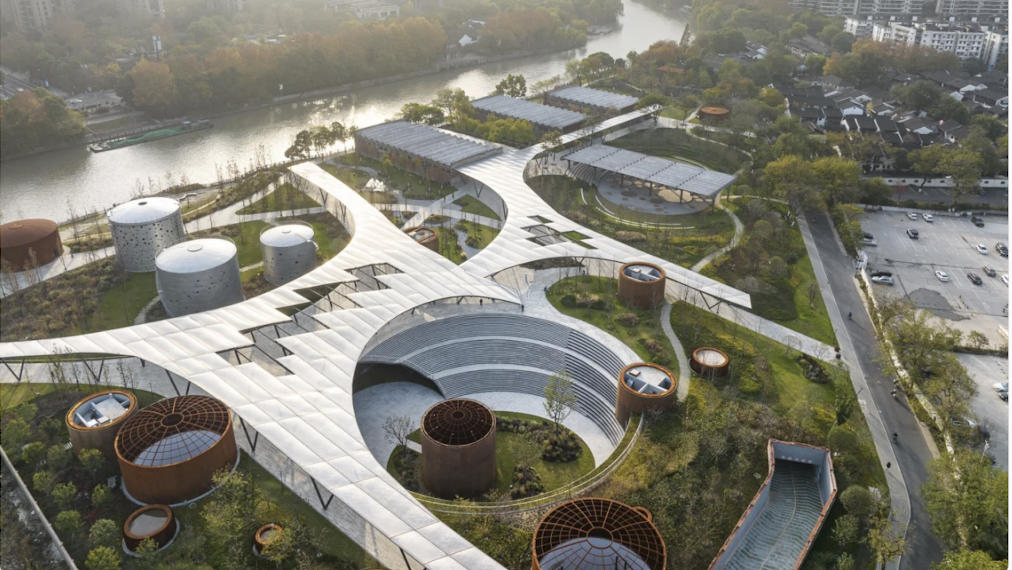
Xiaohe Park is located south of Xiaohe Straight Street in Gongshu District, along the Beijing-Hangzhou Grand Canal. It was converted from the former Hangzhou Xiaohe Oil Depot site and officially opened to the public in 2022, serving as an important node of the Hangzhou Grand Canal National Cultural Park. Covering an area of about 5.6 hectares, the park ingeniously preserves the industrial relics of the original oil depot, including four large oil tanks, a loading and unloading dock, and oil pipelines, which are connected as a whole through steel structure corridors, landscape walkways, and green vegetation. The four giant oil tanks have been transformed into immersive light and shadow art spaces, presenting brilliant visual effects under built-in lighting at night and making the park a popular new photo spot in Hangzhou. Along the canal side, the park features a waterfront walkway about 10 meters wide, flanked by weeping willows, camphor trees, and cherry blossoms, offering diverse scenery throughout the four seasons.
Qiaoxi Historical and Cultural Block (Qiaoxi Lishi Wenhua Jiequ) · 桥西历史文化街区
🎧 In app 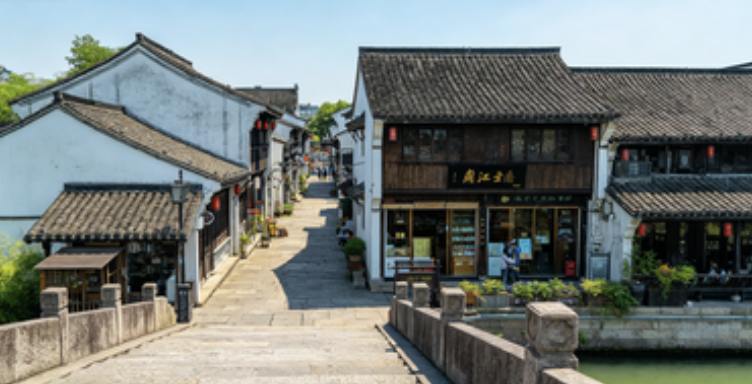
The Qiaoxi Historical and Cultural Block is located on the west bank of Gongchen Bridge and is one of the best-preserved historical blocks along the Hangzhou section of the Beijing-Hangzhou Grand Canal. Covering an area of about 7.8 hectares, the block retains a large number of residential houses, workshops, shops, and dock ruins from the late Qing Dynasty and early Republican era, fully presenting the historical features of canal handicraft civilization. Strolling through the block, visitors see bluestone roads flanked by restored black-tiled and white-walled buildings. Along the street are time-honored shops such as Zhang Xiaoquan, Wang Xingji, and West Lake Silk Umbrella, as well as numerous independent cafes, cultural creative studios, and handicraft workshops. The block houses four national-level thematic museums: China Umbrella Museum, China Knife, Scissors and Sword Museum, China Fan Museum, and Hangzhou Arts and Crafts Museum. The block connects with Xiaohe Straight Street to the south and extends north to the Grand Canal Traditional Chinese Medicine Hall and Zhang Daxian Temple, with a total length of about 1.5 kilometers.
China Beijing-Hangzhou Grand Canal Museum (Zhongguo Jinghang Da Yunhe Bowuguan) · 中国京杭大运河博物馆
🎧 In app 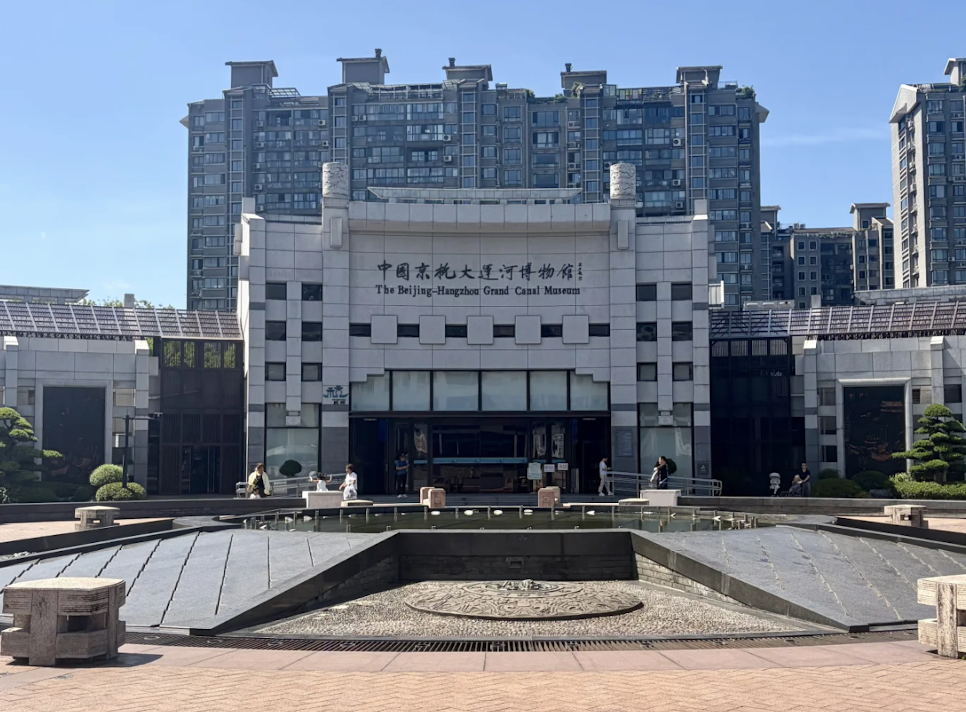
The China Beijing-Hangzhou Grand Canal Museum is located south of Canal Square in Gongshu District, Hangzhou, and officially opened to the public in 2006. It is the only national-level thematic museum in China dedicated to the Beijing-Hangzhou Grand Canal. With a floor area of about 12,000 square meters and the theme "The Canal Changed China," the museum systematically showcases the long history of over 2,500 years from 486 BCE when King Fuchai of Wu excavated the Han Ditch to the present, as well as the profound impact of the Grand Canal on Chinese civilization in politics, economy, culture, and water conservancy. The museum houses over ten thousand pieces of cultural relics, ancient books, charts, and models related to the Grand Canal, including precious artifacts such as a Sui Dynasty gilt bronze door knocker, a Yuan Dynasty canal ship rudder, and a Ming Dynasty complete map of the canal. The museum building is shaped like a giant canal ship about to set sail, magnificent in bearing. The museum also regularly holds canal culture lectures, temporary special exhibitions, and youth research activities.
Gongchen Bridge (Gongchen Qiao) · 拱宸桥
🎧 In app 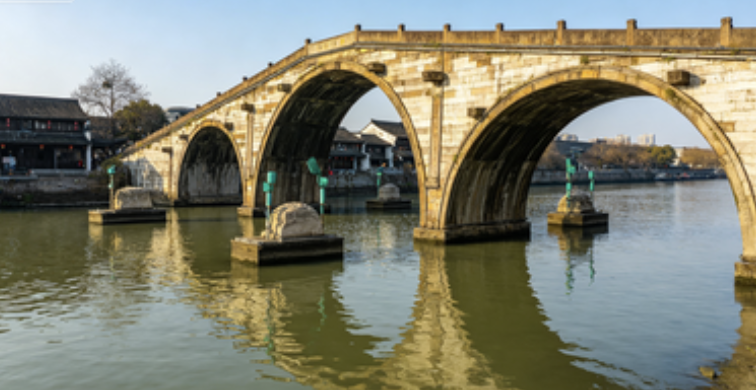
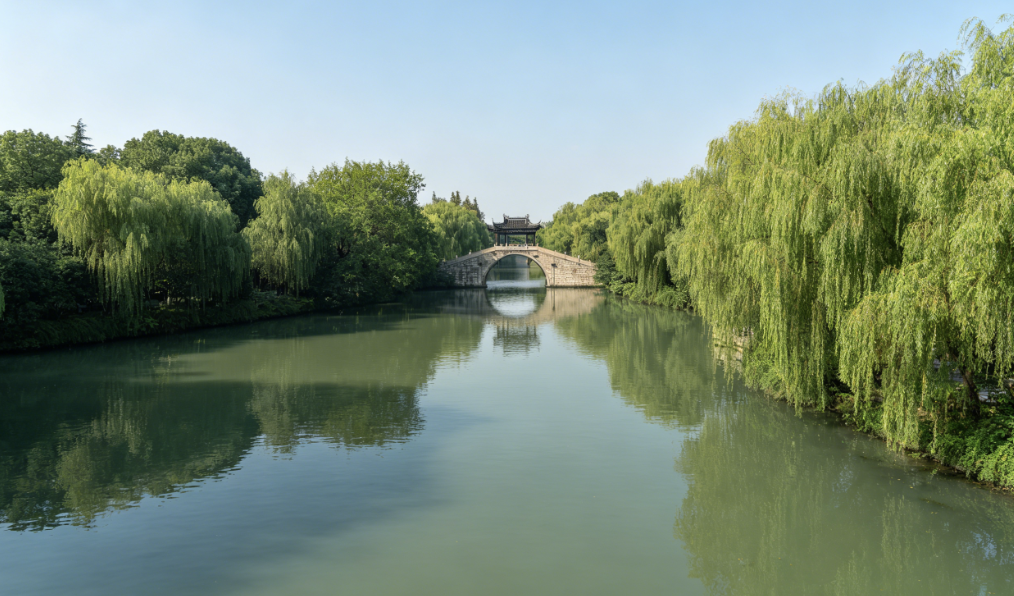
Gongchen Bridge was first built in 1631 during the Ming Dynasty and stands as the southern terminus landmark of the Beijing-Hangzhou Grand Canal. It is the longest, highest, and widest surviving stone arch bridge in Hangzhou. The bridge spans 98 meters with a height of 16 meters, featuring a three-arch thin-pier structure. The deck is paved with long bluestone slabs, flanked by stone balustrades and pillar posts carved with lotus motifs in an antique and majestic style. The name "Gongchen" derives from the phrase "gongweichenji," meaning to guard the imperial seat with reverence, symbolizing respect for the emperor. Historically, Gongchen Bridge marked the terminal point where canal shipping boats arrived in Hangzhou, and merchants from all over would dock and disembark here, gradually forming a bustling market on the west side of the bridge, creating the magnificent scene of "Ten Li of Silver Hushu." Today, Gongchen Bridge remains vibrant with traffic and pedestrians. The ancient bridge stretches across the sparkling canal waters, with the Qiaoxi Historical and Cultural Block on the west bank and the commercial district on the east bank. At dusk, the setting sun casts its glow on the ancient stone railings while canal boats glide slowly by—a truly moving scene.
Yunhe Square (Yunhe Guangchang) · 运河广场
🎧 In app 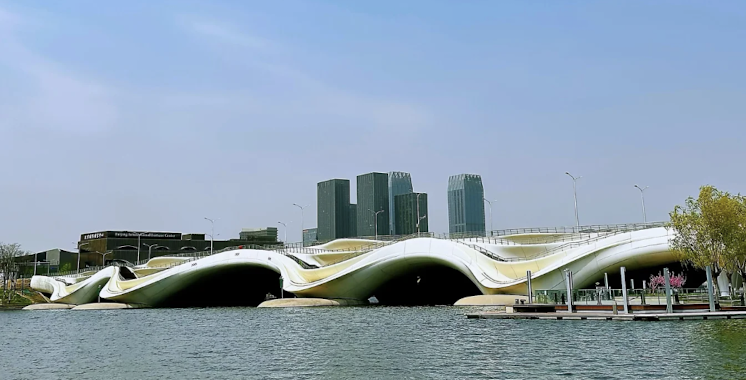
Yunhe Square is located on the west bank of Gongchen Bridge in Gongshu District, at the southern terminus of the Beijing-Hangzhou Grand Canal. It is an open urban square that showcases Hangzhou's canal culture most comprehensively. The square is paved with bluestone slabs and antique-style floor tiles, with a large sailing ship sculpture standing at its center, symbolizing the millennial canal shipping culture. The east side of the square is adjacent to Gongchen Bridge, with waterfront steps and antique-style street lamps along the bank, making it a popular spot for citizens to take evening strolls, square dancing and enjoying the canal night view. During holidays, the square hosts canal culture markets, intangible cultural heritage exhibitions, and light shows, bustling with activity. The surrounding area is equipped with tea culture houses, canal-themed restaurants, and cultural creative shops, where visitors can rest and enjoy tea while experiencing Hangzhou's historical heritage of "prospering because of the canal." This is also one of the main boarding and disembarkation points for canal cruise boats on the Hangzhou section of the Grand Canal.