← Hangzhou

Hangzhou · 河坊街(清河坊历史街区)

Hefang Street (Qinghefang Historical Block)

🎫 Ticket Free
🕘 Opening Hours Street: open 24/7 year-round. Shop hours generally 9:00–22:00, varying by individual store.
🚇 Metro Metro Line 7 → Wushan Square Station (Exit D/C), walk 3–5 minutes to the west entrance of the block (most convenient)
🚇 Metro Metro Line 1 → Ding'an Road Station (Exit C), walk about 10 minutes to the east entrance of the block
📍 Address Hefang Street, Shangcheng District, Hangzhou, Zhejiang Province (from Zhonghe Road east to Wushan Square west) Map ↗
🎧 10 audio walking guides for Hefang Street (Qinghefang Historical Block) — listen on the spot in the YOLO HAPPY app. →

Inside Hefang Street (Qinghefang Historical Block)

Hefang Street East Entrance (Dongrukou) · 河坊街东入口

🎧 In app
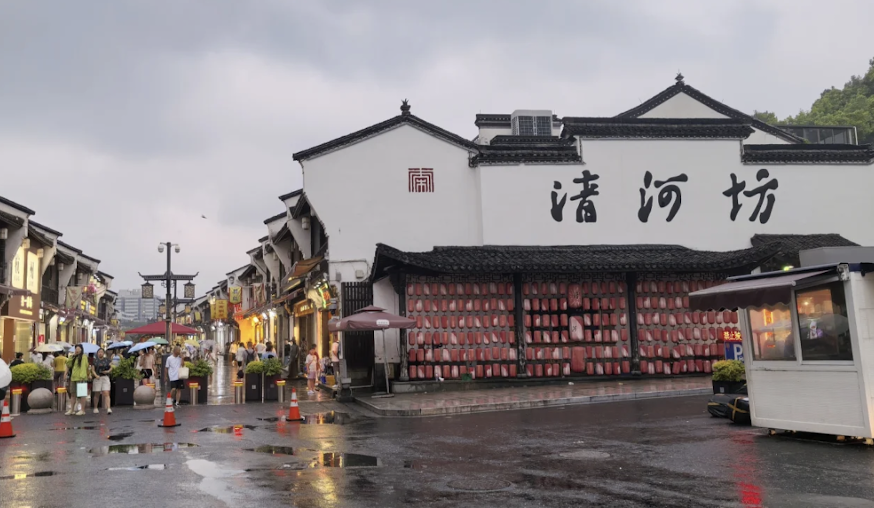
Hefang Street East Entrance (Dongrukou)

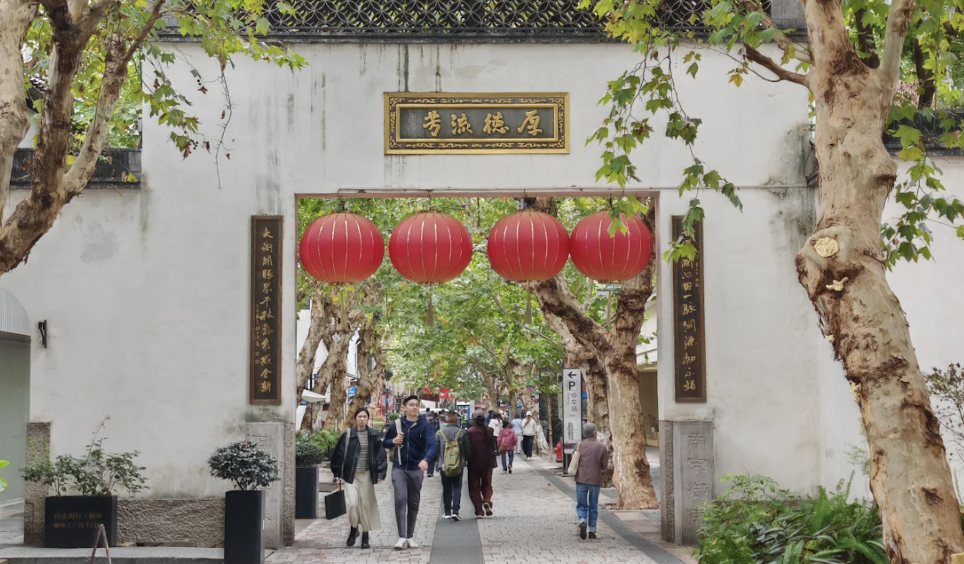
The East Entrance of Hefang Street is located at the intersection of Zhongshan Middle Road and Hefang Street in Shangcheng District, Hangzhou. It is the eastern starting point of the Hefang Street pedestrian zone. The entrance is paved with neat bluestone slabs, and both sides of the street feature restored architectural complexes in Ming-Qing style, with black tiles, white walls, and carved wood windows——the rich ancient atmosphere greets visitors instantly. Nearby the entrance are various Hangzhou time-honored brand shops, including Wang Xingji Fan Studio, Zhang Xiaoquan Scissors, and Hu Qingyutang Traditional Chinese Medicine, among others. Once visitors step in from this entrance, they formally enter the core area of Hangzhou's millennial civilian culture. Hefang Street has a total length of about 1,800 meters, of which the Qinghefang section (from the East Entrance to Nanshan Road) is a pedestrian street——one of the most completely preserved and representative historical and cultural blocks in Hangzhou. Every weekend and holiday, the area in front of the East Entrance teems with crowds.
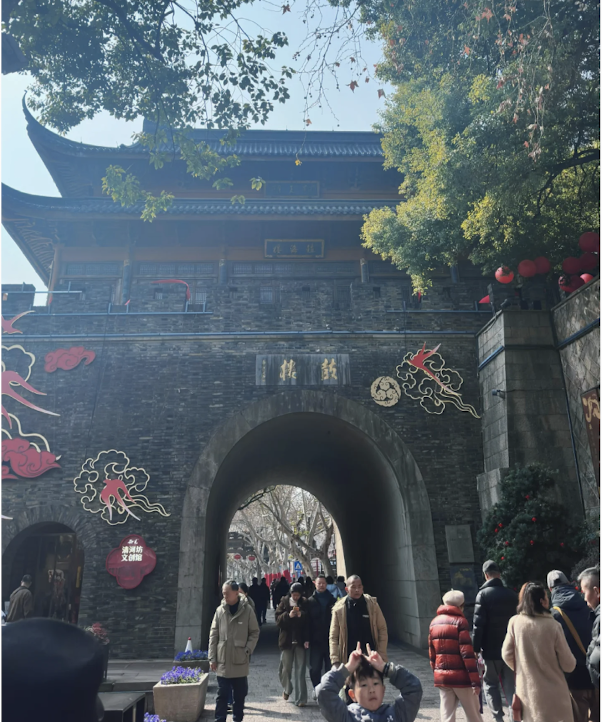
Drum Tower (Gulou) · 鼓楼

🎧 In app
Drum Tower (Gulou)

The Drum Tower is located at the east end of Hefang Street, at the intersection of Zhongshan Middle Road and Wangjiang Road. It is an important historical and cultural site and landmark building in Hangzhou. The Drum Tower was first built during the Five Dynasties period in the Wuyue Kingdom (approx. 907 CE) and originally served as the south gate of Lin'an City's inner citadel——Chaotian Gate——in the Southern Song Dynasty, being the south gate of ancient Hangzhou and holding a prominent status. Historically, the Drum Tower was destroyed by war and fire multiple times and rebuilt repeatedly. The existing building was reconstructed in 2002 according to the Ming Dynasty Drum Tower form. The Drum Tower is a three-story wooden tower-style building with a double-eave xieshan roof, red walls, and black tiles, about 20 meters in height, presenting a majestic bearing. The first floor houses the "Southern Song Lin'an City Historical Relics Exhibition," recreating the prosperous scene of Lin'an, the Southern Song capital, through texts, models, and multimedia. The second floor is a tea culture exhibition space where visitors can taste tea and rest.

Wangxian Pavilion (Wangxiange) · 望仙阁

🎧 In app
Wangxian Pavilion (Wangxiange)

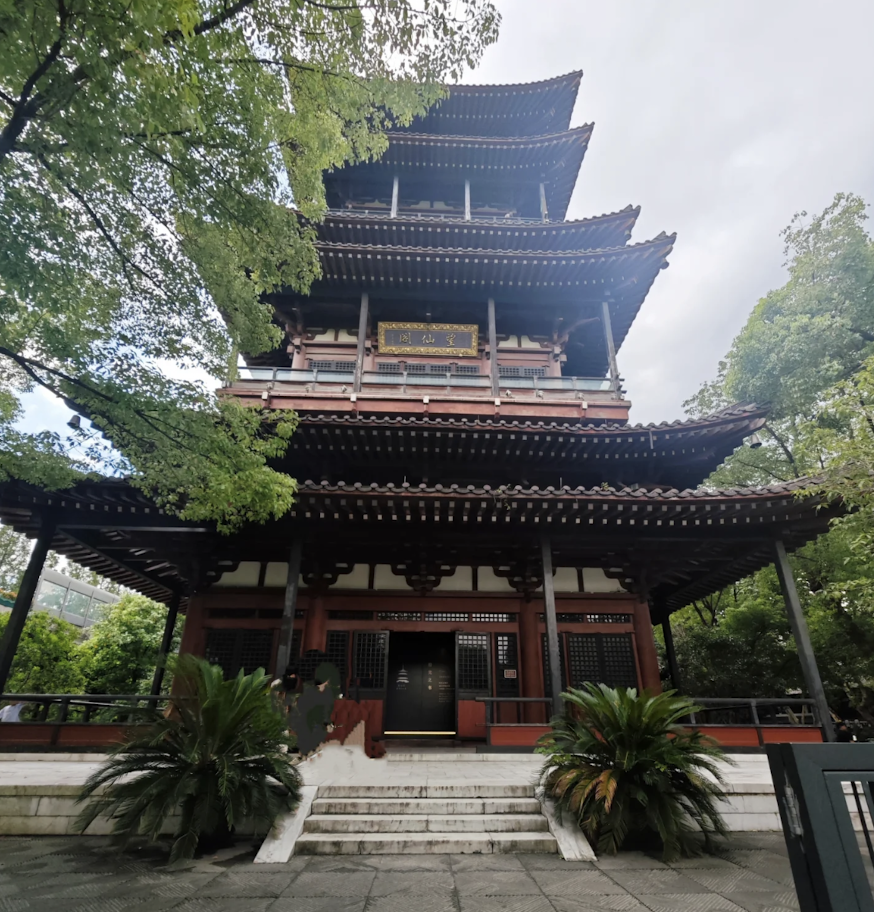
Wangxian Pavilion is located in the middle section of Hefang Street, adjacent to the Southern Song Imperial Street ruins. It is a three-story tower-style building in Ming-Qing style and the best high vantage point within Hefang Street for viewing the surroundings. The pavilion's name originates from a touching Southern Song legend: when Emperor Gaozong of Song (Zhao Gou) crossed south and stationed in Hangzhou, he once gazed into the distance from this spot and suddenly saw immortal figures appearing in auspicious clouds. A pavilion was subsequently built to commemorate this event, hence the name "Wangxian" (Gazing at Immortals) Pavilion. The pavilion is about 16 meters high, with a double-eave pyramidal roof, vermilion pillars, and surrounding corridors——elegant and exquisite in architectural style. The first floor houses a Hangzhou old photographs exhibition, displaying precious old photos of Hangzhou's city walls, streets, and canal from the late Qing and early Republican period. The second floor is a Southern Song culture exhibition space. The third floor is an open viewing terrace. Wangxian Pavilion is also one of the best photography spots on Hefang Street.

Hu Qingyutang Traditional Chinese Medicine Museum · 胡庆余堂中药博物馆

🎧 In app
Hu Qingyutang Traditional Chinese Medicine Museum

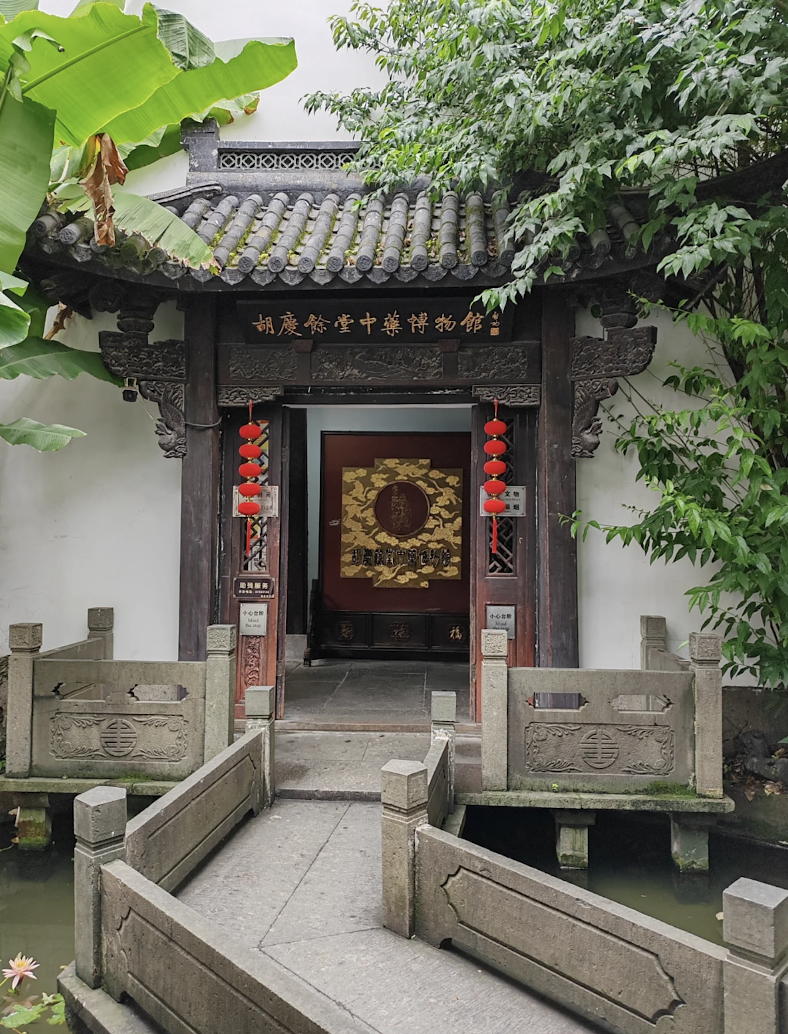
The Hu Qingyutang Traditional Chinese Medicine Museum is located within Da Jing Lane on Hefang Street and was converted from the original site of the Hu Qingyutang pharmaceutical workshop. It officially opened to the public in 1989 and is the only national-level traditional Chinese medicine specialized museum in China. Hu Qingyutang was founded in 1874 by Hu Xueyan, a renowned Anhui merchant in the late Qing Dynasty, and is hailed as the "Jiangnan Medicine King," standing alongside Beijing Tongrentang as the "Two Great Pharmacies of North and South." The museum covers an area of about 3,000 square meters and completely preserves the "front shop, back workshop" architectural layout of the Qing Dynasty pharmacy——the front hall serving as the sales and exhibition area, and the back hall as the pharmaceutical workshop and medicinal material storage area. The museum houses over ten thousand pieces of traditional Chinese medicinal material specimens, pharmaceutical tools, and precious medical books. Visitors can closely observe pharmaceutical workers demonstrating traditional Chinese medicine production processes such as slicing herbs, grinding powder, and making pills on-site.

Fang Huichun Tang (Fang Huichuntang) · 方回春堂

🎧 In app
Fang Huichun Tang (Fang Huichuntang)

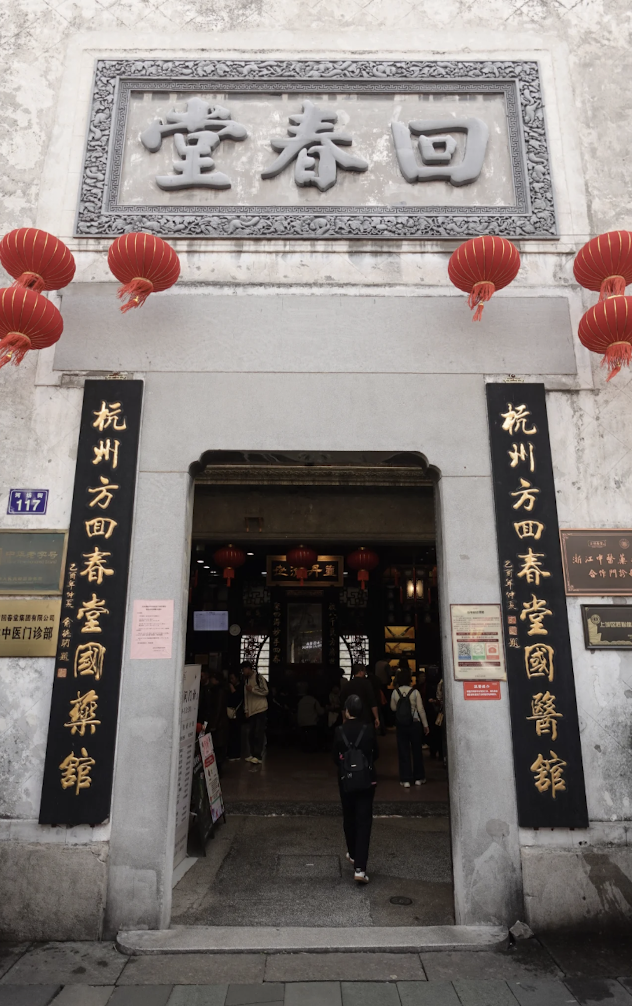
Fang Huichun Tang is located at 117 Hefang Street and was founded in 1649 (the sixth year of the Shunzhi reign of the Qing Dynasty) by the Fang family of Qiantang. It is the oldest surviving traditional Chinese medicine time-honored brand in Hangzhou, predating Hu Qingyutang by 225 years. The name "Huichun" (Returning Spring) is derived from the meaning of "rejuvenating the elderly and restoring health with miraculous skills," and the hall has long been renowned for its "authentic medicinal materials, meticulous processing, and renowned physicians practicing on-site." The medicine hall is a late Qing residential building with three courtyards and two skywells, featuring black tiles, white walls, and carved gate towers, preserving the complete layout of ancient TCM halls. Currently, Fang Huichun Tang offers comprehensive TCM diagnosis and treatment services including internal medicine, gynecology, pediatrics, and acupuncture and tuina massage, with over ten renowned veteran TCM doctors stationed there. The hall also regularly holds public welfare activities such as "National TCM Day," "Herbal Paste Festival," and "Parent-Child Paste Experience." During the winter paste festival period, free clinic services and constitution identification are also provided.

Zhu Bingren Copper Sculpture Art Museum (Jiangnan Copper House) · 朱炳仁铜雕艺术博物馆(江南铜屋)

🎧 In app
Zhu Bingren Copper Sculpture Art Museum (Jiangnan Copper House)

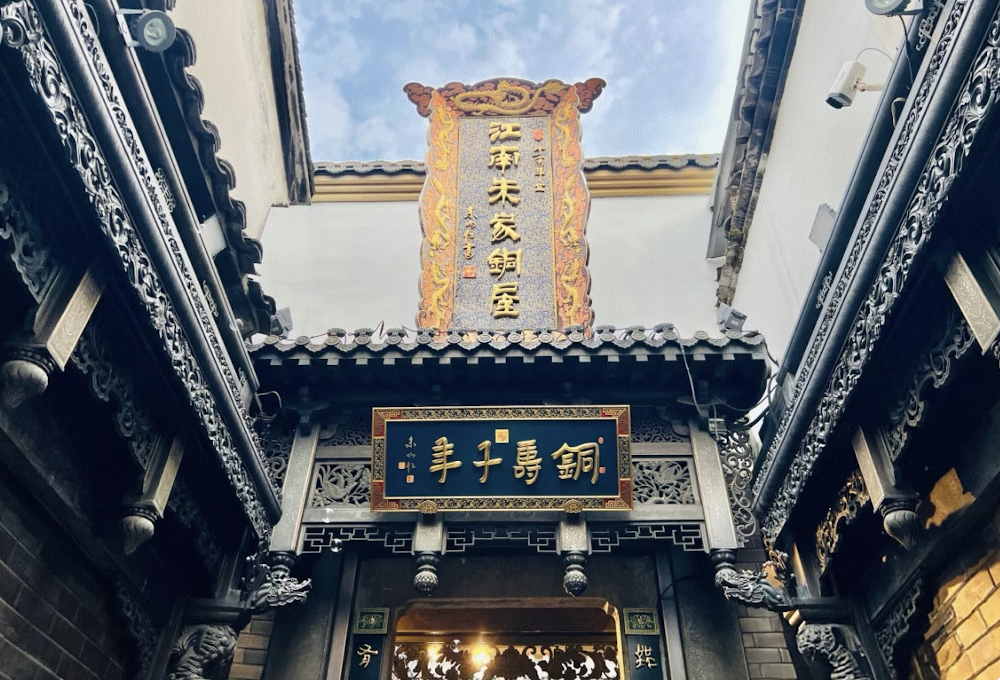
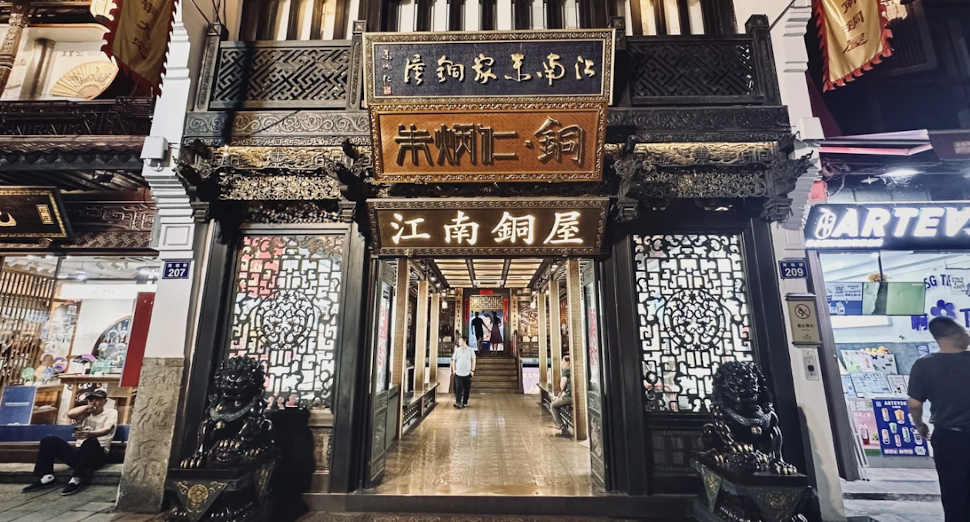
The Zhu Bingren Copper Sculpture Art Museum is also known as the "Jiangnan Copper House" and is located at 207 Hefang Street. It was founded in 2007 by Mr. Zhu Bingren, a national-level arts and crafts master and the fourth-generation inheritor of "Zhu Family Copper Art." It is the only thematic museum in China dedicated to copper sculpture art. The entire museum building is constructed with copper walls, copper roof, and copper pillars——from the roof and walls to the floor and doors/windows——consuming about 150 tons of pure copper in total, presenting a magnificent and spectacular sight, hailed as an "epic written in copper." The museum is divided into four major exhibition sections: "Copper History Corridor," "Zhu Bingren Copper Sculpture Masterpieces Exhibition," "Copper and Life," and "Copper Architecture Art," displaying over a thousand exquisite works by Zhu Bingren and three generations of copper art inheritors from his family. Among these, the 5-meter-high purple copper "Leifeng Pagoda" model, the 3-ton "Copper Bridge," and the "Copper Calligraphy" series are all crown jewels of the museum. The museum also has a copper sculpture interactive experience zone.

Jiangnan Copper House (Jiangnan Tongwu) · 江南铜屋

🎧 In app
Jiangnan Copper House (Jiangnan Tongwu)

The Jiangnan Copper House is the alternative name for the Zhu Bingren Copper Sculpture Art Museum and also the most stunning core landscape of the museum. The entire building is strictly constructed according to the "front hall, back main hall, with side wings" layout of Ming-Qing Jiangnan residential buildings, with three courtyards, two skywells, and a column-and-tie wooden (copper) structure. Everything from the exterior to the interior decorations is made of copper——the doors and windows are copper, the pillars are copper, the handrails are copper, and even the floor paving and ceiling decorations are copper, totaling over 150 tons of pure copper consumed, with a cost of tens of millions of yuan. The Copper House appears with "black tiles" (copper tiles) and "white walls" (copper walls), with upturned eaves and carved beams——under sunlight it glitters with golden light, presenting a magnificent sight. Inside the copper house, thematic exhibition areas such as "Copper Study," "Copper Tea Room," "Copper Buddha Hall," and "Copper Garden" are set up. The Copper House itself is also a rare giant copper sculpture artwork.

Southern Song Imperial Street (NanSong Yujie) · 南宋御街

🎧 In app
Southern Song Imperial Street (NanSong Yujie)

The Southern Song Imperial Street is located on Zhongshan Middle Road in Shangcheng District, Hangzhou, extending from the Drum Tower in the south to Zhongbei Bridge in the north, with a total length of about 4,000 meters. It was the central axis of Lin'an City (the Southern Song capital) and the exclusive ancient road where emperors passed on their way to offer sacrifices to heaven at the Jingling Palace. The Imperial Road ruins were discovered in 2008 at the Yangguan Lane section of Zhongshan Middle Road. Subsequently, Hangzhou launched the comprehensive conservation project for the Imperial Street, transforming the areas along the street into an open pedestrian block according to the principle of "restoring the old to its original form." Today's Southern Song Imperial Street retains bluestone slab pavement and underground imperial road ruin display windows——visitors can view the crushed stone cushion layer, drainage ditches, and floor tile ruins of the Southern Song Imperial Road through specially-made glass flooring. The Southern Song Imperial Street and Hefang Street intersect in a cross pattern, together forming the "Qinghefang-Southern Song Imperial Street" historical and cultural block.

Dajing Lane (Dajing Xiang) · 大井巷

🎧 In app
Dajing Lane (Dajing Xiang)

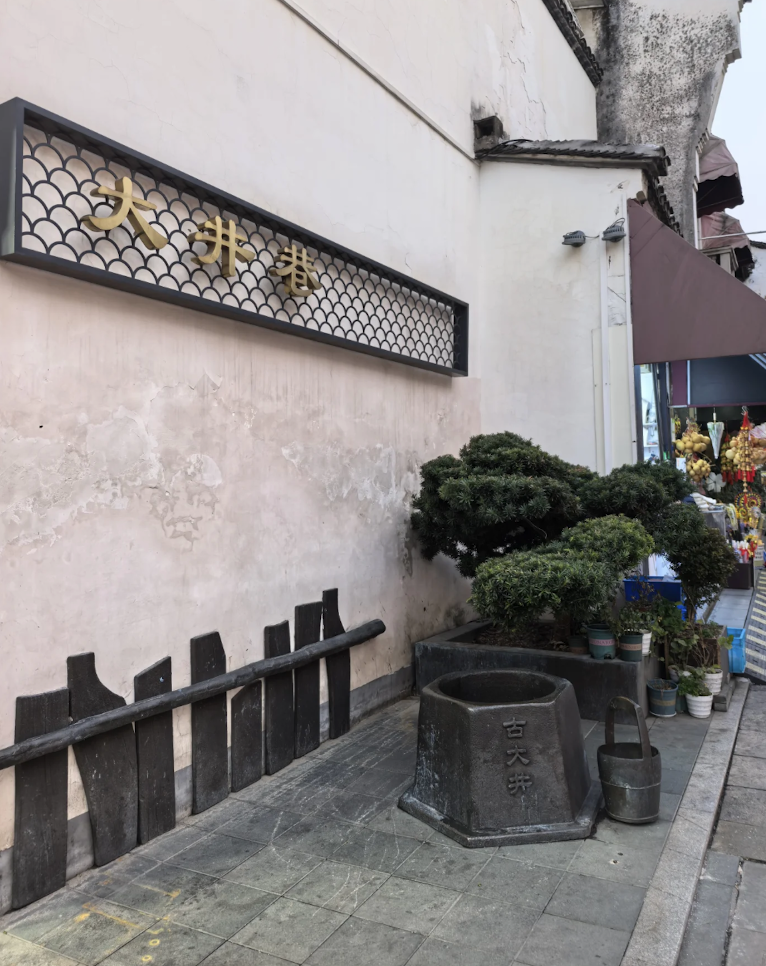
Dajing Lane is located on the south side of Hefang Street, at the foot of Wu Mountain. It connects Zhongshan South Road on the east and links to Hefang Street on the west. It is a quiet historical lane about 300 meters long. The lane's name originates from a five-eye ancient well——Dajing (Big Well)——built during the Five Dynasties period in the Wuyue Kingdom, inside the lane. The well mouth has five water drawing holes, allowing five households to draw water simultaneously. It was one of the important public water sources in ancient Hangzhou, and nearby residents still draw water for drinking from it to this day. Both sides of the lane retain a large number of Hangzhou-style residential houses from the late Qing and early Republican period, with black tiles, white walls, wooden doors, and stone steps. Dajing Lane is also one of the convenient paths to the Wu Mountain scenic area and Chenghuang Pavilion. Because the lane is relatively narrow and has not undergone excessive commercial development, it is one of the few "living old Hangzhou" blocks in the vicinity of Hefang Street.

Wushan Square and Chenghuang Pavilion (Wushan Guangchang yu Chenghuang Ge) · 吴山广场与城隍阁

🎧 In app
Wushan Square and Chenghuang Pavilion (Wushan Guangchang yu Chenghuang Ge)

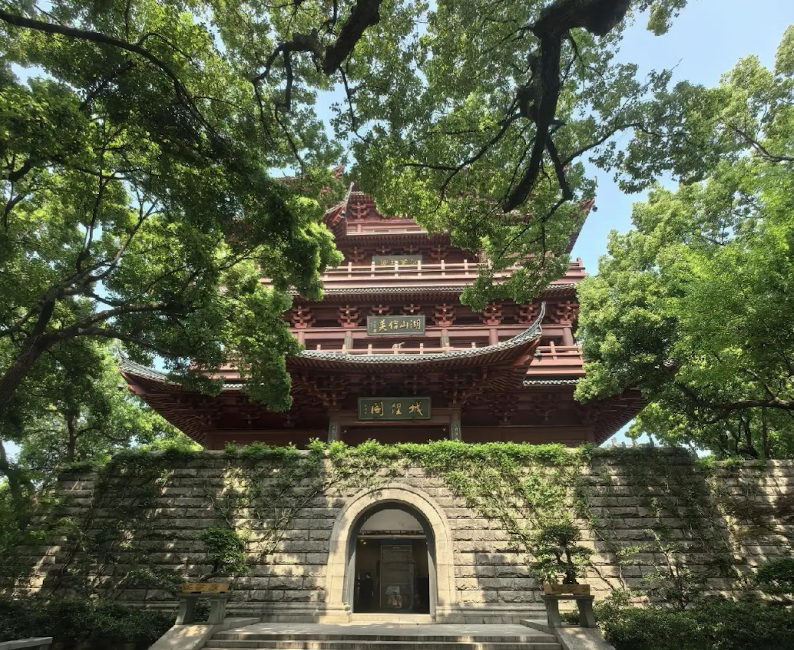
Wushan Square is located at the foot of Wushan Hill, on the south side of Hefang Street in Shangcheng District, Hangzhou. It is a landmark open urban square at the southern end of old Hangzhou's urban area and a comprehensive public space for citizens' fitness, leisure, and large-scale events. The square covers an area of about 5 hectares, paved with granite floor tiles, with a large musical fountain and a sunken performance stage in the center. Every weekend and holiday, intangible cultural heritage markets, folk performance exhibitions, and open-air concerts are held here. From the southern end of the square, follow the stone-step mountain path winding upward——it takes about 20-30 minutes to reach the summit of Wushan, where the landmark Chenghuang Pavilion stands. Chenghuang Pavilion is a seven-story antique-style building, about 40 meters high, with upturned eaves and vermilion walls. Ascending the pavilion offers a 360-degree overlook of Hangzhou's cityscape. Wushan itself is also an important cultural famous mountain in Hangzhou, with many scenic spots such as the "Twelve Zodiac Rocks," "River and Lake Convergence Viewing Pavilion," and "Medicine King Temple" on the mountain.

Get the app

The tool solved one problem. The app handles the whole trip.

Per-trip visa judgements, audio guides, prep checklists, and a real human concierge — offline-ready, in your language.

Download for iPhoneFree to download · No OTA upsells