← Hangzhou

Hangzhou · 灵隐寺

Lingyin Temple (Temple of Soul's Retreat)

🎫 Ticket 30 RMB
🕘 Opening Hours Daily 7:30-18:00 (last entry 17:00). Hours may adjust during special Dharma assemblies.
🚇 Metro Metro Line 3, Dongyue Station
🚇 Metro Line 3 Huanglong Sports Center Station (Exit B/C) → Transfer to Lingyin Express/Route 278M direct to Lingyin Station
🚇 Metro Line 1 Longxiangqiao Station (Exit A) → Transfer to Route 7/Tourist Route 1 bus to Lingyin Station
🚇 Metro Line 3 Huanglong Cave Station (Exit B) → Transfer to Route 505 bus
📍 Address No.1 Fayun Lane, Lingyin Road, Xihu District, Hangzhou, Zhejiang Province Map ↗
🎧 10 audio walking guides for Lingyin Temple (Temple of Soul's Retreat) — listen on the spot in the YOLO HAPPY app. →

Inside Lingyin Temple (Temple of Soul's Retreat)

Lingyin Temple Scenic Area Entrance (Lingyin Jingqu Rukou) · 灵隐寺景区入口

🎧 In app
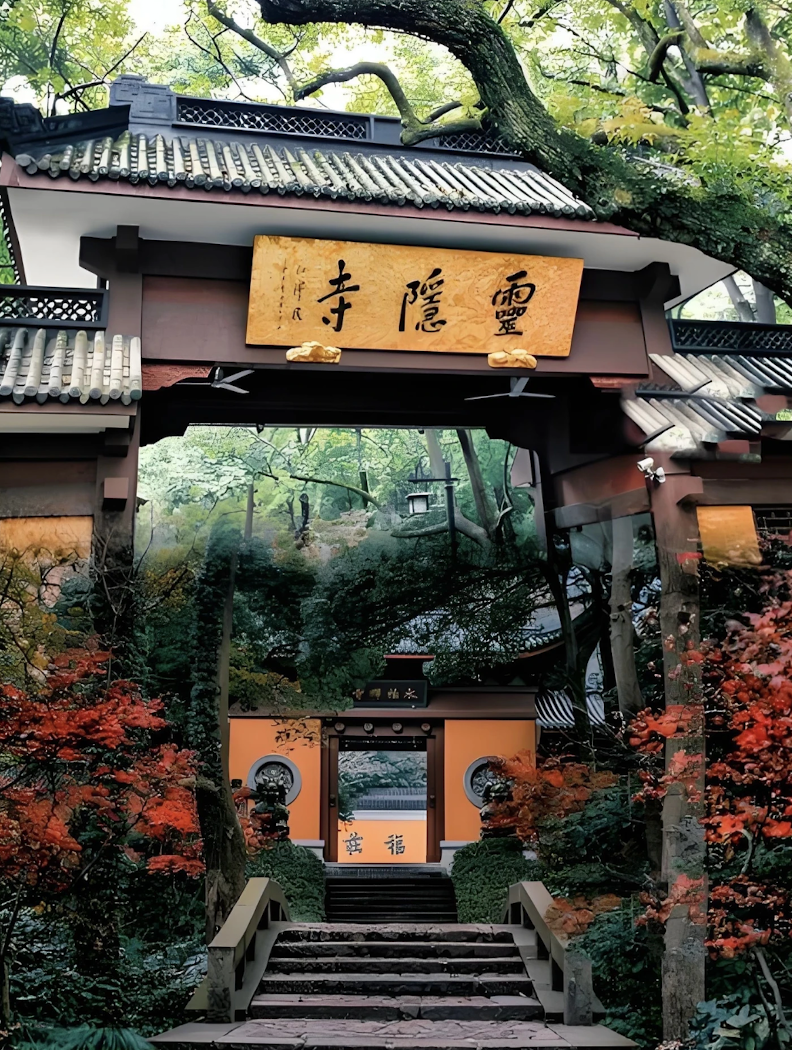
Lingyin Temple Scenic Area Entrance (Lingyin Jingqu Rukou)

The Lingyin Temple Scenic Area Entrance is located at 1 Fazhou Alley, Xihu District, Hangzhou, and is the formal starting point for entering the Lingyin Temple Scenic Area and Feilai Peak Carved Statues area. A large bluestone paifang (memorial archway) is set up at the entrance, with the four large characters "Lingyin Zen Traces" inscribed on the archway plaque in a vigorous and antique style, calligraphed by Li Ruihuan, former Chairman of the National Committee of the Chinese People's Political Consultative Conference. Inside the entrance are visitor center, ticket office (Feilai Peak scenic area 45 RMB/person, Lingyin Temple charges an additional 30 RMB incense offering fee), luggage storage, and barrier-free access——complete facilities and thoughtful service. From the entrance to the Lingyin Temple mountain gate, it takes about 5-8 minutes of walking.
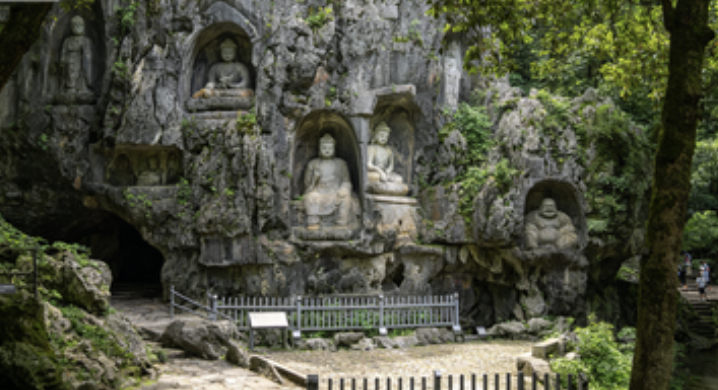
Feilai Peak Carved Statues (Feilai Feng Zaoiang) · 飞来峰造像

🎧 In app
Feilai Peak Carved Statues (Feilai Feng Zaoiang)

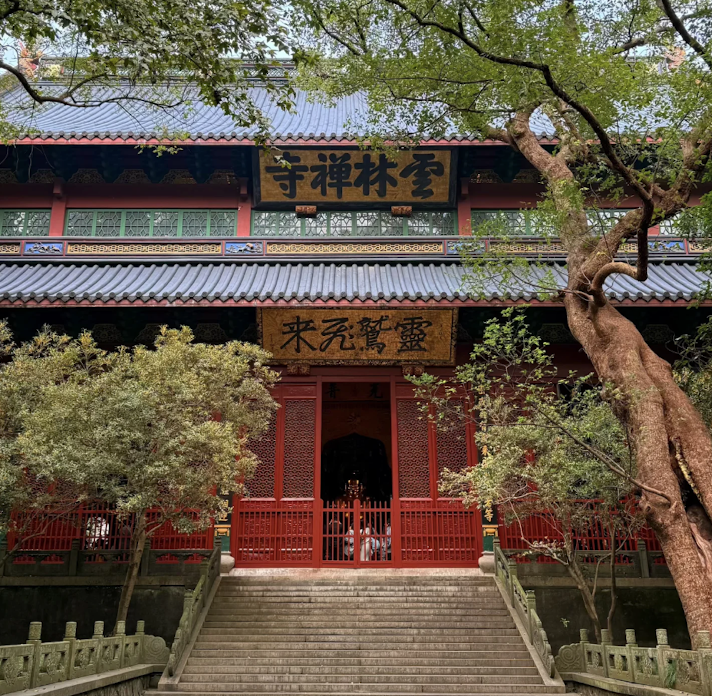
Feilai Peak Carved Statues are located east of the Lingyin Temple Scenic Area entrance, in front of Lingyin Temple's mountain gate. They are the largest in scale and best-preserved statue group among West Lake cliffside carved art, and also a Major Historical and Cultural Site Protected at the National Level. Feilai Peak is also known as "Spiritual Vulture Peak," about 168 meters high, with over 470 cliffside carved statues from the Five Dynasties to Yuan Dynasty distributed among the rock walls. The most famous is the Song Dynasty seated Maitreya Buddha statue, bare-chested and big-bellied with an ever-smiling mouth. The statue group is distributed along both banks of the creek valley, with towering ancient trees and hanging vines.

Ligong Pagoda and Lengquan Pavilion (Ligong Ta yu Lengquan Ting) · 理公塔与冷泉亭

🎧 In app
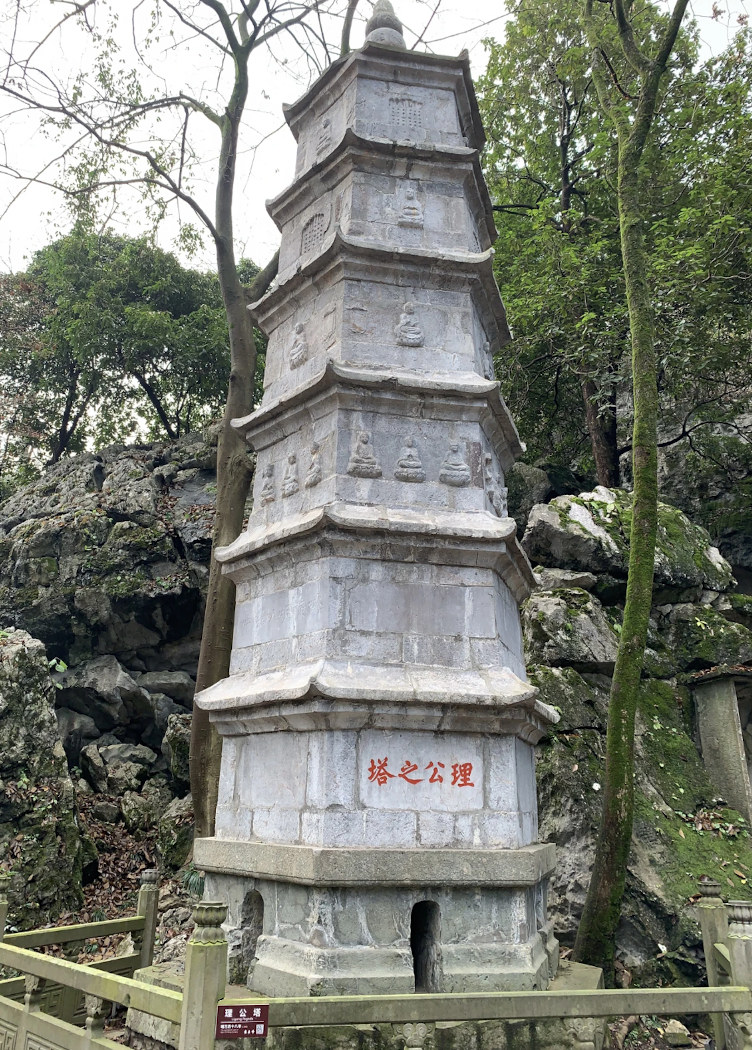
Ligong Pagoda and Lengquan Pavilion (Ligong Ta yu Lengquan Ting)

Ligong Pagoda and Lengquan Pavilion are located in front of Lingyin Temple's mountain gate, west of Feilai Peak Carved Statues. They are the scenic combination with the richest cultural heritage within the Lingyin Temple Scenic Area. Ligong Pagoda is also known as "Lingyin Pagoda" and was built to commemorate Ven. Huili, the founding patriarch of Lingyin Temple. Huili traveled to Hangzhou in 326 CE (first year of the Xianhe reign of Eastern Jin) and, seeing the mountain's exquisite beauty as if the Spiritual Vulture Peak from India had flown here, built a temple facing the mountain, naming it "Lingyin" (Soul's Retreat). Ligong Pagoda is a six-cornered, seven-story pavilion-style solid stone pagoda, about 8 meters high. Lengquan Pavilion is located south of Ligong Pagoda, by the bank of Lengquan Creek.

Hall of Heavenly Kings (Tianwang Dian) · 天王殿

🎧 In app
Hall of Heavenly Kings (Tianwang Dian)

The Hall of Heavenly Kings is the first main hall after Lingyin Temple's mountain gate and the first hall on the temple's central axis. It was first built during the Five Dynasties period of the Wuyue Kingdom, and the existing hall was rebuilt in modern times. The hall spans seven bays in width and four bays in depth, with a double-eave xieshan roof covered with yellow glazed tiles. Enshrined in the center of the hall is the incarnation of Maitreya Bodhisattva——the bare-chested, big-bellied, ever-smiling Maitreya Buddha seated statue, about 2.5 meters high, carved from camphor wood in the Qing Dynasty and fully gilded. On both sides of the hall are enshrined the majestic statues of the Four Heavenly Kings, respectively governing wind, harmony, rain, and smoothness, implying "favorable weather, the country peaceful and the people safe."

Mahavira Hall (Daxiong Baodian) · 大雄宝殿

🎧 In app
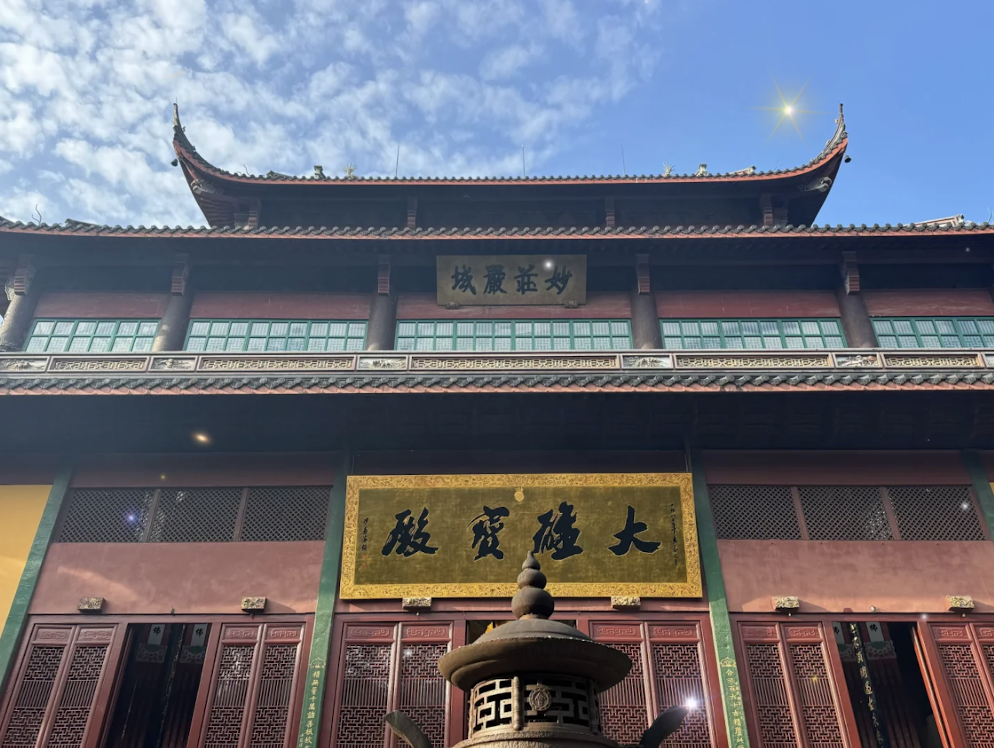
Mahavira Hall (Daxiong Baodian)

The Mahavira Hall is located behind the Hall of Heavenly Kings, at the core position of Lingyin Temple's central axis. It is the largest in scale and highest in specification among the halls in the temple, and also one of the most splendid and magnificent halls in Chinese Buddhist temples. The hall spans nine bays in width and five bays in depth, with a double-eave hipped roof——the highest grade of ancient Chinese building roof form——covered with yellow glazed tiles. Enshrined in the center of the hall is the gilded wood-carved seated statue of Sakyamuni Buddha, with a statue height of about 24.8 meters (including the Sumeru throne and auspicious backdrop), fully gilded with a solemn and majestic appearance. It is currently the largest indoor wood-carved Buddha statue within China's borders.

Medicine Buddha Hall (Yaoshi Dian) · 药师殿

🎧 In app
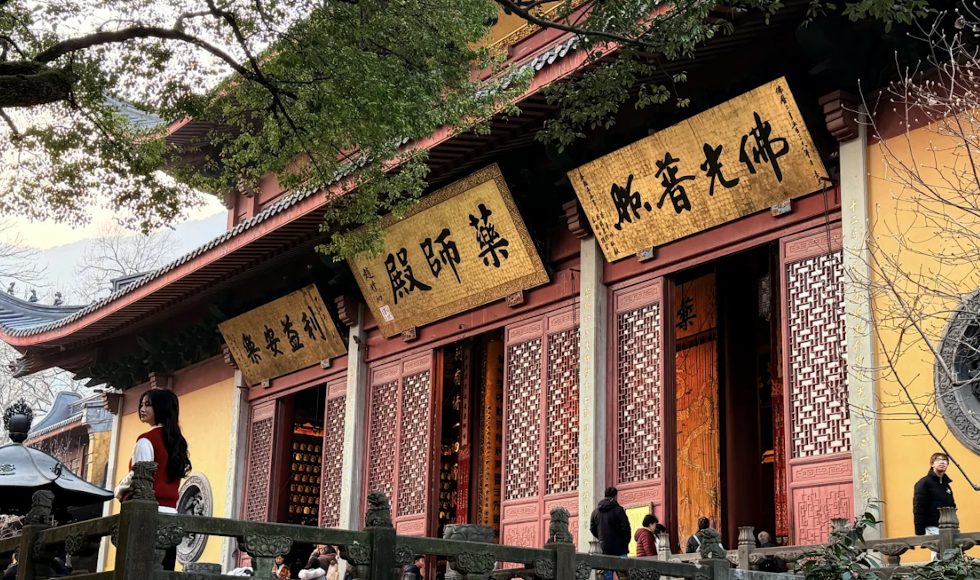
Medicine Buddha Hall (Yaoshi Dian)

The Medicine Buddha Hall is located on the east side of the Mahavira Hall on Lingyin Temple's central axis. It is the side hall specifically dedicated to Medicine Buddha of the Eastern Pure Lapis Lazuli World, and also the hall most favored by Hangzhou devotees for praying to dispel disasters, extend lifespan, and maintain physical health. The hall spans five bays in width and three bays in depth, with a single-eave xieshan roof, black tiles, and vermilion pillars——simple, elegant, and dignified in style. Enshrined in the center of the hall is the seated statue of Medicine Buddha, about 3.5 meters high, wearing Buddhist robes and holding a medicine vase, with a compassionate and serene countenance. The hall's front courtyard is planted with a medicinal herb garden, growing dozens of Chinese medicinal herbs such as Ganoderma lucidum, Chinese angelica, and Astragalus membranaceus——a unique "Buddhist medicinal herb garden" landscape in Lingyin Temple.

Scripture Library (Cangjing Lou) · 藏经楼

🎧 In app
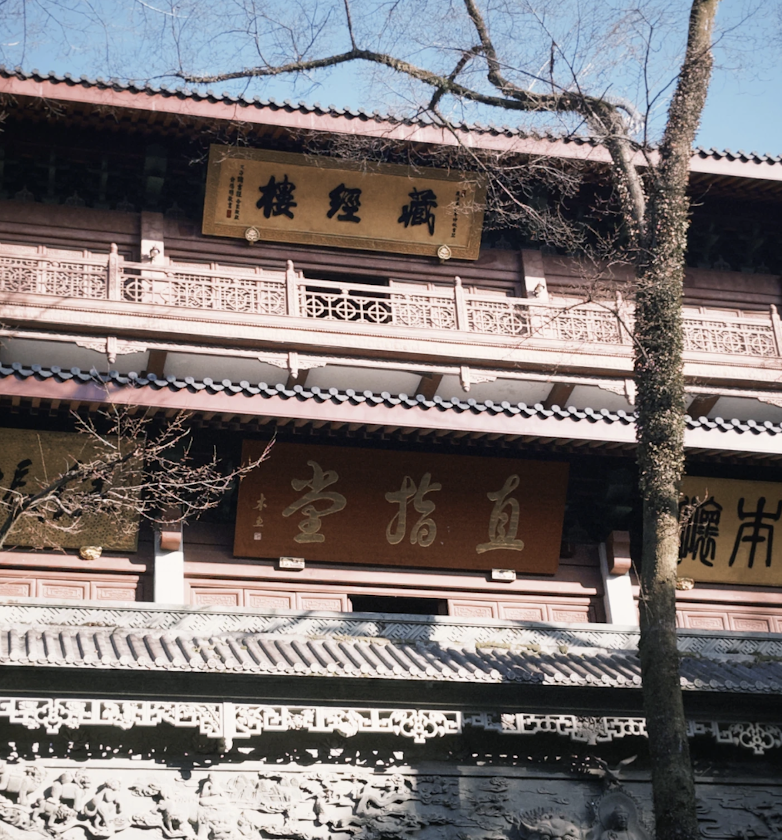
Scripture Library (Cangjing Lou)

The Scripture Library is located at the northernmost end of Lingyin Temple's central axis, behind the Mahavira Hall. It is the hall specifically used for collecting and enshrining the Buddhist Tripitaka and precious Buddhist scriptures, as well as an important venue for the abbot to preach the Dharma and for monastics to study scriptures in daily practice. The library is a two-story building with five bays in width and four bays in depth, featuring a double-eave ying-shan roof with green tiles and white walls, presenting an elegant and dignified style. Enshrined in the center of the first floor is a large reclining jade Buddha from Myanmar, over 6 meters in length—the largest jade Buddha statue in the temple. The second floor is the scripture collection area, housing precious Tripitaka versions such as the "Qianlong Tripitaka," "Yongle Northern Tripitaka," and "Fangshan Stone Scriptures," as well as handwritten manuscripts of treatises by eminent monks across dynasties.

Huayan Hall (Huayan Dian) · 华严殿

🎧 In app
Huayan Hall (Huayan Dian)

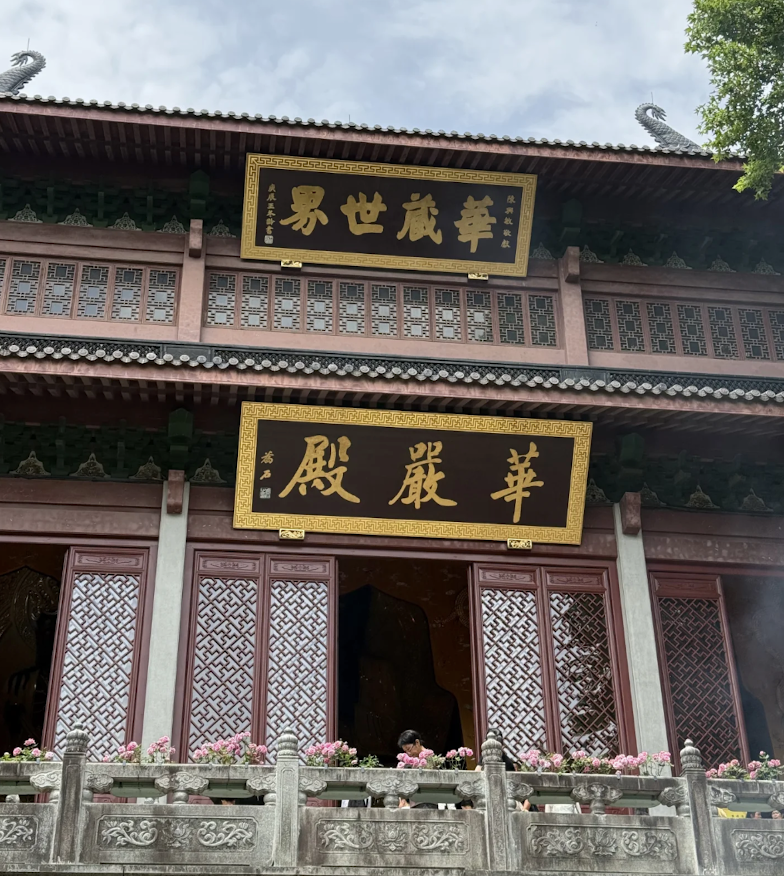
The Huayan Hall is located on the west side of Lingyin Temple's central axis, south of the Scripture Library. It is the hall dedicated to the Huayan Three Sages. The Huayan Three Sages feature Vairocana Buddha (Dharma Body Buddha) in the center, Manjusri Bodhisattva (Wisdom Virtue) on the left, and Samantabhadra Bodhisattva (Principle Virtue) on the right, together demonstrating the perfect and harmonious Dharma Realm view of "one is all, all is one" from the Huayan Sutra. The hall spans five bays in width and three bays in depth, with a single-eave xieshan roof and vermilion pillars—dignified and elegant in style. Inside the hall, the three Buddha statues are each about 4 meters high, carved from camphor wood and fully gilded.

Jigong Hall (Jigong Dian) · 济公殿

🎧 In app
Jigong Hall (Jigong Dian)

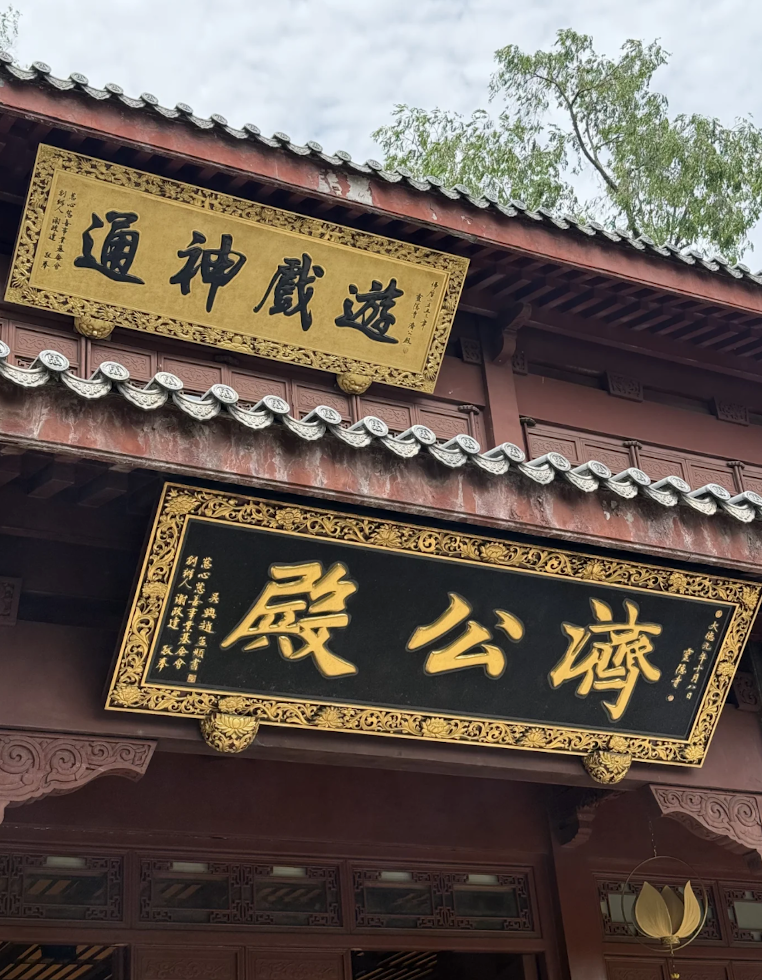
The Jigong Hall is located in the east side hall of Lingyin Temple and is the dedicated hall commemorating Ven. Jigong (secular name Li Xiuyuan, Dharma name Chan Master Daoji) of the Southern Song Dynasty. Jigong was born in 1148 CE (18th year of the Shaoxing reign) in Tiantai County. At age 18, he became a monk under Ven. Xiaotang Huiyuan at Lingyin Temple. He is widely known for his "crazy" image—"shoes torn, hat torn, kasaya on the body torn"—and his transcendent state of "wine and meat pass through the intestines, but the Buddha remains in the heart," revered by the people as the "Living Buddha Jigong." Enshrined in the center of the hall is the seated statue of Jigong, about 2.5 meters high, wearing a tattered kasaya and holding a broken fan, with a humorous and approachable expression.

Hall of Five Hundred Arhats (Wubai Luohan Tang) · 五百罗汉堂

🎧 In app
Hall of Five Hundred Arhats (Wubai Luohan Tang)

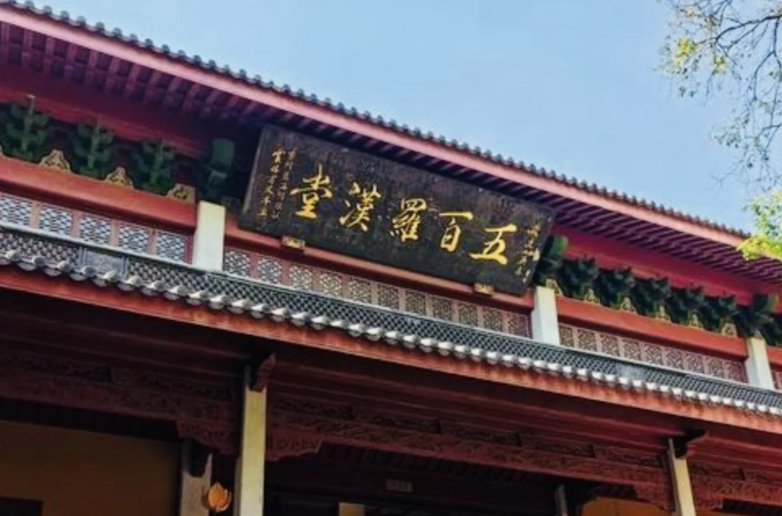
The Hall of Five Hundred Arhats is located in the west side hall of Lingyin Temple and is the dedicated hall for enshrining the Five Hundred Arhats, also one of the larger and better-preserved Arhat Halls among Hangzhou temples. The Arhat Hall spans seven bays in width and three bays in depth, with a single-eave hipped roof, green tiles, and vermilion pillars—dignified yet elegant in architectural style. Inside the hall, shrines for the Five Hundred Arhats are arranged along three walls, each Arhat statue about 0.8 meters in height, round-carved from camphor wood and fully gilded. The Arhats have diverse expressions and are vividly lifelike. In the center of the hall are enshrined Vairocana Buddha and the two Bodhisattvas Manjusri and Samantabhadra, forming the "Three Sages of Huayan" configuration. The four walls of the Arhat Hall are also painted with Buddhist story frescoes.

Get the app

The tool solved one problem. The app handles the whole trip.

Per-trip visa judgements, audio guides, prep checklists, and a real human concierge — offline-ready, in your language.

Download for iPhoneFree to download · No OTA upsells