🎫 Ticket The main lakeside scenic areas (Broken Bridge, Su Causeway, Bai Causeway, Hubin, Huagang Guanyu, Liu Lang Wen Ying, etc.) are permanently free with no reservation required;
🕘 Opening Hours West Lake lakeside area: open 24/7. Paid attractions generally 7:00-17:30 (winter) or 7:00-18:30 (summer). Check individual attraction notices for specifics.
🚇 Metro Metro Line 1, Longxiangqiao or Fengqi Road station
🕘 Opening Hours Regular hours for ticketed attractions: Leifeng Pagoda: Mid-March – mid-November 08:00–20:00; December – mid-March of the following year 08:00–17:30;Three Pools Mirroring the Moon: 08:00–16:00 (island cleared at 17:00);Yue Fei Temple: 07:30–17:30
🎫 Inner small attractions charge separately: Leifeng Pagoda: 40 RMB; Three Pools Mirroring the Moon (including boat ticket): 55 RMB; Yue Fei Temple: 25 RMB; Jingci Temple: 10 RMB, etc. (discounts/free admission per policy)
📍 Address No.1 Longjing Road, Xihu District, Hangzhou, Zhejiang Province (West Lake Scenic Area) Map ↗ Inside West Lake (Xi Hu)
Duanqiao Canxue (Broken Bridge with Remnant Snow) · 断桥残雪
🎧 In app 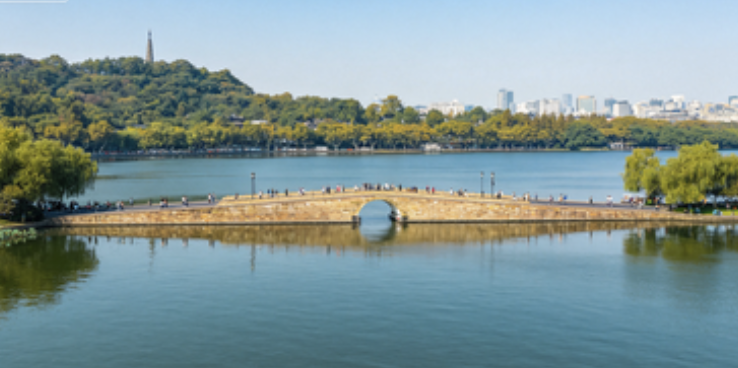
Duanqiao (Broken Bridge) is located at the intersection of Beishan Road and Baiti (White Causeway) in Xihu District, Hangzhou. It is the location of "Broken Bridge with Remnant Snow," one of the Ten Scenes of West Lake, and also the bridge with the most romantic color and cultural heritage in Hangzhou. The bridge is a single-arch stone bridge, 8.8 meters long and 8.6 meters wide, first built in the Tang Dynasty, with the existing bridge body reconstructed in 1941. The name "Broken Bridge" originates from folk legend—after snow, when the sun-facing side of the bridge melts while the shaded side remains snow-covered, the bridge body appears broken yet not broken from afar, hence the name "Broken Bridge with Remnant Snow." The bridge is also the classic scene location where Bai Suzhen and Xu Xian met in the "Legend of White Snake."
Baiti (White Causeway) · 白堤
🎧 In app 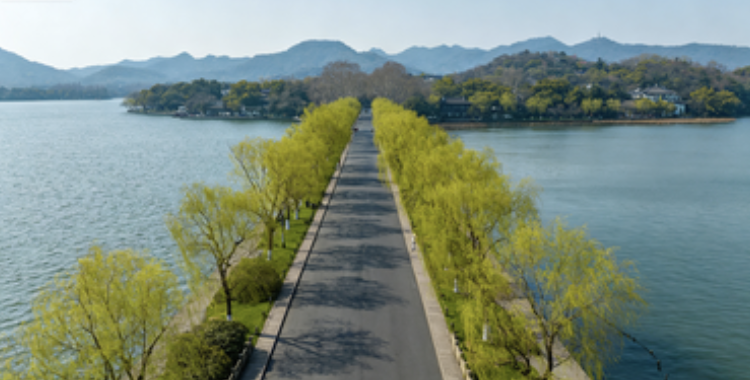
Baiti (White Causeway) extends from Broken Bridge in the east to Autumn Moon over Calm Lake in the west, with a total length of about 1 kilometer. It is the most famous spring-viewing causeway at West Lake, alongside Sudi and Yanggongdi known as the "Three Causeways of West Lake." The causeway name "Bai" originates from the beneficial governance achievement of Tang Dynasty poet Bai Juyi, who dredged West Lake and built lake embankments during his tenure as Hangzhou governor (822-824 CE). The sides of the causeway are fully planted with peach trees and weeping willows. Baiti is also an excellent position for viewing the West Lake sunrise.
Pinghu Qiuyue (Autumn Moon over Calm Lake) · 平湖秋月
🎧 In app 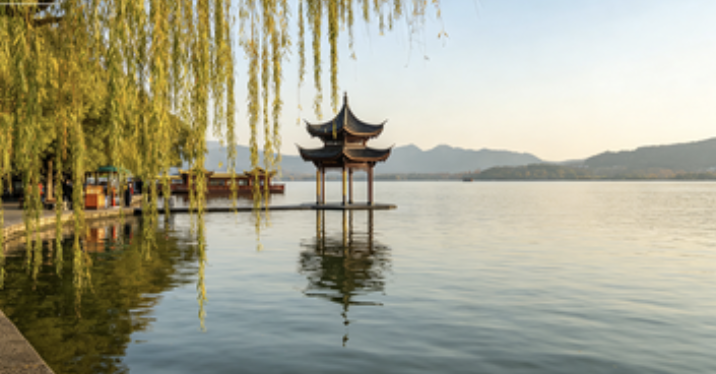
Pinghu Qiuyue, or Autumn Moon over Calm Lake, is located at the west end of Baiti, on the south foot of Gushan, in Xihu District, Hangzhou. It is one of the Ten Scenes of West Lake and one of the classic settings for the lake's moon-viewing culture. The scenic area covers about 2,000 square metres and comprises the Imperial Stele Pavilion, the Autumn Moon over Calm Lake Tower, the lakefront water-access platform, and the Zhejiang Tide artificial-rockery group. From the fifteenth to the twentieth day of the eighth lunar month, when the autumn sky is clear and the lake is mirror-still, the bright moon rises from the eastern horizon and its reflection falls on the water.
Gushan and Xiling Seal Society (Gushan yu Xiling Yinshe) · 孤山与西泠印社
🎧 In app 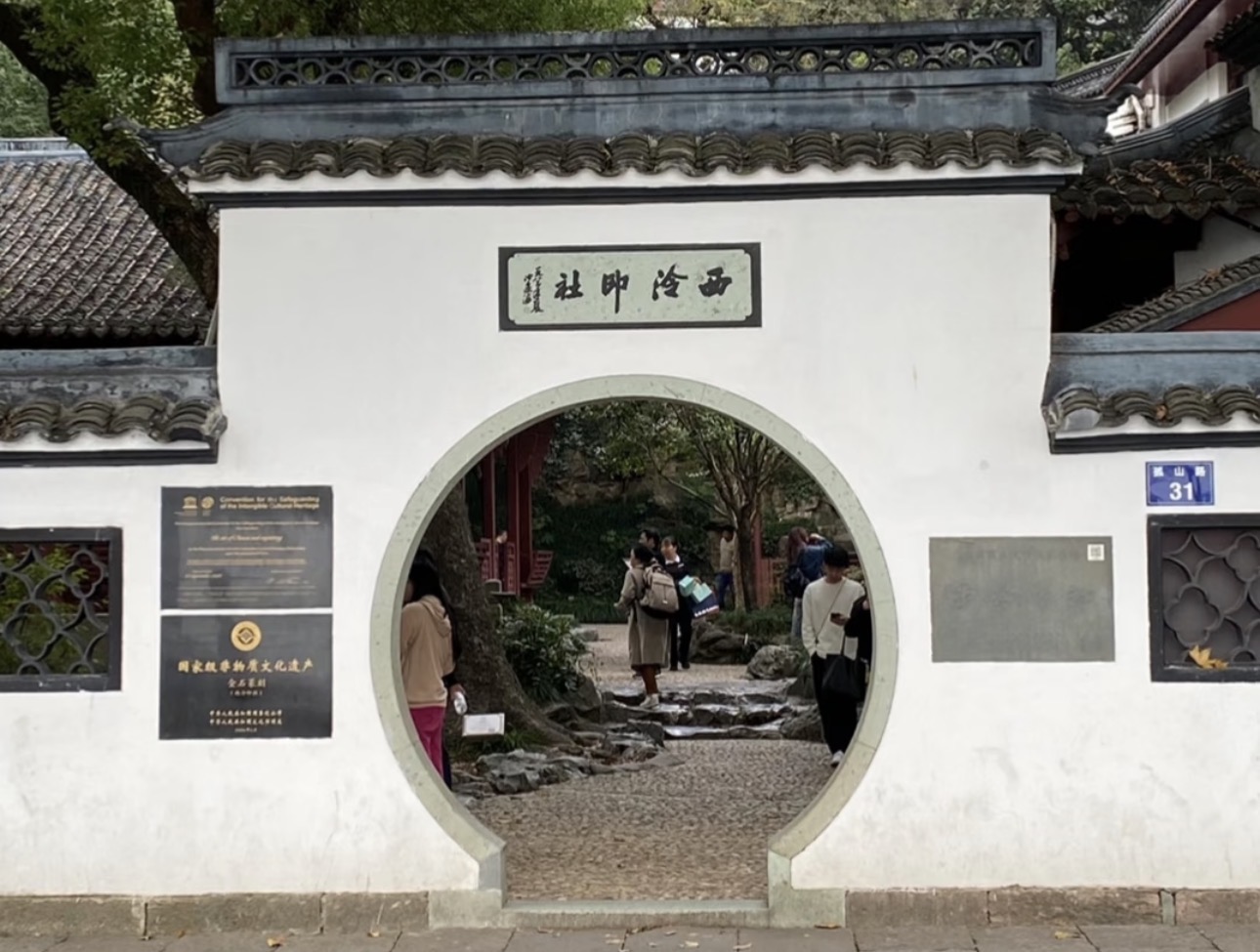
Gushan (Solitary Hill) is located on the northwest side of West Lake in Xihu District, Hangzhou, between the west end of Baiti and Xiling Bridge. It is the largest natural island in West Lake, named for being "one mountain in the lake, solitary in the lake's center." The hill is about 38 meters high, covering about 300 mu, connecting Baiti and Xiling Bridge, forming the unique pattern of "island within the lake, mountain within the island." Gushan is the area with the highest cultural density at West Lake. Among these, Xiling Seal Society was founded in 1904 (30th year of the Guangxu reign of Qing Dynasty) and is the Chinese historical academic organization with the longest history and most profound influence in seal art.
Quyuan Fenghe (Breeze-ruffled Lotus in Winy Courtyard) · 曲院风荷
🎧 In app 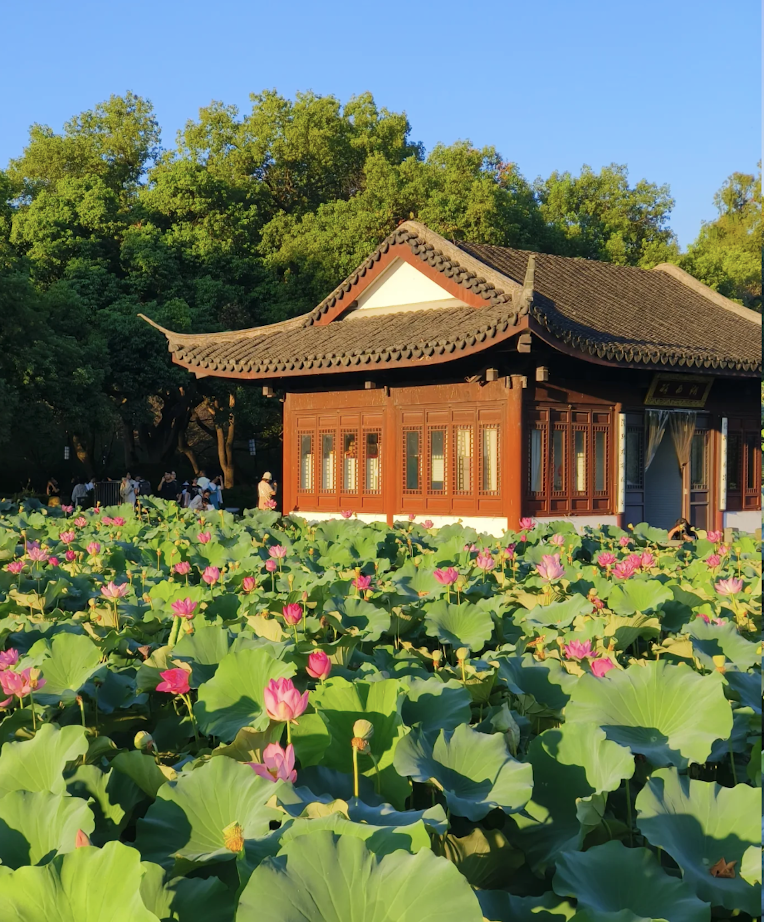
Quyuan Fenghe (Breeze-ruffled Lotus in Winy Courtyard) is located south of the intersection of Beishan Road and Yanggongdi in Xihu District, Hangzhou. It is one of the Ten Scenes of West Lake and also the most representative landscape of West Lake in summer. The scenic area covers an area of about 28 hectares, composed of five major sections: Yue Lake, Zhusu Garden, Quyuan, Fenghe (Wind Lotus) Area, and Lakeside Dense Forest Area. The scenic area plants over a hundred varieties of lotus, including precious varieties such as Xihu Red Lotus, Shuguang Lotus, Ancient Lotus, and China-Japan Friendship Lotus. Every year from June to August, the lake surface is covered with blooming lotus and lush lotus leaves.
Sudi Chunxiao (Spring Dawn on Su Causeway) · 苏堤春晓
🎧 In app 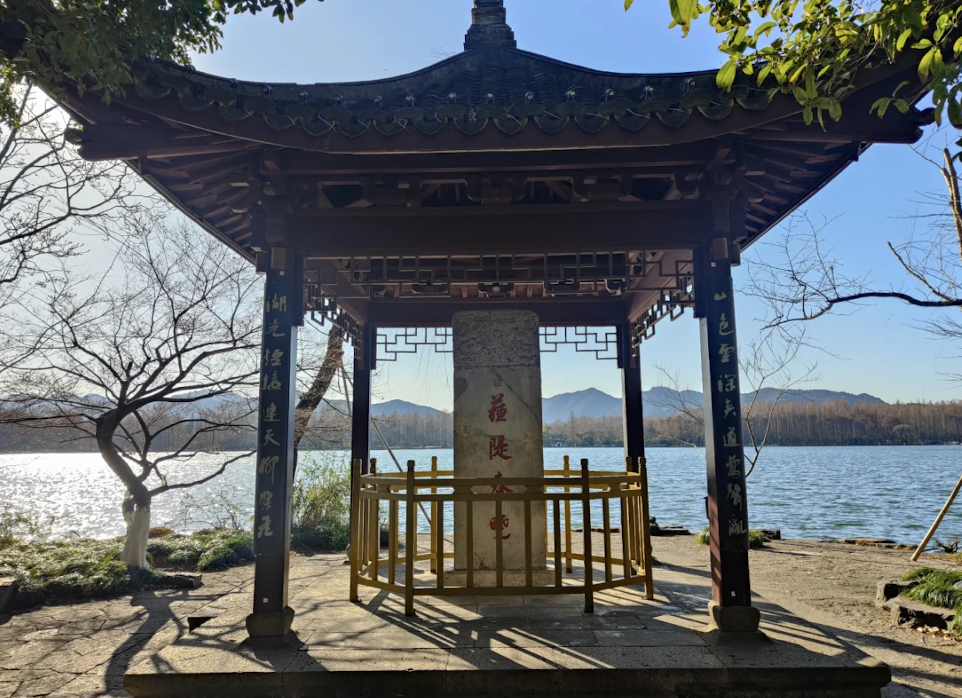
Sudi (Su Causeway) is located on the west side of West Lake in Xihu District, Hangzhou, extending from Nanping Mountain in the south to Qixia Ridge in the north, with a total length of about 2.8 kilometers. It is the most famous spring-viewing causeway at West Lake and ranks first among the "Ten Scenes of West Lake." The causeway was constructed in 1090 CE (5th year of the Yuanyou reign of Northern Song) under the supervision of Su Shi (Su Dongpo), then serving as the prefect of Hangzhou.
Huagang Guanyu (Flower Harbor Viewing Fish) · 花港观鱼
🎧 In app 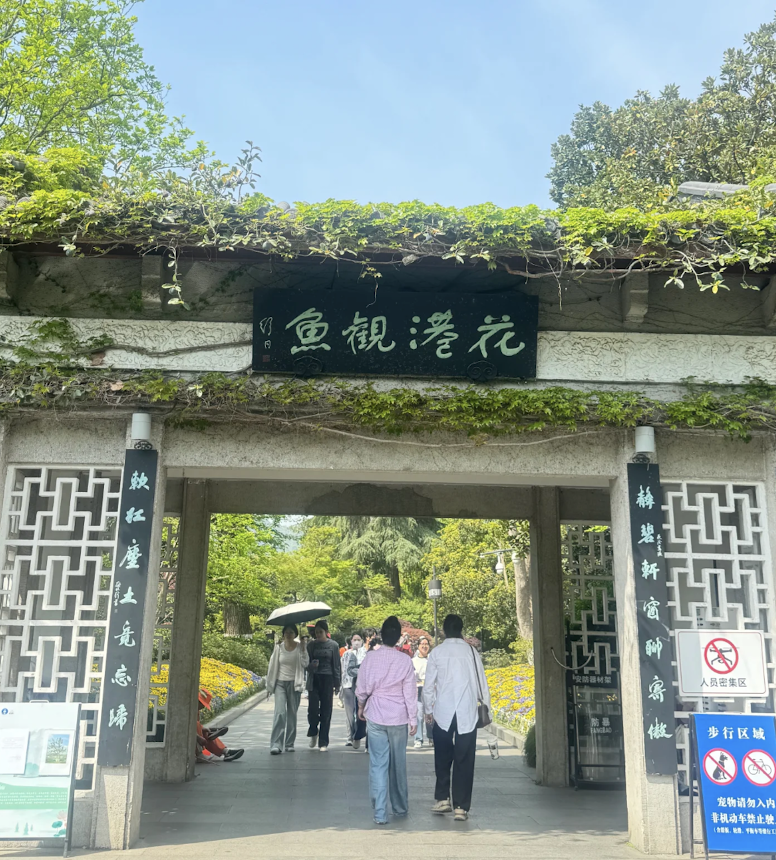
Huagang Guanyu (Flower Harbor Viewing Fish) is located on the west side of the south section of Sudi, on the west bank of West Lake in Xihu District, Hangzhou. It is one of the "Ten Scenes of West Lake" and also the scenic area with the richest ecological charm at West Lake. The scenic area covers about 20 hectares, composed of five major sections: Peony Garden, Red Fish Pond, Flower Harbor, Large Lawn Area, and Dense Forest Area. Red Fish Pond is the core of the scenic area, raising thousands of red carp and koi. The Peony Garden plants over a hundred varieties of peonies and Chinese herbaceous peonies.
Leifeng Pagoda (Leifeng Ta) · 雷峰塔
🎧 In app 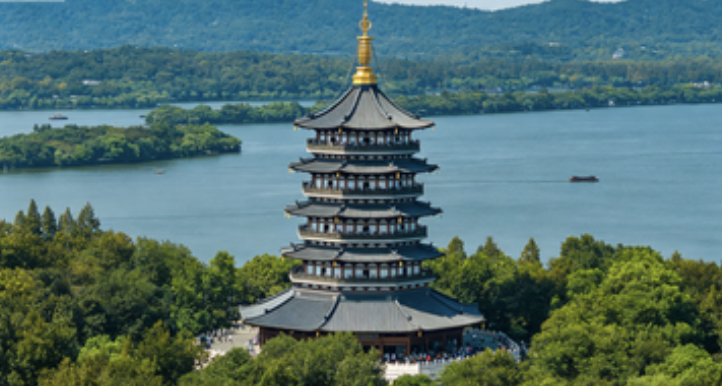
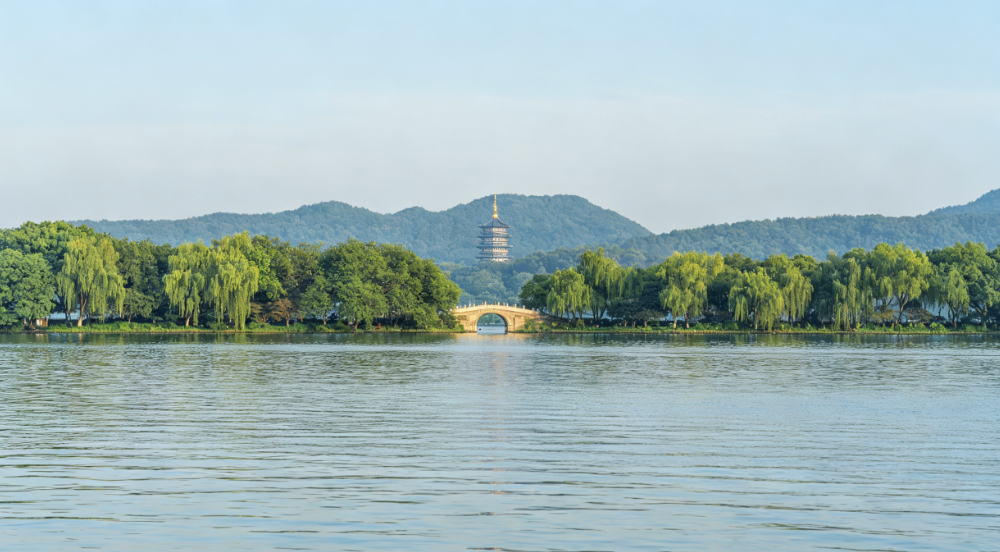
Leifeng Pagoda is located at the foot of Xizhao Mountain on the south shore of West Lake in Xihu District, Hangzhou. It is the carrier of "Leifeng in the Sunset Glow," one of the "Ten Scenes of West Lake," and also one of the most iconic structures in the West Lake scenic area. The original pagoda was constructed in 975 CE under the supervision of King Qian Chu of Wuyue Kingdom. On September 25, 1924, the millennial ancient pagoda collapsed with a loud crash due to excessive brick theft. In 2002, driven by the Zhejiang Provincial Government and Hangzhou Municipal Government, the new pagoda was reconstructed on the original site according to the concept of "pagoda covering ruins."
Nanping WanZhong (Evening Bell from Nanping) · 南屏晚钟
🎧 In app 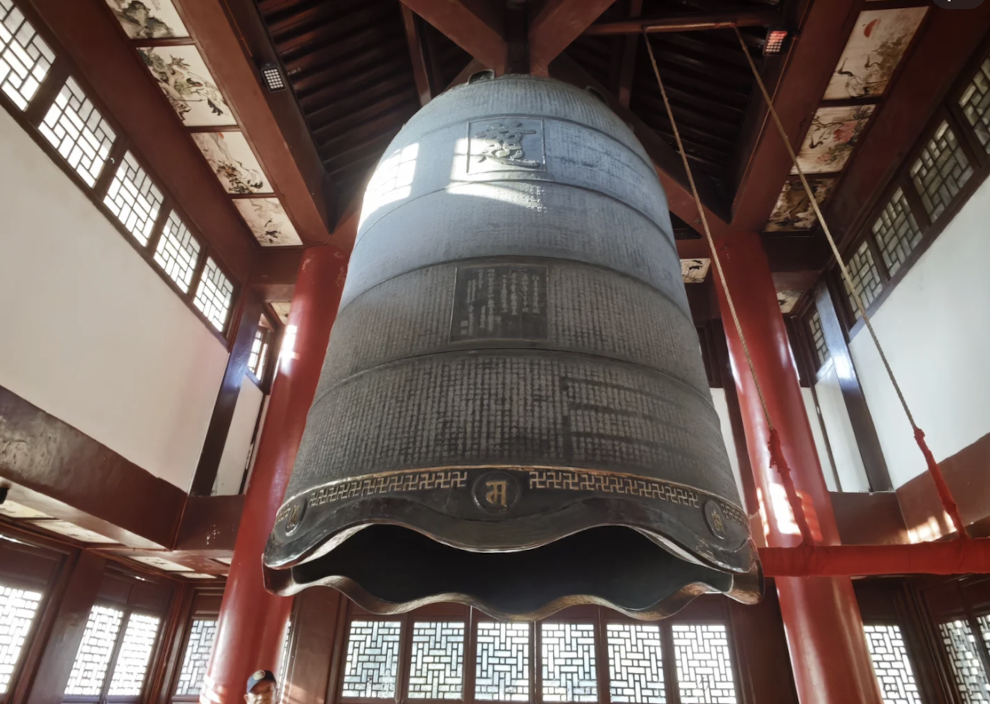
Nanping Wanzhong (Evening Bell from Nanping) is located inside Jingci Temple at the foot of Nanping Mountain on the south shore of West Lake in Xihu District, Hangzhou. It is one of the "Ten Scenes of West Lake" and also the most Zen-like and culturally profound soundscape of West Lake. Jingci Temple was built in 954 CE during the Wuyue Kingdom period by King Qian Chu of Wuyue, and is a millennial ancient temple second only to Lingyin Temple in the West Lake vicinity. Inside the temple is a bronze great bell weighing about 10 tons and about 3.6 meters high. Every dusk, the temple monks perform evening chanting and strike the evening bell.
Liulang Wenying (Oriole Singing in Willow Waves) · 柳浪闻莺
🎧 In app 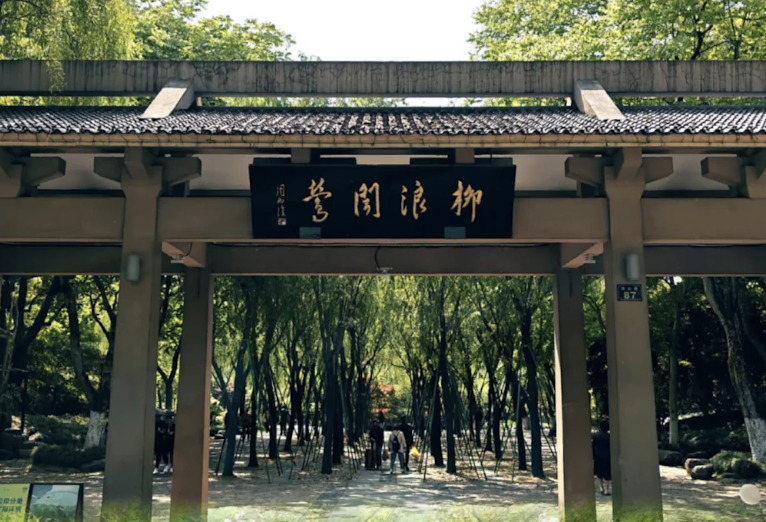
Liulang Wenying (Oriole Singing in Willow Waves) is located on the southeast shore of West Lake in Xihu District, Hangzhou, between Qingbo Gate and Yongjin Gate. It is one of the "Ten Scenes of West Lake" and also the open park with the richest natural ecological charm in the West Lake vicinity. The park covers about 21 hectares, composed of four major sections: Friendship Garden, Wenying Garden, Jujing Garden, and Yangfeng Garden. Along the lake shore are planted over ten thousand willow trees of various types. The park also hosts a large number of singing birds such as orioles, hwameis, and larks.
Hubin Park (Lakefront Park) · 湖滨公园
🎧 In app 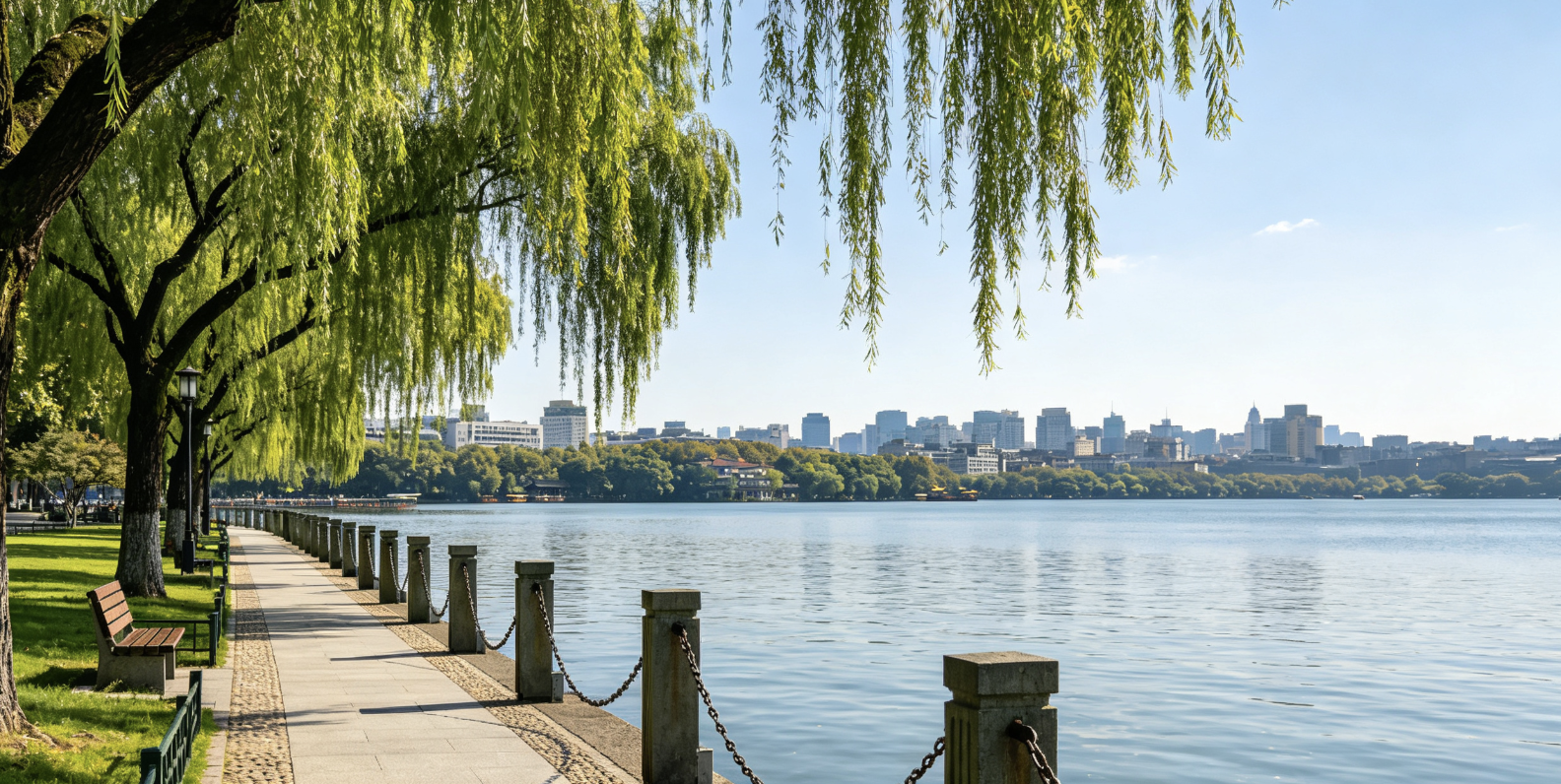
Hubin Park is located on the east side of West Lake in Xihu District, Hangzhou, between Hubin Road and Nanshan Road. With a total length of about 1.5 kilometers, it is a transitional lakefront park between the West Lake scenic area and the core urban district of Hangzhou, and also the most popular and vibrant civic leisure space in Hangzhou. The park has a lakeside walkway about 15 meters wide along the lake side, flanked by weeping willows, camphor trees, osmanthus, and cherry blossoms——scenery varies across the four seasons. A large-scale musical fountain is set up in the central area of the park, operating on a regular schedule daily with coordinated lighting and music (generally one show each at 19:30 and 20:30), with water jets reaching up to 80 meters high——the night view is especially spectacular. Hubin Park is also the best position for viewing Hangzhou's urban light show.
Santan Yinyue (Three Pools Mirroring the Moon) · 三潭印月
🎧 In app 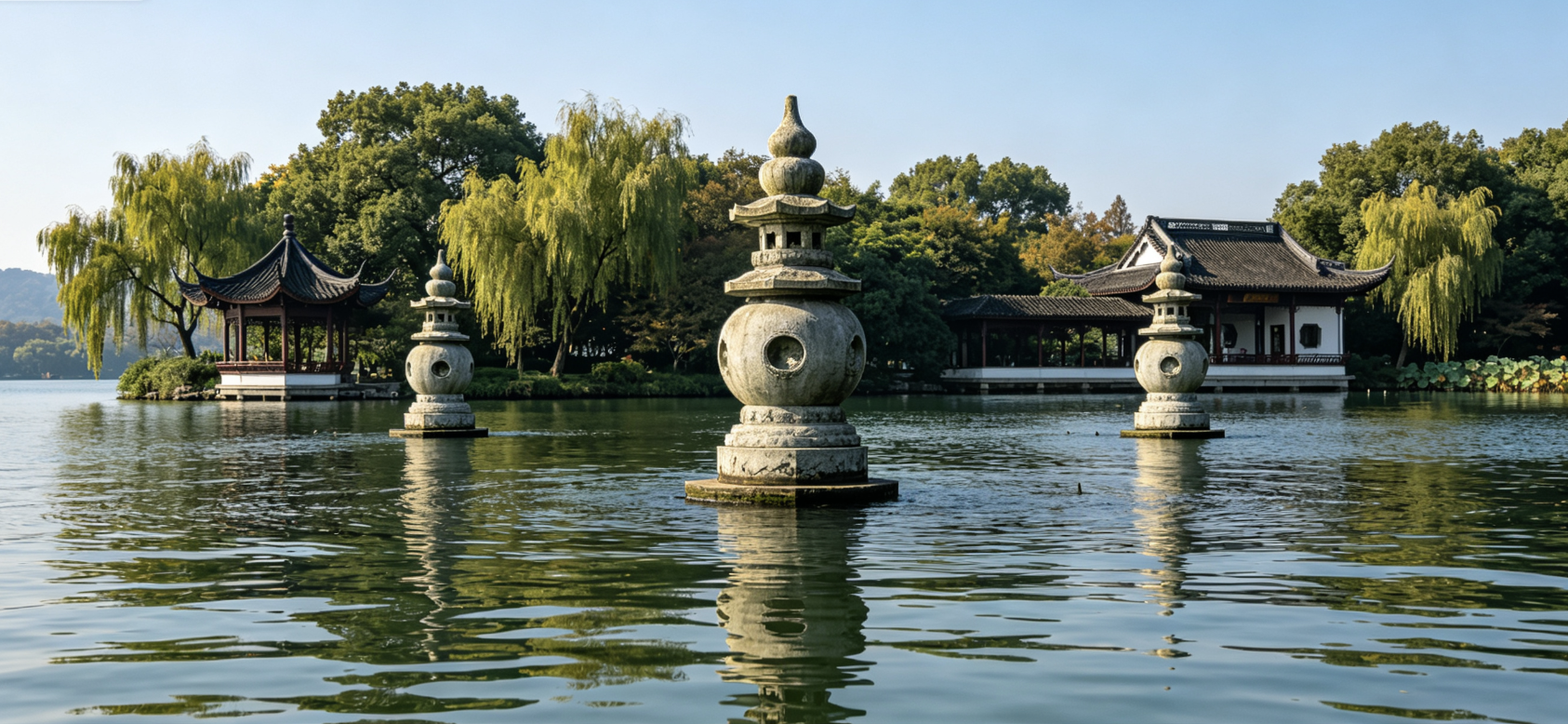
Santan Yinyue (Three Pools Mirroring the Moon) is located in the southeastern part of West Lake in Xihu District, Hangzhou. It is the largest island in West Lake, covering an area of about 6 hectares, formed by dredged silt from West Lake, and has long been renowned as the "Number One Scenic Spot of West Lake." The island's name originates from the three bottle-shaped stone pagodas standing in the lake water south of the island——the Three Pools Stone Pagodas. On bright moon nights, candles are lit inside the pagodas, and the openings are covered with thin paper——candlelight shining through the paper holes onto the lake surface creates the marvelous scene of "moonlight, candlelight, and lake light" reflecting each other, hence the famous name "Three Pools Mirroring the Moon." The island also appears on the back of the one-yuan RMB banknote.