← Nanjing

Nanjing · 南京明城墙

Nanjing Ming City Wall

🎫 Ticket 50 RMB
🕐 Duration 2 hours
🚇 Metro Metro Line 1, Zhonghuamen Station
🕘 Opening Hours - **Daytime opening hours:** Generally 8:00—17:00 (subject to announcements at each wall entry point) - **Night opening hours:** To facilitate citizens and tourists to enjoy the night view of the city wall, Zhonghuamen and Jiefangmen (Taicheng Section) implement evening opening. In peak season (April of the current year to October of the current year), the opening hours are 17:00—22:00 (ticket sales stop at 21:30); off-season opening hours may be adjusted, subject to on-site announcements - **Special note:** Some sections may be temporarily closed due to repairs, weather, etc. Please pay attention to official announcements - **Recommended visiting time:** 1—2 hours/section
🕘 Opening Hours November–March off-season night tour: 17:00–21:00.
📍 Address The Nanjing Ming City Wall is distributed across multiple districts of Nanjing. The addresses of the main wall entry points are as follows: - **Zhonghuamen Section:** Zhonghuamen Castle, Qinhuai District, Nanjing, Jiangsu Province - **Taicheng Section (Jiefangmen Section):** Jiefangmen (near Jiming Temple), Xuanwu District, Nanjing, Jiangsu Province - **Shencemen Section:** Shencemen Park, Xuanwu District, Nanjing, Jiangsu Province - **Zhongshanmen Section:** Zhongshanmen, Xuanwu District, Nanjing, Jiangsu Province - **Xuanwumen Section:** Xuanwumen, Xuanwu Lake Park, Xuanwu District, Nanjing, Jiangsu Province Map ↗
🎧 8 audio walking guides for Nanjing Ming City Wall — listen on the spot in the YOLO HAPPY app. →

Inside Nanjing Ming City Wall

Zhonghua Gate Square (Entrance) · 中华门广场(入口)

🎧 In app
Zhonghua Gate Square (Entrance)

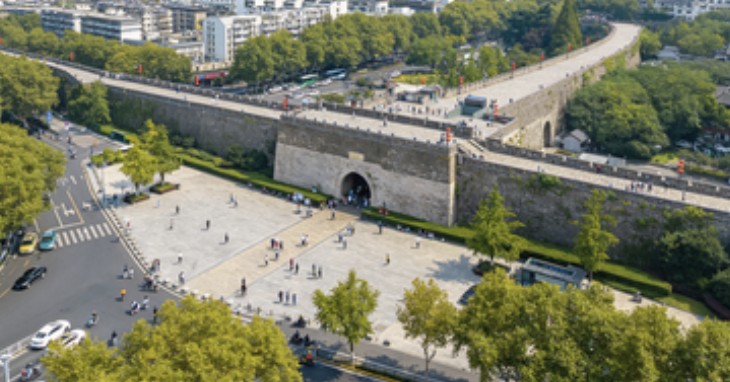
Zhonghua Gate Square is located on the south side of the Nanjing City Wall at Zhonghua Gate, serving as the starting point for visitors entering the barbican scenic area. The square is broad and flat, extending approximately 100 meters from north to south. Looking up, visitors can see the majestic city wall spanning before them, reaching up to 21 meters in height with a commanding presence. A guide stele stands at the center of the square, with ticket booths and a visitor service center on either side. Ginkgo and sycamore trees line the square; in autumn, their golden foliage contrasts beautifully with the grey wall. This is also the best vantage point for photographing the full frontal view of Zhonghua Gate, and many iconic images of Nanjing have been captured here.
First City Gate (Main Gate) · 第一道城门(主城门)

🎧 In app
First City Gate (Main Gate)

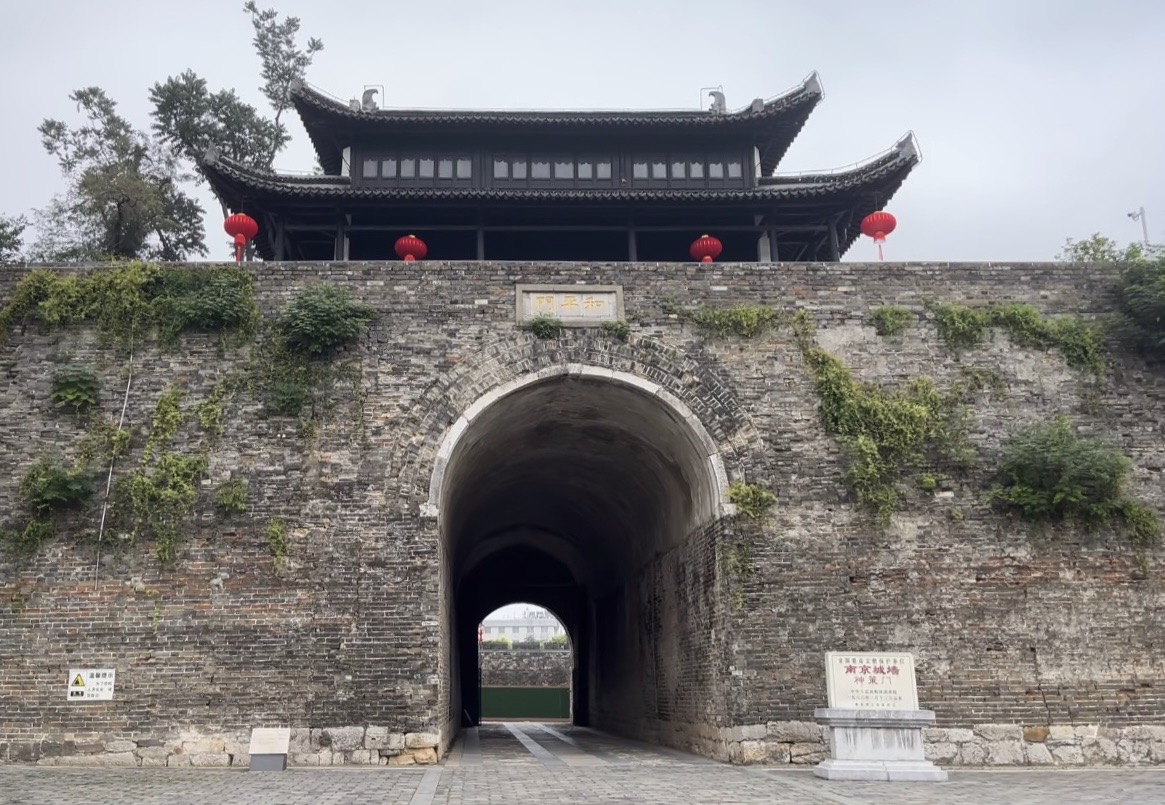
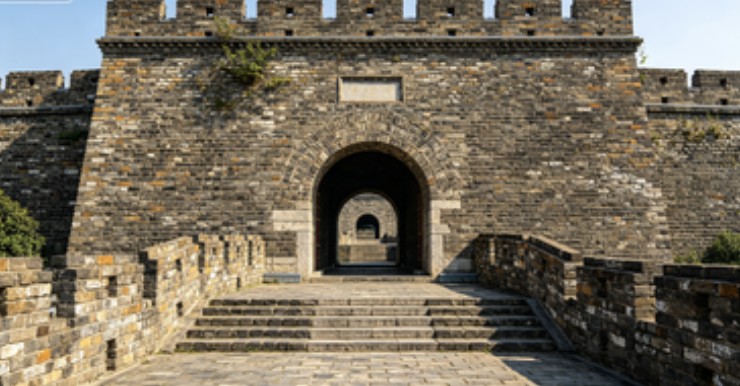
The First City Gate is the main south-facing gate of the Zhonghua Gate barbican and the largest gate in the entire defensive system. The gate arch is a vaulted structure approximately 10 meters high and 6 meters wide, accommodating both carriages and horses. Inside the arch, slots for a heavy portcullis are visible, which could be lowered during wartime to seal the passage. The base of the flanking walls is built with massive stone blocks, topped with brick masonry. Inscriptions on the bricks — recording their place of manufacture and the names of the craftsmen — remain clearly legible, serving as important physical evidence for the study of the Ming Dynasty brick production system. Passing through this gate, visitors enter the first barbican and experience the military ingenuity of the "catching turtles in a jar" defensive design.

First Barbican · 第一道瓮城

🎧 In app
First Barbican

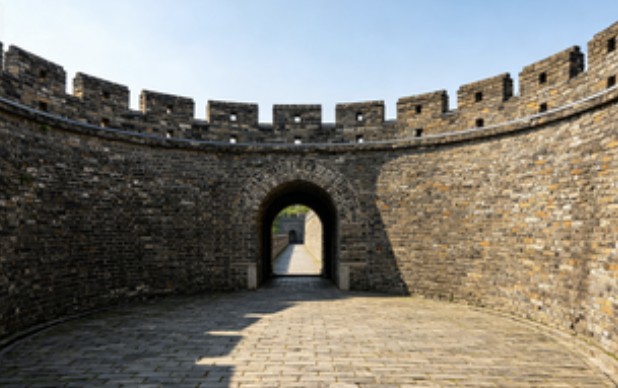
The First Barbican is the outermost of the three barbicans at Zhonghua Gate, covering approximately 3,700 square meters. Visitors enter this space after passing through the main gate. Walls flank it to the east and west, with the second gate to the north, forming a semi-enclosed courtyard on three sides. The core tactical concept of the barbican is to "lure the enemy in deep and catch them like turtles in a jar" — if enemy forces breach the main gate and rush into the barbican, defenders can seal the gates front and rear, then attack from above with arrows, rolling stones, and firearms from all four sides, making escape impossible. The interior is flat and was historically used for stationing troops. Today, multiple exhibition panels introduce the history, construction techniques, and successive renovations of Zhonghua Gate.

Soldier-Hiding Caverns · 藏兵洞

🎧 In app
Soldier-Hiding Caverns

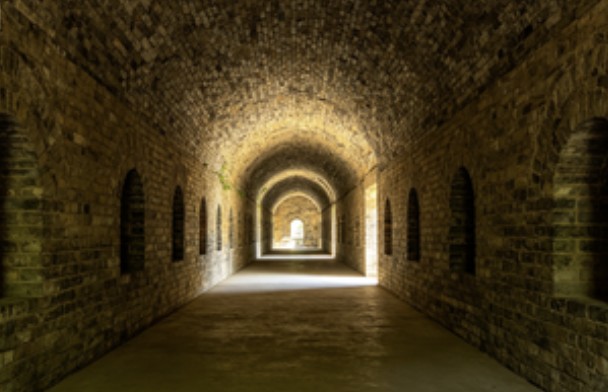
The Soldier-Hiding Caverns are the most distinctive military feature of Zhonghua Gate. Built into the interior of the barbican walls, there are 27 chambers arranged across multiple levels. Each chamber ranges from 20 to 60 square meters in area, with vaulted ceilings, good ventilation, and concealed entrances that are virtually undetectable from outside the wall. According to historical records, the caverns could garrison over 3,000 soldiers in peacetime and accommodate more than 10,000 during wartime, while storing large quantities of grain, weapons, and drinking water sufficient for prolonged defensive operations. The chambers are warm in winter and cool in summer. Today, some have been converted into exhibition spaces displaying Ming Dynasty weapons, inscribed bricks, and reconstructed models of defensive equipment, vividly recreating the military scene from six centuries ago.

Horse Ramp · 马道

🎧 In app
Horse Ramp

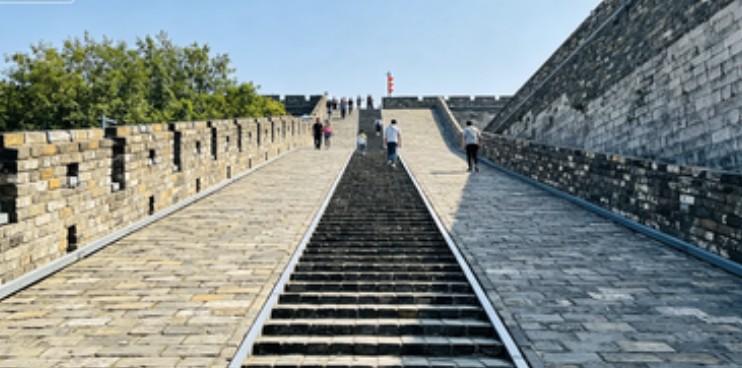
The Horse Ramp is a stone-paved inclined passage built into the interior side of the Zhonghua Gate city wall, approximately 5 meters wide. Paved with stone slabs, it winds from the base of the wall up to the top. During wartime, cavalry could ride directly up the ramp, transporting arrows, rolling stones, grain, and other supplies to defensive positions along the wall crest, greatly enhancing the mobility of the defense. Two ramps are provided on the east and west sides of Zhonghua Gate as backups, ensuring that if one is destroyed, the other remains passable. The ramp has a gradient of approximately 15 to 20 degrees, with low parapet walls on both sides. Walking along it, visitors can appreciate both the practical design of the military architecture and the imposing mass of the wall from a lateral perspective. Today, most visitors use the horse ramp to ascend the wall, making it the best route for experiencing the grandeur of the structure.

Wall Crest · 城墙顶部

🎧 In app
Wall Crest

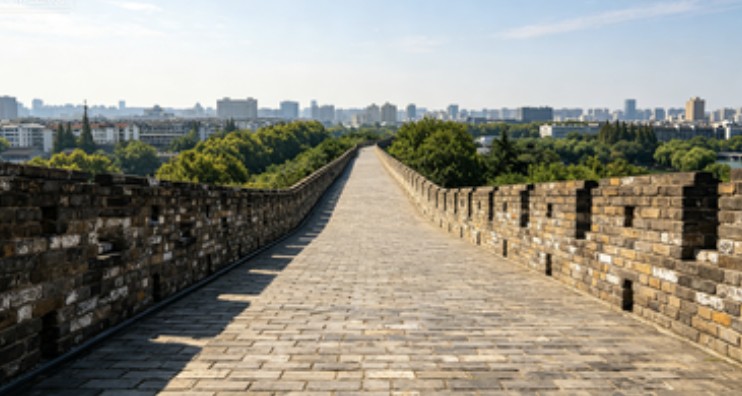
The wall crest is the highest point of the Zhonghua Gate scenic area, approximately 21 meters high, with a top width of 4 to 5 meters paved with smooth bricks, allowing several people to walk abreast. From the top, visitors can gaze northward to see the Qinhuai River meandering through the city and the white-walled, dark-tiled buildings of the Confucius Temple area; southward, the verdant pines and cypresses of Yuhuatai stretch to the horizon; eastward, the Zifeng Tower and Purple Mountain echo each other in a blend of ancient and modern. The wall is topped with crenellations (battlements), with merlons every few steps for soldiers to shoot from and take cover behind. Several reconstructed Ming Dynasty defensive devices and the remains of sentry posts are preserved on the crest. Climbing the wall at dusk, when the setting sun illuminates the ancient bricks, is the golden hour for photographing the Nanjing skyline.

Nanjing City Wall Museum · 南京城墙博物馆

🎧 In app
Nanjing City Wall Museum

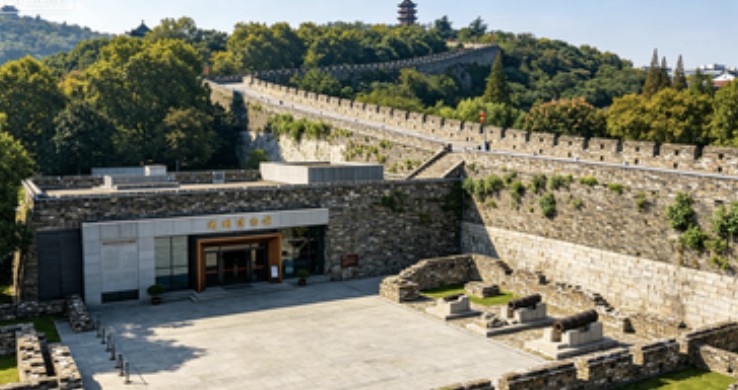
The Nanjing City Wall Museum, located just east of Zhonghua Gate, is China's only museum dedicated to the theme of city walls. It opened in 2013 with a permanent exhibition titled "A Magnificent Wall," organized into chapters including "Heaven and Earth in Harmony: The Capital of the Great Ming," "Every Brick and Tile: United Will Builds the Wall," and "Six Centuries of Wind and Rain: The Vicissitudes of the Wall." Through artifacts, architectural models, multimedia interactives, and holographic projections, the museum systematically presents the planning, design philosophy, construction techniques, and historical evolution of the Nanjing Ming Dynasty City Wall. The museum houses a large collection of inscribed bricks, each bearing the names of the prefecture, county, and craftsman who produced it — precious evidence of the Ming Dynasty's "inscribe the workman's name" quality accountability system. Admission is free, making it an essential stop for anyone seeking to deeply understand the culture of the Nanjing City Wall.

Taicheng Section (Premium Segment) · 台城段(精华段)

🎧 In app
Taicheng Section (Premium Segment)

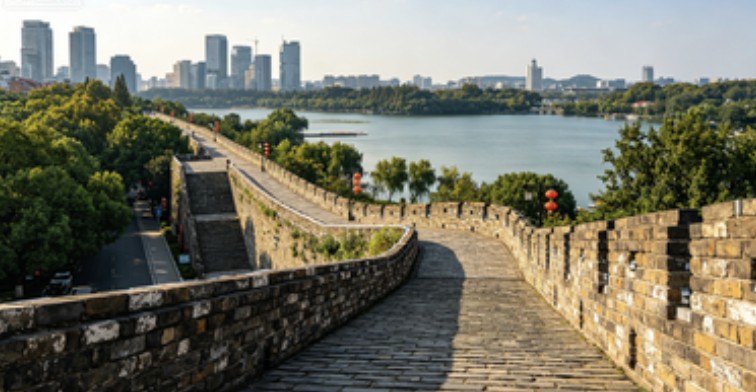
The Taicheng Section is the most representative premium segment of the Nanjing Ming Dynasty City Wall, located on the northeast stretch from Xuanwu Gate to Taiping Gate, approximately 5 kilometers in length. This segment is built along Mount Jilong (Beiji Pavilion), standing on elevated terrain. To the north, it overlooks the vast blue waters of Xuanwu Lake; to the south, it adjoins the millennia-old Jiming Temple. The wall, lake, mountains, and temple pagoda create a dazzling interplay that forms Nanjing's most iconic cityscape. The name "Taicheng" derives from the Palace City of the Six Dynasties period; though not directly related to the Ming wall, this section was named for its proximity to the former Taicheng site. The wall top can be explored on foot or by bicycle, with multiple viewing platforms and rest stations along the way. Ascending Taicheng to gaze at the majestic Purple Mountain and the vast Xuanwu Lake is the ultimate way to experience Nanjing's urban layout of "mountains, water, city, and forest."

Get the app

The tool solved one problem. The app handles the whole trip.

Per-trip visa judgements, audio guides, prep checklists, and a real human concierge — offline-ready, in your language.

Download for iPhoneFree to download · No OTA upsells