← Nanjing

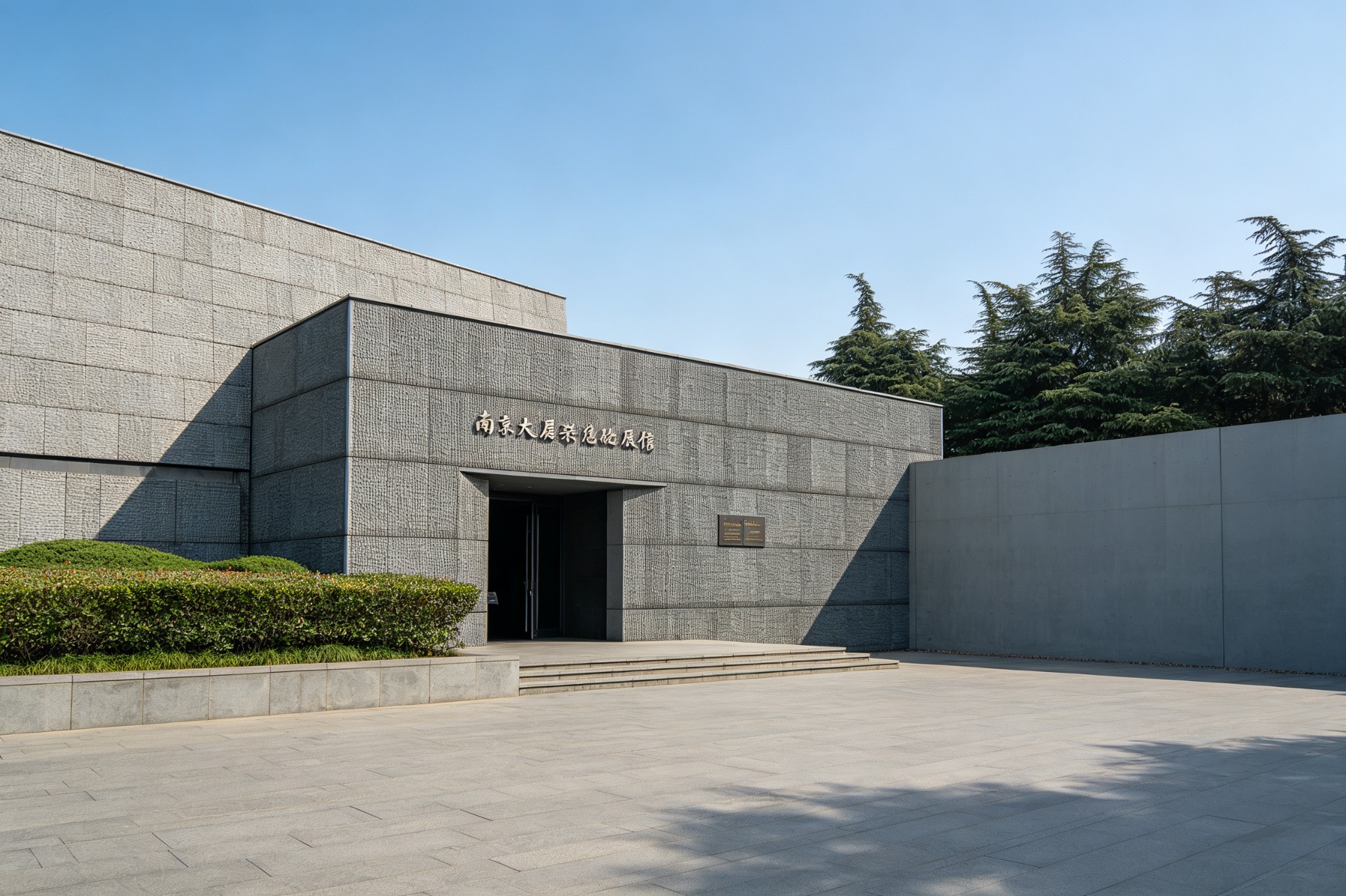
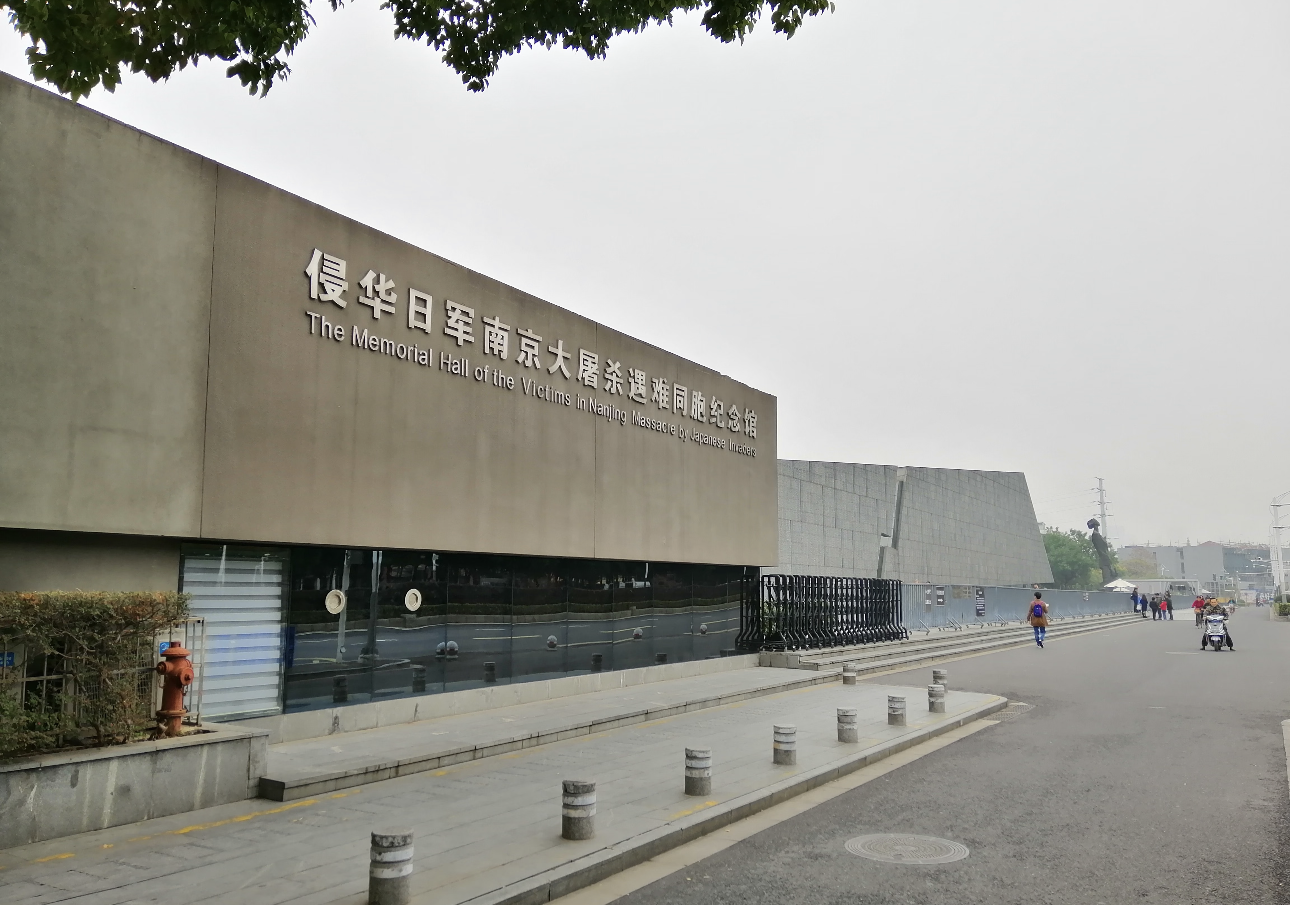
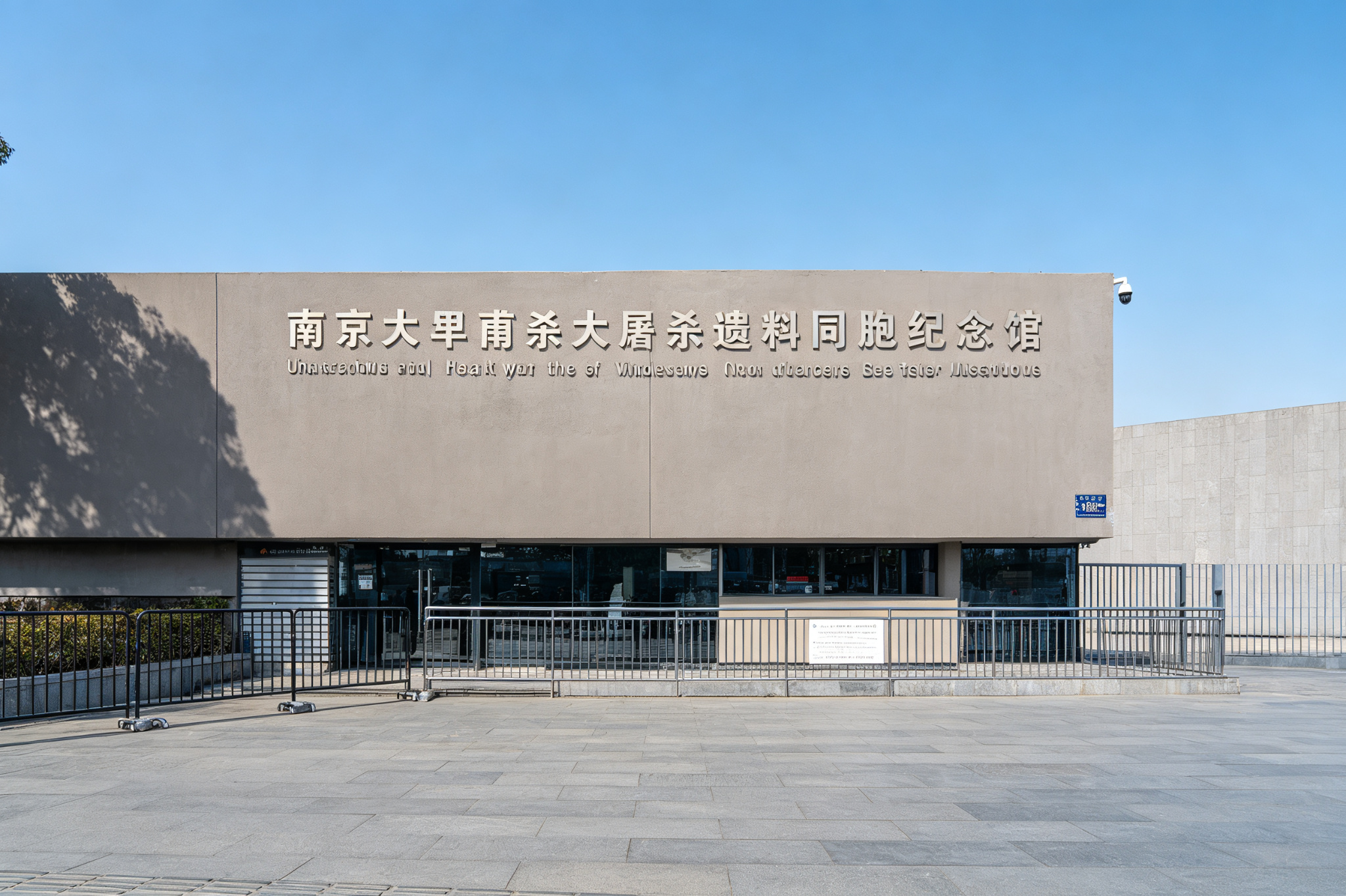
Nanjing · 侵华日军南京大屠杀遇难同胞纪念馆

Memorial Hall of the Victims in Nanjing Massacre by Japanese Invaders

🎫 Ticket Free
🕐 Duration 2–3 hours
🕘 Opening Hours - **Opening hours:** Tuesday to Sunday 8:30–17:30 (last entry at 16:30) - **Closing time:** Closed on Mondays (open on national statutory holidays) - **Special periods:** Opening hours may be adjusted during statutory holidays and periods of large visitor flow, please pay attention to official announcements - **Recommended visiting time:** 2–3 hours
🚇 Metro Metro Line 2, Yunjin Road Station
📍 Address - **Main Exhibition Area (Nanjing Massacre History Exhibition Area, Three Victories Exhibition Area):** No. 418 Shuiximen Street, Jianye District, Nanjing, Jiangsu Province - **Former Site of Lijixiang Comfort Women Station Exhibition Area:** No. 2 Liji Lane, Qinhuai District, Nanjing, Jiangsu Province Map ↗
⚠️ BookingAdvance reservation required
🎧 9 audio walking guides for Memorial Hall of the Victims in Nanjing Massacre by Japanese Invaders — listen on the spot in the YOLO HAPPY app. →

Inside Memorial Hall of the Victims in Nanjing Massacre by Japanese Invaders

Sculpture Plaza · 雕塑广场

🎧 In app
Sculpture Plaza

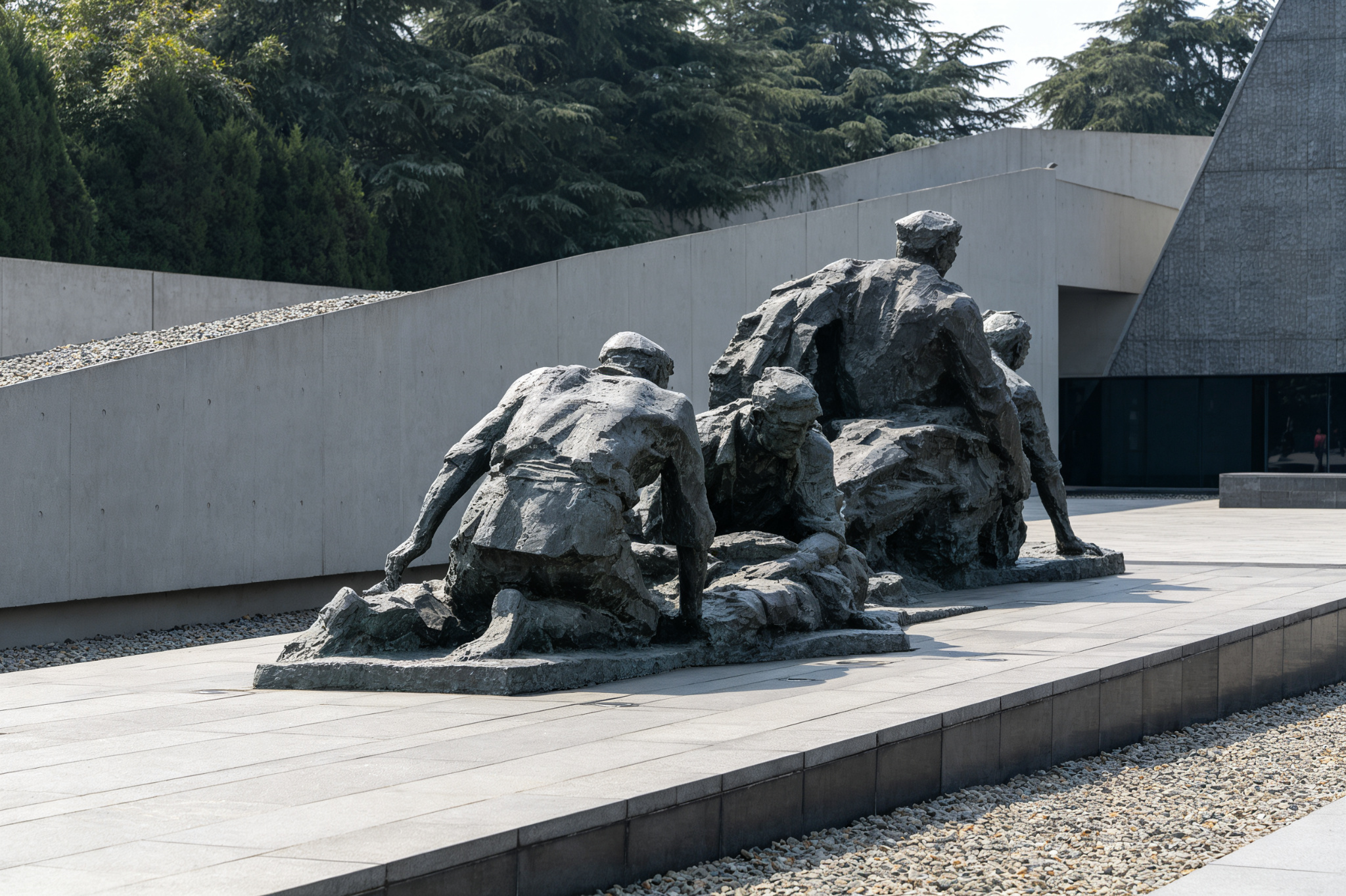
The Sculpture Plaza serves as the prologue to the memorial hall's visiting sequence, featuring large-scale bronze sculptures created by renowned sculptor Wu Weishan. The sculptures include "Broken Family, Dead People," "Fleeing," and "Screaming Souls," with the tallest reaching twelve meters in height. Crafted in a rugged and solemn style, they depict scenes such as a mother holding her deceased infant and civilians fleeing in panic, recreating the profound suffering of the Chinese people during the 1937 Nanjing Massacre. The sculptures integrate seamlessly with the architectural environment, silently conveying the weight of history and inspiring visitors to cherish peace and reverence for life.
Public Memorial Square · 公祭广场

🎧 In app
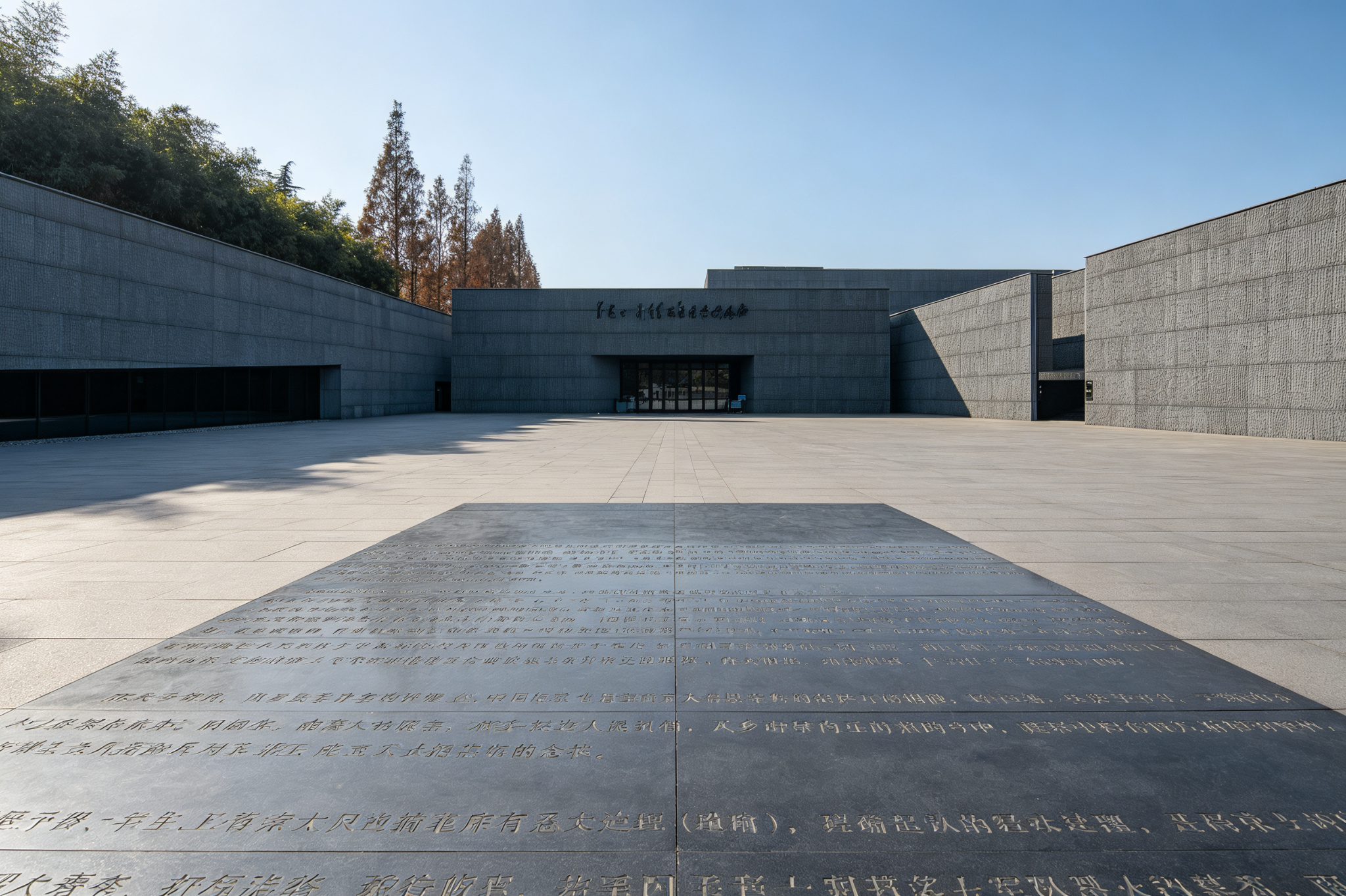
Public Memorial Square

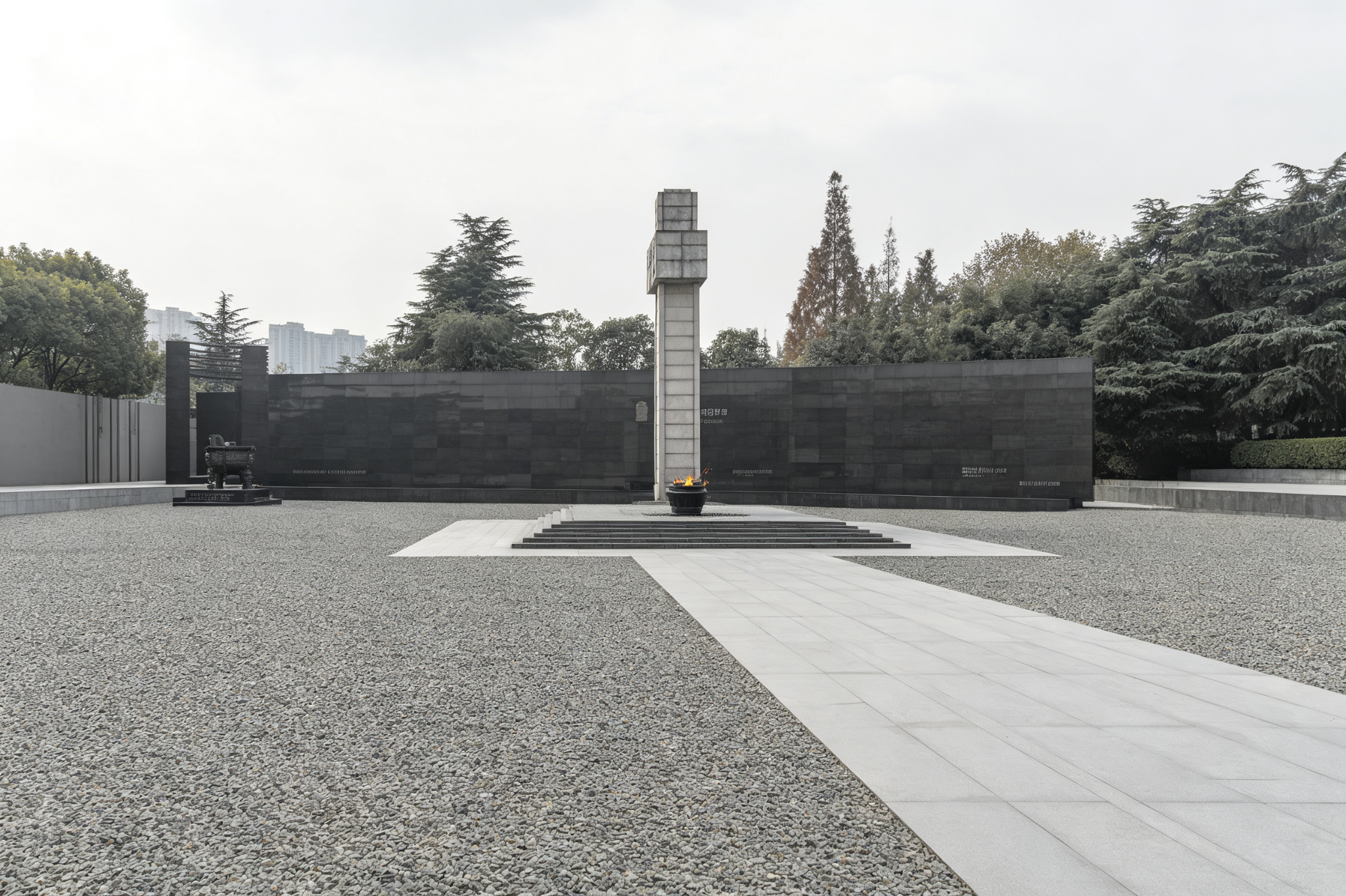
The Public Memorial Square is the core square of the memorial hall and the venue for the annual National Memorial Ceremony for the Victims of the Nanjing Massacre held on December 13. At its center stands a cross-shaped marker inscribed with "1937.12.13—1938.1," reminding visitors never to forget that tragic history. The square is paved with gray granite, and its surrounding walls bear the numeral "300,000" in commemoration of the three hundred thousand compatriots who perished in the massacre. The expansive and solemn space can accommodate ten thousand people for memorial ceremonies. The predominantly gray-and-white architecture creates a somber and tragic atmosphere, making it an essential site for collective mourning and remembrance.

Historical Materials Exhibition Hall · 史料陈列厅

🎧 In app
Historical Materials Exhibition Hall

The Historical Materials Exhibition Hall is the principal exhibition space of the memorial hall. Organized chronologically, it systematically presents the complete history of the Japanese army's occupation of Nanjing in 1937 and the implementation of the massacre. The hall displays a large number of precious historical artifacts, including Japanese military maps, weapons and equipment, victims' belongings, video testimonies of survivors, correspondence archives of international friends, and trial records from the International Military Tribunal for the Far East. The exhibition employs diverse methods—physical displays, document exhibitions, multimedia presentations, and scene reconstructions—to present historical truth from multiple perspectives. The hall also features a victims' name wall and a survivors' archive database, providing irreplaceable documentary support for historical research.

"Ten Thousand Bodies Pit" Site · "万人坑"遗址

🎧 In app
"Ten Thousand Bodies Pit" Site

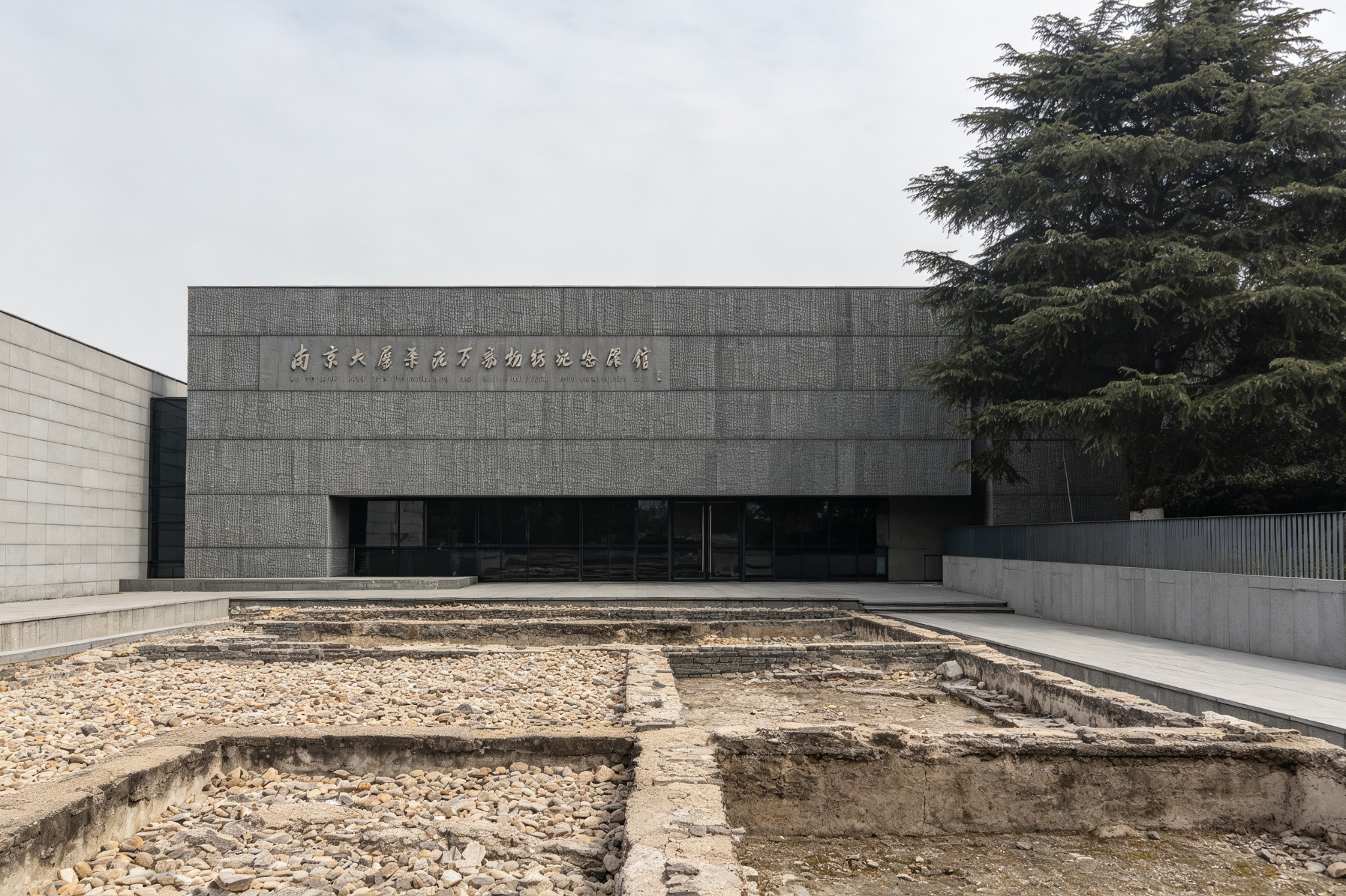
The "Ten Thousand Bodies Pit" Site is the most profoundly shocking area of the memorial hall. In 1984, a large number of victims' remains from the Nanjing Massacre were excavated here, and forensic examinations confirmed they all resulted from unnatural deaths. The site is preserved in situ, covered with a glass floor through which visitors can clearly see the densely layered remains. The bones are distributed in varying postures, some bearing clear marks of violent death, providing irrefutable evidence of the Japanese army's mass killings. Adjacent to the site is a remains display room, complemented by archaeological excavation records and forensic reports, preserving this tragic history with indisputable physical evidence and warning future generations never to forget national humiliation.

Cemetery Square · 墓地广场

🎧 In app
Cemetery Square

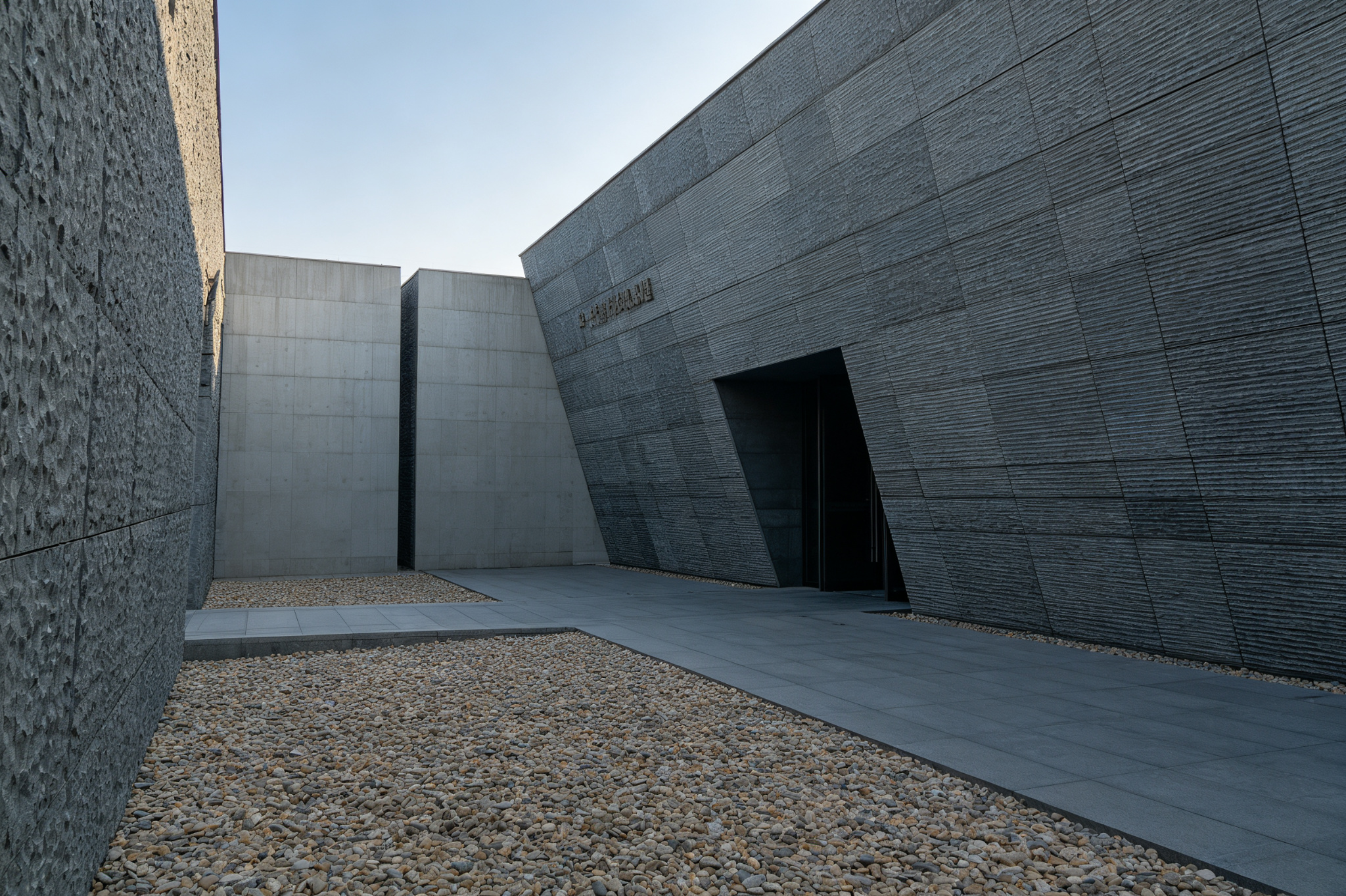
The Cemetery Square is an important mourning space within the memorial hall's visiting sequence, using architectural language to create a cemetery-like atmosphere of solemnity. At the center of the square stands a symbolic tomb, representing the collective burial and eternal remembrance of the perished compatriots. The tomb wall is constructed of black granite, inscribed with the names of identified victims, a list that continues to be expanded. Both sides of the square are paved with cobblestones, barren of vegetation, symbolizing the desolation of death and the passing of lives. Visitors pause here in silent tribute, gazing at the names on the wall, sensing the once-living individuals behind each name. With minimalist architectural vocabulary, the square expresses profound grief and is one of the most moving spaces in the memorial hall.

Memorial Ceremony Ground and Meditation Hall · 祭场与冥思厅

🎧 In app
Memorial Ceremony Ground and Meditation Hall

The Memorial Ceremony Ground is the core venue for mourning activities within the memorial hall, featuring an eternal flame and a flower-offering terrace where visitors may lay flowers to express their deep condolences for the perished compatriots. The eternal flame burns year-round, symbolizing the eternal remembrance of the deceased. The Meditation Hall, located behind the ceremony ground, is a semi-underground structure with dim interior lighting illuminated only by candlelight, creating a tranquil and profound atmosphere. A water-dripping device is installed inside, and the gentle sound of falling water drops echoes in the silent space, symbolizing the passage of time and the eternity of memory. Visitors slow their pace here, conversing with history in stillness and contemplating the preciousness of peace and the dignity of life.

Peace Park · 和平公园

🎧 In app
Peace Park

Peace Park is situated at the conclusion of the memorial hall's visiting route, marking a thematic transition from painful history toward a peaceful future. The park features green vegetation and water surfaces as its primary landscape elements, forming a striking contrast with the preceding gray-and-white architectural palette, symbolizing the continuation of life and the rebirth of hope. The central feature is the "Peace" sculpture, depicting a mother holding an infant in one arm and releasing a dove of peace with the other, expressing the Chinese people's aspiration and pursuit of peace. The park also features the Peace Spring, Peace Grove, and other landscape elements, with murmuring water and shaded trees, providing visitors with a space to soothe and settle their minds after departing from the heavy history, conveying the core concept of "remembering history and cherishing peace."

Wall of Victory and Victory Square · 胜利之墙与胜利广场

🎧 In app
Wall of Victory and Victory Square

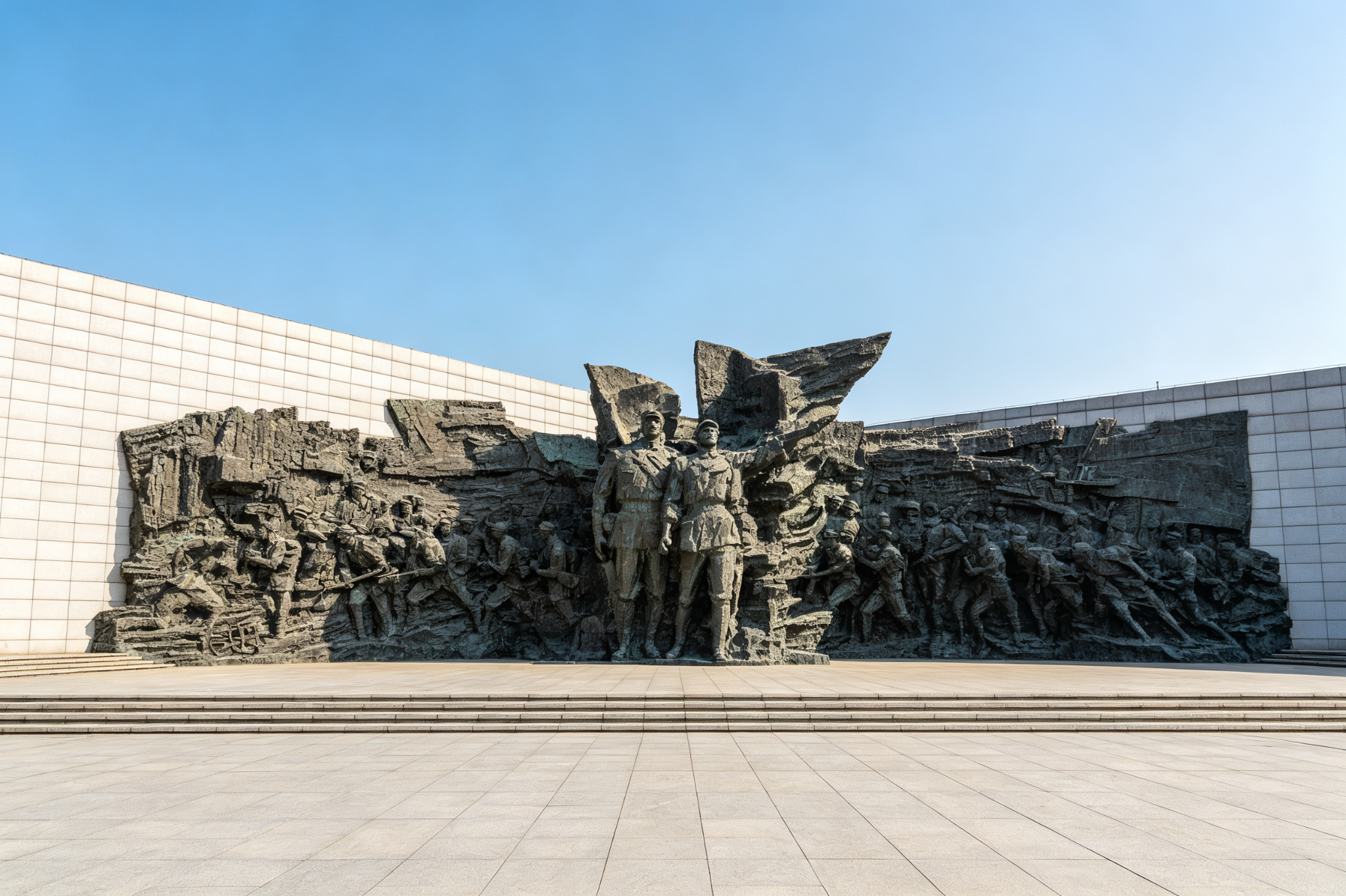
The Wall of Victory and Victory Square are important components of the memorial hall's expansion project, officially opened in 2015 on the occasion of the seventieth anniversary of the victory of the Chinese People's War of Resistance Against Japanese Aggression and the World Anti-Fascist War. The Wall of Victory presents a grand historical panorama in the form of large-scale reliefs, depicting the Chinese military and civilians fighting heroically and ultimately achieving victory. The reliefs vividly portray key scenes including battlefield charges, civilian support for the front lines, and Japan's surrender. The Victory Square is expansive and dignified, capable of hosting large-scale memorial events, with victory-themed sculptures standing upon it. Centered on the theme of "victory," it forms a narrative progression from the preceding themes of "disaster" and "mourning," demonstrating the historical logic from suffering to triumph and highlighting the indomitable spirit of the Chinese nation.

"Three Must-Wins" Theme Exhibition Hall · "三个必胜"主题展厅

🎧 In app
"Three Must-Wins" Theme Exhibition Hall

The "Three Must-Wins" Theme Exhibition Hall is one of the core pavilions of the memorial hall's expansion project, themed on the important proposition put forward by General Secretary Xi Jinping: "Justice will prevail, Peace will prevail, and People will prevail." Through a wealth of historical artifacts, documentary archives, audiovisual materials, and multimedia presentations, the hall comprehensively reviews the glorious course of the Chinese People's War of Resistance Against Japanese Aggression, highlighting the cornerstone role of the Communist Party of China during the war, the heroic deeds of the entire nation's bloody struggle, and the great victory of the World Anti-Fascist War. The hall also presents post-war trials and the reconstruction of the international order, guiding visitors to profoundly understand the great significance of justice, peace, and the power of the people while remembering the tragic history, and to strengthen their commitment to safeguarding world peace.

Get the app

The tool solved one problem. The app handles the whole trip.

Per-trip visa judgements, audio guides, prep checklists, and a real human concierge — offline-ready, in your language.

Download for iPhoneFree to download · No OTA upsells