← Shanghai

Shanghai · 上海博物馆

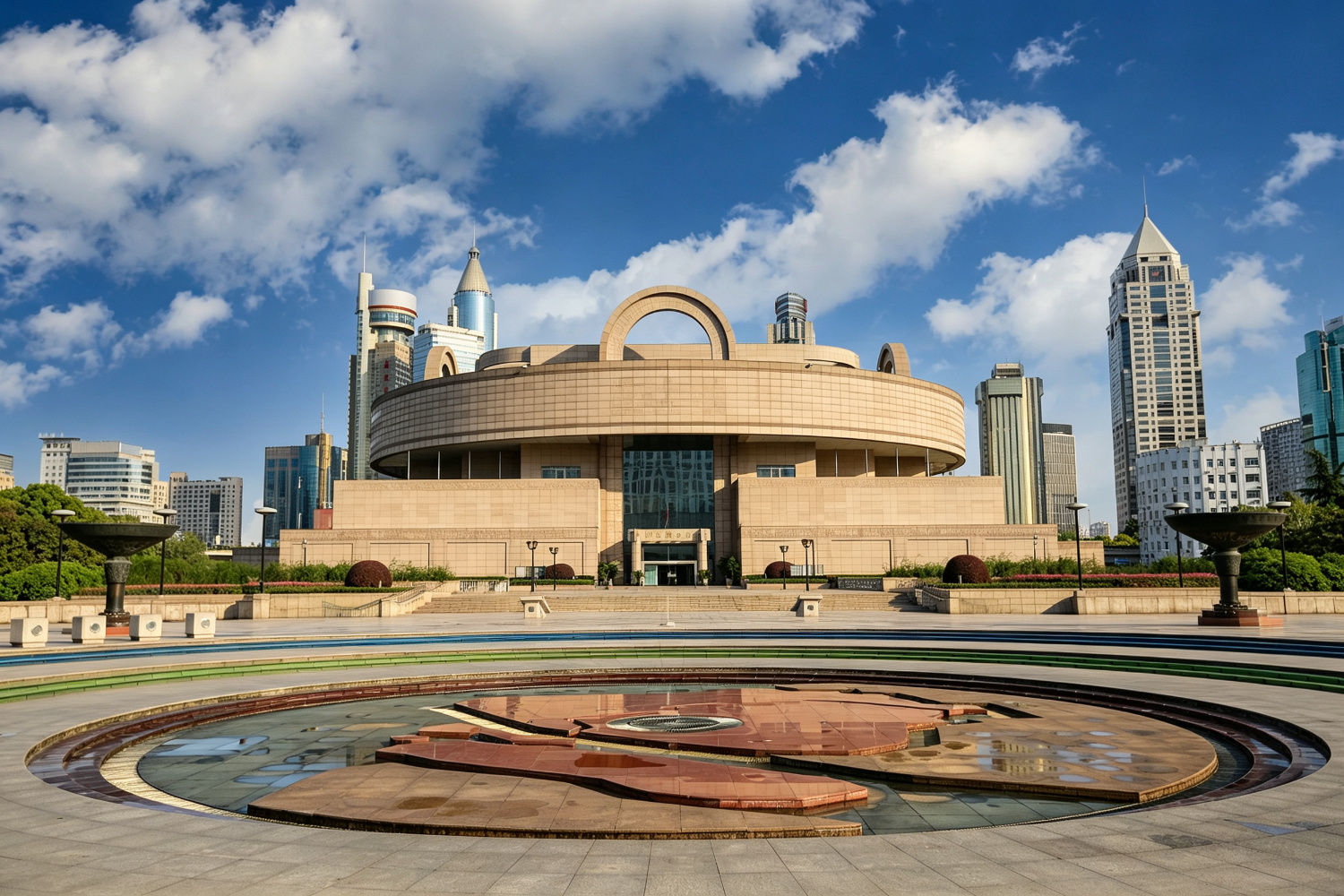
Shanghai Museum

🎫 Ticket Free admission
🕐 Duration(People's Square Branch) 9:00–17:00, last entry at 16:00; closed on Mondays (except public holidays)
🕐 Duration(East Branch) 0:00–18:00, last entry at 17:00; closed on Tuesdays (except public holidays)
🚇 Metro Take Line 1, Line 2, or Line 8 to People's Square Station, exit at Exit 1, about 3–5 minutes' walk; or take Line 14 to Dashijie Station, Exit 4
📍 Address People's Square Branch (Old Branch): No. 201 Renmin Avenue, Huangpu District, Shanghai (South Gate: enter from Wusheng Road) - East Branch (New Branch): No. 1952 Century Avenue, Pudong New Area, Shanghai Map ↗
🎧 10 audio walking guides for Shanghai Museum — listen on the spot in the YOLO HAPPY app. →

Tips for international visitors

  • Reservation policy:Individual visitors on weekdays do not need reservations
  • entering with valid ID documents (ID card
  • passport
  • etc.) - Special exhibitions: Some special exhibitions may charge separately or require reservations
  • subject to official announcements - Tip: Reservations may be required during holidays
  • weekends
  • and for popular exhibitions; recommend checking official information in advance

Inside Shanghai Museum

Ancient Chinese Bronze Gallery · 中国古代青铜馆

🎧 In app
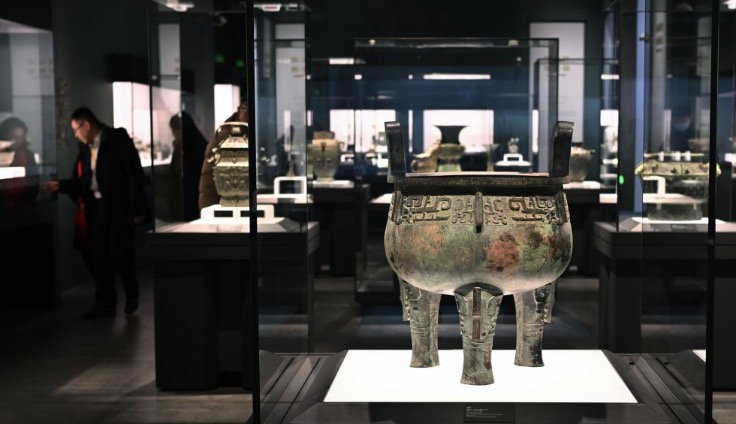
Ancient Chinese Bronze Gallery

The Ancient Chinese Bronze Gallery, on the east wing of the first floor of the Shanghai Museum's People's Square building, is one of the most academically significant permanent exhibitions in the museum's "half-of-China" collection. Covering about 1,200 square meters, it is organized into seven sections—Emergence, Growth, Apex, Transition, and Renewal—together with two thematic units on bronzes from peripheral regions and on smelting and casting techniques. Highlights include Erlitou-culture bronze jue vessels, Shang-dynasty taotie-pattern square ding, Western Zhou masterpieces such as Da Yu Ding and Mao Gong Ding, the Spring and Autumn Lotus and Crane Square Hu, and a replica of the Marquis Yi of Zeng bell set alongside Chu-style rising ding. The route reveals ritual, political, and metallurgical dimensions of early Chinese bronze civilization through vessel typology, inscriptions, and craftsmanship.
Ancient Chinese Sculpture Gallery · 中国古代雕塑馆

🎧 In app
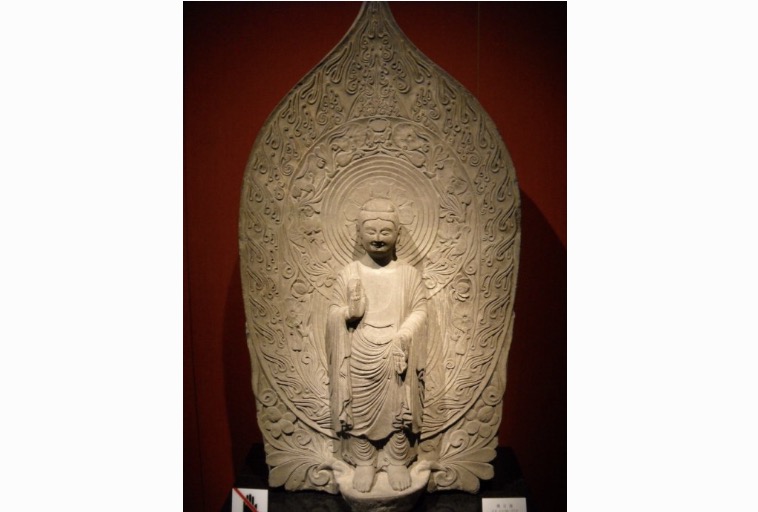
Ancient Chinese Sculpture Gallery

The Ancient Chinese Sculpture Gallery occupies the west wing of the first floor, mirroring the Bronze Gallery. It covers about 640 square meters and is divided into four periods—Warring States to Qin–Han, Wei–Jin through the Sui, Tang–Five Dynasties, and Song–Yuan—with roughly 120 works, of which about 80% are Buddhist statues. Early sections lead with Huo Qubing's tomb reliefs, replicas of the Qin terracotta warriors, and Han pottery figures. The middle period is anchored by Northern dynasties sculptures from Yungang, Longmen, Maijishan, and Dunhuang, alongside white-marble Buddhas from Quyang in Hebei and Liang-dynasty pieces from Wanfo Temple in Sichuan. The Tang–Five Dynasties unit gathers Chang'an-style pieces, Dunhuang painted sculptures, and the Amitabha from the Leifeng Pagoda crypt. The Song–Yuan section pivots to Jinci painted sculptures, Lingyan Temple luohans, and Tibetan-Buddhist statues. A parallel storyline—icons, donors, guardian figures, and tomb sculpture—traces the transformation of Chinese sculpture from ritual object to devotional image.

Ancient Chinese Ceramics Gallery · 中国古代陶瓷馆

🎧 In app
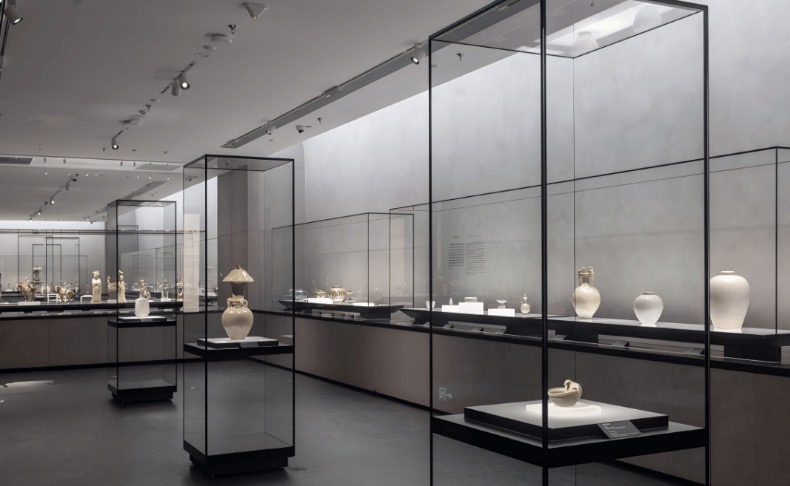
Ancient Chinese Ceramics Gallery

The Ancient Chinese Ceramics Gallery occupies the central area of the second floor. Covering about 1,300 square meters with more than 500 pieces, it is one of the most complete and large-scale surveys of Chinese ceramic history in the museum's collection. Seven chronological sections—Neolithic painted pottery, Shang–Zhou proto-porcelain, Han–Jin and Northern–Southern dynasties, Tang sancai and early celadon, Song dynasty's six great kiln systems (Ru, Guan, Ge, Jun, Ding, and Yue, Longquan, Yaozhou, Cizhou), Yuan–Ming–Qing Jingdezhen blue-and-white and monochrome glazes, and Ming–Qing regional kilns (Yixing zisha, Dehua blanc de Chine, Shiwan)—trace the full arc. Key objects include Majiayao painted pottery basins, Shang proto-porcelain zun, a Northern Qi white-splash-on-green long-neck vase, Tang sancai camel with musicians, a Ru ware sky-blue narcissus basin, a Yuan blue-and-white peony jar, a Ming Yongle sweet-white carved prunus vase, and a Kangxi famille-rose bowl. Five-dimensional labels (period, type, kiln, technique, motif) make the room a complete index for the study of Chinese ceramics.

Chinese Calligraphy Gallery · 中国历代书法馆

🎧 In app
Chinese Calligraphy Gallery

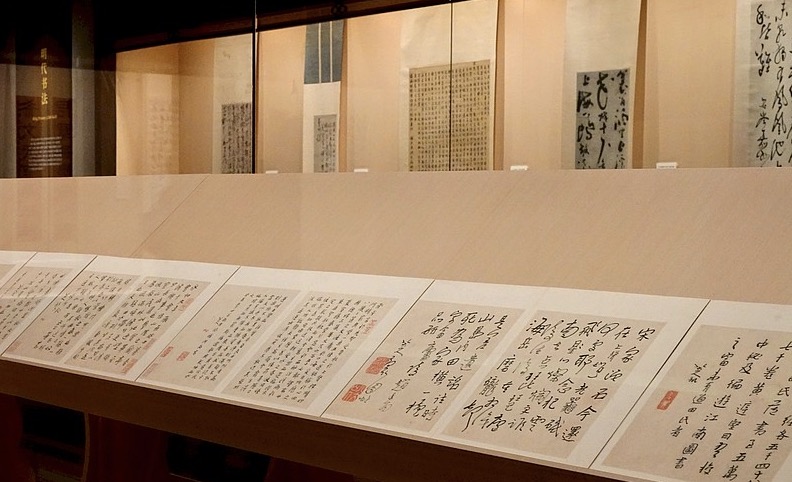
The Chinese Calligraphy Gallery is on the east wing of the third floor, covering about 600 square meters. About 60 masterworks are arranged in six chronological sections—seal and clerical scripts, Jin–Tang calligraphy, Song, Yuan, Ming, and Qing. Highlights include Shang oracle-bone and Western Zhou bronze rubbings, the best-preserved fragments of the Chunhuage Tie, a Tang copy of Wang Xizhi's Shangyu Tie, Huai Su's Bitter Bamboo Shoot Tie, Emperor Huizong's Slender-Gold Thousand-Character Classic, Su Shi's memorial draft for Huang Jidao, Huang Tingjian's cursive Lienpo and Lin Xiangru Biographies, Zhao Mengfu's Danba Stele, works by Zhu Yunming, Wen Zhengming, Dong Qichang, Wang Duo, and Fu Shan, and letters and hand scrolls from the "Two Wangs" lineage. Standing desks with high-resolution digital comparison panels allow visitors to study brushwork, composition, and ink tonality.

Chinese Painting Gallery · 中国历代绘画馆

🎧 In app
Chinese Painting Gallery

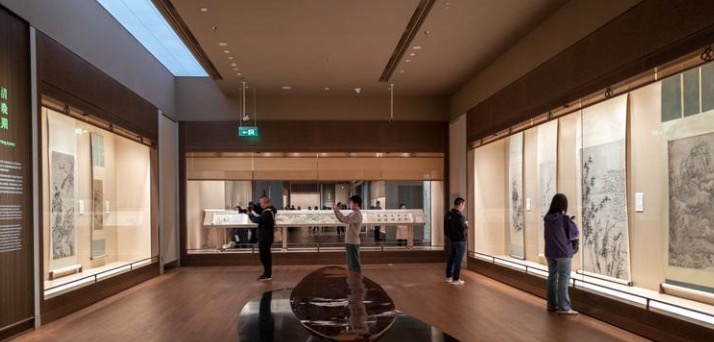
The Chinese Painting Gallery occupies the west wing of the third floor, opposite the Calligraphy Gallery. Covering about 1,200 square meters and displaying more than 120 works from the Tang dynasty to modern times, it is one of the largest permanent ancient painting exhibitions on the Chinese mainland. Seven chronological sections—Tang–Song, Yuan, early-to-mid Ming, late Ming to early Qing, mid Qing, late Qing, plus the dedicated "Liangtu Xuan" gallery—trace the evolution of Chinese painting from blue-and-green landscape to literati xieyi. Treasures include Sun Wei's High Recluse scroll (the only surviving handscroll of its theme), Emperor Huizong's Willows, Crows, and Reed Geese, Liang Kai's Eight Eminent Monks, Wang Shen's Misty Rivers and Layered Peaks, Zhao Mengfu's Horses at the Autumn Outskirts, Ni Zan's Six Gentlemen, masterworks by the Four Masters of Wu (Shen Zhou, Wen Zhengming, Tang Yin, Qiu Ying), Dong Qichang's Eight Views of Yan and Wu album, the Four Wangs, Four Monks, Jinling and Yangzhou schools, and Ren Bonian and Xu Gu of the Shanghai school. Low-illumination cold lighting and UV-filtering vitrines protect silk and paper surfaces.

Chinese Seals Gallery · 中国历代玺印馆

🎧 In app
Chinese Seals Gallery

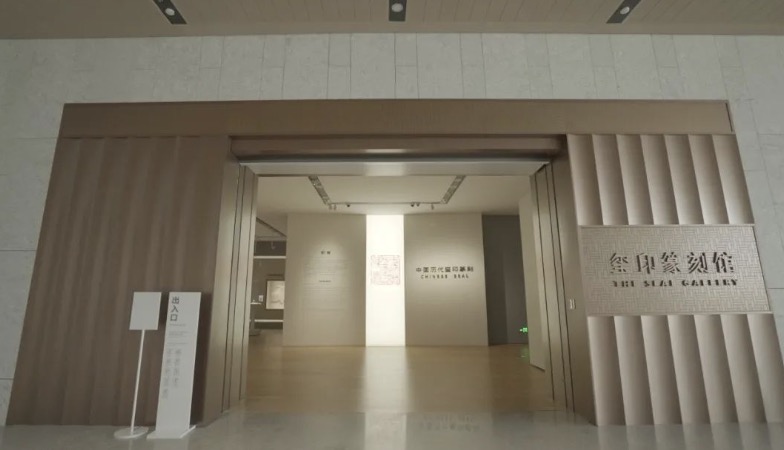
The Chinese Seals Gallery is at the center of the third floor and is the first dedicated museum of Chinese seal engraving in China, covering 380 square meters with more than 500 pieces. Five sections follow the art historical line: early archaic seals (Shang–Zhou through Warring States bronze official and private seals, nose and altar knobs); the Qin–Han codification (Qin "field-grid" seals, Han seal script, jade seals and bird-worm script); Tang–Song–Jin–Yuan new styles (regular-script seals, hand-pressed marks, studio seals); the rise of literati seal carving in Ming–Qing (Wen Peng, He Zhen, the Wan and Zhe schools, Deng Shiru, Wu Rangzhi, Zhao Zhiqian, Wu Changshuo and their lineages); and Ming–Qing seal materials and finial carving (Qingtian, Shoushan, Changhua, Balin stones with full-round and relief knobs). A closing section on "seal catalogues and seal studies" displays the Shizhong Shanfang Yinju, Xueshantang Seal Catalogue, and Xiling Bajia catalogue, linking original seals with their bibliographic counterparts.

Ancient Chinese Jades Gallery · 中国古代玉器馆

🎧 In app
Ancient Chinese Jades Gallery

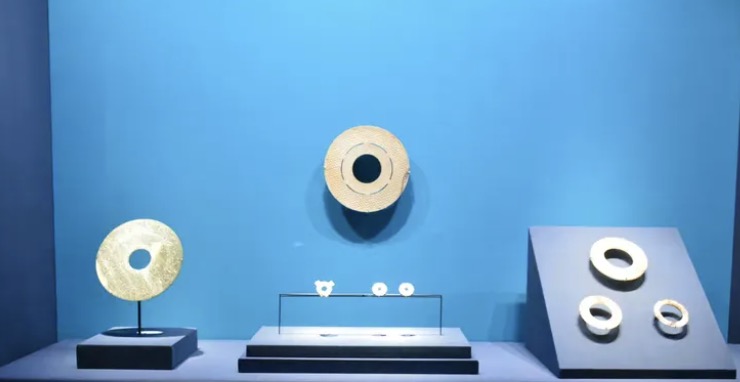
The Ancient Chinese Jades Gallery is on the fourth floor, covering 500 square meters. About 300 jades from the Neolithic to the Qing dynasty are arranged in six units—prehistoric, Xia–Shang–Western Zhou, Spring and Autumn–Warring States, Han–Jin, Tang–Song–Liao–Jin, and Yuan–Ming–Qing. Highlights include a Hongshan-culture jade pig-dragon, Lingjiatan-culture jade eagle and jade plate, Liangzhu cong with a deity-and-beast mask (one of the museum's heaviest), Shang dynasty birds and blades, Fu Hao–style phoenix and figures, Western Zhou pendant sets, Spring and Autumn coiled-dragon bi, Warring States dragon pendants and multi-segment articulated chains, a complete Han dynasty gold-wire jade burial suit and jade dancers, Tang–Song flying apsaras, Liao–Jin "Spring Water" and "Autumn Mountain" jades, Ming–Qing Zigang plaques, Mughal-influenced "Hindustan" jades, and Qianlong-era inscribed jade mountain-sculptures. The storyline—ritual object, ornament, mortuary piece, scholar's implement, display piece—traces jade's cultural trajectory from divine to royal to literari aesthetic.

Chinese Coins Gallery · 中国历代钱币馆

🎧 In app
Chinese Coins Gallery

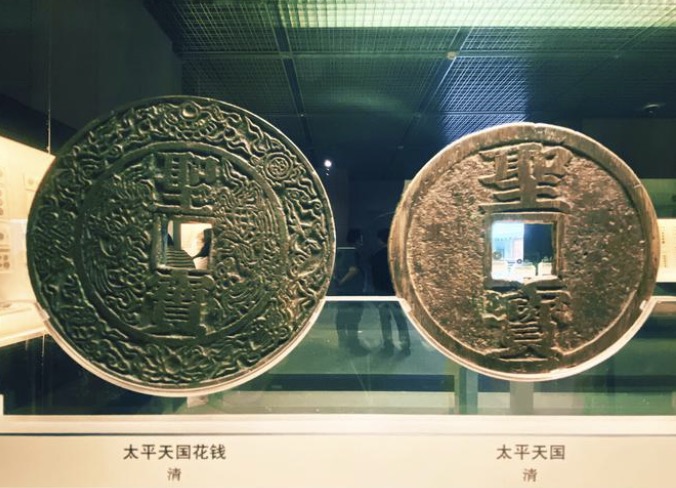
The Chinese Coins Gallery is on the fourth floor and covers 740 square meters, displaying more than 3,300 objects—one of the largest permanent numismatic exhibitions in China. The chronological storyline runs from pre-Qin cowries, spade, knife, and round coins; Qin–Han half-tael and wuzhu; Tang Kaiyuan Tongbao and feiqian; Song money drafts, Jiaozi, silver ingots, and bronze–iron coinage in parallel; Yuan paper money and silver ingots; Ming–Qing baochao, sycee, and machine-struck copper coins; to modern machine-struck silver dollars, copper cents, and currency from red-base regions—tracing money from commodity to metal, from metal to paper, and from hand to machine striking. Two thematic rooms: the "Shi Jiagan Numismatic Room" displays rare Chinese antique and machine-struck coins donated by the modern collector Shi Jiagan; the "Du Weishan and Tan Duanyan Central Asian Coins Room" displays Sogdian, Kushan, Sasanian, and Arabo-Persian coins from the Silk Road donated by the Australian-based scholar Du Weishan and his wife, reflecting East–West monetary exchange along the Silk Road.

Ming–Qing Chinese Furniture Gallery · 中国明清家具馆

🎧 In app
Ming–Qing Chinese Furniture Gallery

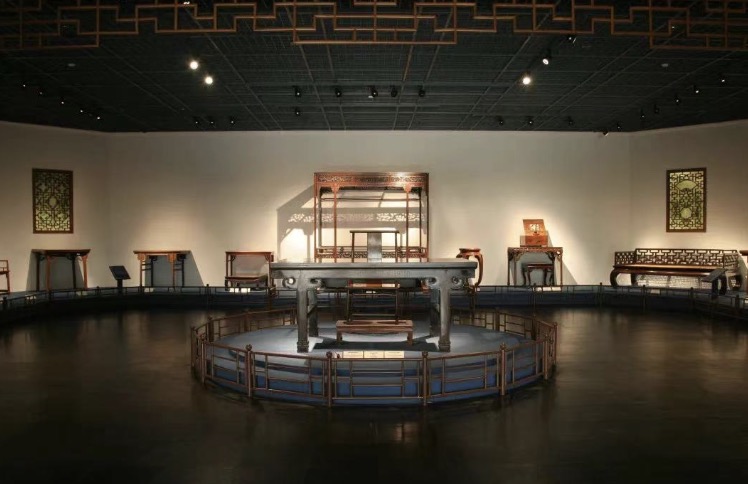
The Ming–Qing Chinese Furniture Gallery is in the west wing of the fourth floor, covering 700 square meters with more than 100 masterpieces. The route divides into two stylistic threads: Ming furniture, in huanghuali, zitan, and tieli, prized for spare forms, rounded lines, and precise proportions—exemplified by a huanghuali four-flush official's cap armchair, a huanghuali flat-top table with insert shoulders, a zitan horseshoe-back armchair, and a zitan large painting table; and Qing furniture, in zitan and hongmu, marked by lavish carving, auspicious motifs, and grandeur—exemplars include a Qianlong-period zitan throne with Western lotus carving, a mid-Qing hongmu carved screen, and mother-of-pearl and marble-inlaid long tables and Eight Immortals tables. Two recreated interiors—an Ming reception hall (centered on long table, Eight Immortals table, armchairs, and flower stands) and a Qing scholar's studio (painting table, horseshoe-back chair, bookcase, and official leather box)—help visitors read furniture within the ritual and daily grammar of traditional Chinese homes. A wall of mortise-and-tenon detail diagrams shows swallowtail, hugging-shoulder, dumpling-angle, insert-shoulder, and through-shoulder joints.

Chinese Ethnic Minorities Craft Gallery · 中国少数民族工艺馆

🎧 In app
Chinese Ethnic Minorities Craft Gallery

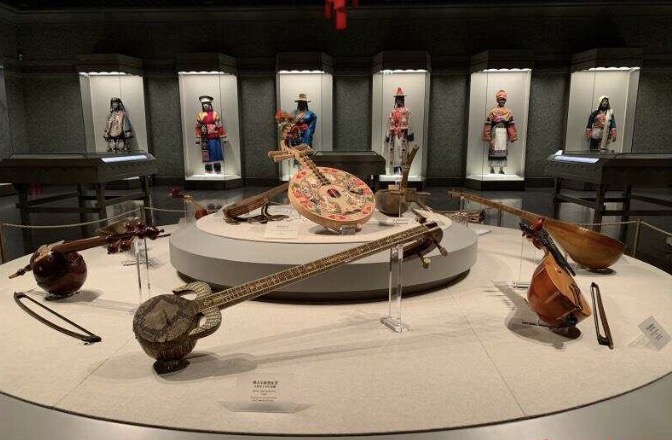
The Chinese Ethnic Minorities Craft Gallery is on the fourth floor's east wing, adjacent to the Jades Gallery. With more than 700 square meters and nearly 600 objects, it is the most culturally diverse permanent gallery in the People's Square museum. Eight craft sections—ethnic costume (Mongolian robe, Tibetan chuba, Yi pleated skirt, Miao silver headdress, Uyghur doppa); dyeing, weaving, and embroidery (batik, tie-dye, embroidery, brocade—Miao embroidery, Dong brocade, Zhuang brocade, Dai brocade, Tujia "Xilankapu", Li brocade, Tibetan pulu); metalwork (Miao silver, Yi silver, Tibetan Buddhist ritual objects and butter lamps, Dai silver ewers, Mongolian gold and silver); carvings (Wa woodcarving, Tibetan carved doors and sutra blocks, Miao wooden masks, Tajik stone carving); ceramics (Dai slow-wheel pottery, Tibetan "ka" kiln ware, Kazakh glazed pottery); lacquerware (Yi lacquer, Tibetan gilt-and-painted, Miao lacquered leather armor); rattan and bamboo weaving (Li rattan, Dai bamboo, Miao baskets, Yi back-baskets); and mask art (Tibetan opera masks, Nuo masks, Yi bimo masks, Miao Lusheng festival masks)—represent the crafts of ethnic regions across all Chinese provinces, autonomous regions, and municipalities. The gallery emphasizes the context of craft, community, festival, and daily life, providing a visual model for understanding the "diversity in unity" of Chinese culture.

Get the app

The tool solved one problem. The app handles the whole trip.

Per-trip visa judgements, audio guides, prep checklists, and a real human concierge — offline-ready, in your language.

Download for iPhoneFree to download · No OTA upsells