🎫 Ticket(April 1–June 30, September 1–November 30) Adult ticket RMB 40
🎫 Ticket(July 1–August 31, December 1–March 31 of the following year) Adult ticket RMB 30
🕐 Duration Generally 9:00–16:30 (last entry at 16:00); closed every Monday for maintenance (except public holidays)
🚇 Metro Take Line 10 or Line 14 to Yu Garden Station, exit at Exit 1 or Exit 7, about 5–8 minutes' walk
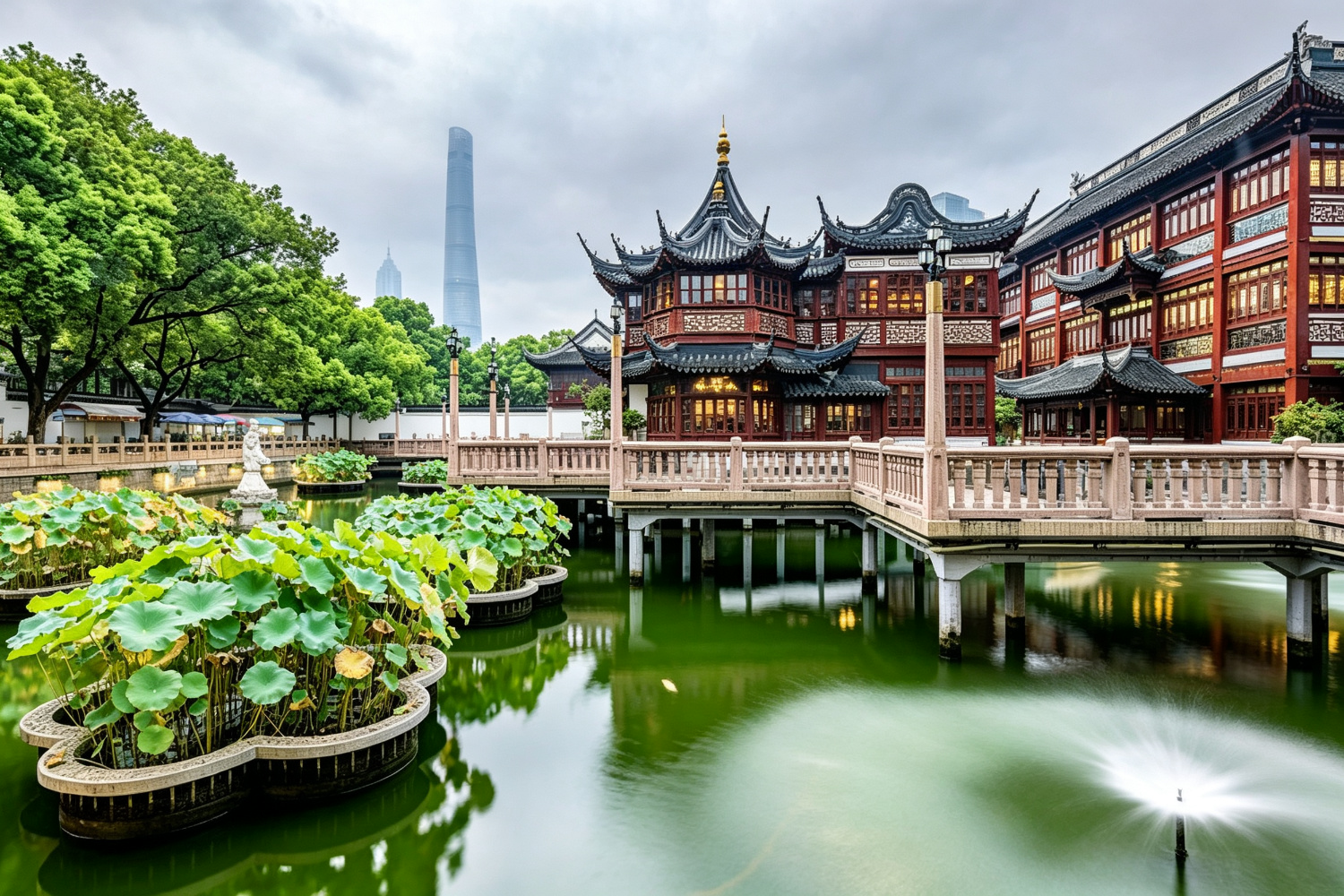
📍 Address No. 168 Fuyou Road, Huangpu District, Shanghai (Yu Garden entrance); City God Temple / Yu Garden Bazaar is located around Fangbang Middle Road and Anren Street Map ↗ Inside Yu Garden
Sansui Hall · 三穗堂
🎧 In app 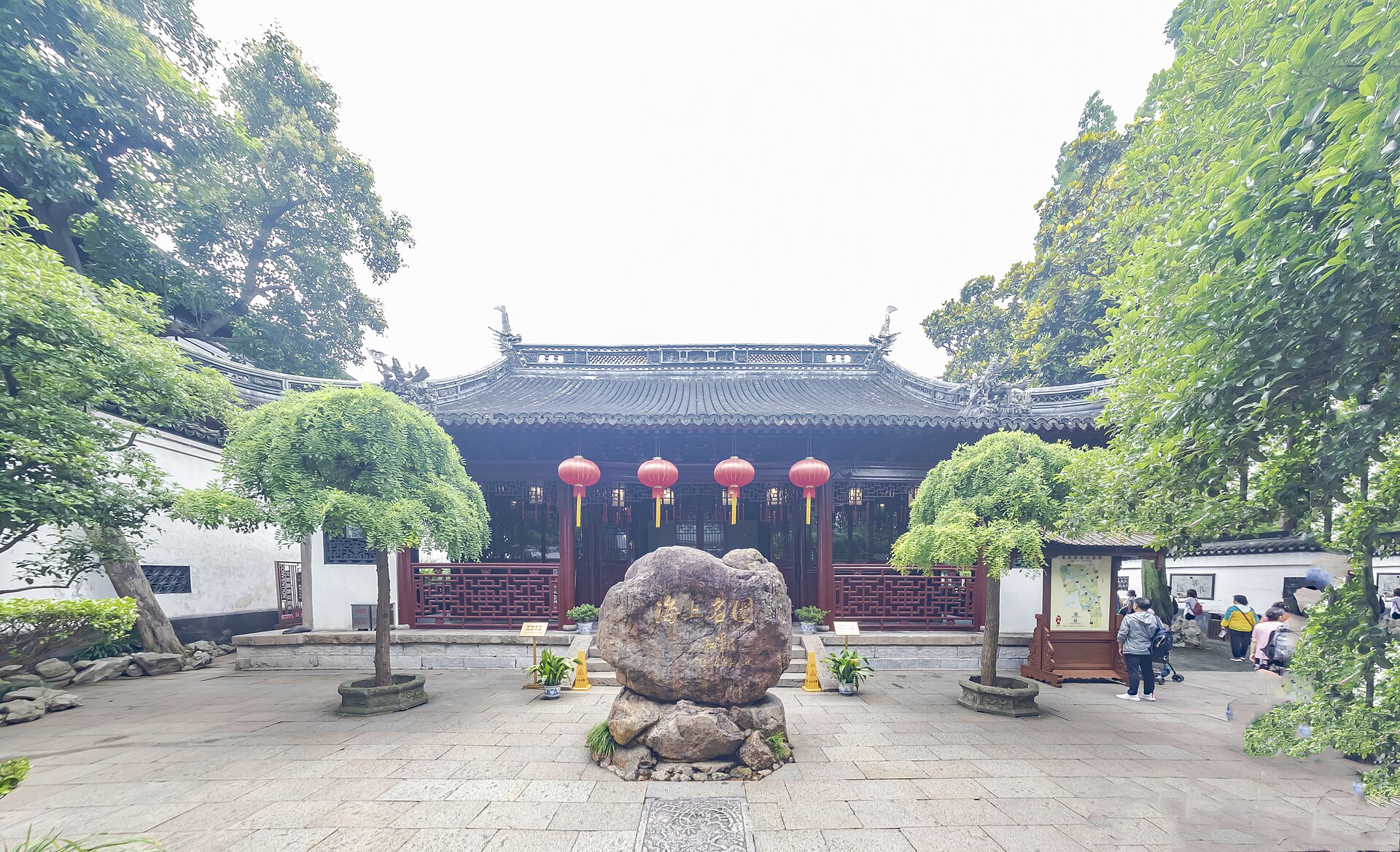
A five-bay gable-roofed hall with a soaring ridge, it displays red-lacquered painted beams and a calligraphic plaque. Inside, a portrait of Pan Yuduan and an old panorama of the garden are exhibited. Today it welcomes visitors and frames the first impression of Yuyuan.
Yangshan Hall & Juanyu Lou · 仰山堂卷雨楼
🎧 In app 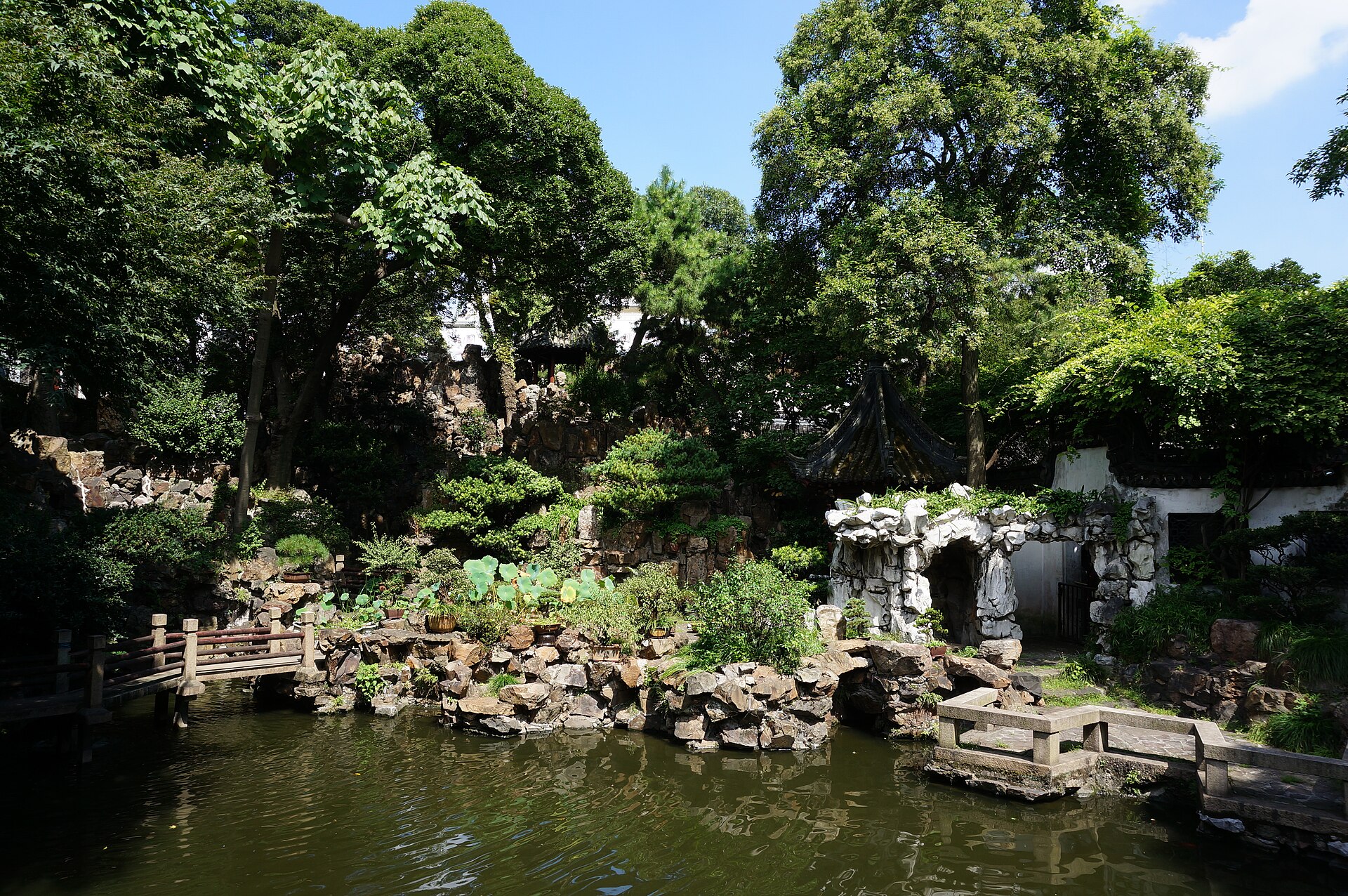
Yangshan Hall is a three-bay gable-roofed room framing views of the rockery; Juanyu Lou above offers tea seats and, on rainy days, eaves that drip like a curtain—hence the name. The complex is the prime vantage point for photographing the Great Rockery.
The Great Rockery · 大假山
🎧 In app 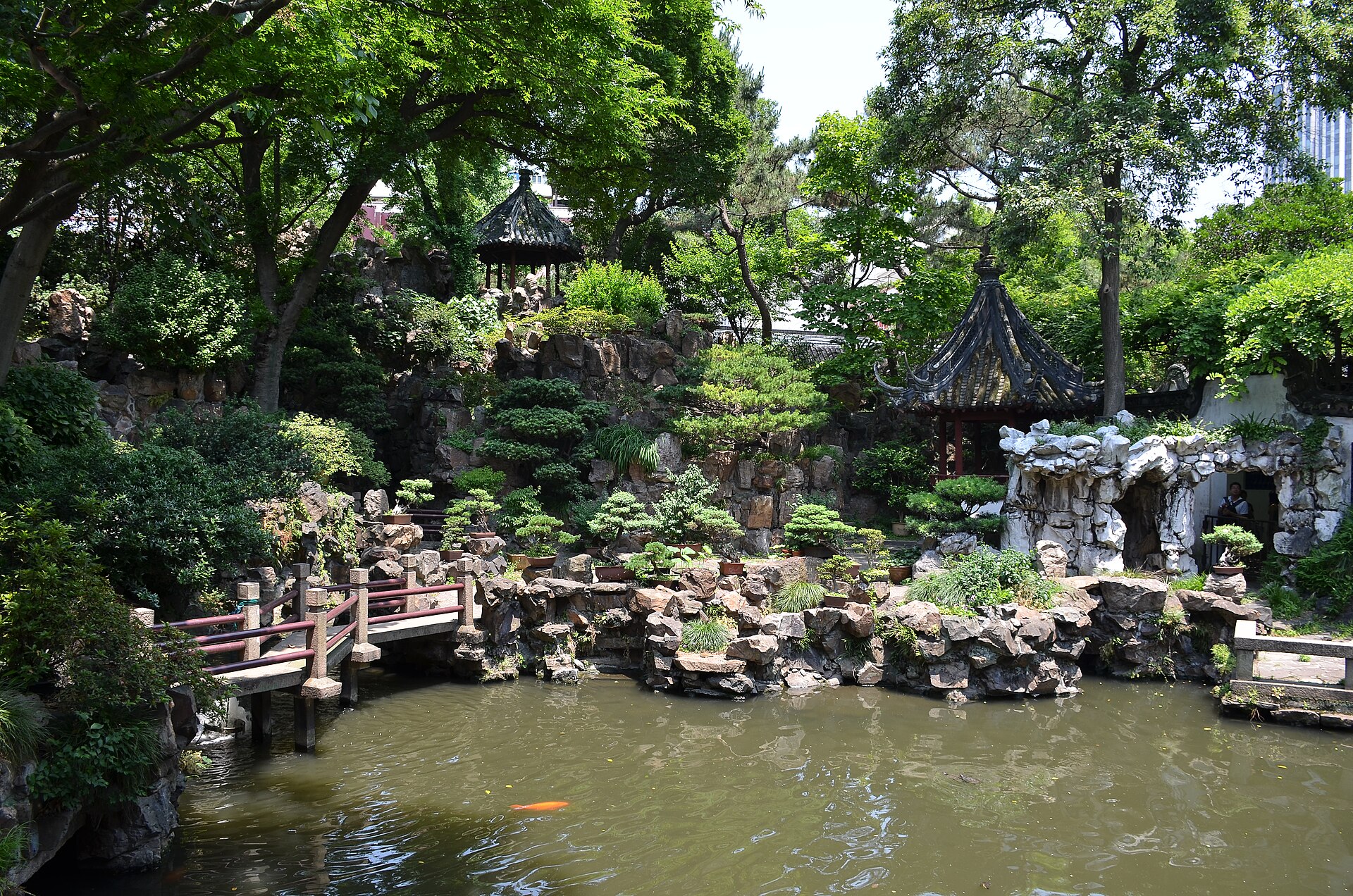
Built of yellow stones from Wukang, Zhejiang, the 12-metre-tall, 400-metre-perimeter rockery features crags, caves and winding paths. From the summit pavilion, visitors glimpse the Huangpu River and City God Temple roofs. A national key cultural relic, it embodies the Ming literati principle of "made by man, yet appearing natural."
Cuixiu Hall · 萃秀堂
🎧 In app 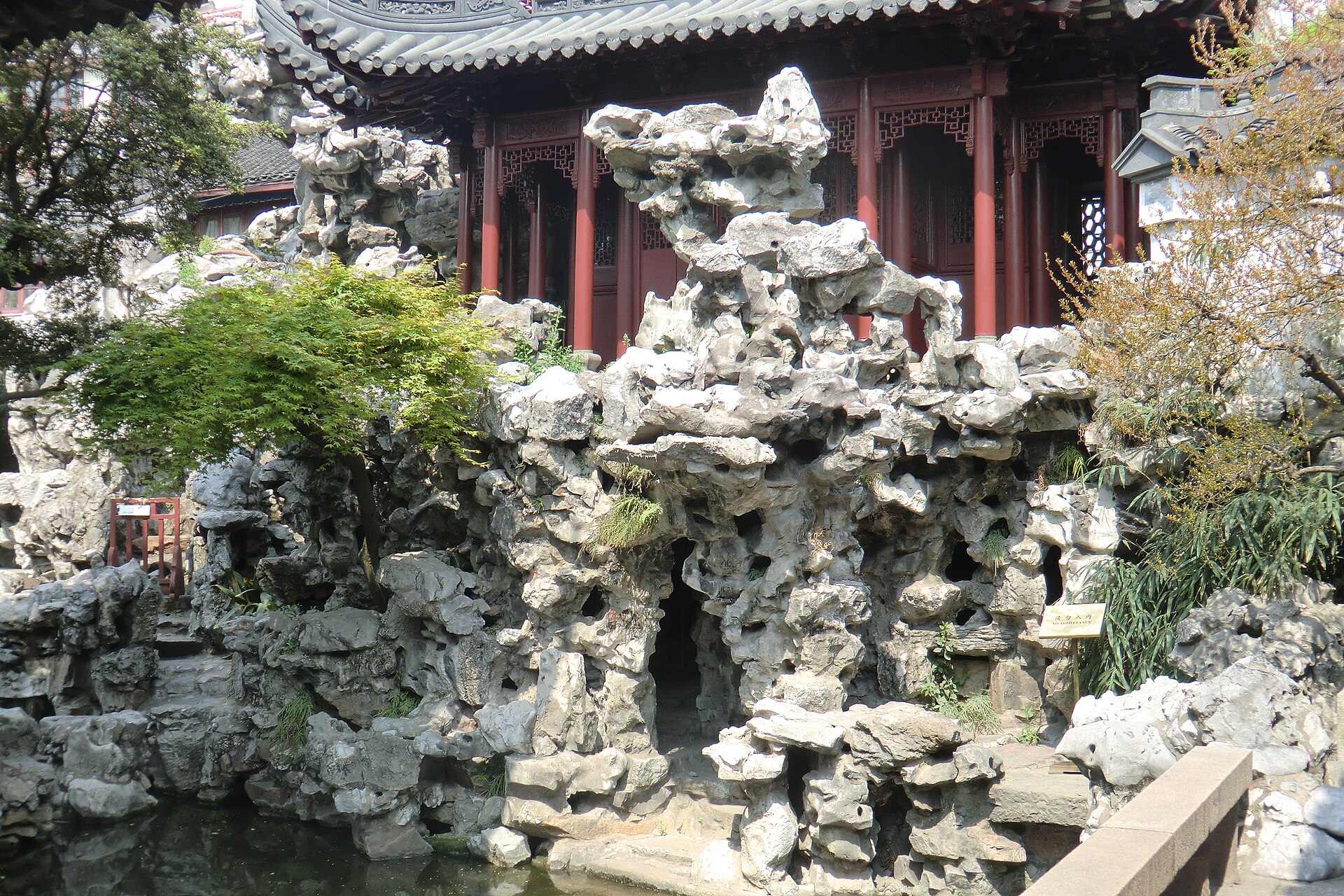
Facing a winding pool and backed by rockwork, Cuixiu Hall is a three-bay hall on the eastern foot of the Great Rockery. Planted with osmanthus, magnolia, crabapple and crape myrtle, it served the Ming owners for poetry and music gatherings. Its pale Su-style painted beams and fine latticework reflect the classic Jiangnan literati aesthetic.
Wanhua Lou · 万花楼
🎧 In app 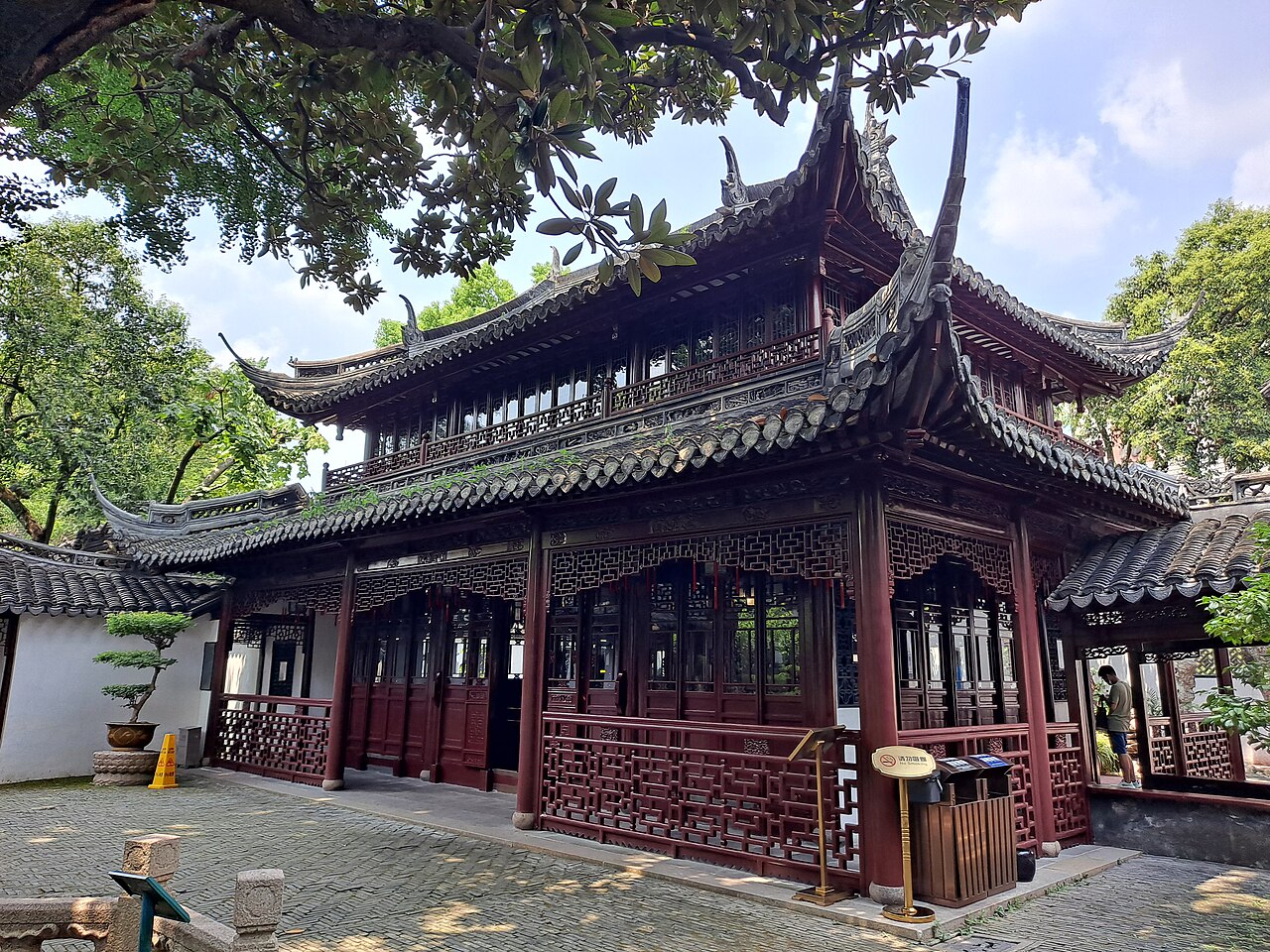
A two-storey structure next to Cuixiu Hall, named for the peonies, roses, camellias, azaleas and herbaceous peonies surrounding it. The ground floor is a flower-viewing parlor; the upper floor overlooks the pool and rockery. It is Yuyuan's most beloved springtime destination.
Dianchun Hall · 点春堂
🎧 In app 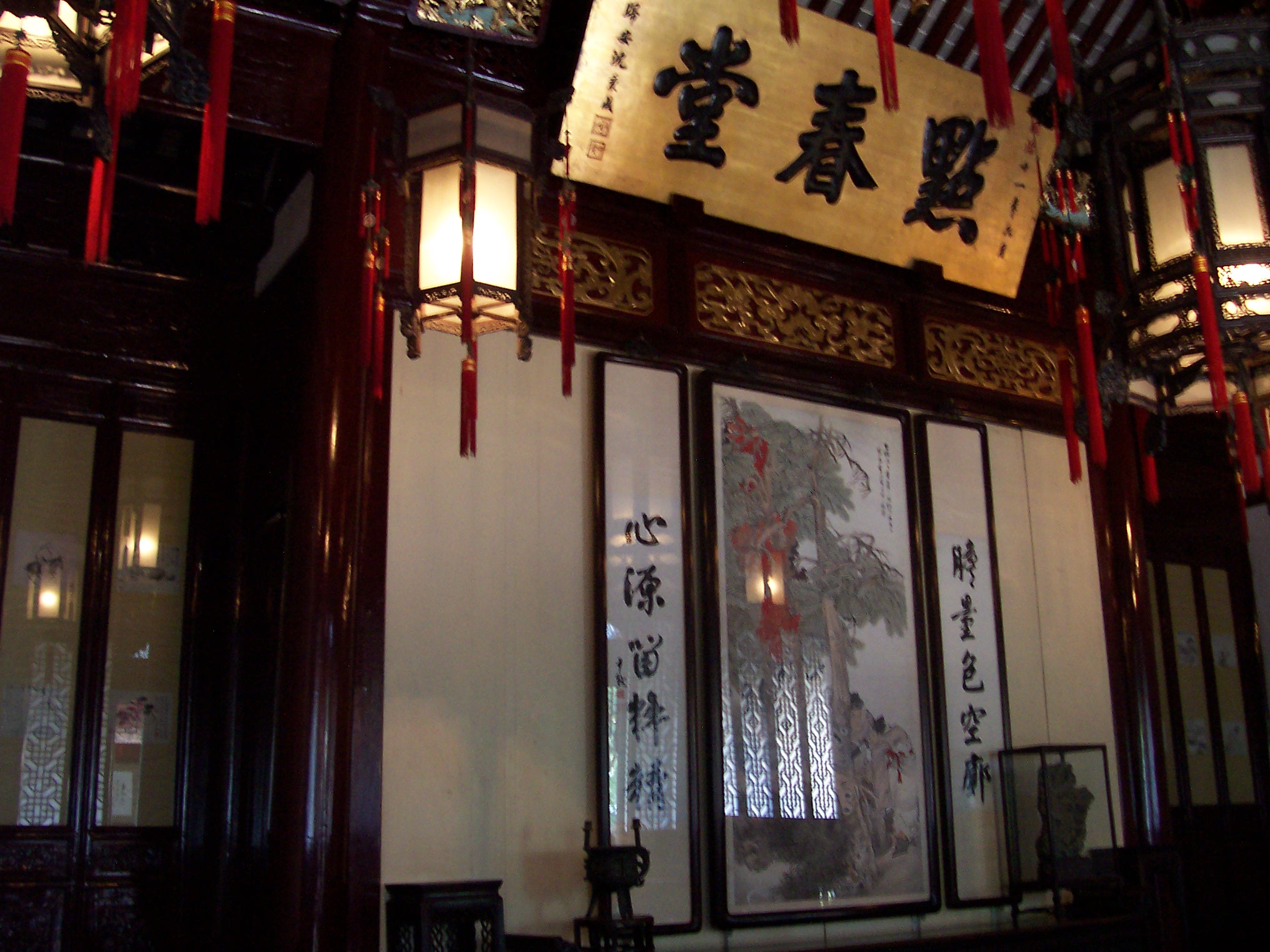
Originally a guild hall for Fujianese sugar and flower merchants, Dianchun Hall became the command post of the 1853 Small Swords Society Uprising led by Liu Lichuan. Today a five-bay gable-roofed building with a front stage, it preserves exhibits about the uprising, making it both a revolutionary heritage site and a traditional opera venue.
Yulinglong (Jade Camellia Stone) · 玉玲珑
🎧 In app 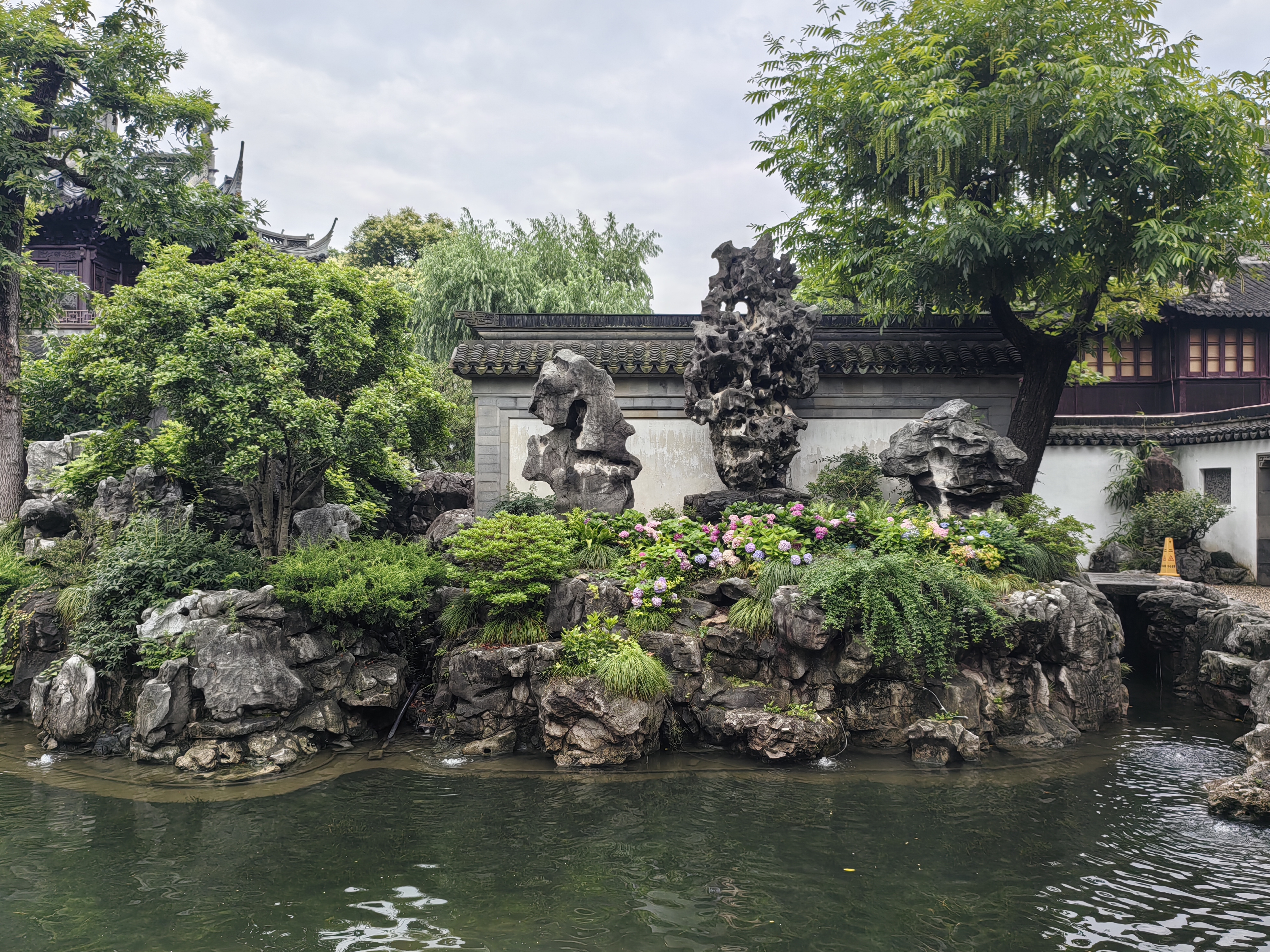
A 3.3-metre-tall Lake Tai scholar's rock, Yulinglong is famed for its 72 perforations, said to let smoke from a single incense burner escape through every hole. Once owned by the Ming official Gu Mingshi, it is one of the "Three Great Rocks of Jiangnan" alongside Liu Garden's Guanyun Peak and West Lake's Zhouyun Peak.
Yuhua Hall · 玉华堂
🎧 In app 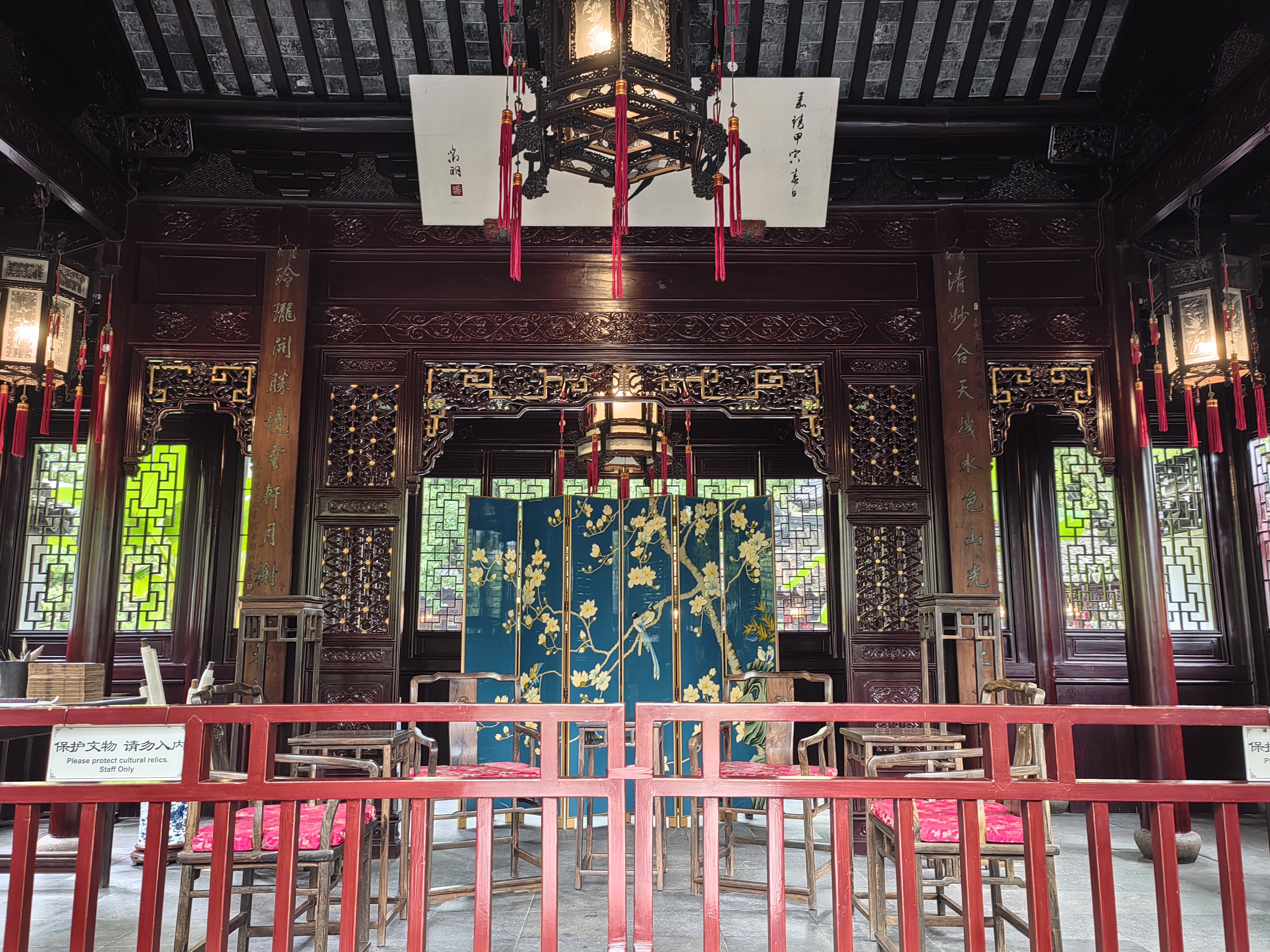
Yuhua Hall ("Jade-Splendor Hall") is a compact three-bay studio adjoining the Jade Camellia Stone. Its name means "the essence of jade." Fitted with Ming-style furniture and surrounded by bamboo, rocks and a small pool, it was the owner's retreat for reading and qin playing. Today it complements the Yulinglong stone display.
Huijing Lou · 会景楼
🎧 In app 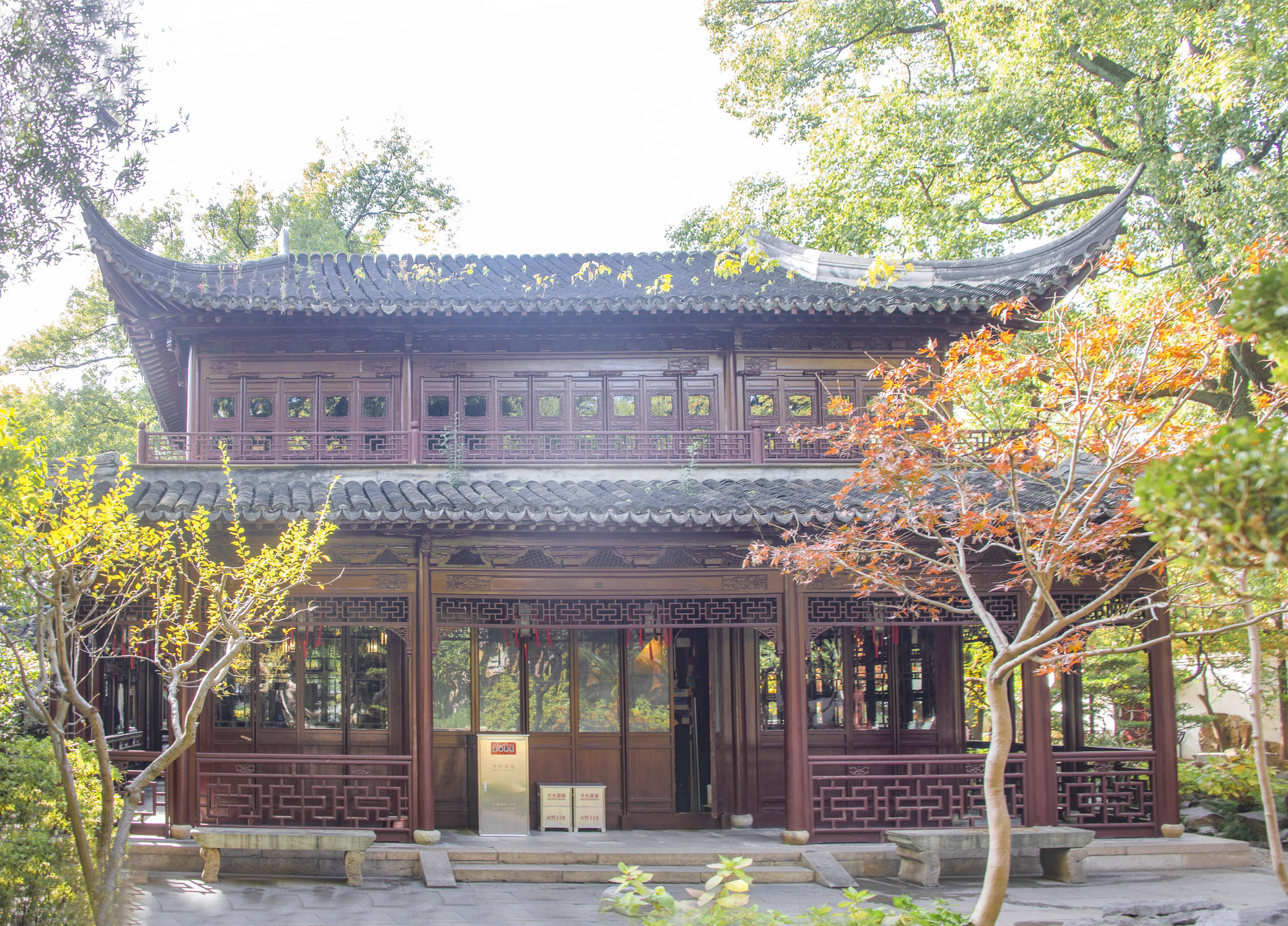
The three-storey Huijing Lou ("Gathering-Scenery Tower") is the tallest building in Yuyuan's west garden. Its top floor offers 360-degree views: the Nine-Turn Bridge and Mid-Lake Pavilion to the south, the Great Rockery and City God Temple to the east, and Lujiazui's skyline to the northwest. It also houses calligraphy exhibitions and a tea house.
Deyue Lou · 得月楼
🎧 In app 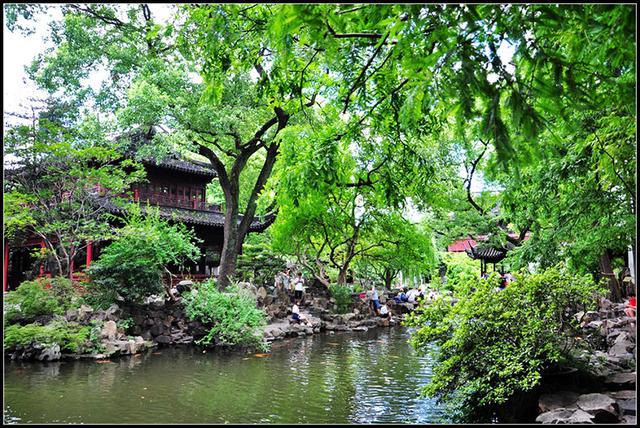
Built by the lotus pond, Deyue Lou ("Moon-Winning Tower") is a two-storey teahouse facing the Mid-Lake Pavilion and the winding Nine-Turn Bridge. Its name quotes Su Lin of the Song dynasty: "The waterside tower wins the moon first." Tea and Shanghainese snacks are served upstairs with prime views—the quintessential Jiangnan teahouse experience.
Inner Garden · 内园
🎧 In app 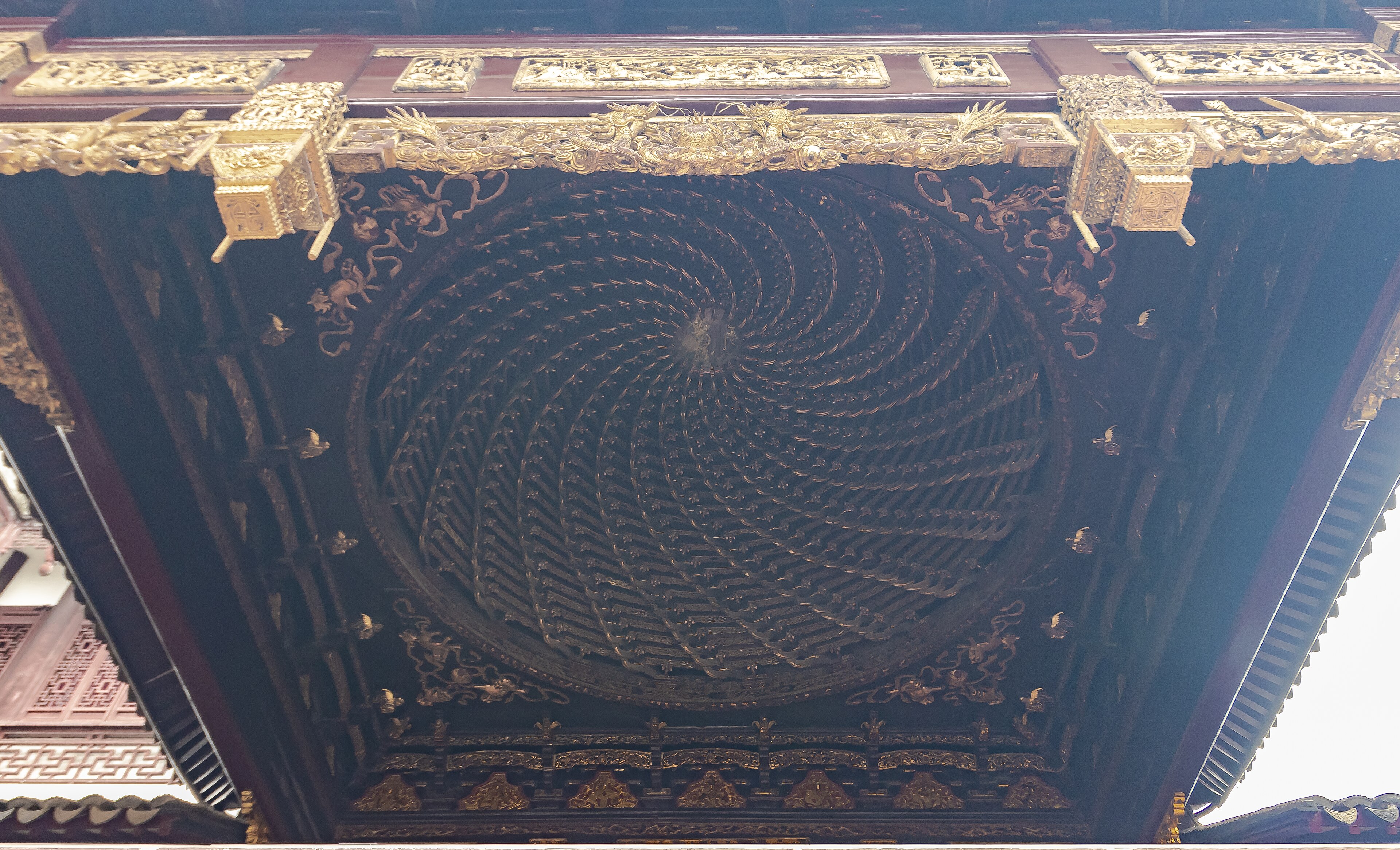
Built in 1709 as a private garden for the City God Temple complex, the Inner Garden is a master class in Jiangnan miniature landscaping. In just 2 mu it packs winding corridors, the Nine-Dragon Pool, the Yellow-Stone Rockery and the Jiyu Peak, connected by covered walkways inset with Ming–Qing stone tablets—a perfectly preserved late-imperial literati garden.