🎫 Ticket Not free; real-name reservation and ticket purchase required
🕘 Opening Hours - March 1 – October 31: 07:30–17:30 (ticket sales and entry stop at 17:00)
- November 1 – February 28: 07:30–17:00 (ticket sales and entry stop at 16:30)
🚇 Metro Line 4 Sanyuanfang Station Exit 2, walk about 6 minutes directly (closest)
🎫 Ticket Peak season (March 1 – October 31): 20 RMB/person
🎫 Ticket Off-season (November 1 – February 28 of the following year): 15 RMB/person
🎫 Ticket Combo ticket: Canglang Pavilion + Keyuan, peak season 40 RMB, off-season 30 RMB
🚇 Metro Alternative: Line 4/5 Nanmen Station, walk about 10 minutes
📍 Address No. 3 Canglangting Street, Gusu District, Suzhou, Jiangsu Province, China Map ↗ Inside Canglang Pavilion Scenic Area / Surging Wave Pavilion
Mianshui Pavilion (Water-Facing Pavilion) · 面水轩
🎧 In app 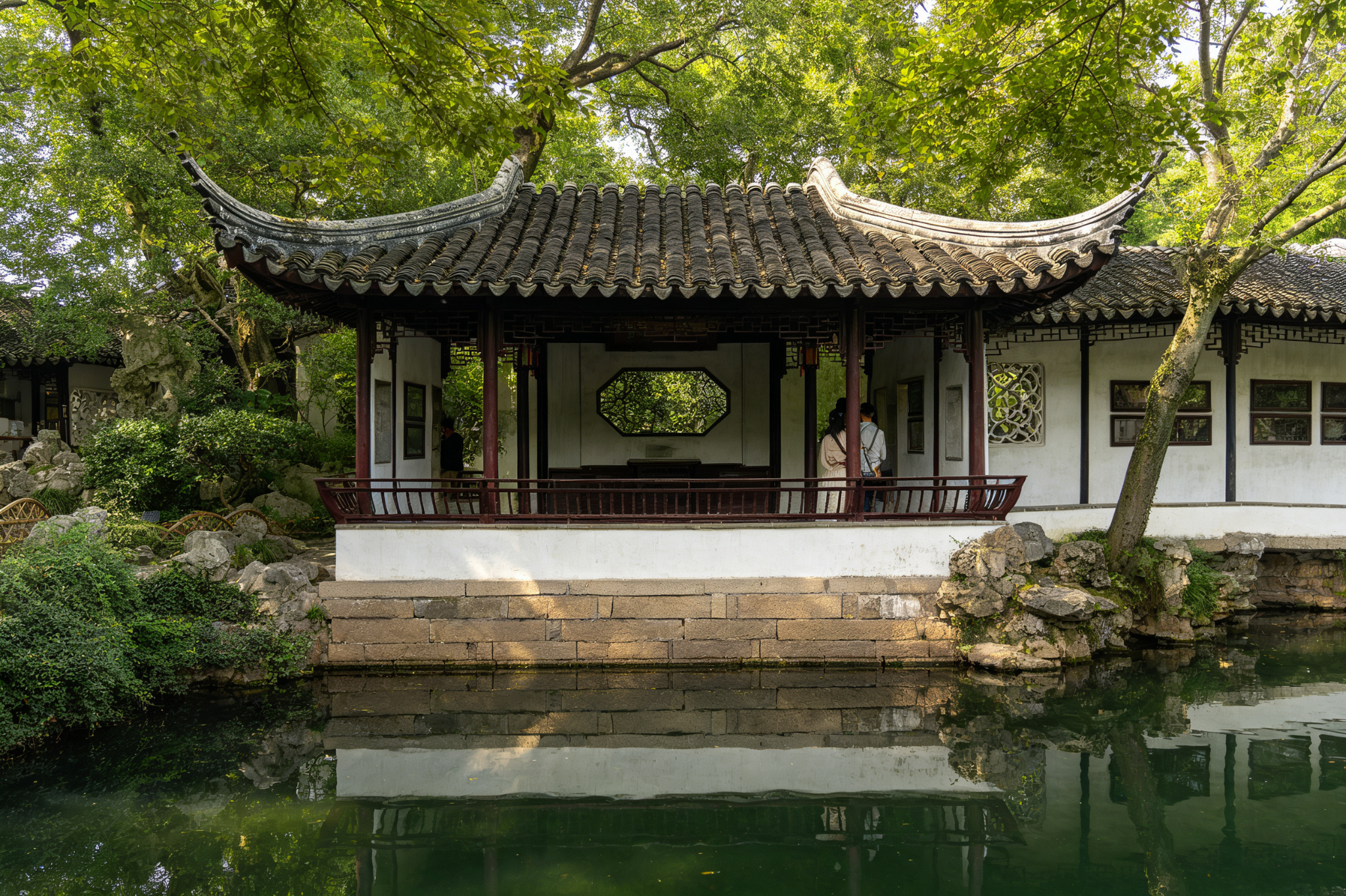
Mianshui Pavilion sits just north of the garden entrance and serves as the first architectural highlight visitors encounter. Facing the water on its northern side, it spans three bays with a stone terrace projecting into the pond, making it the premier spot for viewing the outer Fengxi stream and borrowed scenery. The name "Mianshui" aptly describes its defining feature of facing the water. The structure uses a flush gable roof with a low eave line, maintaining an intimate connection with the water. It stands as the garden's overture, embodying Canglang Pavilion's celebrated concept of water encircling the garden before one even enters.
Guanyu Spot (Fish-Watching Spot) · 观鱼处
🎧 In app 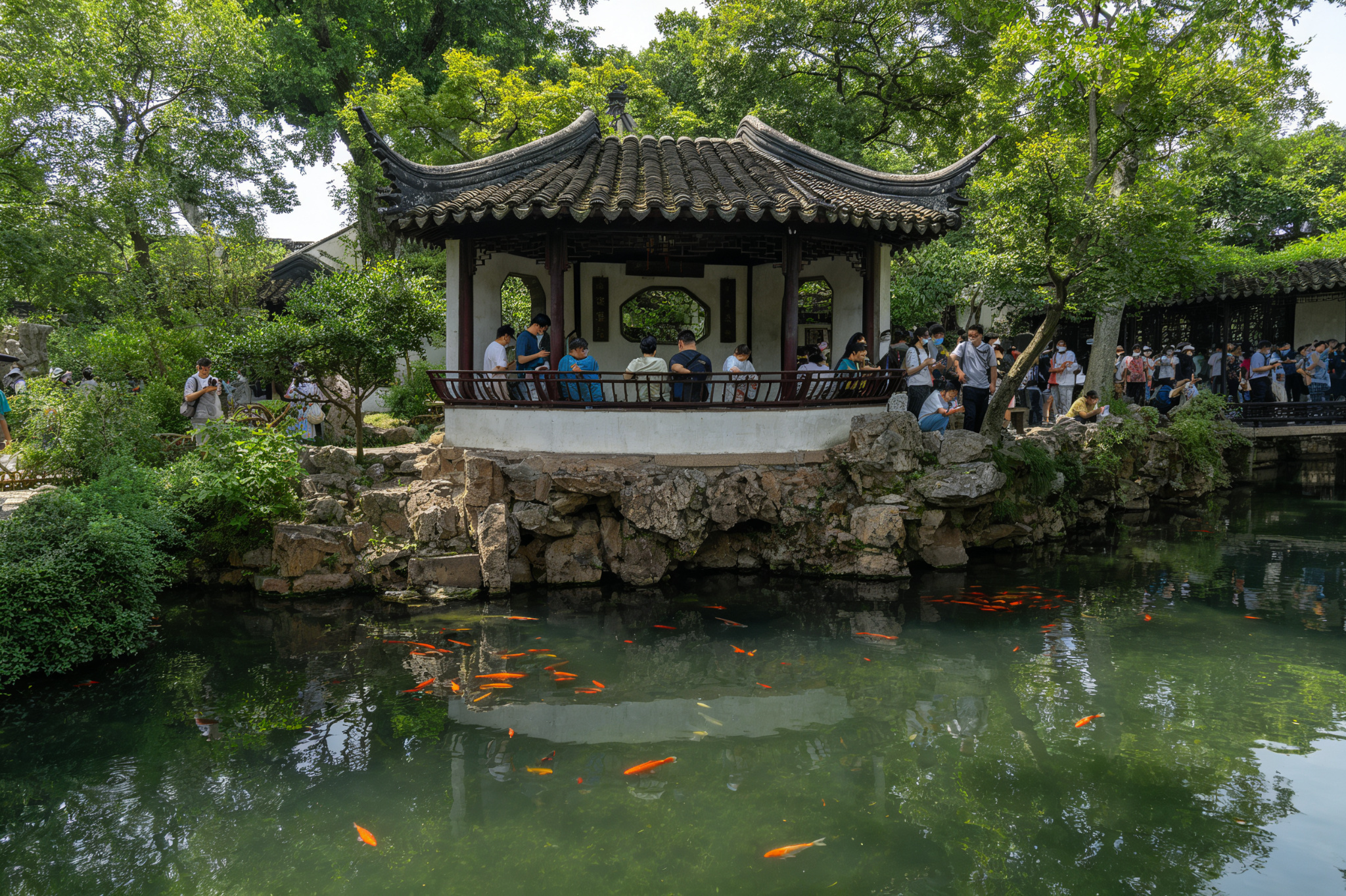
Guanyu Spot lies east of Mianshui Pavilion, consisting of a stone terrace and a small viewing area at the water's edge. The open water teems with koi, evoking the ancient tale of Zhuangzi watching fish at Hao River, reflecting the garden owner's philosophical pursuit of transcendence. The terrace is built with Lake Tai stones arranged in varied heights, with weeping willows and sweet flag planted along the shore, their reflections enhancing the serene atmosphere. Visitors gazing at the leisurely koi can share the Song literati's spiritual resonance with "the joy of fish," making this one of the most philosophically rich viewing spots in the garden.
Canglang Pavilion · 沧浪亭
🎧 In app 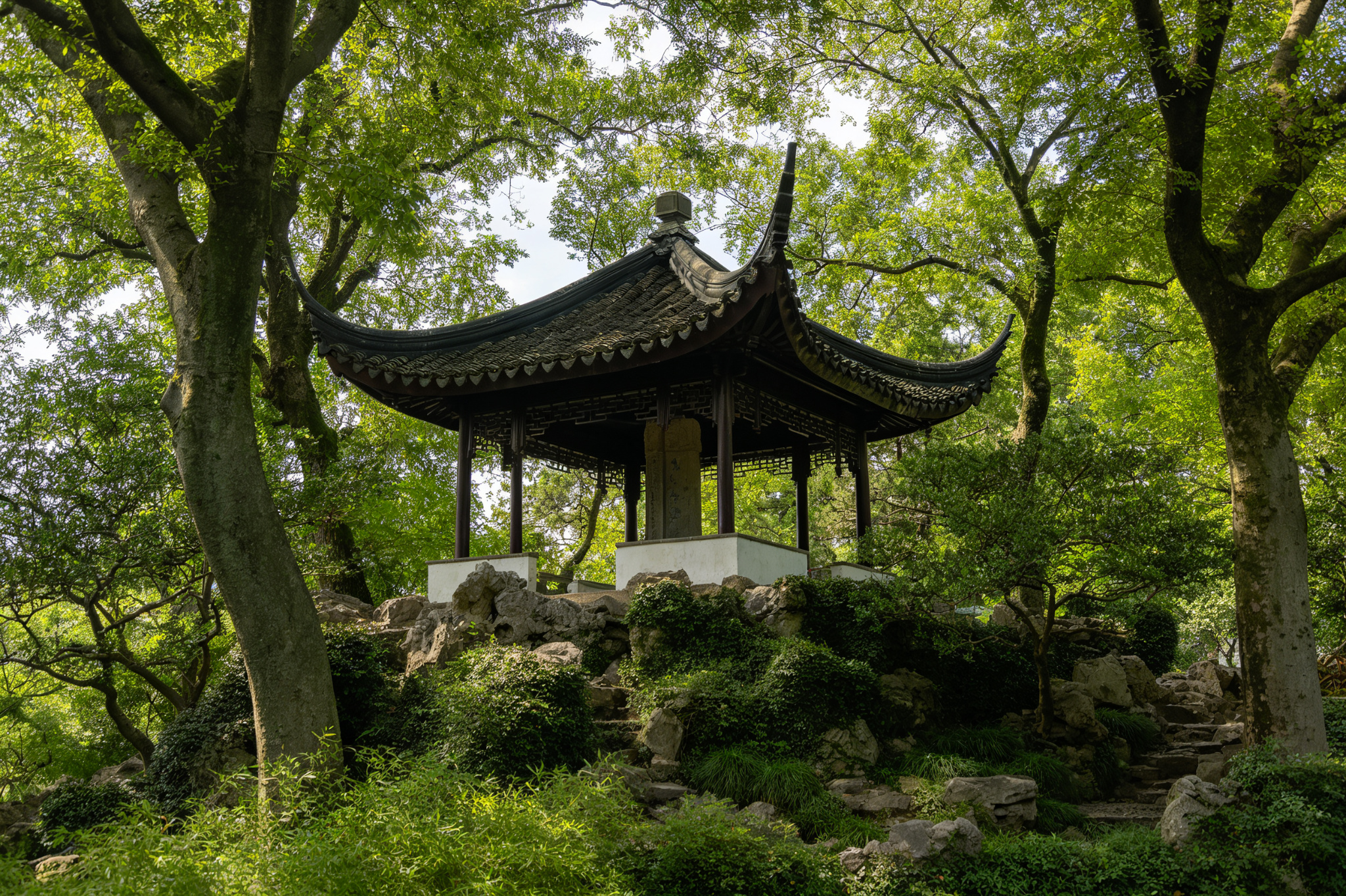
Canglang Pavilion is the centerpiece of the entire garden, perched atop a stone-and-earth hill at the center, exemplifying the rare Suzhou layout of "water encircling the garden with the hill as its core." The square pavilion features a four-hipped roof with upturned eaves, radiating classical elegance. Its columns bear the famous couplet by late-Qing scholar Yu Yue: "The refreshing breeze and bright moon are beyond price; near waters and distant hills both stir the heart." The name derives from the Chu Ci verse about the Canglang waters, symbolizing the owner's aspiration to retire from worldly affairs and preserve his integrity. From within, visitors gaze south at the hill and ancient trees, and north at the pond beyond the walls—the zenith of the garden's borrowing-scenery philosophy.
Mingdao Hall (Hall of Understanding the Way) · 明道堂
🎧 In app 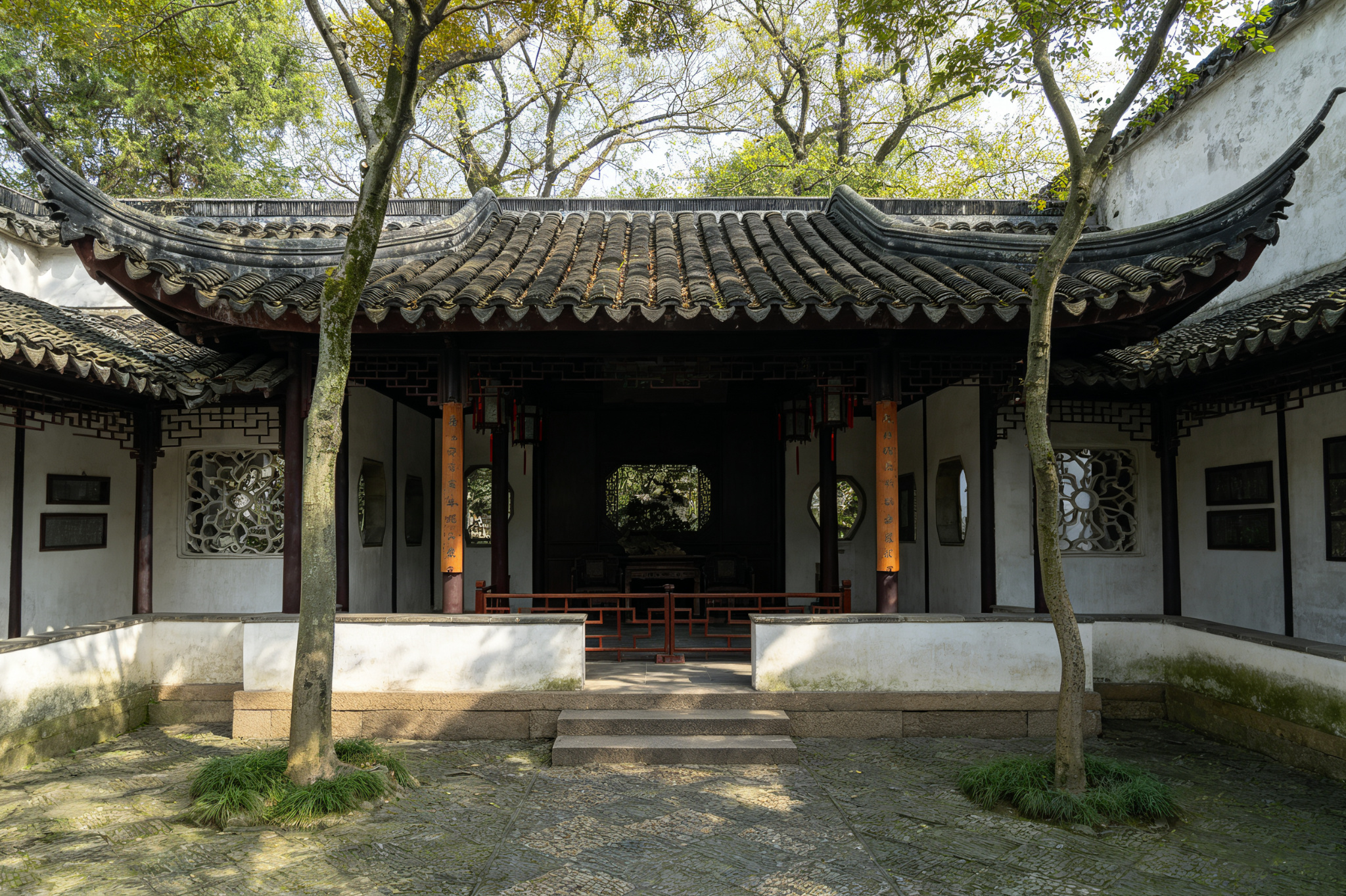
Mingdao Hall stands south of Canglang Pavilion and is the largest hall in the garden, spanning three bays with a deep plan and a broad front terrace. The name "Mingdao" means "to understand the Way of the former sages," dating back to Su Shunqin's original Song-era garden and preserved through subsequent rebuilds. The interior exposes its timber frame with large, unpainted members, reflecting the austere architectural style of the Song dynasty. The spacious forecourt is planted with ancient magnolias and bamboo, creating an elegant ambiance. This was the venue where the owner gathered with literati for scholarly discourse and poetic exchange, embodying the intellectual spirit of Canglang Pavilion as a Song literati garden.
Kanshan Tower (Mountain-Viewing Tower) · 看山楼
🎧 In app 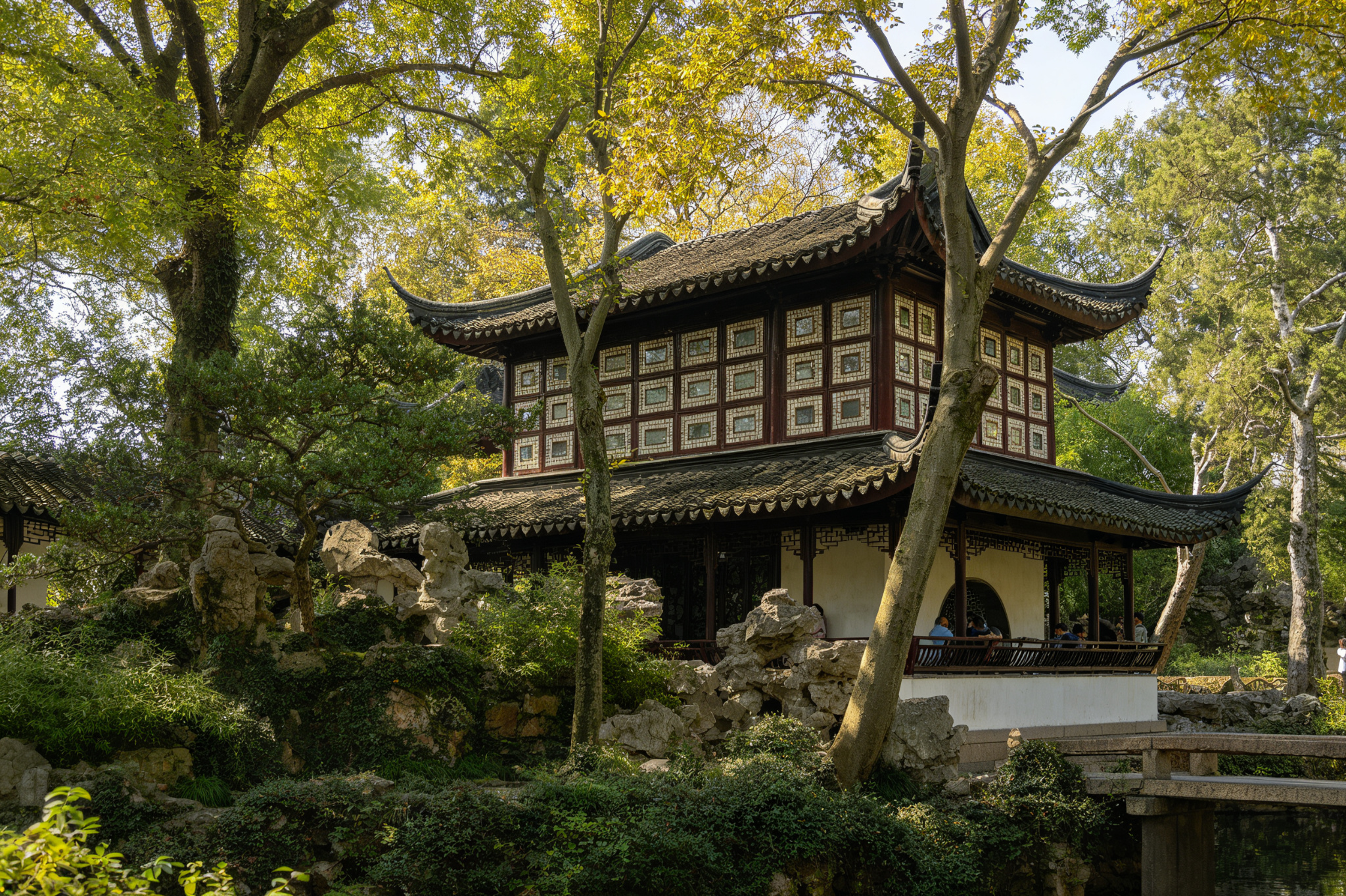
Kanshan Tower stands on a stone terrace atop the hill at the garden's southern end, a two-story pavilion with a flush-gable roof, marking the highest point in Canglang Pavilion. Its name "Kanshan" means "viewing mountains," as ascending it reveals vistas of Tianping, Lingyan, and Lion hills to the southwest. The tower masterfully employs the "distant borrowing" technique, drawing mountains beyond the garden walls into the visual composition, creating a sense of infinite space within finite bounds. The lower level is built on a yellow-stone base, while the upper timber story spreads its eaves gracefully. From the windows, visitors see bamboo and banana leaves nearby and blue mountain silhouettes afar, capturing the idyllic serenity celebrated by Song literati.
Cui Linglong (Emerald Chamber) · 翠玲珑
🎧 In app 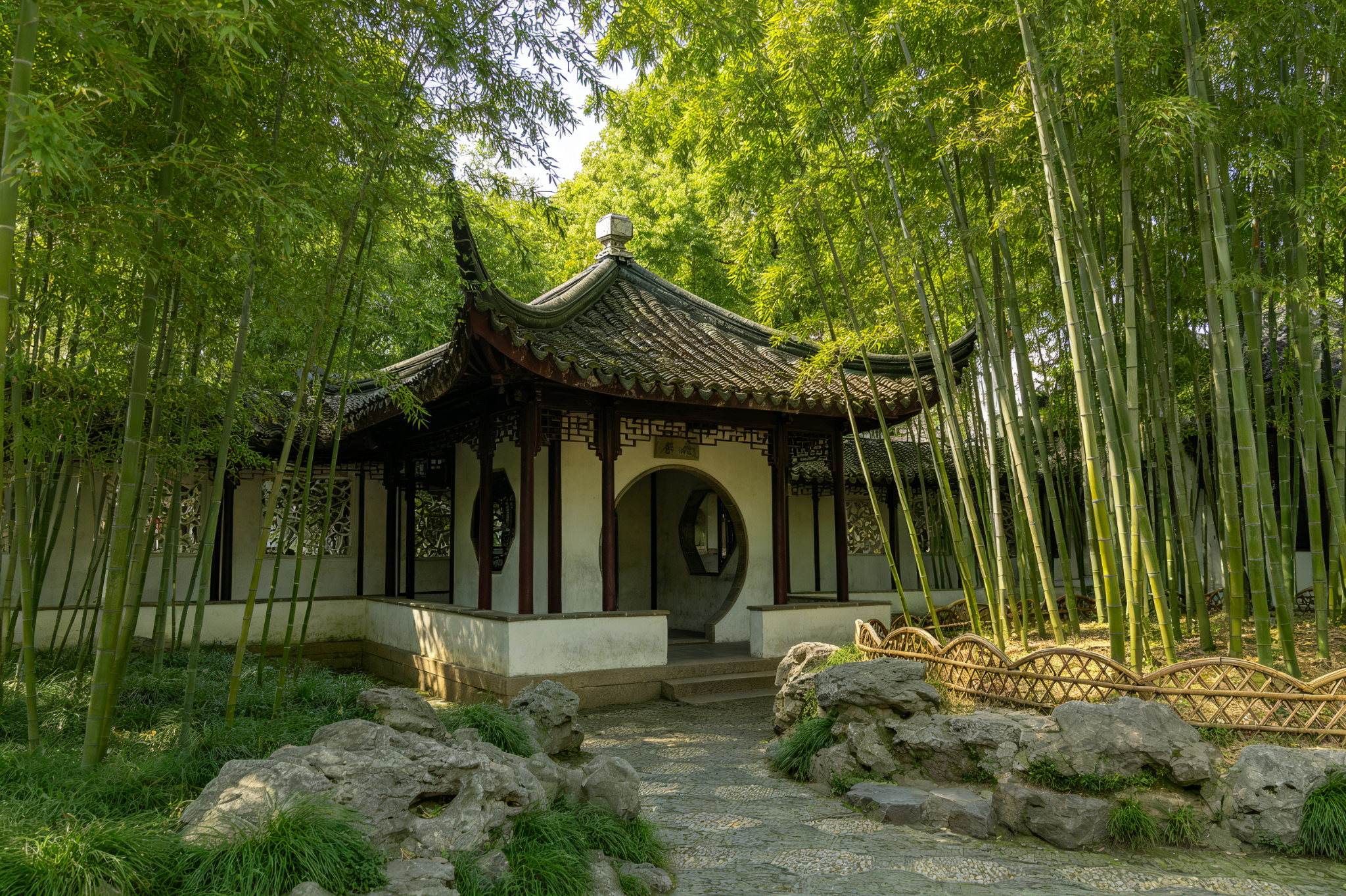
Cui Linglong is a small study tucked in a bamboo grove west of Kanshan Tower. Spanning merely one and a half bays, it is surrounded by tall bamboo on three sides, with sunlight filtering through the leaves to cast dappled shadows, creating an atmosphere of profound seclusion. The poetic name combines "cui" (emerald green bamboo) and "linglong" (exquisite and translucent). This was Su Shunqin's reading chamber, where he depicted scenes of studying amid bamboo in his "Record of Canglang Pavilion." A winding path before the chamber is dotted with Lake Tai stones, their forms interplaying with bamboo shadows. Removed from the main tourist route, the spot is exceptionally tranquil, offering an ideal place to experience the reclusive life of a Song literati and the garden's technique of suggesting grandeur through intimacy.
Five Hundred Sages Shrine · 五百名贤祠
🎧 In app 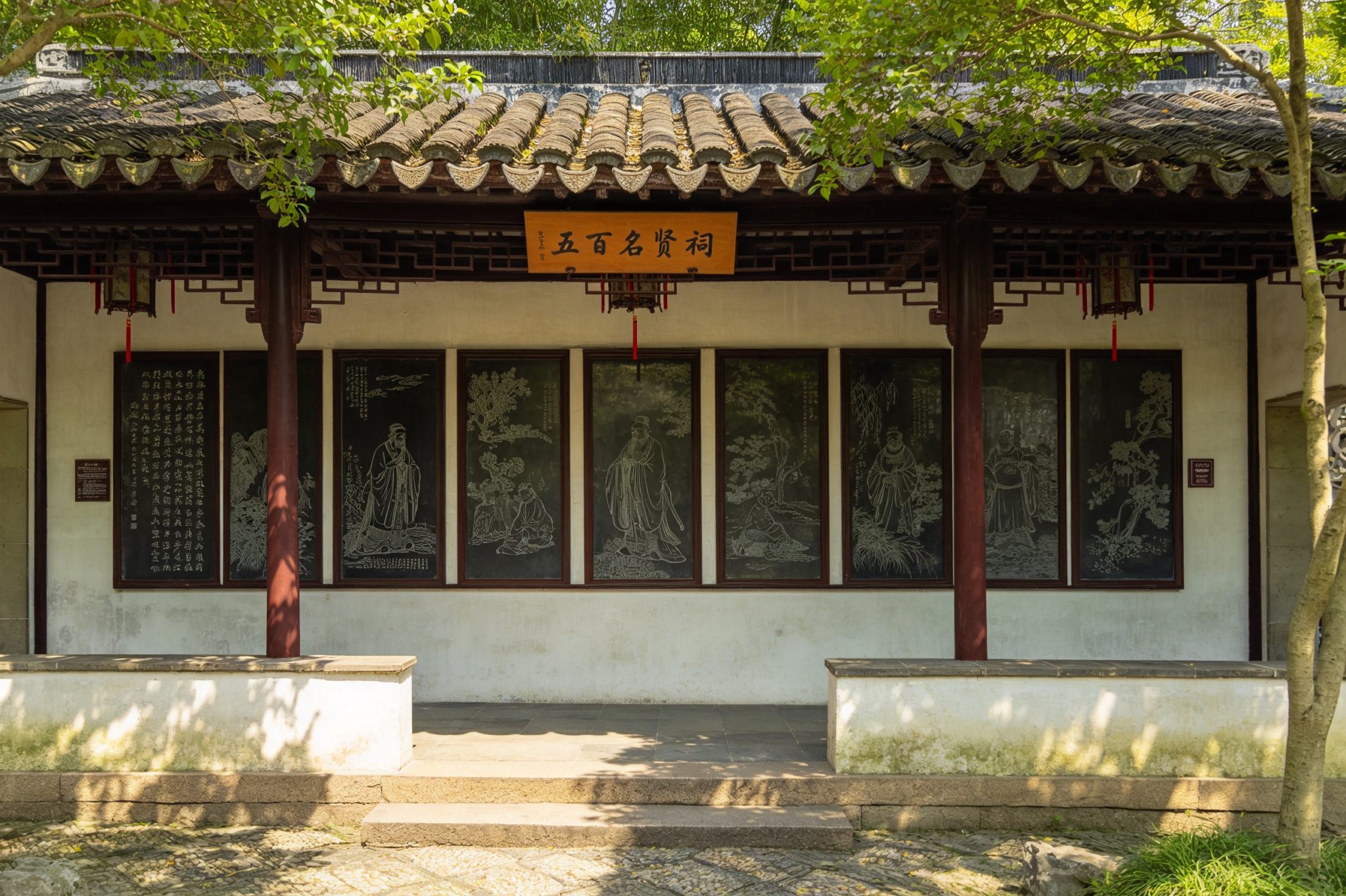
The Five Hundred Sages Shrine, located in the northwest of Canglang Pavilion, was established in the seventh year of the Daoguang reign (1827) by Tao Zhu, then Governor of Jiangsu. Its walls are inlaid with stone-carved half-length portraits of 594 Suzhou worthies spanning over two thousand years, from Ji Zha of the Spring and Autumn period to Lin Zexu of the Qing dynasty, covering politics, literature, art, and science. Each portrait is accompanied by a name and brief inscription, executed with succinct yet expressive carving. The shrine is not merely a memorial but a stone-carved chronicle of Suzhou's cultural heritage, embodying the city's reputation for producing exceptional talent. The architecture is austere and dignified, with grey brick and tile complementing the solemnity of the portraits.
Imperial Stele Pavilion · 御碑亭
🎧 In app 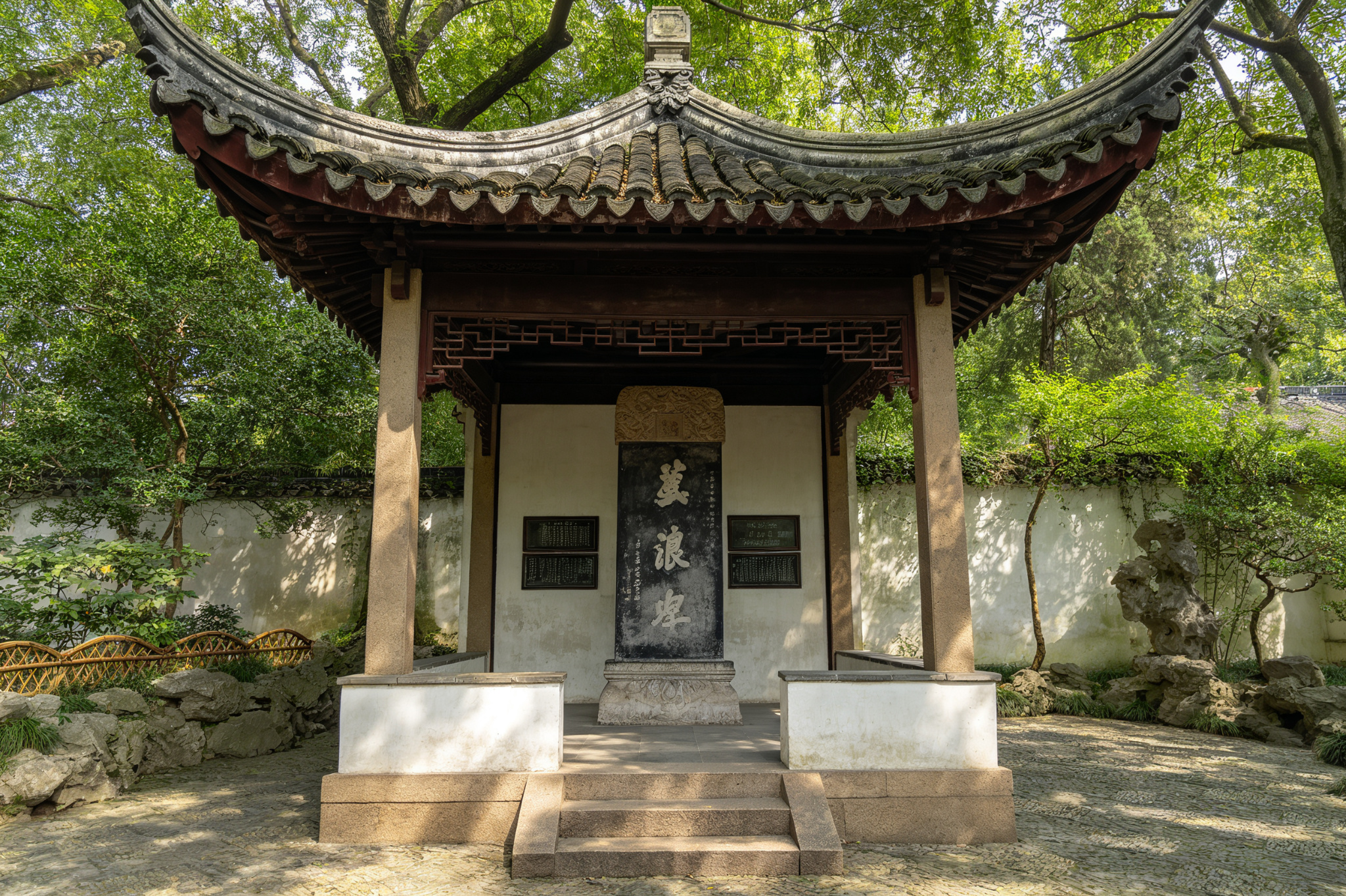
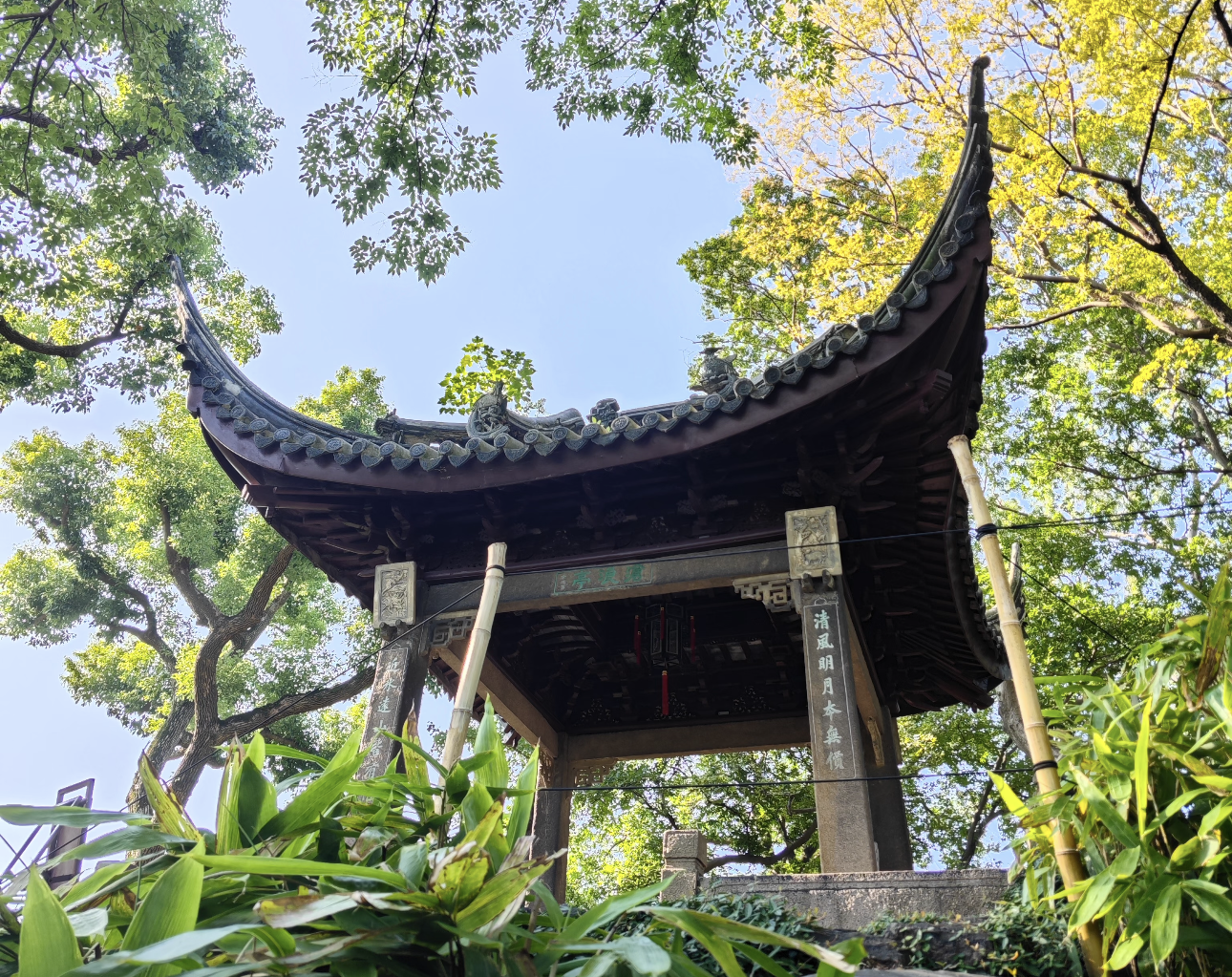
The Imperial Stele Pavilion is located in the west-central area of Canglang Pavilion, a small pavilion built specifically to shelter a stele inscribed by Emperor Kangxi of the Qing dynasty. The stele bears Kangxi's own calligraphy, composed during his southern inspection tour, praising the scenery of Canglang Pavilion and the virtue of Su Shunqin. The stele is carved from bluestone with a dragon-crested top and a bixi (mythical tortoise) base, exhibiting typical Qing imperial stele characteristics. The pavilion is square with a pyramidal roof and four stone columns, open on all sides for viewing the stele. It holds significant historical and cultural value, demonstrating the garden's sustained importance from the Song to the Qing, and represents a rare surviving example of imperial stele within Suzhou gardens.
Ouhua Water Pavilion (Lotus Water Pavilion) · 藕花水榭
🎧 In app 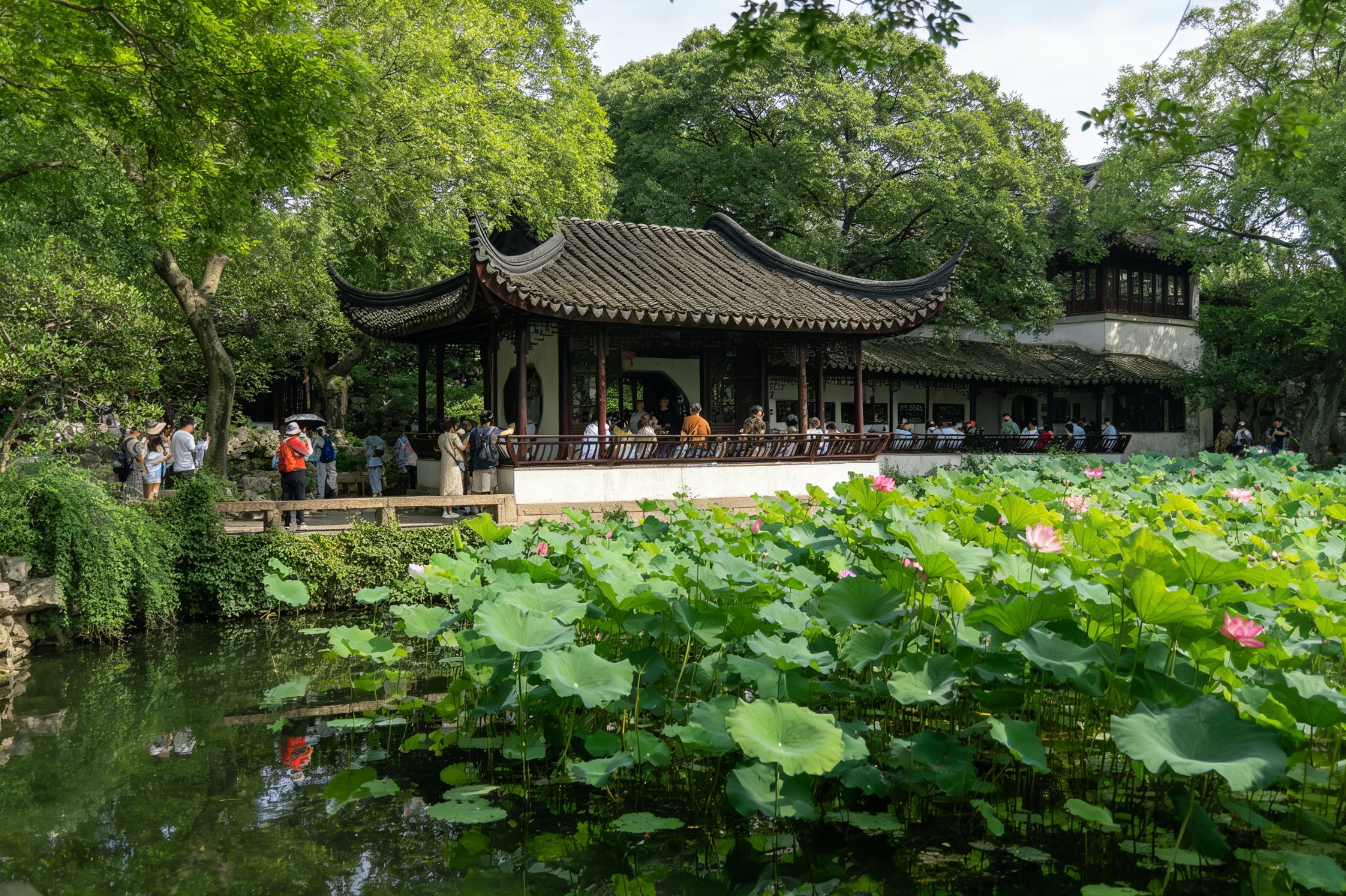
Ouhua Water Pavilion sits at the northern water's edge of Canglang Pavilion, a classical waterside structure half-suspended over the pond. It is built facing the water, with the lower portion supported on stone columns projecting over the surface, and an upper timber structure with a flush-gable roof, open on all sides for panoramic water views. The name "Ouhua" refers to lotus flowers, which were historically planted here in abundance; in midsummer the scene of boundless green lotus leaves and crimson blooms is particularly enchanting. Beyond lotus viewing, the pavilion offers one of the best vantage points for the outer pond and borrowed scenery to the north. Even in autumn and winter, the withered lotus leaves on the water convey a melancholy beauty, embodying the Suzhou garden aesthetic of beauty in all four seasons.