🎫 Ticket Not free; real-name reservation and ticket purchase required
🎫 Ticket Peak season (March 1 – October 31): 55 RMB/person
🎫 Ticket Off-season (November 1 – February 28 of the following year): 45 RMB/person
🕘 Opening Hours - Peak season (April, May, July–October): 07:30–17:30 (ticket sales and entry stop at 17:00)
- Off-season (January–March, June, November, December): 07:30–17:00 (ticket sales and entry stop at 16:30)
🚇 Metro Metro Line 2, Shilu Station
🕘 Opening Hours Holidays (Qingming/May Day/National Day, etc.) often extended to 18:00, last admission at 17:30
📍 Address No. 338 Liuyuan Road, Gusu District, Suzhou, Jiangsu Province, China Map ↗ Inside Lingering Garden Scenic Area
Ancient Trees Interlocking · 古木交柯
🎧 In app 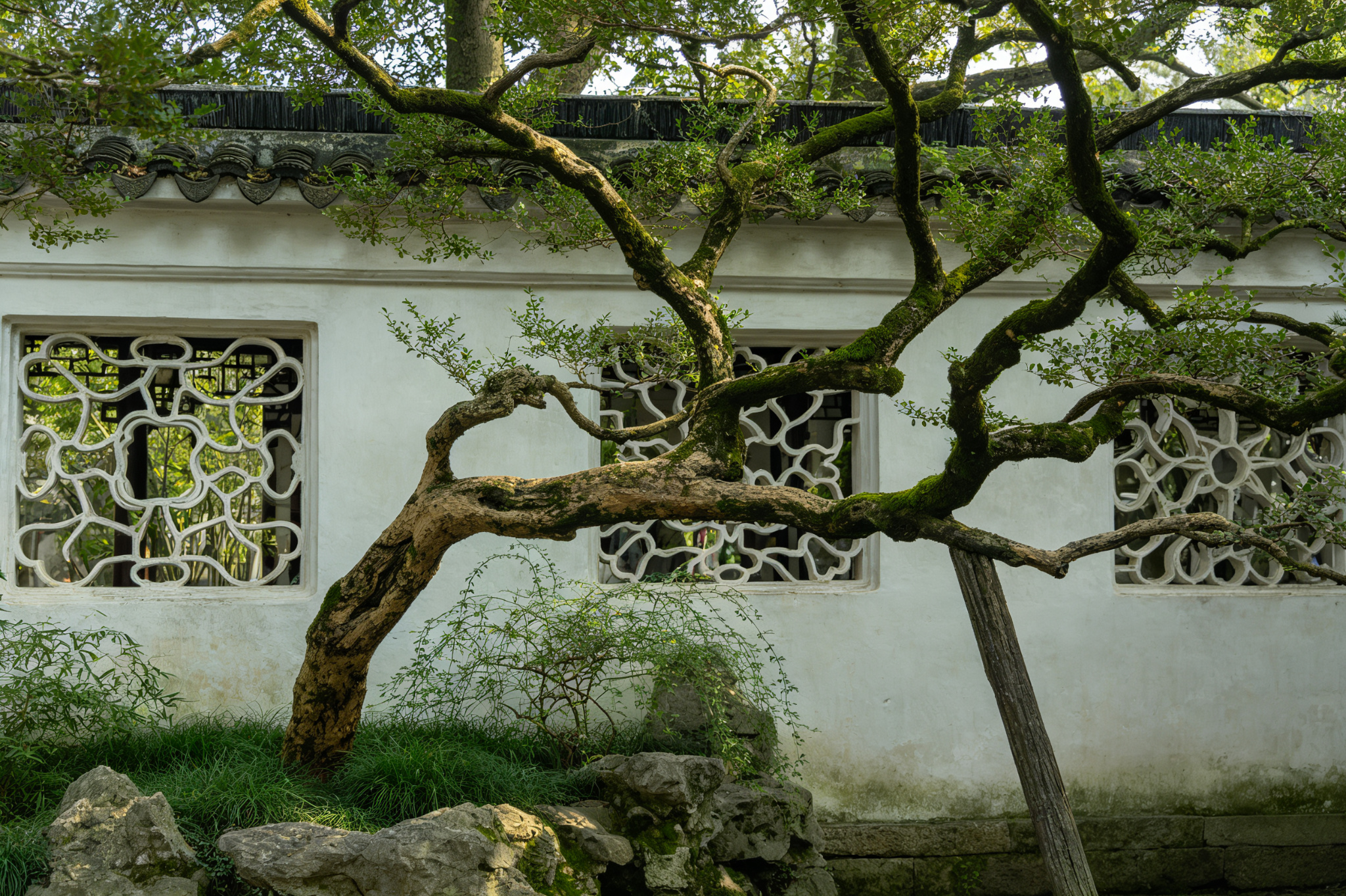
Ancient Trees Interlocking lies at the entrance area of Lingering Garden, greeting visitors as the first scenic vista upon stepping into the garden. An ancient cypress and a camellia intertwine their branches, resembling lovers leaning upon each other, hence the name "Interlocking." This scene embodies the harmonious coexistence of rugged strength and delicate beauty, reflecting the Chinese philosophical concept of yin-yang complementarity. The Ming dynasty painter Wen Zhengming once depicted similar imagery; this living scene in Lingering Garden serves as a vivid re-creation and a superb example of the garden design principle of "seeing the grand in the small."
Green Shade Pavilion · 绿荫轩
🎧 In app 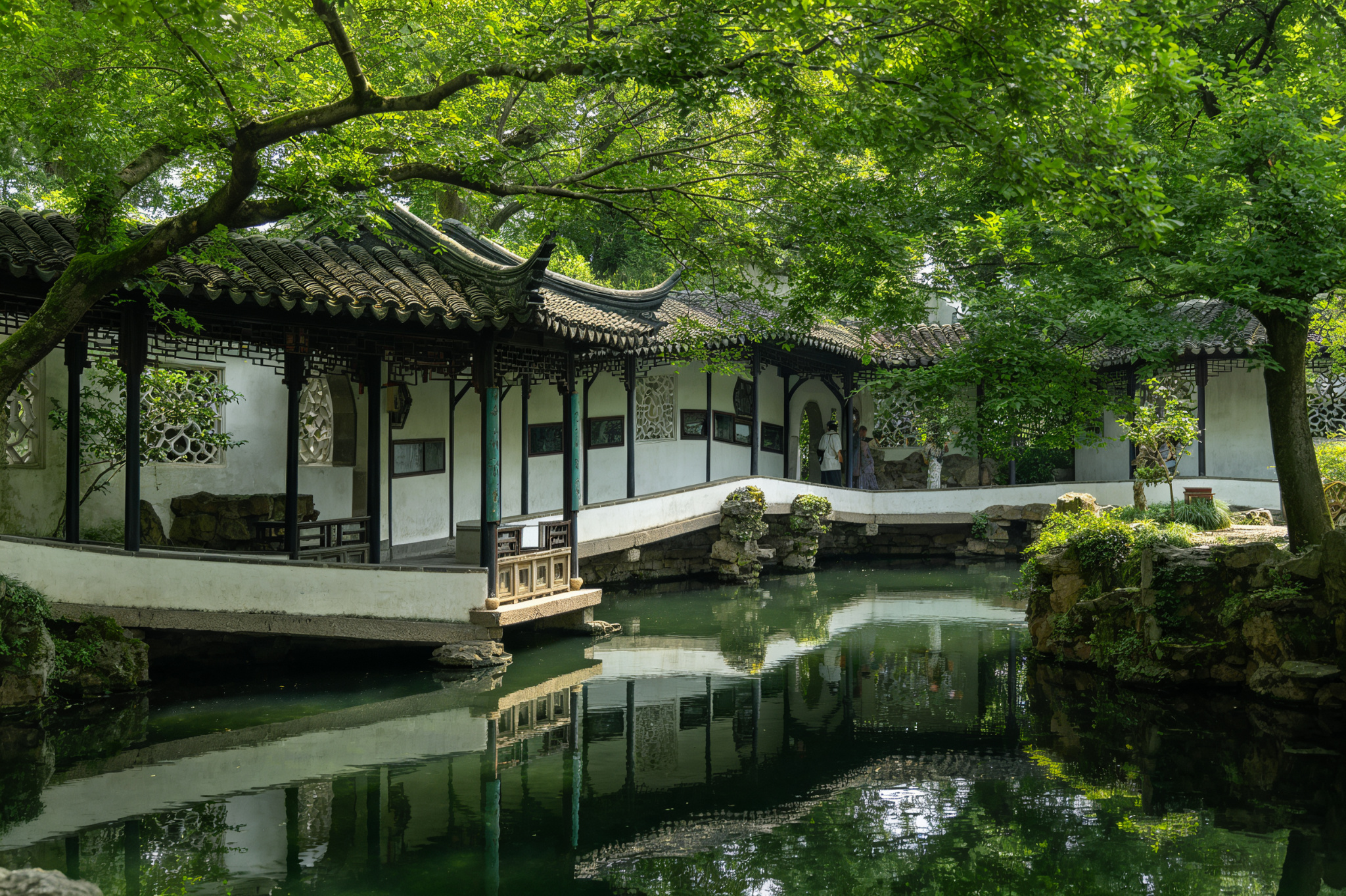
Green Shade Pavilion sits in the central part of Lingering Garden, adjacent to Hanbi Mountain House. It is a small pavilion-style structure built against a wall and facing the water. Ancient trees before the pavilion cast dense shade; sitting here in summer, one enjoys gentle breezes and faint lotus scents—a uniquely tranquil pleasure. The name "Green Shade" highlights its environmental essence—using tree canopy to create a cooling ambiance, a classic example of Suzhou garden techniques of "borrowed and screened views." With simple furnishings and verdant views beyond the windows, a single table and chair suffice for tea-sipping and scenery appreciation—arguably the most ideal spot for quiet contemplation in Lingering Garden.
Hanbi Mountain House · 涵碧山房
🎧 In app 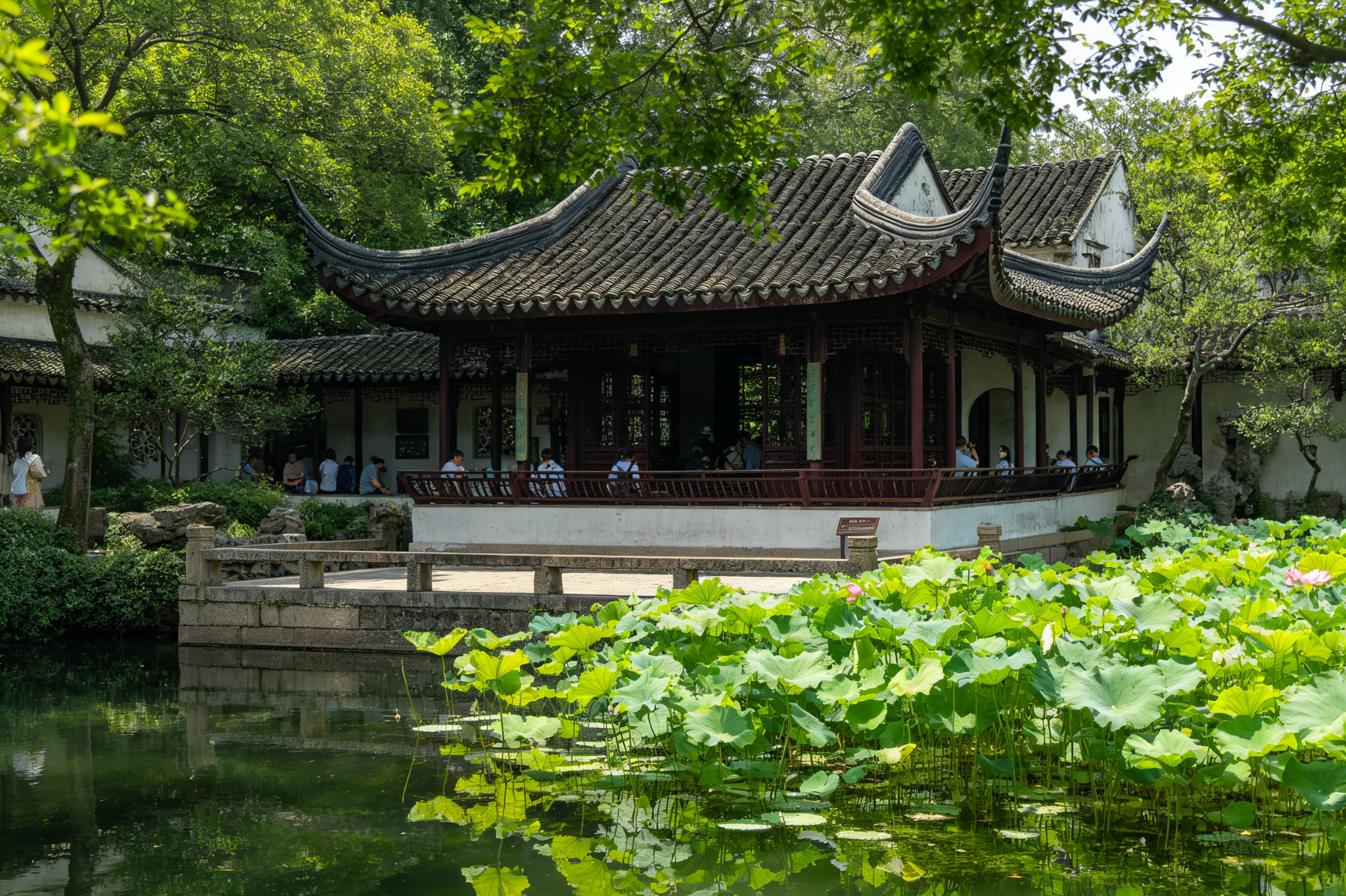
Hanbi Mountain House is the principal hall in Lingering Garden's central scenic area, facing north with three bays wide. It fronts a rippling pond and backs onto artificial hills and floral plantings—one of the garden's premier vantage points. "Hanbi" derives from the Song dynasty poet Zhu Xi's line "One water just embraces emerald," meaning water's radiance contains verdant hues—an imagery of pristine expansiveness. The hall is bright and open, with scenic views both north and south: southward toward hills and ancient trees, northward over a pool mirroring the sky. The name encapsulates the idea that "both mountain and water are embraced within this house." This structure embodies the Suzhou garden design philosophy where hall and landscape are mutually constitutive—one sits indoors while scenery unfolds beyond the windows, interior and exterior seamlessly interwoven.
Osmanthus Fragrance Pavilion · 闻木犀香轩
🎧 In app 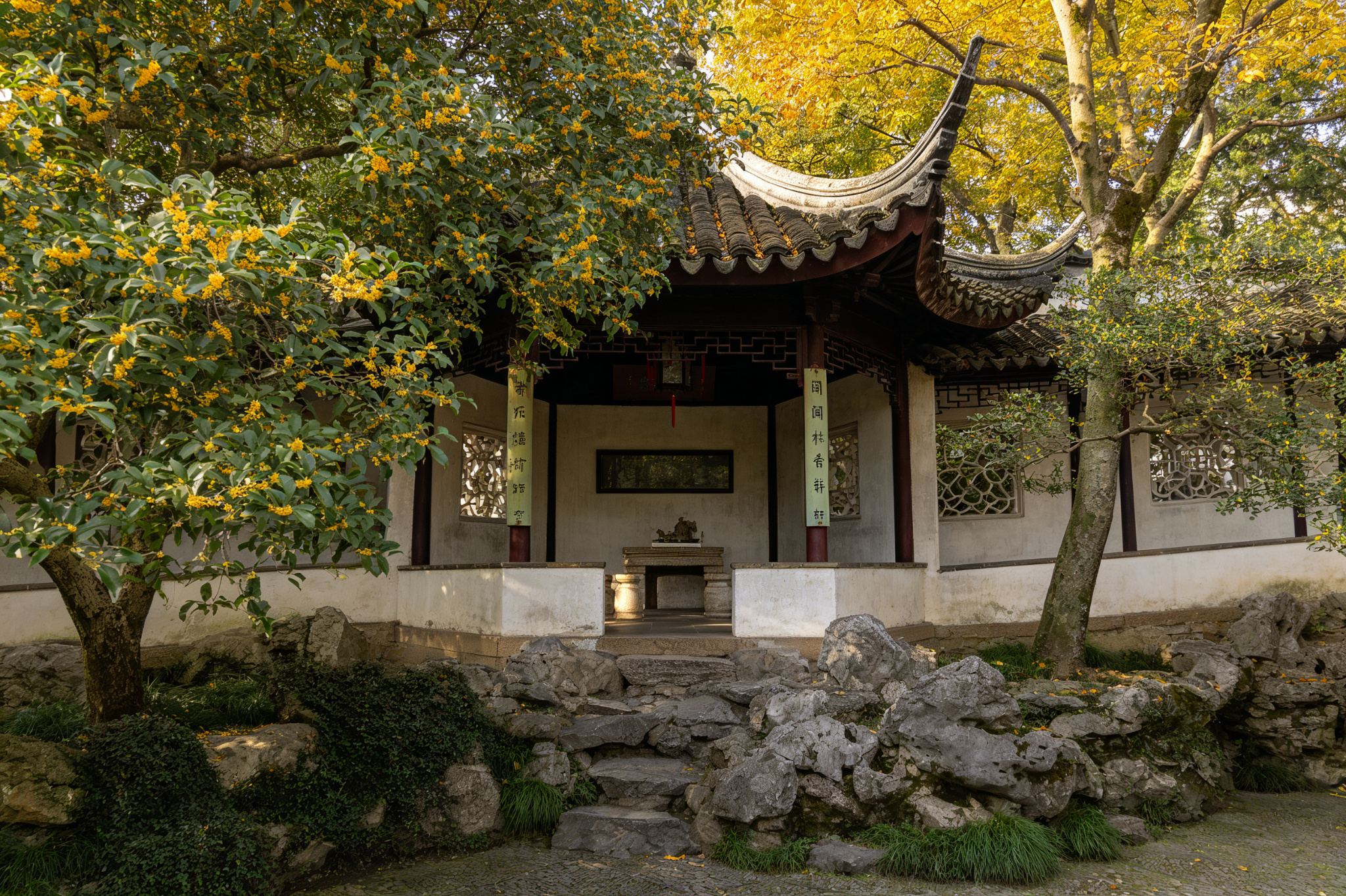
Osmanthus Fragrance Pavilion is located in the western scenic area of Lingering Garden, a pavilion-style structure expressly designed for appreciating the scent of osmanthus. "Muxi" is the classical term for osmanthus; the pavilion name plainly declares its design intent—enriching the garden's sensory dimensions through olfactory experience. When golden osmanthus blooms in autumn, the pavilion is suffused with intoxicating fragrance; visitors inevitably pause to breathe deeply, marveling at the garden maker's ingenuity in incorporating scent as scenery. Osmanthus trees are planted all around, complemented by rockery paths, forming a unique aesthetic space in Lingering Garden where olfaction takes precedence—breaking the convention of purely visual garden appreciation, and standing as a classic paradigm of "recognizing scenery through fragrance" in Chinese garden design.
Winding Stream Tower · 曲溪楼
🎧 In app 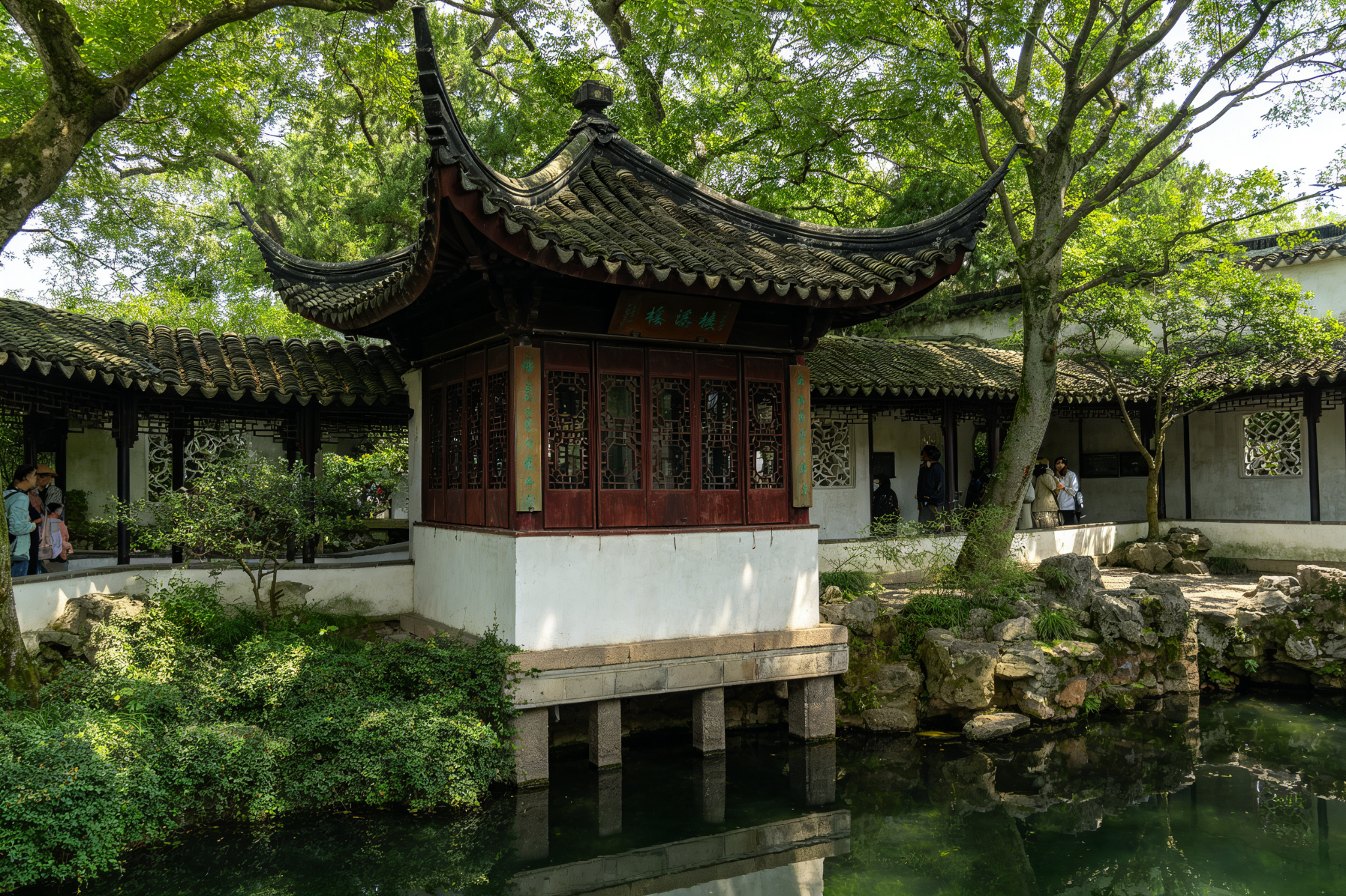
Winding Stream Tower stands in the eastern section of Lingering Garden, a two-story tower-style structure built beside the water. The name draws from the winding course of the garden's waterway—"Winding Stream" is both descriptive and poetic: the actual winding stream and the metaphorical winding paths of life. The upper floor features open windows and a long railing; ascending for a distant view, the entire eastern water scene unfolds—winding bridges, corridor reflections, ripple layers upon layers. The lower floor has a waterside corridor for close viewing of stream stones and swimming fish. Winding Stream Tower offers the dual experience of "ascending for distant vistas" and "sitting by water to hear ripples," making it one of the most observationally versatile towers in Lingering Garden, and exemplifying the Suzhou garden design ingenuity of "scenery both above and below."
Five Peaks Fairy Hall · 五峰仙馆
🎧 In app 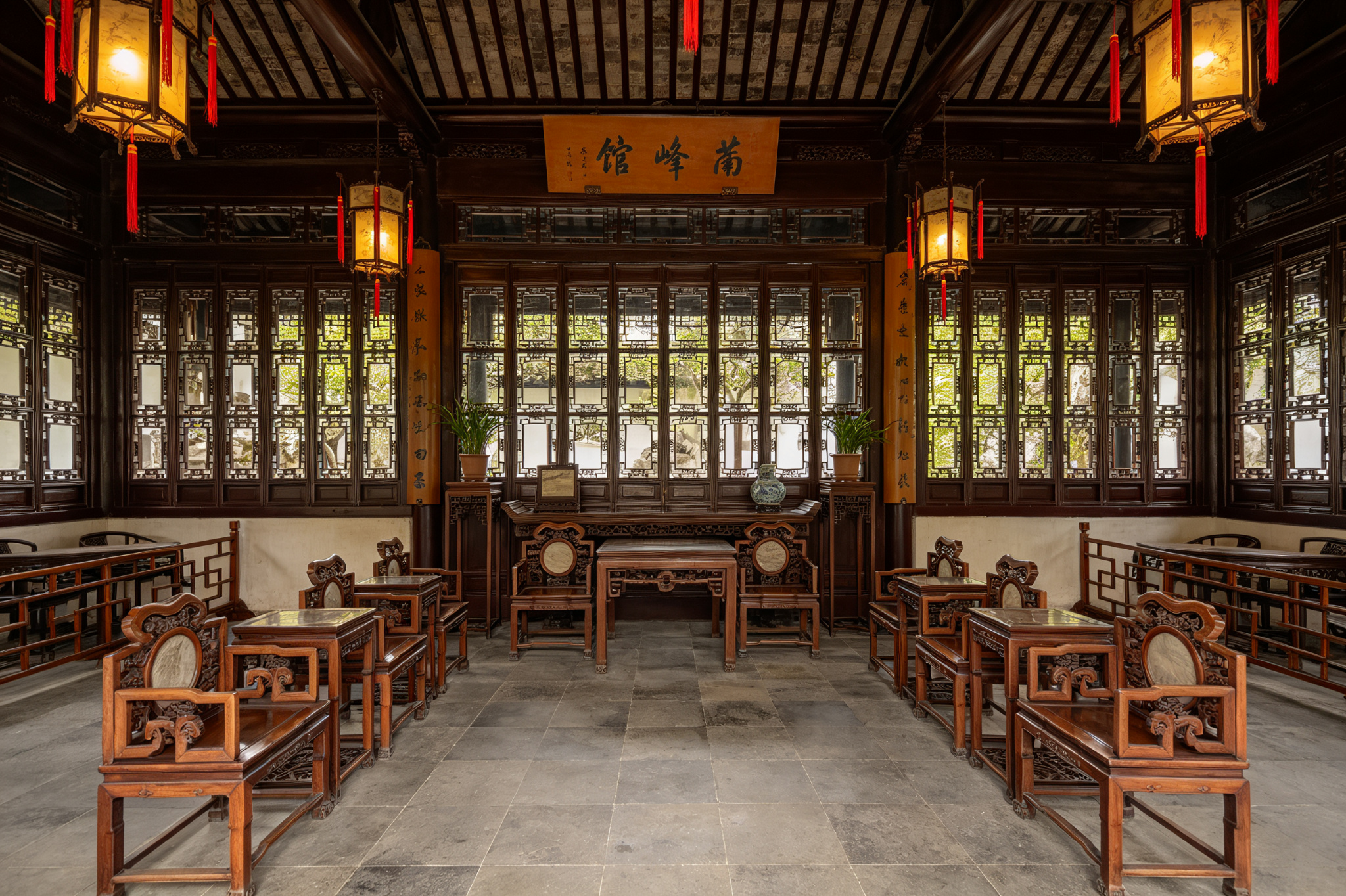
Five Peaks Fairy Hall is the core building of Lingering Garden's eastern scenic area and the largest hall in the entire garden, spanning five bays with imposing grandeur. In the courtyard before the hall stand five Taihu stone peaks of varying heights and distinct postures, simulating the imagery of the five divine mountains where immortals dwell—hence the name. The hall's structural materials are meticulously chosen: nanmu wood frames the beams and columns, with refined carvings that are exquisite yet not excessive, and elegant, dignified furnishings—reflecting the Jiangnan literati aesthetic of "grand yet not extravagant, refined yet not vulgar." This hall served as the garden owner's principal venue for receiving distinguished guests and hosting elegant gatherings, with spacious yet well-layered interiors, standing as a paradigm of hall design in Suzhou gardens.
Hall of Elderly Sages in Woodland Springs · 林泉耆硕之馆
🎧 In app 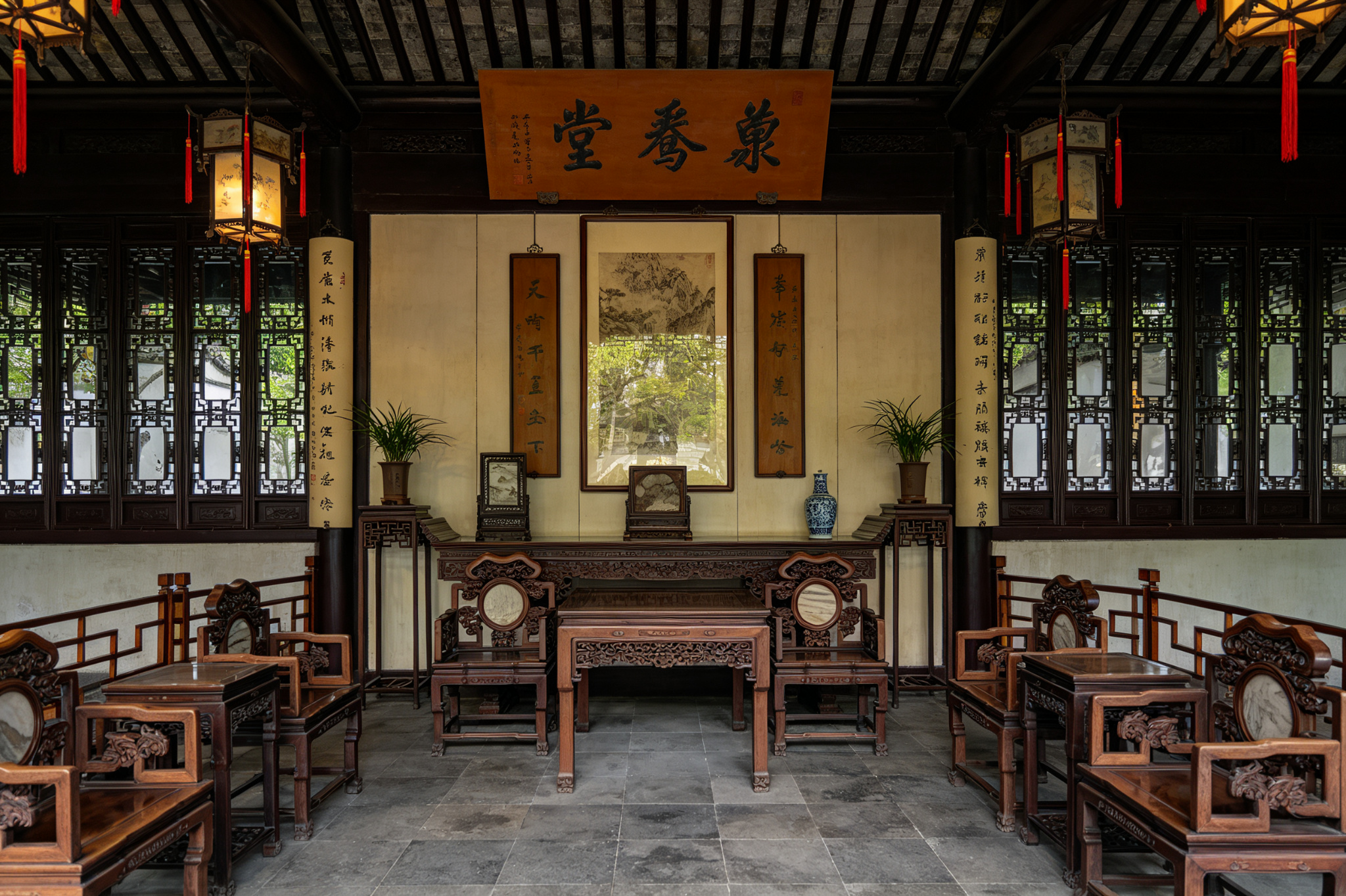
Hall of Elderly Sages in Woodland Springs is located in the eastern part of Lingering Garden, adjacent to Five Peaks Fairy Hall, and is a distinctive double-facing hall. "Woodland Springs" refers to the reclusive environment of mountains, forests, and spring waters; "Elderly Sages" denotes venerable persons of high virtue and senior age. The hall name expresses the garden owner's reverence and aspiration for reclusive scholars of distinction. Its architectural form is remarkable: one side faces the courtyard rockery, the other faces the pool and corridor pavilions—north and south scenes are strikingly different while the building remains seamlessly unified, representing the ultimate expression of "one hall, two views" in Suzhou garden design. Inscribed plaques and couplets inside are all by renowned calligraphers, with a strong literary atmosphere—arguably the building that best embodies the literati spirit at the core of Lingering Garden.
Cloud-Capped Peak · 冠云峰
🎧 In app 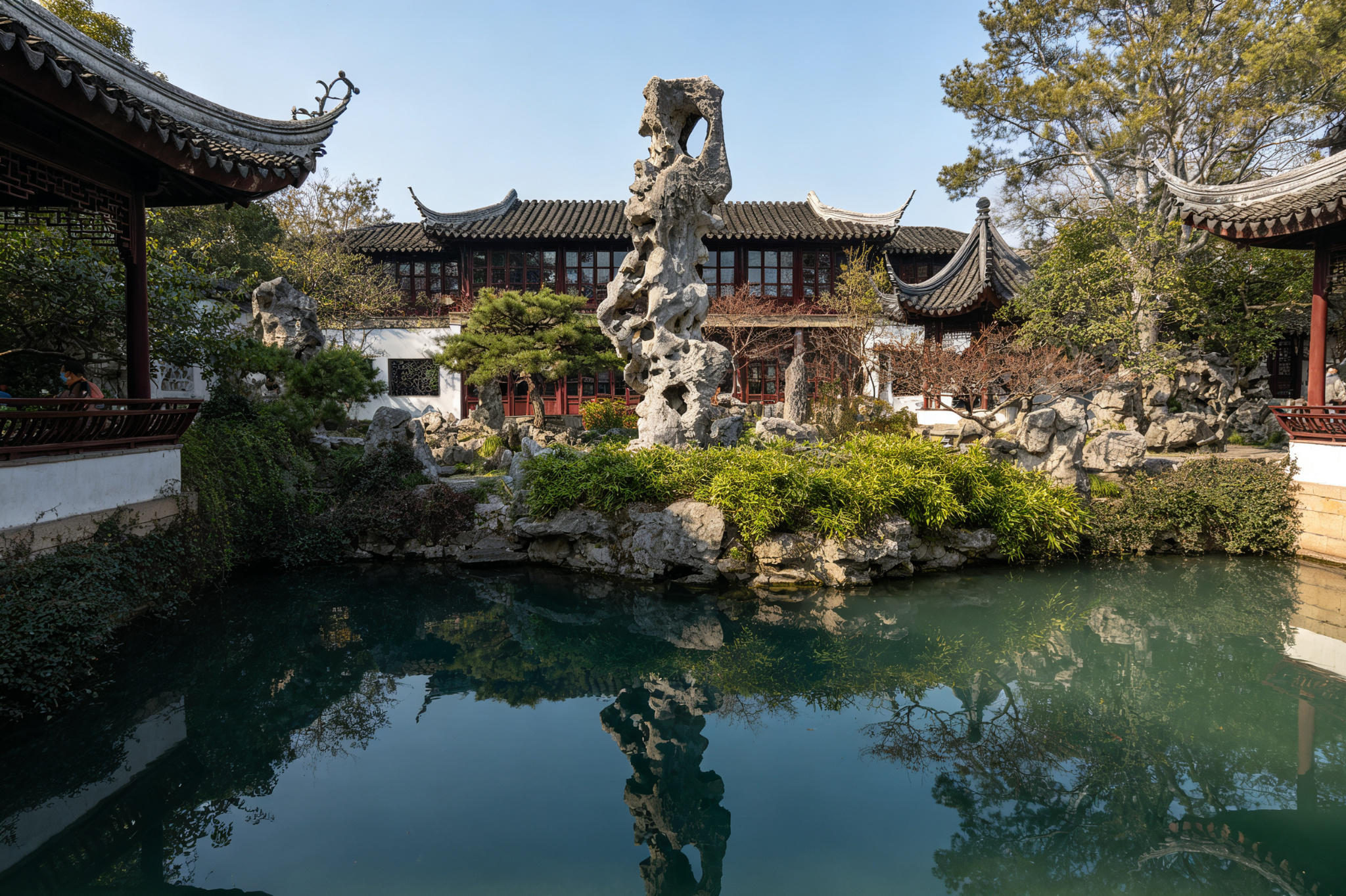
Cloud-Capped Peak is Lingering Garden's most celebrated landmark and its crown jewel. Standing approximately 6.5 meters tall and weighing about 5 tons, it is the supreme specimen among Taihu stones, achieving the ultimate expression of the four aesthetic criteria: "slender, perforated, translucent, and wrinkled." The peak's posture is majestic, its summit soaring like a crown piercing the clouds—hence the name. Legend holds it as a remnant of the Song dynasty's "Flower and Stone Network" tribute collection; having endured a millennium of wind and rain, it remains standing here—the tallest independent Taihu stone peak surviving in Jiangnan gardens. Surrounded by pools, pavilions, and corridors, the stone's silhouette reflects in the water, generating an interplay of reality and illusion that enhances its ethereal elegance. Stone appreciation is the essence of Chinese literati garden culture, and Cloud-Capped Peak stands as the pinnacle of this tradition.
Cloud-Capped Tower · 冠云楼
🎧 In app 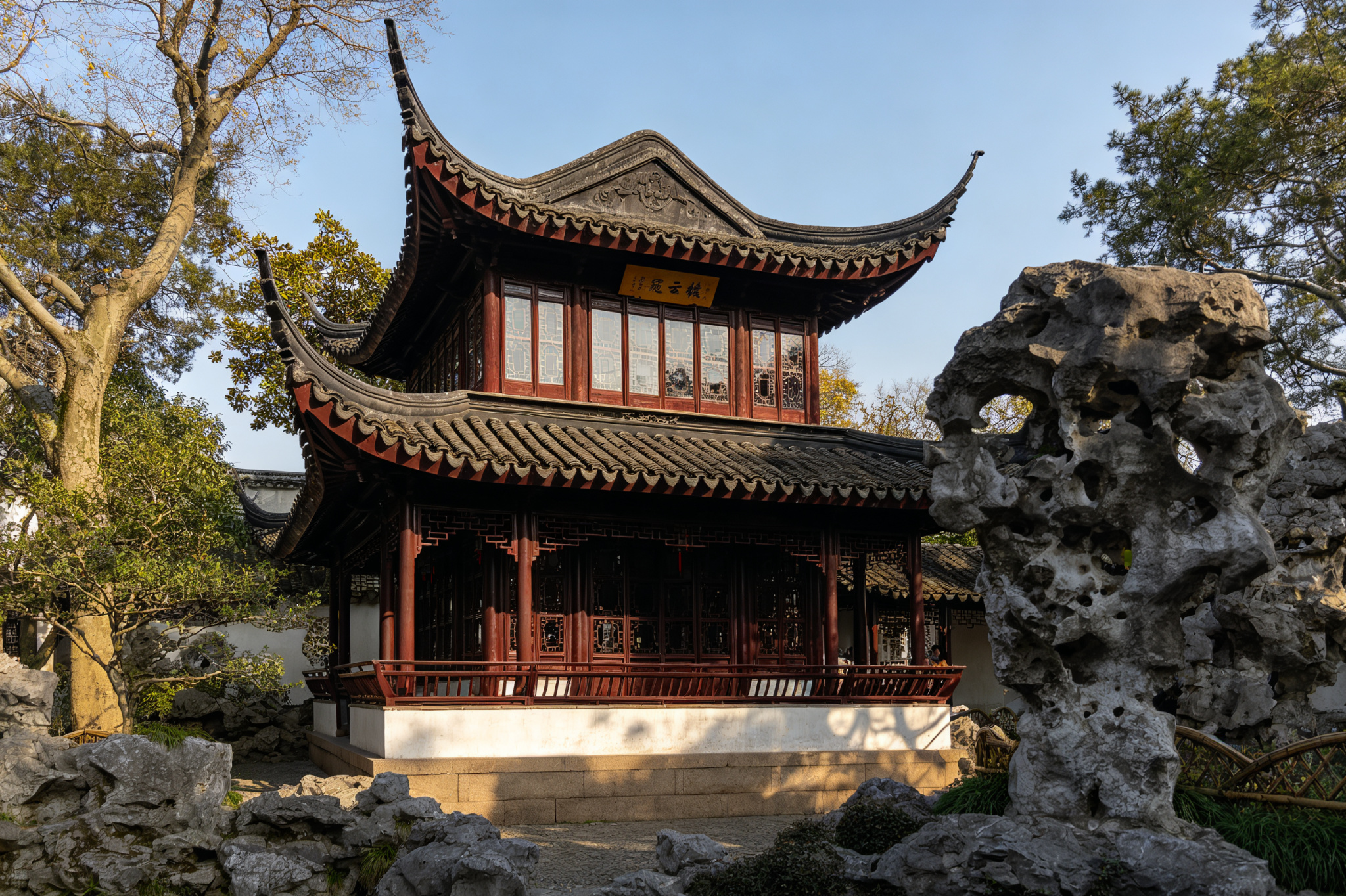
Cloud-Capped Tower stands in the eastern part of Lingering Garden, built right beside Cloud-Capped Peak, a three-story tower-style structure. It shares the peak's name because ascending the tower affords a complete panoramic view of Cloud-Capped Peak. The tower and peak form a classic "tower-peak opposing view"—looking down from the tower, the peak's majestic upright posture is fully revealed; gazing up from the peak, the tower's sweeping eaves and corner brackets are entirely displayed. The two resonate in height and complement each other in solidity and void, arguably the most brilliant pairing of architecture and stone peak in Suzhou gardens. Cloud-Capped Tower also houses important inscribed stone tablets and artifacts of Lingering Garden. Windows on the upper floors allow distant views beyond the garden across the Gusu cityscape—it is the scenic high point in Lingering Garden combining both close and distant observation functions.