← Suzhou

Suzhou · 耦园(又称藕园)

Couple's Retreat Garden / Ou Yuan

🎫 Ticket Not free; real-name reservation required; no on-site tickets;Peak season (March 1 – October 31): 25 RMB/person;Off-season (November 1 – February 28): 20 RMB/person
🕘 Opening Hours - Peak season (March 1 – October 31): 07:30–17:30 (ticket sales and entry stop at 17:00) - Off-season (November 1 – February 28): 07:30–17:00 (ticket sales and entry stop at 16:30)
🚇 Metro Line 1 Xiangmen Station Exit 3, walk about 8–10 minutes (most recommended, closest)
🚇 Metro Alternative: Line 6 Lindun Road Station Exit 1, walk about 10 minutes
📍 Address No. 6 Xiaoxinqiao Lane, Cang Street, Gusu District, Suzhou, Jiangsu Province, China Map ↗
🎧 10 audio walking guides for Couple's Retreat Garden / Ou Yuan — listen on the spot in the YOLO HAPPY app. →

Tips for international visitors

  • Reservation: Jun Dao Suzhou / Suzhou Garden Tourism mini-program for real-name reservation; scan ID card at entry; garden pass accepted
  • Near Pingjiang Road; can be visited together

Inside Couple's Retreat Garden / Ou Yuan

Entrance Hall · 门厅

🎧 In app
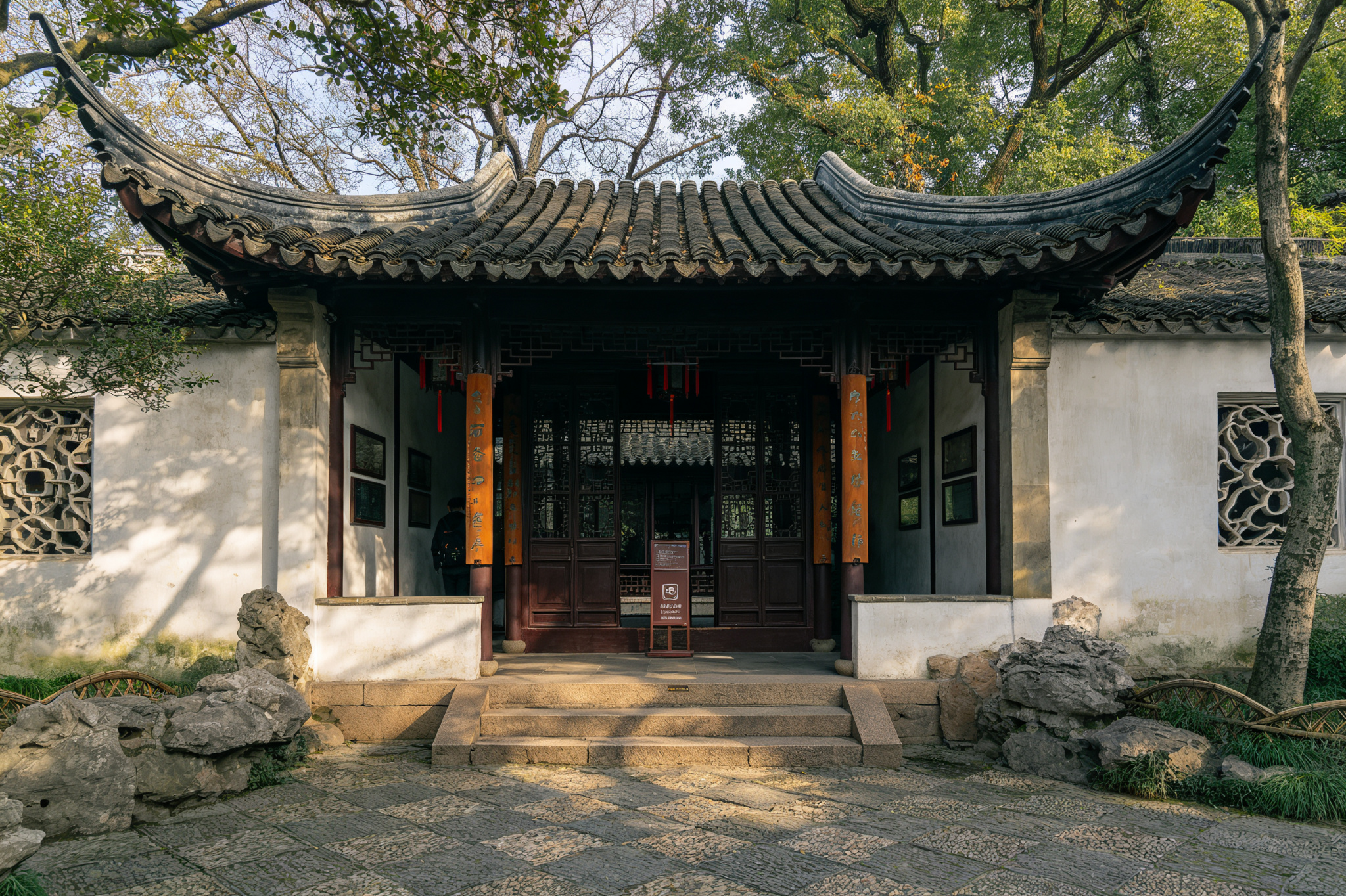
Entrance Hall

The Entrance Hall is the gateway space of Couple's Garden Retreat—the garden's first outward-facing aspect. Despite its renown as a Suzhou classic garden, its facade is understated, presented in the style of an ordinary residence, aligning with the Suzhou garden cultural tradition of "great reclusion within the city." The Entrance Hall is simple and unadorned—white walls, black tiles, no decorative carvings—aptly conveying the garden owner's philosophy of retreating to pastoral life without seeking fame. Only after stepping through the Entrance Hall and past the screen door does the scenic beauty of mountains and water gradually reveal itself. This spatial sequence of "from simplicity to refinement" is a classic embodiment of Suzhou garden design's "concealed scenery" technique at the entry point.
Sedan Chair Hall · 轿厅

🎧 In app
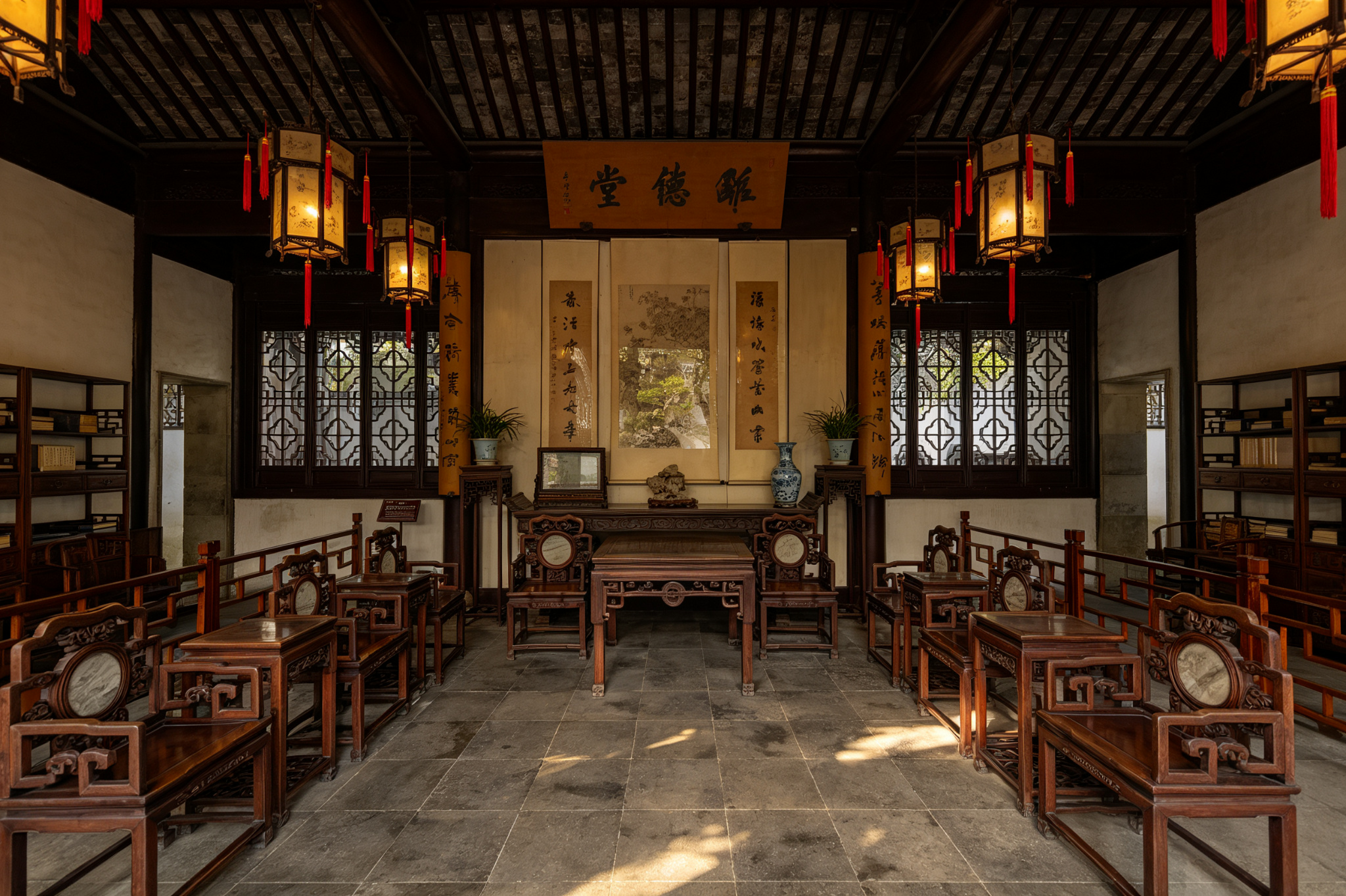
Sedan Chair Hall

The Sedan Chair Hall sits between the Entrance Hall and the Main Hall, an indispensable transitional architectural space in traditional Suzhou residence-gardens. In former times, when the owner or guests arrived by sedan chair, the conveyance was parked here—hence the name. This hall is both a functional parking and waiting area and a transitional node in spatial rhythm—from the modest Entrance Hall through the Sedan Chair Hall into the Main Hall, building proportions gradually increase and decorations become more refined, forming a spatial progression of "from exterior to interior, from simplicity to splendor." The Sedan Chair Hall is proportionately sized—neither overshadowing nor appearing shabby—perfectly bridging the understated Entrance Hall and the dignified Main Hall, serving as the pivotal connecting link in Suzhou garden architectural sequences.

Main Hall (Shequ Hall) · 大厅(涉趣堂)

🎧 In app
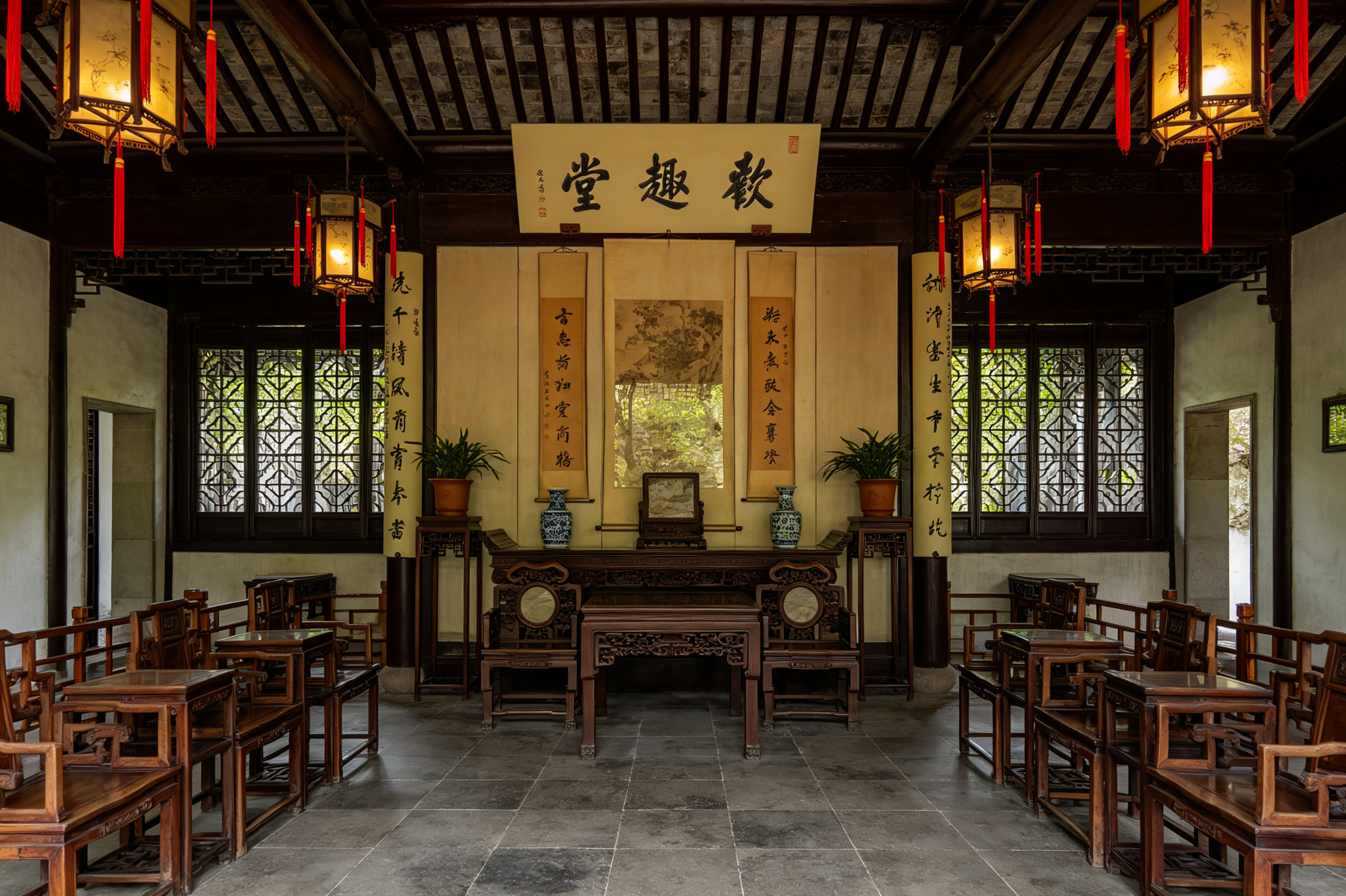
Main Hall (Shequ Hall)

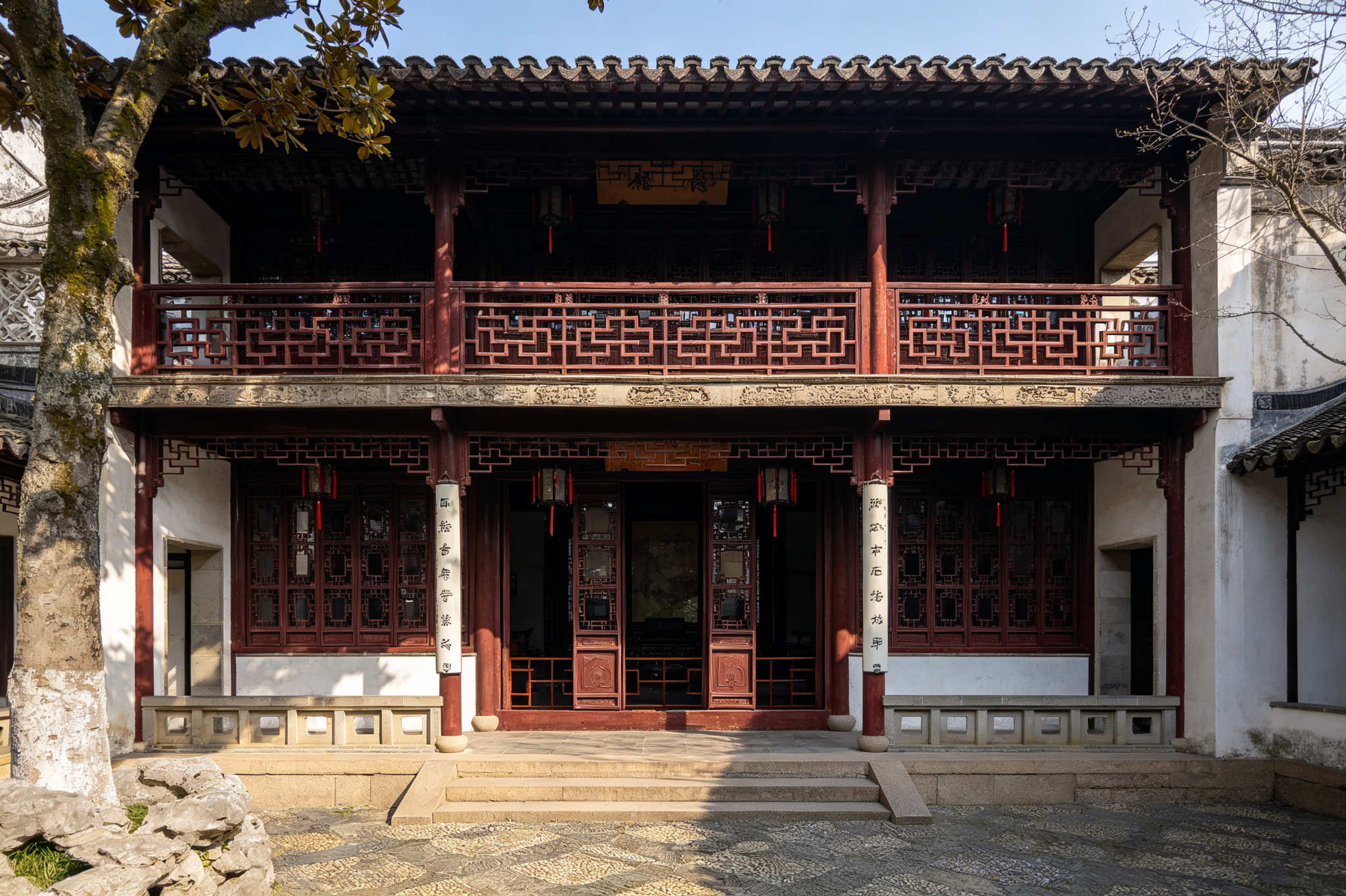
The Main Hall, also named Shequ Hall, is the core building of Couple's Garden Retreat's residential area, spanning three bays with grand proportions—the principal venue for formal ceremonies and guest reception. "Shequ" derives from Tao Yuanming's phrase "delving into delights as one goes," meaning following one's interests and pleasures in exploration and experience—this is precisely the core philosophy of Couple's Garden Retreat's entire design: seeking not grand spectacle but rather abundant delight. The interior furnishings are dignified and elegant, with nanmu furniture complemented by paintings and calligraphy by renowned artists; the hall plaque "Shequ Hall" was inscribed by a prominent figure of the era. Courtyards exist both before and behind the hall—the front courtyard is open and square, the rear courtyard secluded and winding—within one hall, two entirely distinct spatial experiences are obtained, reflecting the Suzhou garden layout wisdom of "hall at center, divergent paths on either side."

Upper Hall (Residence Tower) · 楼厅(寝居楼)

🎧 In app
Upper Hall (Residence Tower)

The Upper Hall, also called Residence Tower, lies at the rear of Couple's Garden Retreat's residential area—a two-story tower-style structure. The lower floor serves as daily living space with a reception room and study; the upper floor is the private sleeping quarters of the garden owner and family. The building's scale is slightly smaller than the Main Hall, with warmer, more refined decorations, reflecting the transition from public ceremonial space to private living space. Rear windows overlook the garden's rockery and lotus pool; front windows enjoy courtyard flowers and trees—it is a typical node where residence and garden intermingle. Occupants can experience garden beauty from within the tower without deliberately stepping out. This lifestyle of "living is touring, touring is living" embodies the essence of Suzhou's integrated residence-garden culture.

Study (Hanrui Study) · 书房(含蕊书斋)

🎧 In app
Study (Hanrui Study)

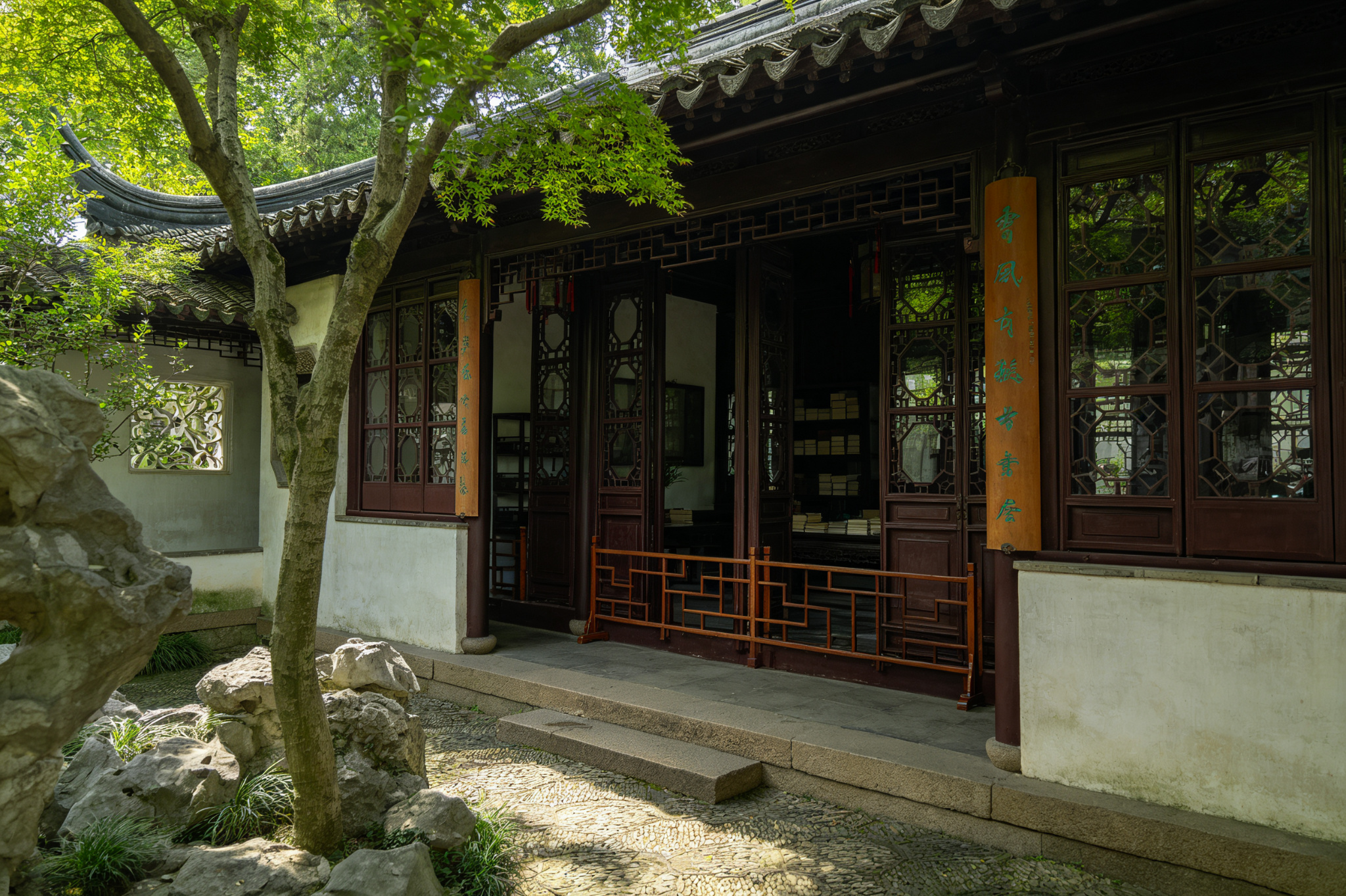
Hanrui Study is the garden owner's dedicated space for quiet study and contemplation in Couple's Garden Retreat, situated at the junction between the residential area and the garden area—a small study with a serene environment and elegant furnishings. "Hanrui" means containing flower buds—potential within, yet unreleased—metaphorically referring to the literati practice of nurturing talent and awaiting the right moment, highly congruent with Couple's Garden Retreat's overall "reserved and understated" temperament. The study faces the garden side; beyond the windows, rockery and green bamboo are visible. Inside, the book collection is plentiful and writing materials are complete, creating an immersive ideal environment for reading and meditation. This was the daily space where garden owners Shen Bingcheng and his wife composed poetry, painted, sipped tea, and discussed scholarship—also one of the spiritual symbols of Couple's Garden Retreat as a "couple's shared reclusion" garden. In the study, the two shared the joy of reading in harmonious companionship.

Entertainment Hall (Tinglu Hall) · 戏厅(听橹厅)

🎧 In app
Entertainment Hall (Tinglu Hall)

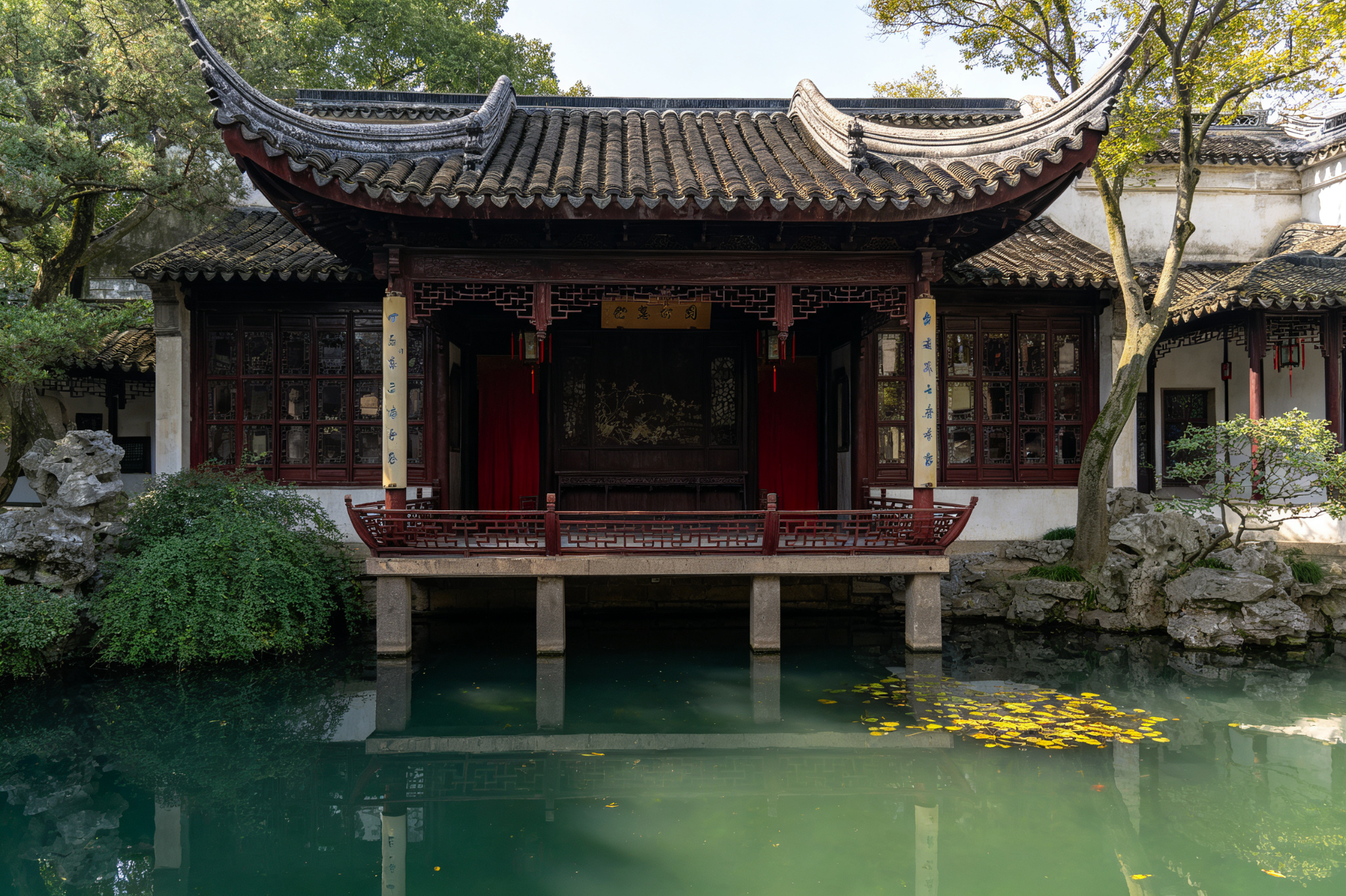
Tinglu Hall is a building space in Couple's Garden Retreat rich in both everyday vitality and poetic imagination. "Tinglu" (listening to oars) derives from the garden's unique geographical setting—the east side borders Suzhou's ancient inner-city canal; sitting in the hall, one can hear the sound of boat sculls paddling through the water, hence the name. This hall served as the venue for the garden owner and his wife to enjoy music and performances, host banquets, and entertain guests—thus also called the Entertainment Hall. The interior is spacious enough for small performances and elegant gatherings. On the canal side, open windows bring the waterway's sonic landscape indoors, forming a unique "sound scenery entering the room" experience. Suzhou is a water city; oar sounds are its urban auditory signature. Tinglu Hall employs hearing as a landscape design medium, integrating the city's external living rhythm into the garden's interior tranquility—a rare example of "constructing scenery through sound" in Suzhou gardens.

Lotus Pond · 荷花池

🎧 In app
Lotus Pond

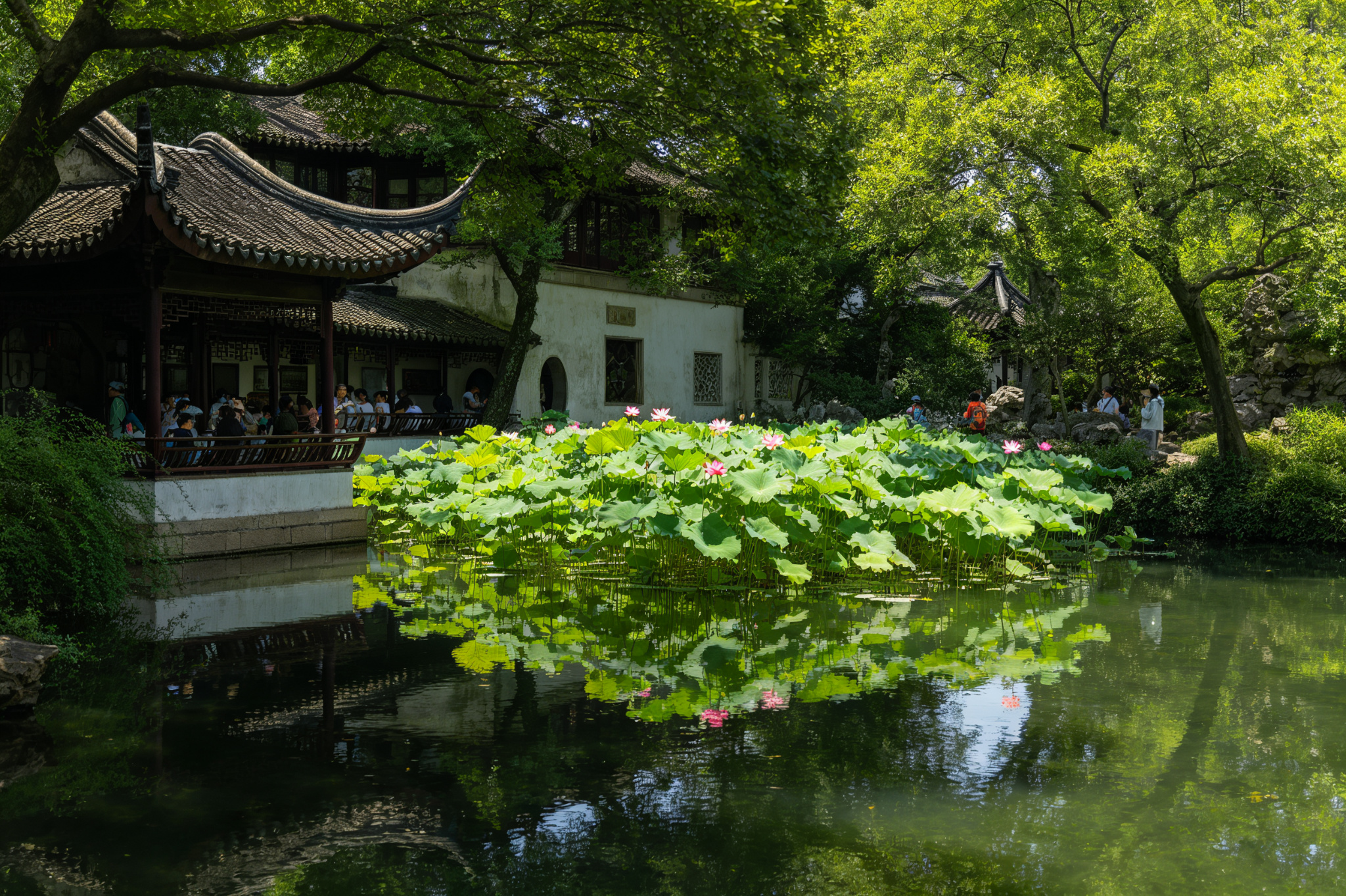
The Lotus Pond is the core water feature space in Couple's Garden Retreat's garden area, and the visual and ecological center of the entire garden. The name is straightforward yet poetic—"ou" means lotus root; Couple's Garden Retreat's name itself is closely connected to the lotus, and the Lotus Pond is the living scenic source of this naming. Lotuses are planted throughout the pond; in summer, lotus leaves stretch to the horizon, red blossoms reflect the sun, and pure fragrance drifts far—harmonizing with the garden's name. The pond's banks wind with deliberate irregularity; corridors, bridges, and pavilions line the water, the surface reflecting rockery, pavilions, skylight, and cloud shadows—real and virtual interwoven like a painting. In Chinese culture, the lotus symbolizes purity and integrity. Couple's Garden Retreat's lotus theme is both a scenic choice and a spiritual commitment—the garden owners Shen Bingcheng and his wife used the lotus as a moral metaphor, embedding their aspirations for reclusive integrity among mountains, waters, flowers, and trees.

Rockery · 假山

🎧 In app
Rockery

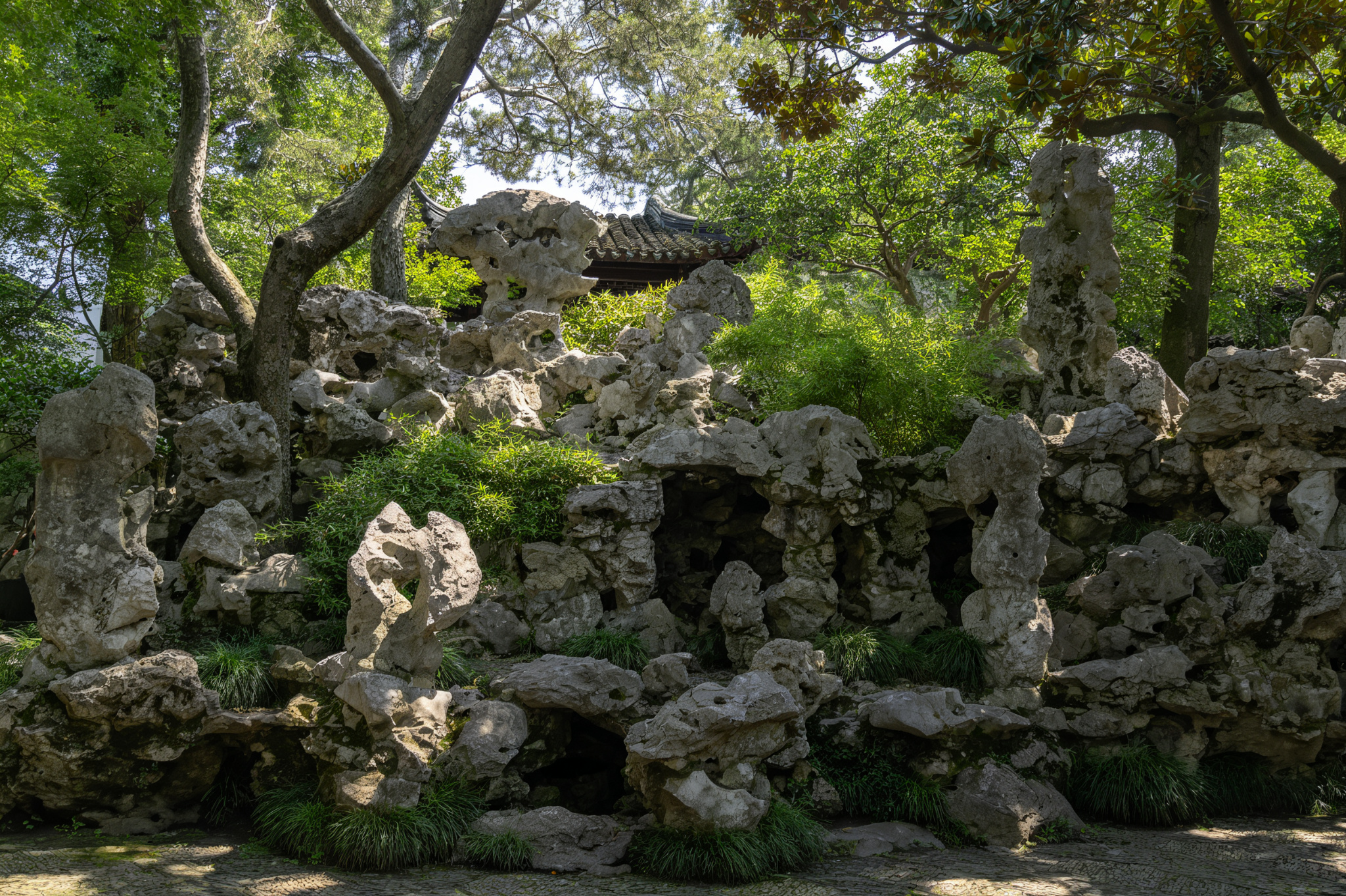
The Rockery is the three-dimensional landscape centerpiece of the garden area, located east of the Lotus Pond, constructed from Taihu stones. The mountain body rises and falls in staggered layers, with winding, deep paths forming a three-dimensional landscape scroll that is both explorable and visually appreciable. Though artificially constructed, the rockery pursues the natural ideal of "crafted by humans yet appearing as if created by nature"—stone peaks are rugged and graceful, caves are deep and intriguing, stone paths wind like real mountain stream courses. An observation platform atop the rockery offers panoramic views of the Lotus Pond and garden pavilions, with distant views of Suzhou's cityscape beyond the walls. Stone caves and chambers beneath provide cool respite in summer—an ideal spot for escaping heat while enjoying scenery. Though not as grandly scaled as Lion Grove Garden's rockery, Couple's Garden Retreat's rockery excels in refinement and subtlety, forming a classic "mountains encircling, waters surrounding" layout with the adjacent pond and pavilions.

Hexagonal Pavilion (Ouxiang Pavilion) · 六角亭(藕香亭)

🎧 In app
Hexagonal Pavilion (Ouxiang Pavilion)

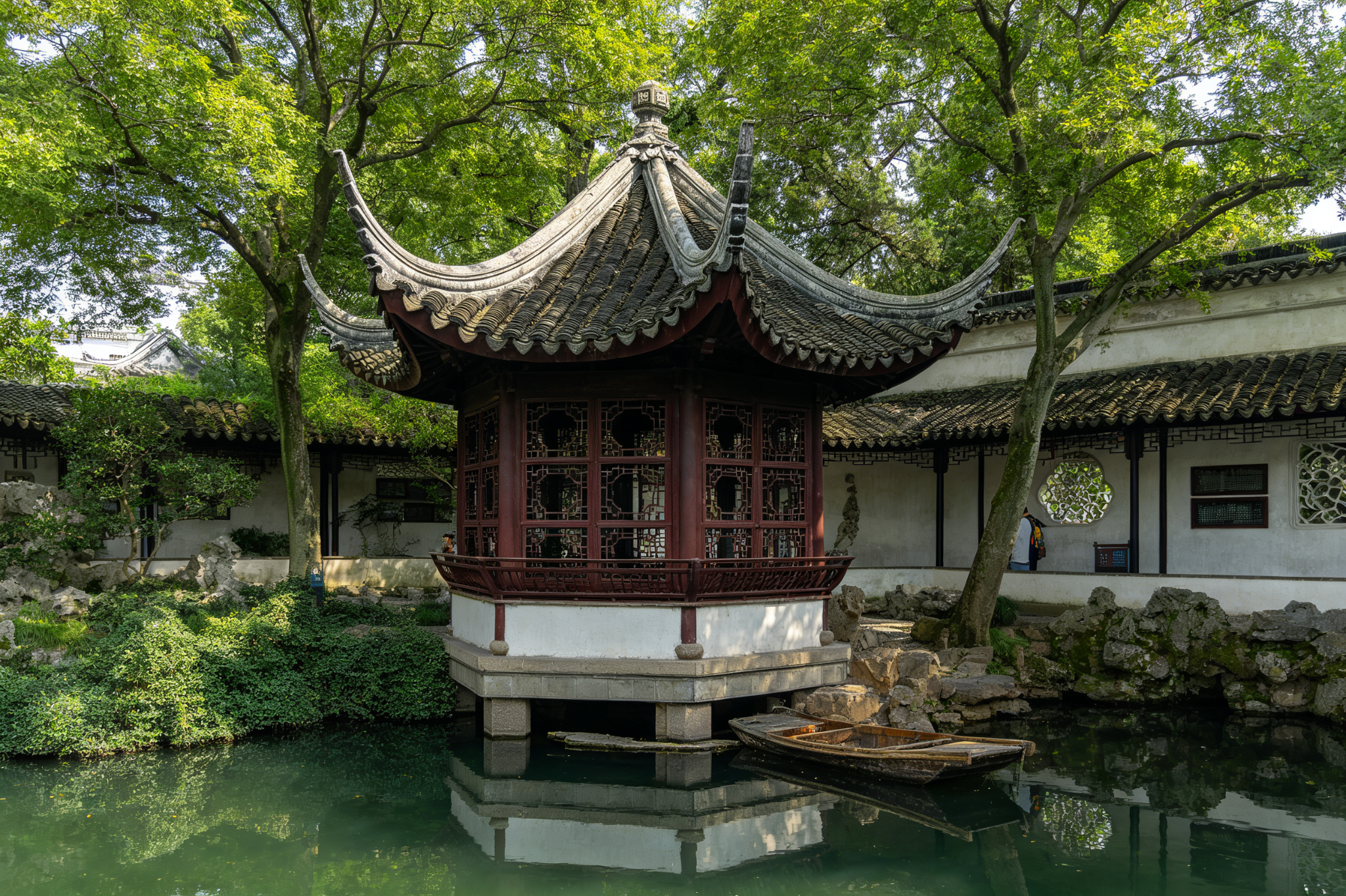
Ouxiang Pavilion is a hexagonal waterside pavilion in Couple's Garden Retreat's garden area, situated north of the Lotus Pond and facing the rockery across the water. The name "Ouxiang" (lotus root fragrance) directly highlights its defining feature—when lotus flowers bloom in summer, breezes carry their fragrance into the pavilion; sitting within to admire lotuses and inhale their scent constitutes the garden's most poetically sensory experience. The hexagonal pavilion's form is light and elegant, with open views on all six sides—every direction offers scenic entry: southward across the Lotus Pond, eastward to the majestic rockery, westward along winding corridors, northward toward the ancient city wall. Stone table and benches provide resting and tea-sipping spots—an ideal place for visitors to pause and immerse in garden scenery. Ouxiang Pavilion resonates most directly with the garden's name—"ou" and "he" (lotus) share the same origin, "xiang" (fragrance) is the lotus's essence—the pavilion name annotates the garden name, making it the garden's signature thematic work.

Winding Corridor · 回廊

🎧 In app
Winding Corridor

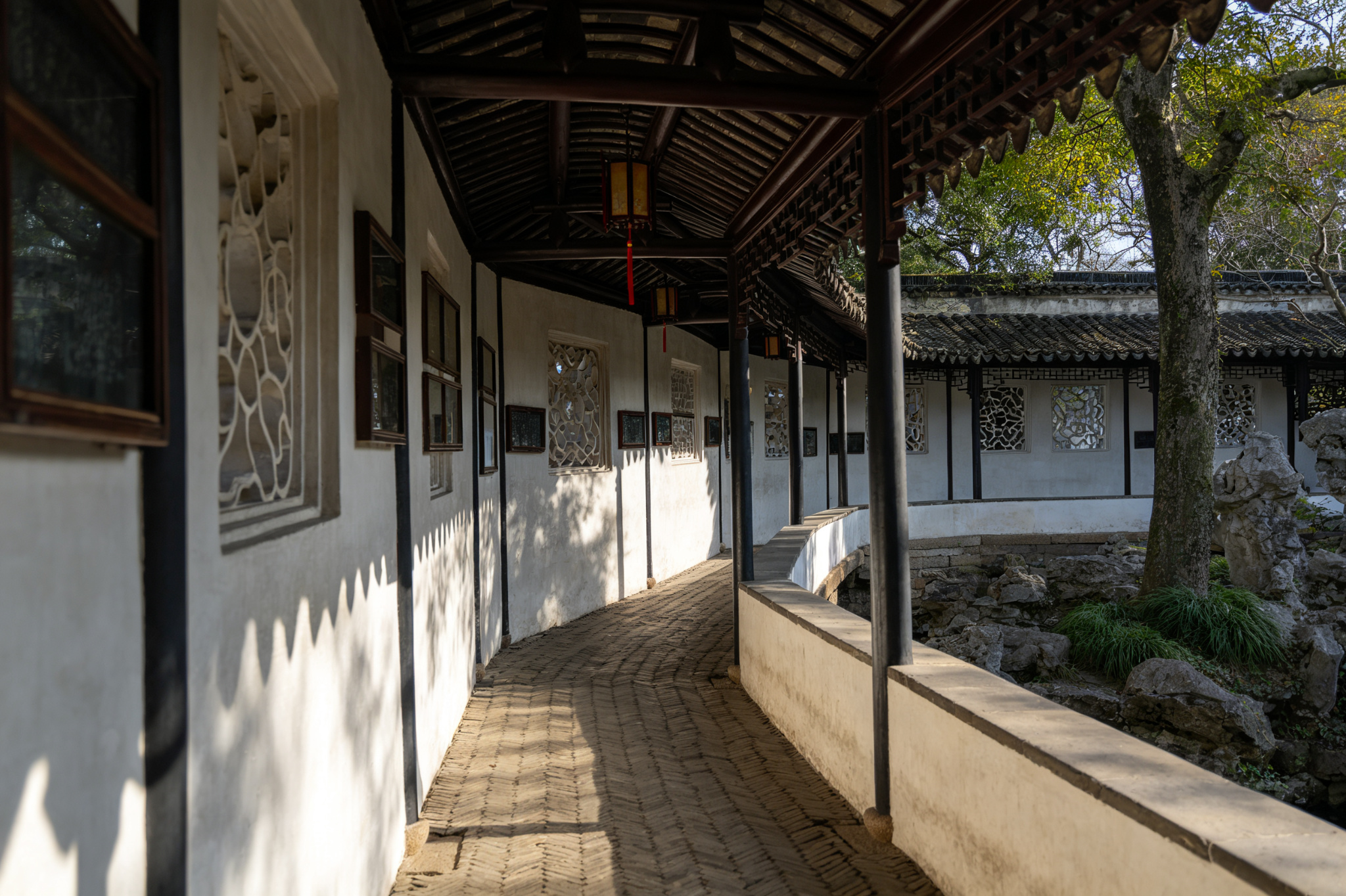
The Winding Corridor is an essential architectural element threading together all scenic points in Couple's Garden Retreat's garden area, winding along the Lotus Pond's edge, organically linking pavilions, terraces, towers, and halls with rockery and water into a complete observation sequence. The corridor is proportionately wide, with water on one side and walls or plantings on the other, forming a dual-view layout of "water on one side, wall on the other" or "scenes on both sides"—every step brings a different visual experience, representing the best practice of Suzhou garden's "shifting views with each step" principle. The corridor roof follows Suzhou's traditional corridor-pavilion construction: simple beams and columns, lightly sweeping eave corners. Every few steps, a pierced window opens—each uniquely shaped: round, square, plum blossom, or fan—through which different angles of pond and rockery scenes appear, making the corridor itself a flowing visual artwork. The corridor is not merely a traffic route but a carefully choreographed "visual narrative thread," guiding visitors to experience each garden scene in a designed rhythm.

Get the app

The tool solved one problem. The app handles the whole trip.

Per-trip visa judgements, audio guides, prep checklists, and a real human concierge — offline-ready, in your language.

Download for iPhoneFree to download · No OTA upsells