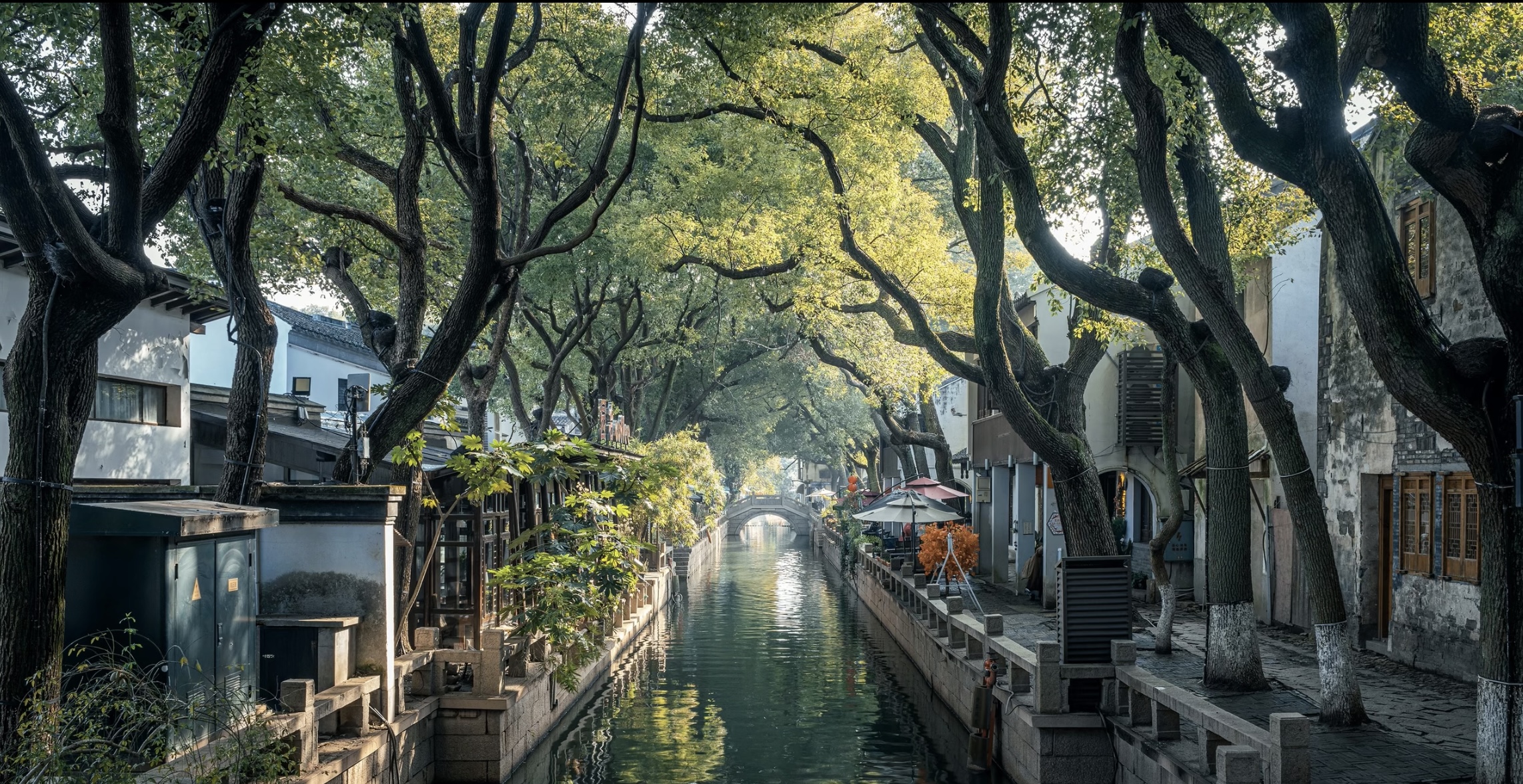
🎫 Ticket The block is not entirely free; attractions require a combo ticket;Adult combo ticket (including core attractions such as Tuisi Garden, Pearl Tower, etc., valid for 2 days): 100 RMB on-site, approximately 80 RMB online in advance;Free to stroll the block (cannot enter ticketed small attractions): Free entry to the town for walking and night views before 8:00 AM and after 17:15
🕘 Opening Hours - Scenic area: 08:00–17:15 year-round
- Opening hours of individual attractions within the town vary; check on-site notices
- Night tours and evening activities are subject to official announcements
🚇 Metro Metro Line 4, Tongli Station
🚇 Metro Metro Line 4 terminal station "Tongli Station" Exit 9;Transfer after exiting: Free smart tram T1 line / Route 725 bus, about 10 minutes directly to the ancient town's North Gate; taxi is faster
📍 Address No. 1 Zhongchuan South Road, Wujiang District, Suzhou, Jiangsu Province, China (Tongli Ancient Town Scenic Area) Map ↗ Inside Tongli Ancient Town
Tuisi Garden (Retreat & Reflection Garden) · 退思园
🎧 In app 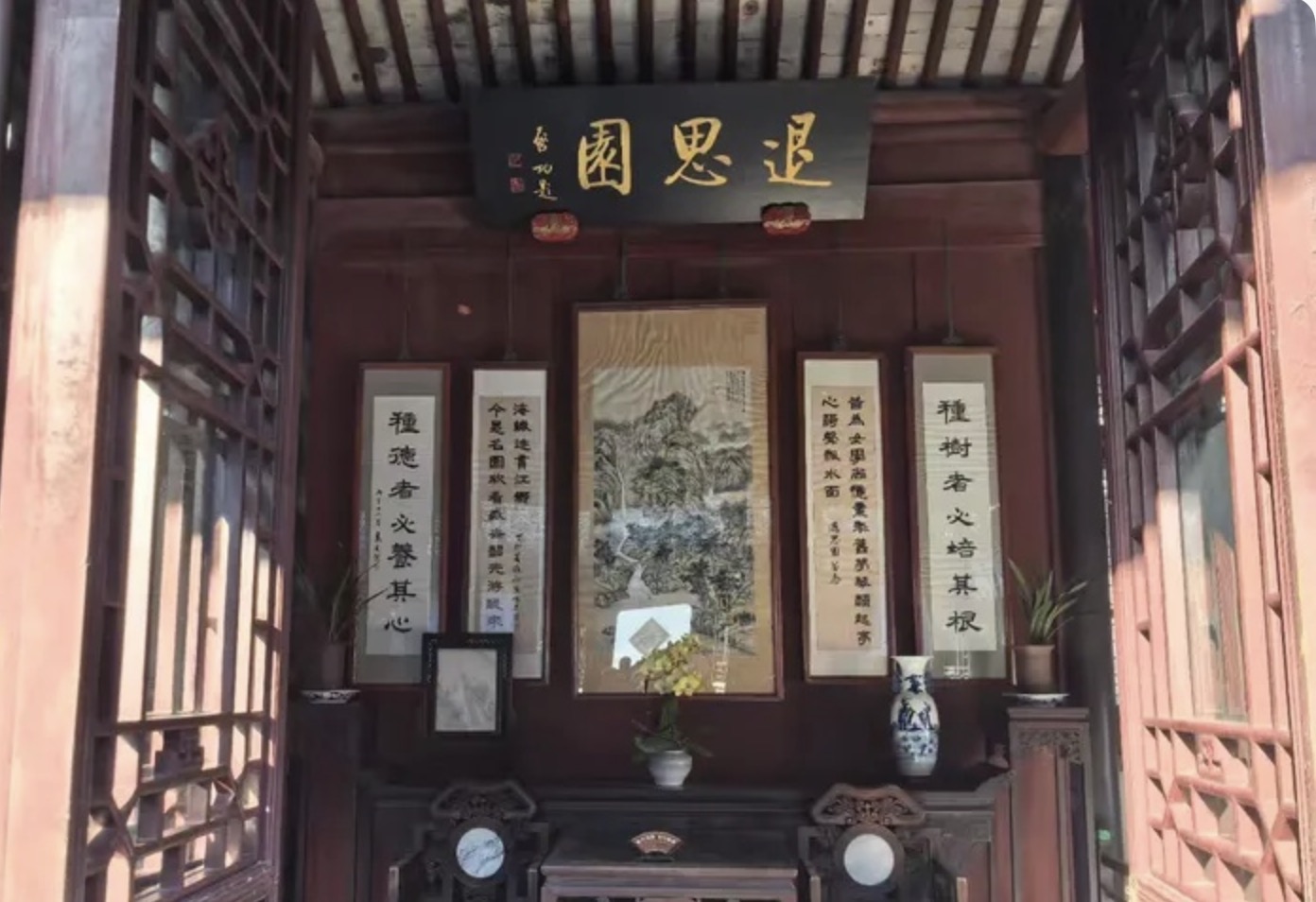
Built in the Guangxu era of the Qing dynasty, the garden was constructed by Ren Lansheng after his dismissal from office, named after the Zuo Zhuan phrase "Advance to serve with loyalty, retreat to reflect and mend faults." Though only 9.8 mu in area, its masterly layout creates infinite poetic resonance within limited space — pavilions, towers, pools, rockeries, flowers, trees, corridors, and bridges. All buildings are constructed flush against the water, forming a "water-hugging" architectural ensemble including Spring View Tower, Cool Arrowroot Rain Pavilion, and Osmanthus Hall. The mirror-like water reflects pavilions, merging reality and illusion. As a UNESCO World Heritage site and Tongli's core attraction, its "seeing the vast in the small" design philosophy is hailed as the paradigm of Jiangnan gardens.
Pearl Tower · 珍珠塔
🎧 In app 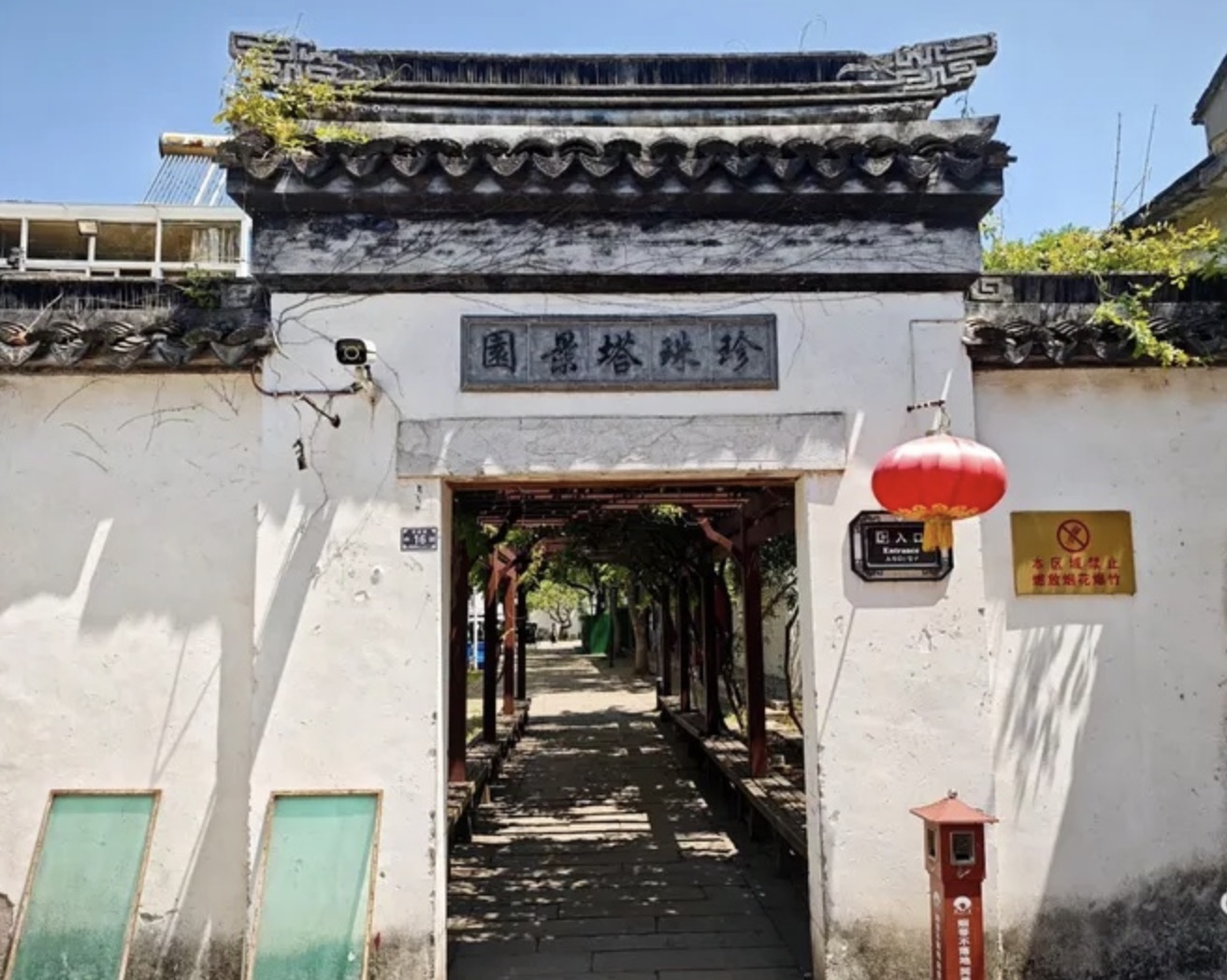
The Pearl Tower is not a physical tower, but the combined name of a long-celebrated opera story in Tongli and the associated Chen family mansion. The tale tells of Fang Qing, a Tongli noble fallen into poverty, seeking help from his aunt Chen Cuie; the Chen family pretended to gift a pearl tower but actually hid silver within it to aid Fang Qing, eventually leading to a happy ending. This "Pearl Tower" legend has been adapted into Suzhou pingtan (storytelling) and opera, becoming Tongli's most famous folk narrative. The restored Chen mansion is now open to visitors, with displays and scene reconstructions related to the story, allowing guests to relive this tale of Jiangnan loyalty and deep affection spanning centuries.
Three Bridges · 三桥
🎧 In app 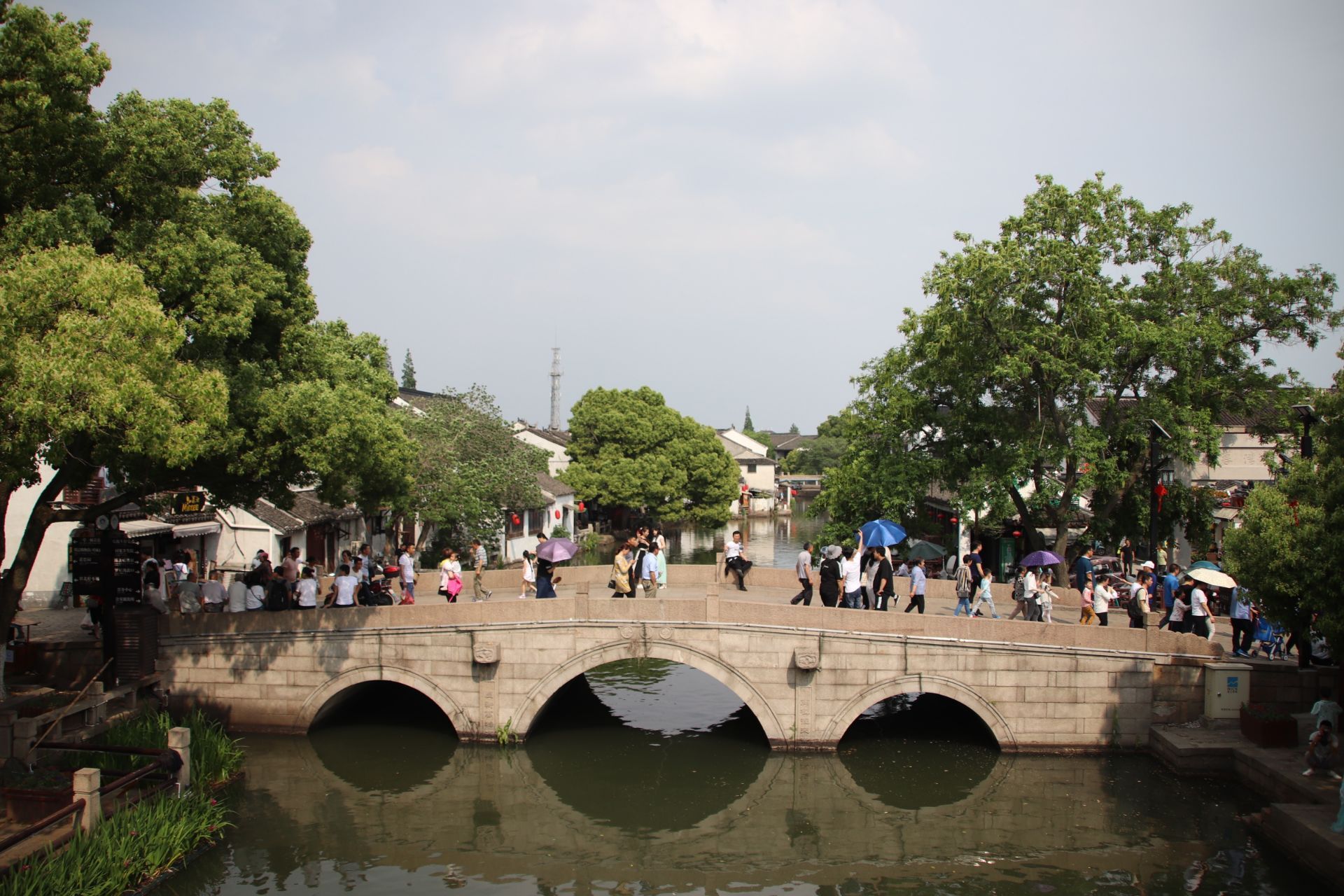
The Three Bridges are Tongli's most iconic landscape — three ancient stone bridges spanning the town's central waterways: Taiping (Peace), Jili (Good Fortune), and Changqing (Lasting Celebration). Arranged in a "品" (pin) pattern close together, they form the visual focal point of Tongli's waterside space. In local tradition, newlyweds must walk the three bridges for blessings of peace, fortune, and lasting joy; residents also stroll the bridges during festivals to pray for good luck — a custom sustained for centuries. Below the bridges, emerald water flows gently; on both banks, white walls and black tiles; on the bridges, pedestrians stream; beneath them, boats pass — the most vivid frame of Tongli's waterside life scroll, and photographers' favorite angle.
Chongben Hall · 崇本堂
🎧 In app 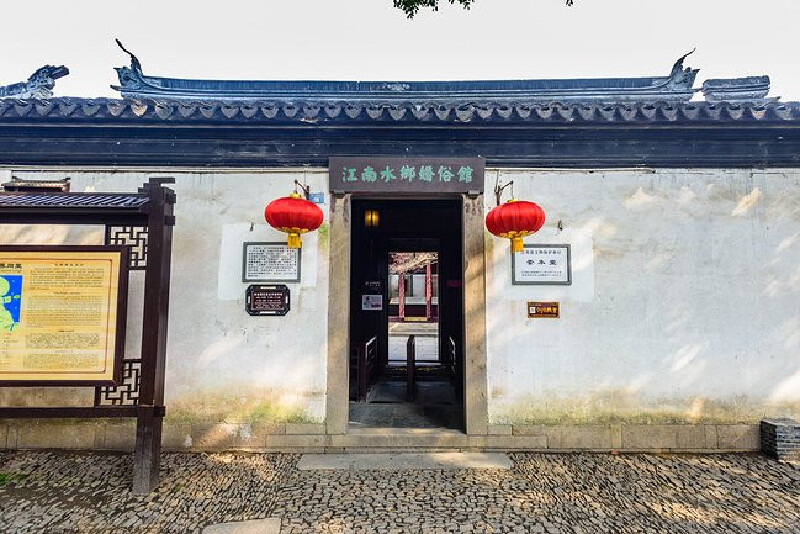
Built in the Xuantong era of the Qing dynasty, Chongben Hall was the residence of wealthy Tongli merchant Qian Youqin, named for the principle of "honoring roots and reflecting on origins." Though modest in scale, it stands out among Tongli's ancient architecture for its exceptionally refined brick-carved gate towers and wood-carved decorations. The gate tower's brick carvings are richly layered, depicting theatrical tales and auspicious motifs with meticulous knife work; interior wood-carved doors and windows render scenes from The Romance of the Western Chamber and other operas with lifelike figures. Built along the river in three progressive courtyards — from entrance hall to main hall to inner quarters — it embodies the typical Jiangnan residential pattern of "front hall, rear dwelling," a precious case study of Tongli merchant-class life.
Jiayin Hall · 嘉荫堂
🎧 In app 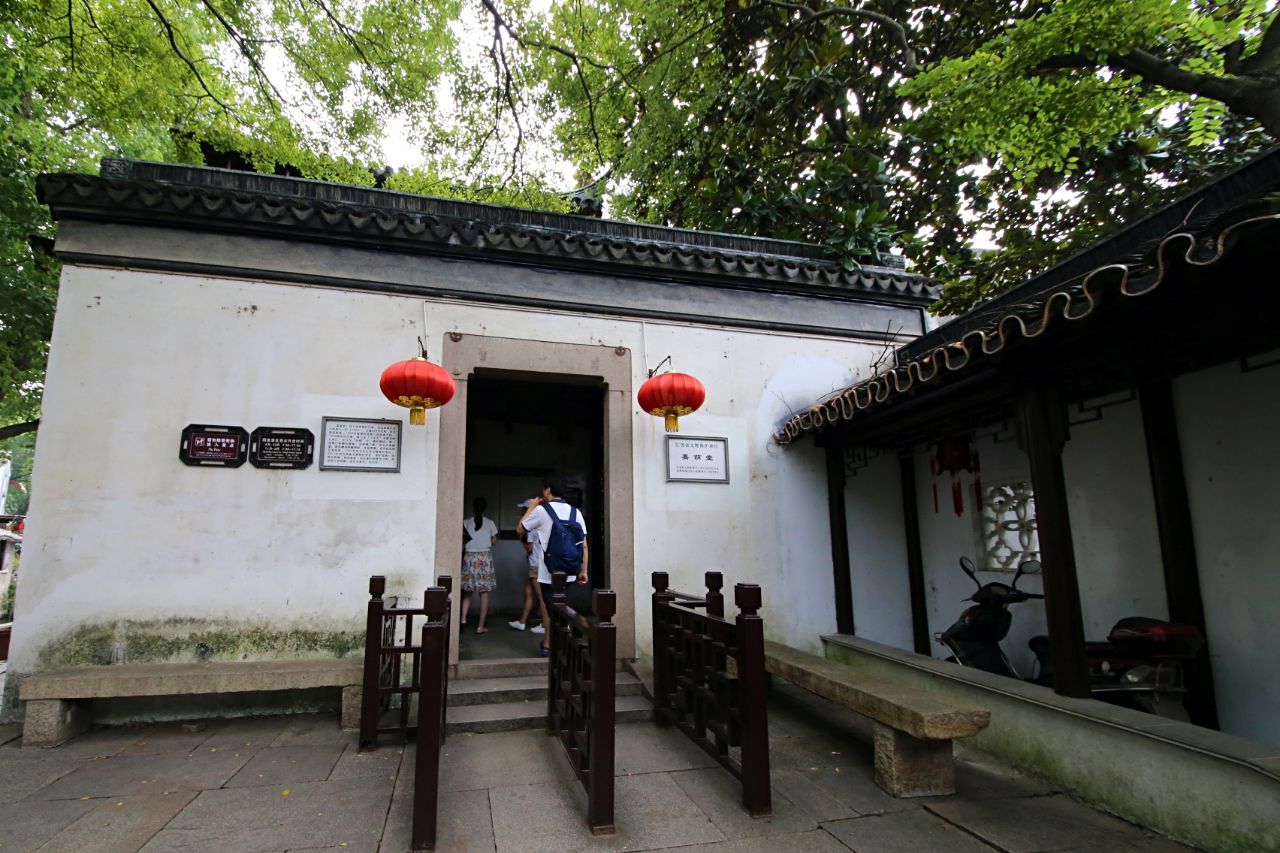
Built in the early Republic of China era, Jiayin Hall was the mansion of wealthy Tongli merchant Liu Bingnan. Grand in scale, its five progressive courtyards unfold sequentially — entrance hall, sedan hall, main hall, inner hall, and rear garden — fully reproducing the spatial sequence of a great Jiangnan household. The main hall is called the纱帽 (Gauze-Hat) Hall because its roof-beam structure resembles the wings of a Ming official's gauze hat; inside, carved beams and painted pillars showcase superb craftsmanship. Jiayin Hall is laid out along the river, its main gate facing the water with a private pier on the side — a clear imprint of the merchant lifestyle of traveling by boat. The complex balances official dignity with commercial practicality, an excellent window into Tongli's modern business-social class structure.
Gengle Hall · 耕乐堂
🎧 In app 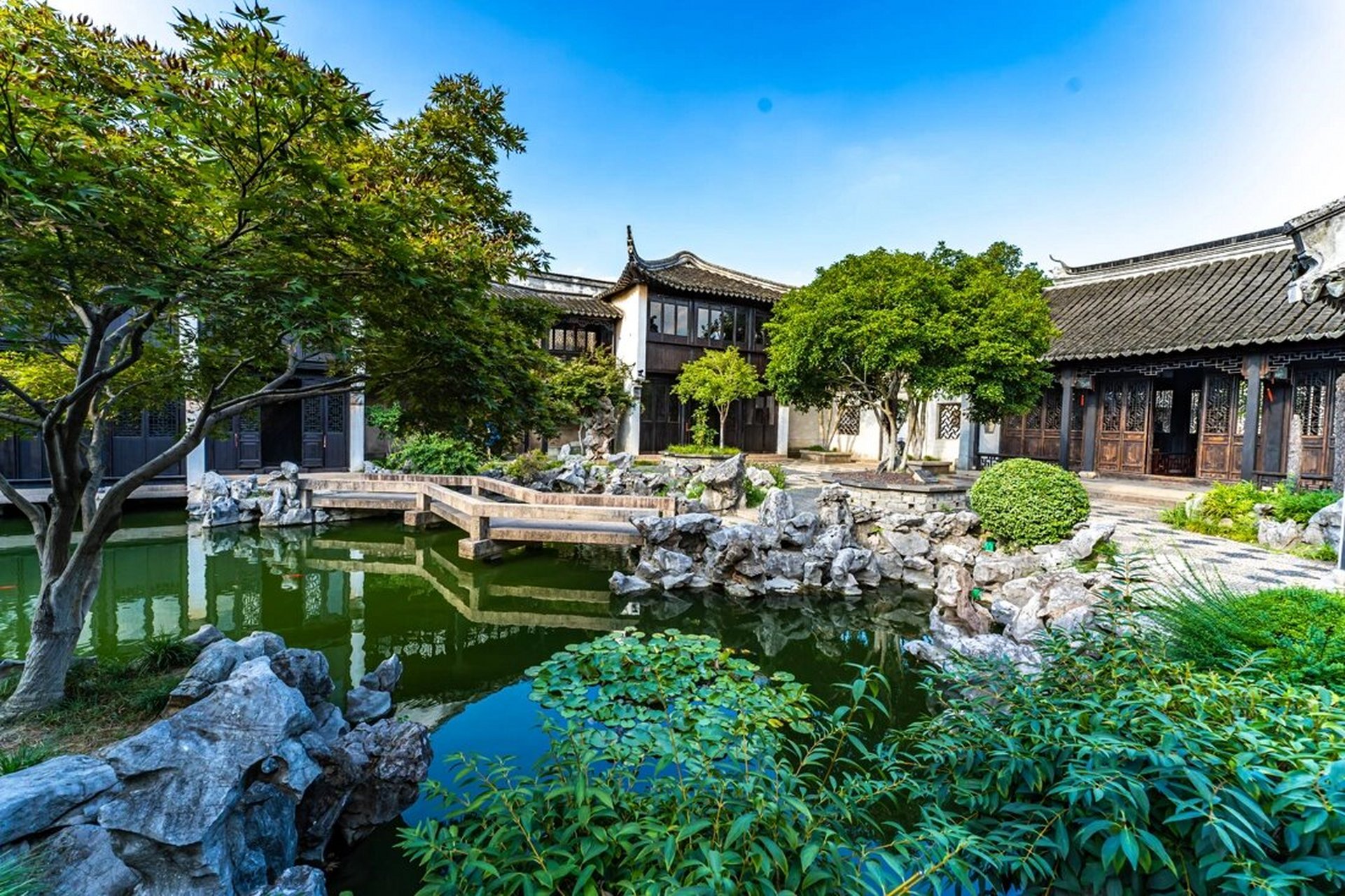
Gengle Hall was built by Ming-era recluse Zhu Xiang, named for the ideal of "farming and studying as family tradition, joy within" — one of Tongli's oldest surviving dwellings. Zhu Xiang refused official career all his life, finding joy in farming and reading; his residence and garden thus carry the plain, serene character of a literati-scholar. Four progressive courtyards with an attached small garden planted with osmanthus and white-bark pine, its winding paths and corridors embody the austere aesthetics of Ming literati garden-living. Compared with Tongli's merchant mansions, Gengle Hall has few ornate carvings — instead, plain brick walls and bare wooden beams reveal their natural beauty, preserving the authentic appearance of Ming Jiangnan dwellings and providing precious physical specimens for studying Ming vernacular architecture.
Ming-Qing Street · 明清街
🎧 In app 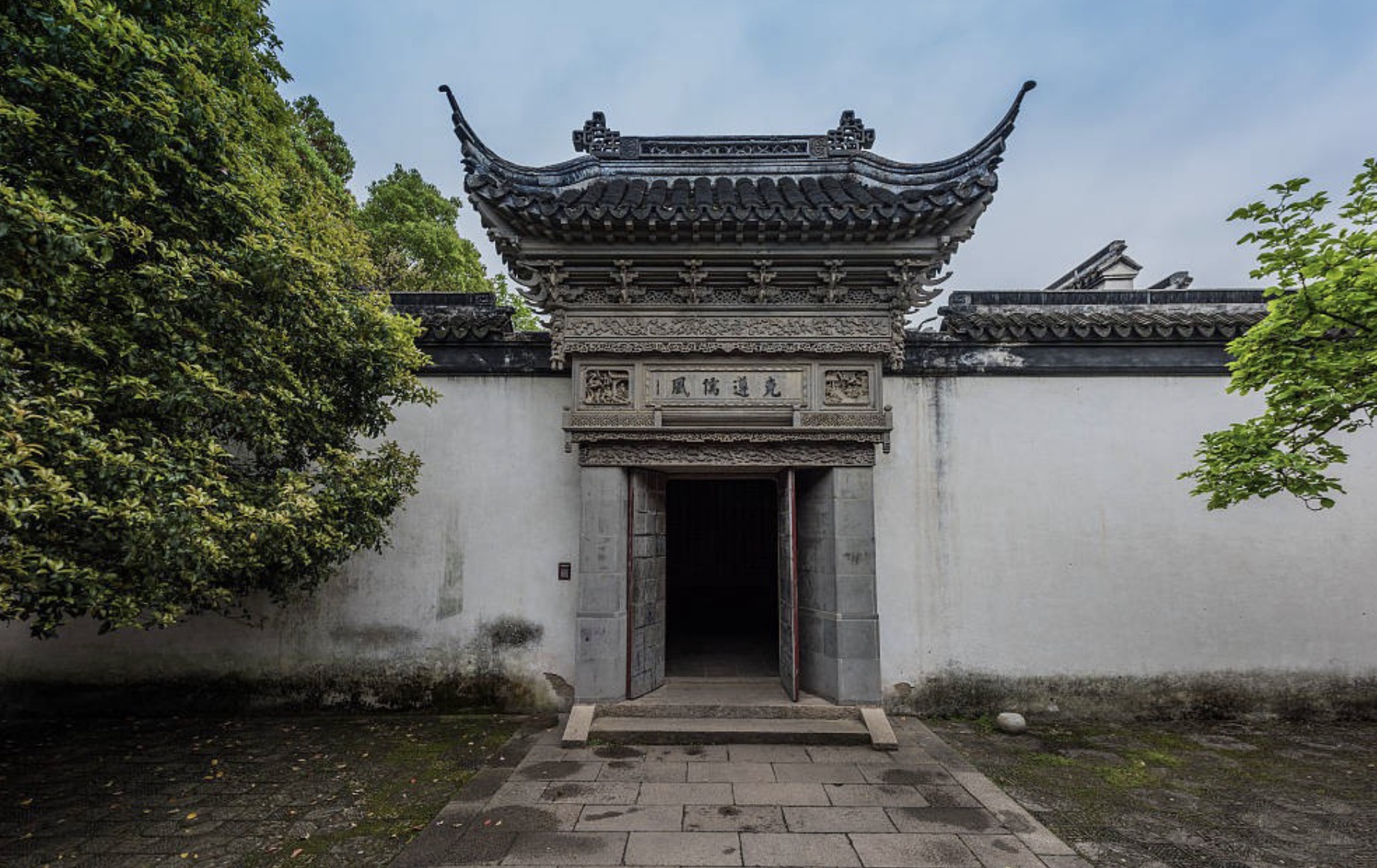
Ming-Qing Street is Tongli's main commercial lane, roughly 300 meters long, with Ming-Qing-era shop layouts and street-front character preserved on both sides. Gloss from centuries of foot traffic still gleams on the flagstone pavement. Shops sell Su embroidery, Lake Tai pearls, Tongli's signature pickled vegetables and "champion's trotter" braised pork — old brands and new stalls mixing into a unique marketplace atmosphere interweaving past and present. Occasional langpeng (roofed corridors) span the street overhead, sheltering pedestrians from sun and rain — a hallmark of Jiangnan waterside commercial streets. Strolling Ming-Qing Street, the eyes take in the scroll of white walls and black tiles; the nose catches the sweet scent of pickles and lotus-root sweets; the hands feel flagstones' warmth — senses converge into a complete Tongli memory.
Nanyuan Tea House · 南园茶社
🎧 In app 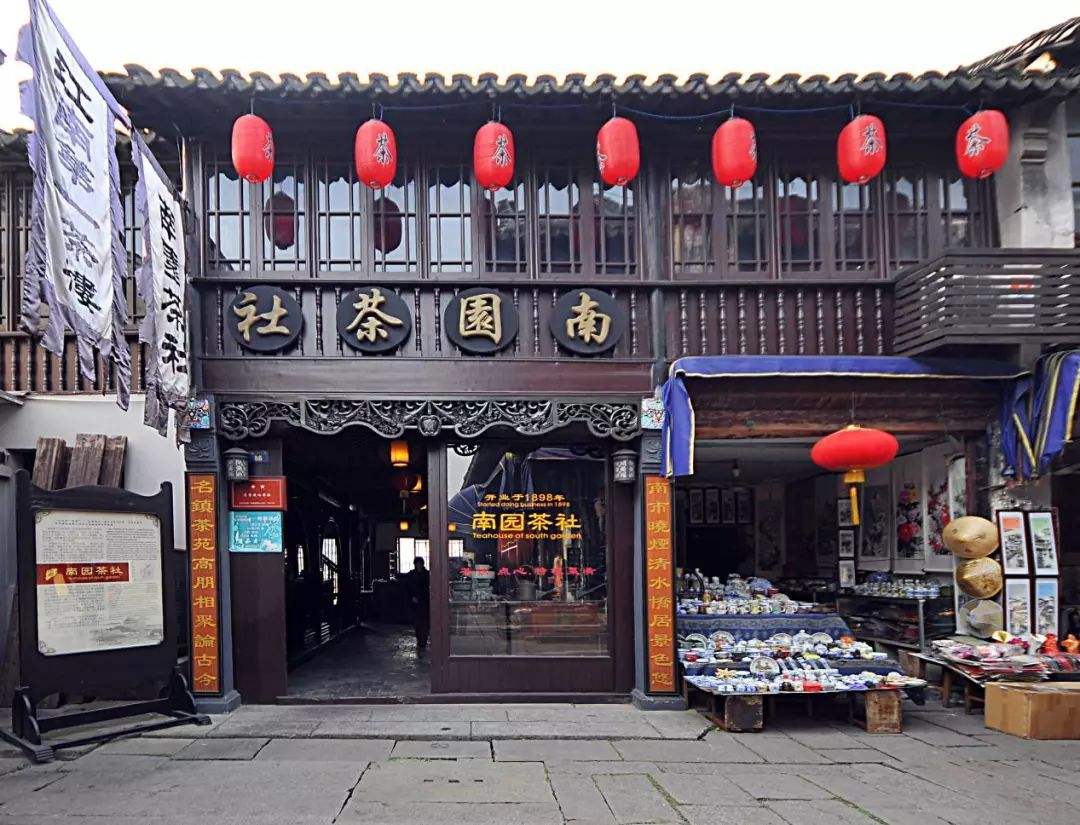
Founded in the late Qing dynasty, Nanyuan Tea House is Tongli's most iconic traditional tea house, set along the river with two floors of wood-windowed, water-facing Suzhou-style spaces. The house features Biluochun tea and local snacks; afternoon sessions often host Suzhou pingtan performers — plucked strings ringing, melodic voices soaring, particularly moving in the waterside tea-house context. Sitting by the window with a pot of clear tea, watching boats pass on the river outside, pingtan melodies drifting into the ears, time seems to slow its pace. Nanyuan Tea House is more than a place for tea — it is a living specimen of Tongli's waterside lifestyle, allowing visitors, in a brief pause, to touch the century-long pulse of Jiangnan tea-house culture.
Chen Qubai's Former Residence · 陈去病故居
🎧 In app 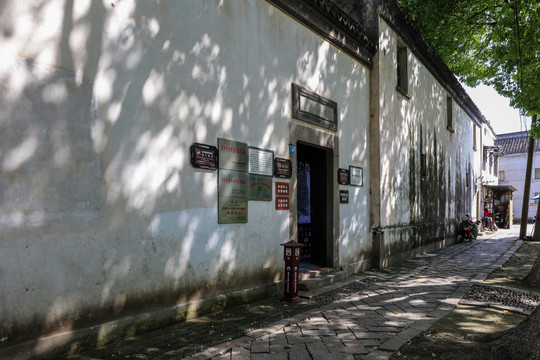
Chen Qubai's Former Residence is the old home of the renowned modern revolutionary and Nanshe (Southern Society) co-founder in Tongli. Chen Qubai (1874–1933) was a pivotal revolutionary literatus of the late Qing and early Republic, co-founding Nanshe with Liu Yazi and others, wielding literature as a weapon to advocate anti-Qing revolution and democratic ideals. The residence follows a traditional Jiangnan dwelling layout; inside, an exhibition of Chen's life uses letters, photographs, and manuscripts to trace his journey from Tongli scholar to revolutionary pioneer. The quiet, deep old alley where the house sits contrasts sharply with Chen's turbulent revolutionary career, revealing a truth: modern China's upheavals often began in an unremarkable room in a small Jiangnan town.
Luoxing Island · 罗星洲
🎧 In app 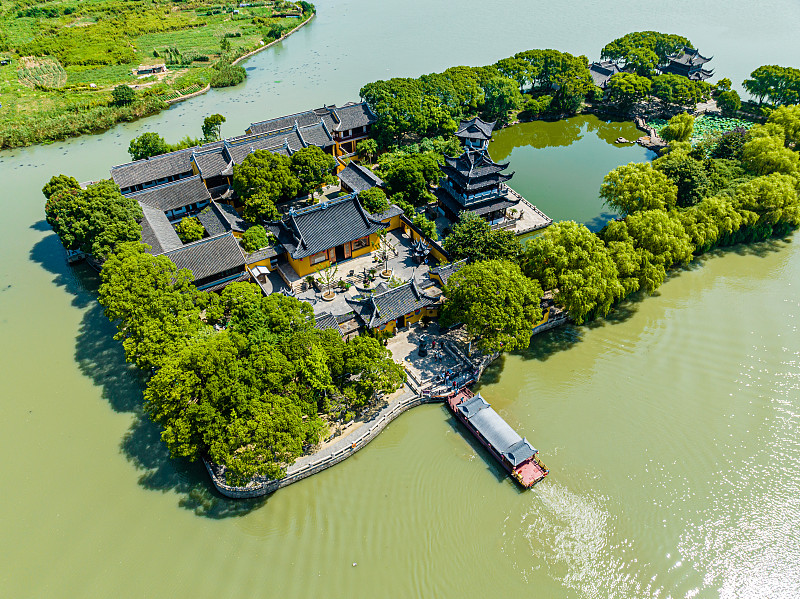
Luoxing Island is a small island in Tongli Lake, reached by roughly a ten-minute boat ride from the ancient town pier. Existing structures include the Guanyin Hall, Wenchang Pavilion, and Doumu Pavilion, where Buddhist, Daoist, and Confucian faiths coexist — reflecting Jiangnan folk religion's inclusive tradition. A small garden on the island features winding paths, lush plantings, and panoramic lake-and-hill views; gazing across the water, Tongli's black-tiled rooftops appear faintly in the distance. Luoxing Island has been destroyed and rebuilt multiple times through war and disaster; current buildings are largely modern reconstructions, but ancient trees and ruins preserve memories of past turmoil. The boat journey — wind on the water, shimmering waves — makes arriving at the island feel like entering an otherworld paradise, the most ritual-laden segment of any Tongli visit.