← Suzhou

Suzhou · 退思园

Retreat & Reflection Garden / Tuisi Garden

🎫 Ticket Not free; flat rate 10 RMB/person
🕘 Opening Hours - Year-round: 08:00–20:30 - Entry to attractions inside Tongli Ancient Town stops after 17:15 - Specific hours are subject to Tongli Ancient Town announcements
🚇 Metro Line 1 Yangyuxiang Station Exit 3, walk about 10 minutes
🚇 Metro Line 2 Shilu Station Exit 12, walk about 12 minutes
🚇 Metro Line 4 Chayuanchang Station, walk about 10–15 minutes
📍 Address No. 1 Renjia Lane, Zhuhang Street, Tongli Town, Wujiang District, Suzhou, Jiangsu Province, China (inside Tongli Ancient Town) Map ↗
🎧 10 audio walking guides for Retreat & Reflection Garden / Tuisi Garden — listen on the spot in the YOLO HAPPY app. →

Tips for international visitors

  • Reservation: Tickets can be purchased on-site; also reservable via Jun Dao Suzhou / Suzhou Garden Tourism mini-program; garden pass accepted
  • Hidden in a small alley; follow the navigation and don't doubt you're going the wrong way

Inside Retreat & Reflection Garden / Tuisi Garden

Entrance Gate · 入口宅门

🎧 In app
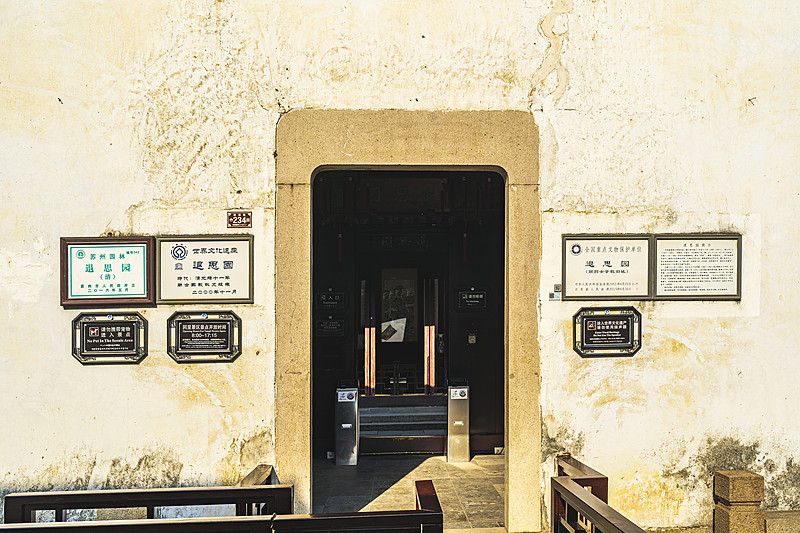
Entrance Gate

The entrance gate faces the lanes of Tongli Ancient Town in the traditional stone-arch style, with a brick-carved lintel inscribed "Tuisi Garden." The gatehouse is constructed of finely ground grey bricks with tight mortar joints, showcasing exceptional craftsmanship. Unlike the ornate gatehouses of wealthy merchants, Tuisi Garden's entrance deliberately pursues simplicity—befitting Ren Lansheng's status as a demoted official returning home, and echoing the humility inherent in the garden's name. Upon entering, a screen wall temporarily conceals the garden's scenery, creating a spatial sequence of "suppression before revelation" that guides visitors from the bustling streets into a tranquil world.
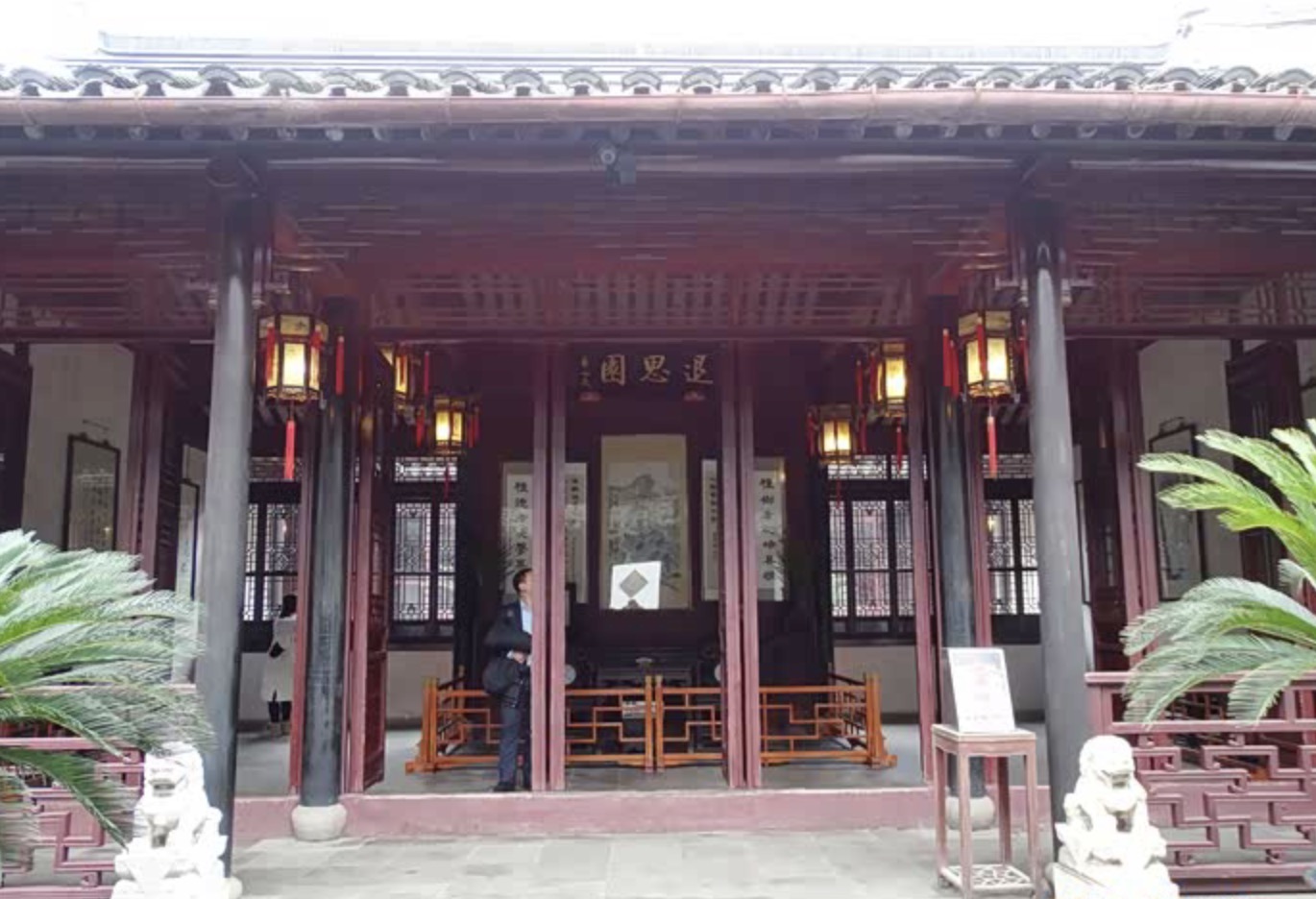
Sedan Chair Hall · 轿厅

🎧 In app
Sedan Chair Hall

The Sedan Chair Hall sits between the entrance gate and the main hall, an essential ceremonial transitional space in traditional Jiangnan residences. Its name derives from its original function of parking sedan chairs: arriving guests would dismount, tidy their attire, and rest briefly before being received into the main hall. The hall spans three bays with simple timber framing, modest decoration, and square-tile flooring. Wooden benches once lined both sides for attendants. Though unadorned, the Sedan Chair Hall plays a crucial role in modulating spatial rhythm—from the noise of the street to the formality of the main hall, it acts as a buffer, allowing visitors to prepare visually and psychologically, while embodying the etiquette governing host-guest relations.

Main Hall (Hall of Sheltered Abundance) · 正厅(荫余堂)

🎧 In app
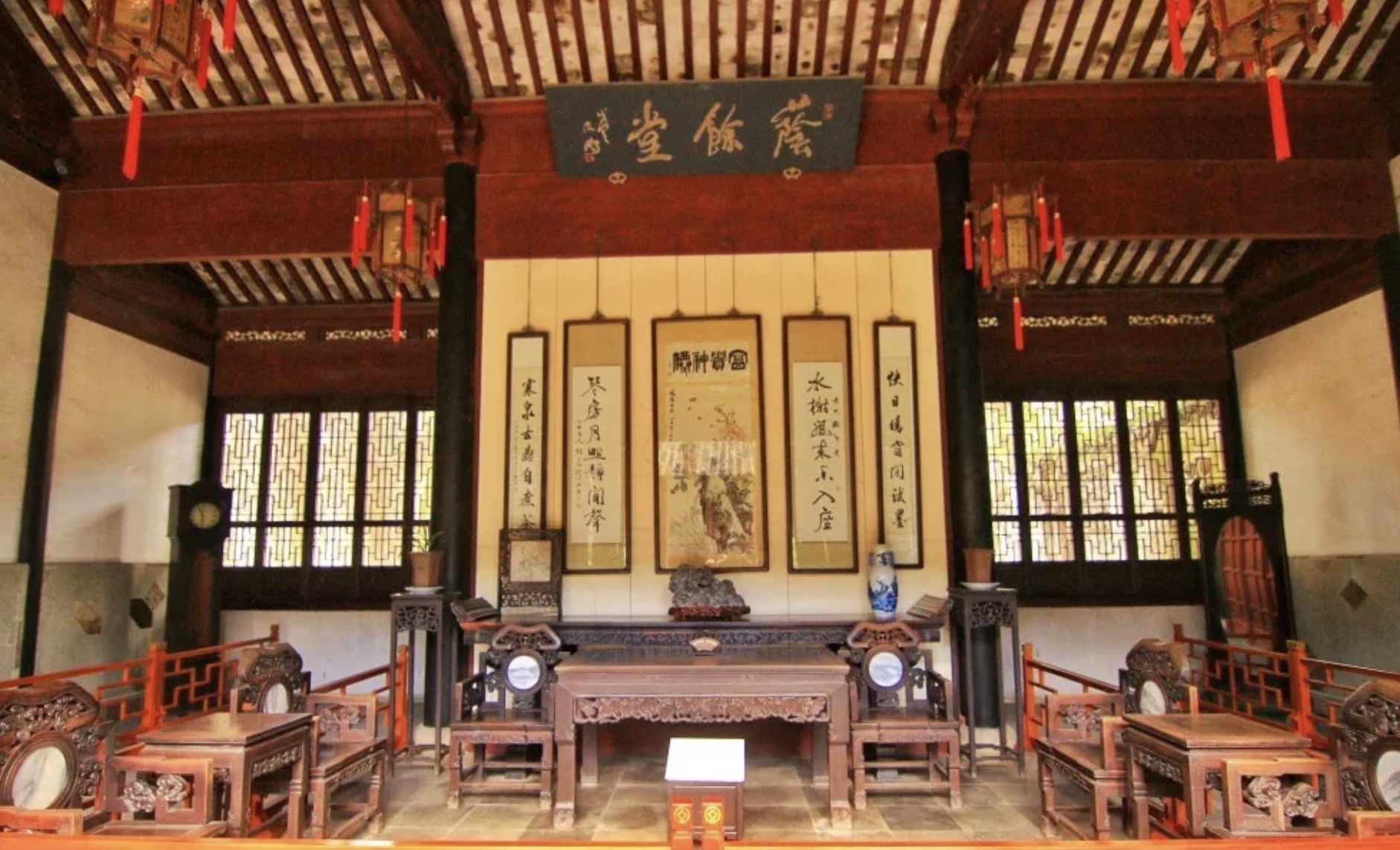
Main Hall (Hall of Sheltered Abundance)

Yinyu Tang is the main hall of Tuisi Garden and the most important ceremonial space in the residential quarter. The name "Yinyu" means "to shelter descendants and leave a lasting legacy," expressing Ren Lansheng's aspirations for his family's enduring prosperity. The hall spans three bays with a high, bright interior, fine timber construction, and drum-shaped blue-stine plinths. A plaque inscribed "Yinyu Tang" hangs at the center, flanked by couplets. The interior follows traditional arrangement—a long narrow table at the center, armchairs and side tables on either side, with calligraphy and paintings on the walls. This was the venue for receiving distinguished guests, conducting family councils, and hosting weddings and funerals. The courtyard before the hall features osmanthus and magnolia, symbolizing "abundance of gold and jade."

Inner Residence (Wanxiang Pavilion) · 内宅(畹芗楼)

🎧 In app
Inner Residence (Wanxiang Pavilion)

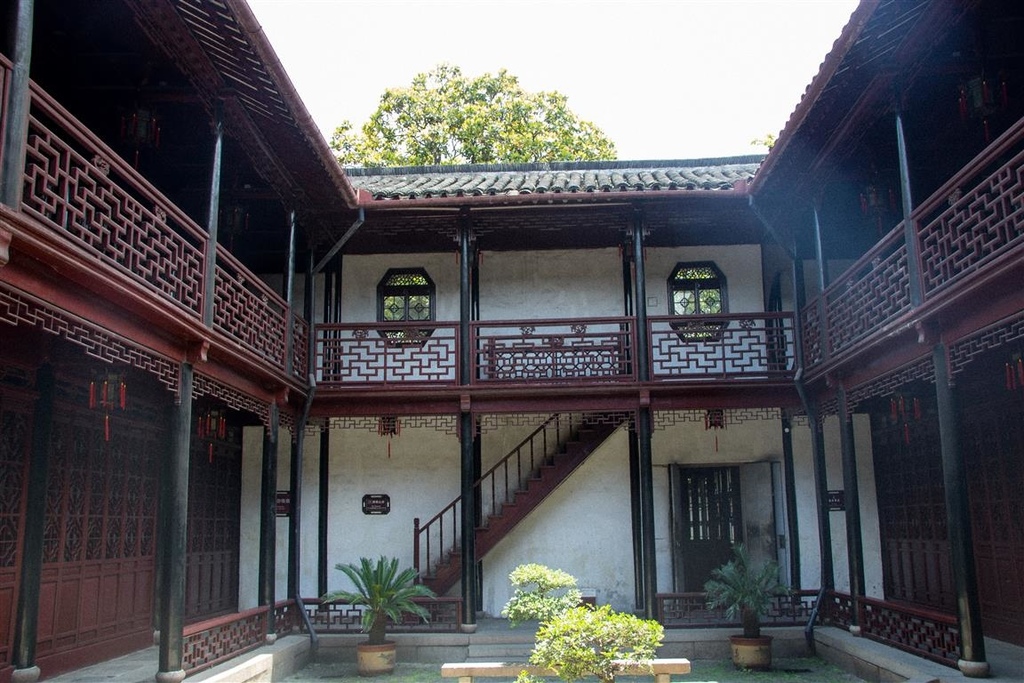
Wanxiang Lou is situated behind the main hall, serving as the inner residence where the owner and family conducted daily life. The name "Wanxiang" means "fragrance of orchids," alluding to Qu Yuan's Li Sao: "I have nurtured orchids in nine fields," symbolizing the owner's noble character. The two-story building has a ground floor for daily living and dining, with bedrooms upstairs. The interior once featured rosewood furniture, carved beds, and refined ornaments. A small courtyard before the building holds orchids and banana plants, creating a serene atmosphere. Narrow passageways and courtyard walls separate the inner residence from the public halls, forming the traditional layout of "front hall, rear quarters, inner and outer distinct," ensuring family privacy while reflecting the spatial hierarchy of Confucian propriety.

Tuisi Thatched Hall (Hall of Retreat and Reflection) · 退思草堂

🎧 In app
Tuisi Thatched Hall (Hall of Retreat and Reflection)

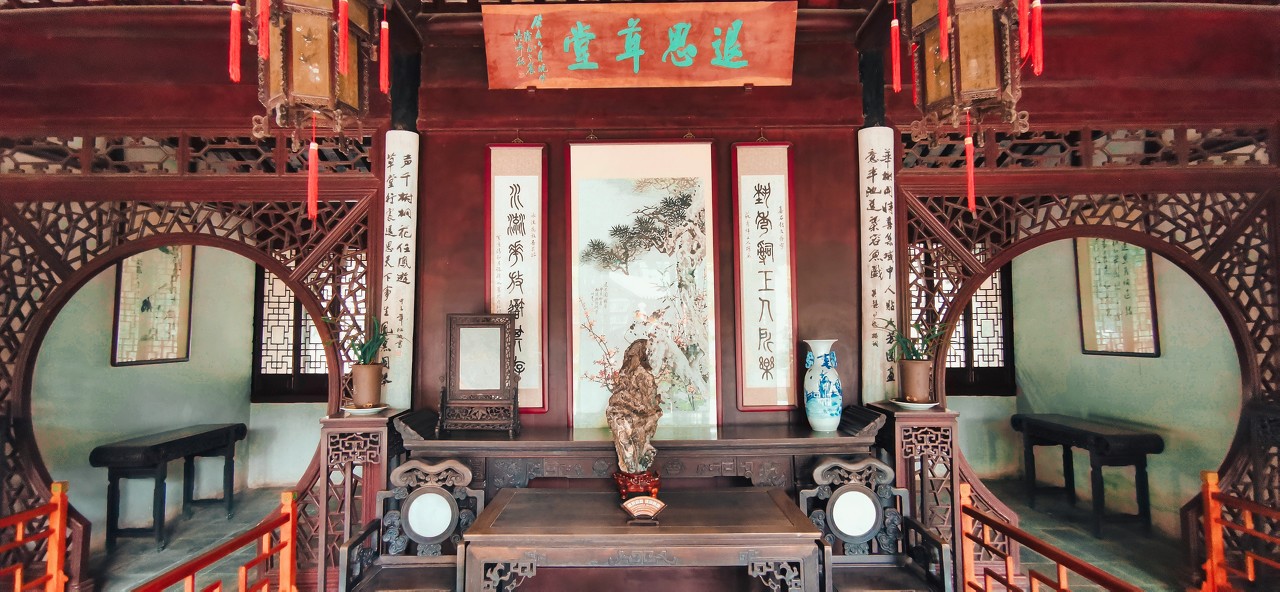
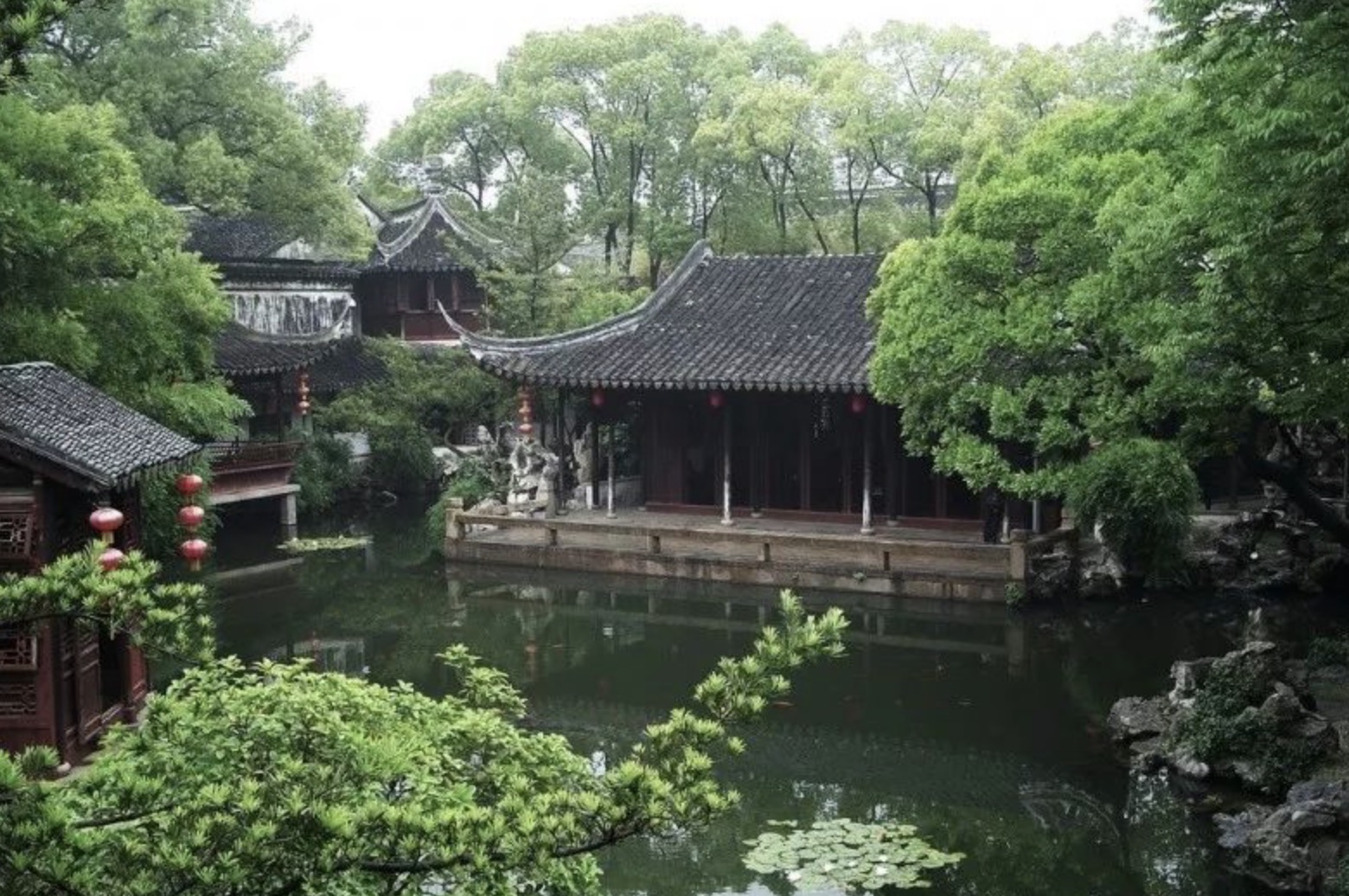
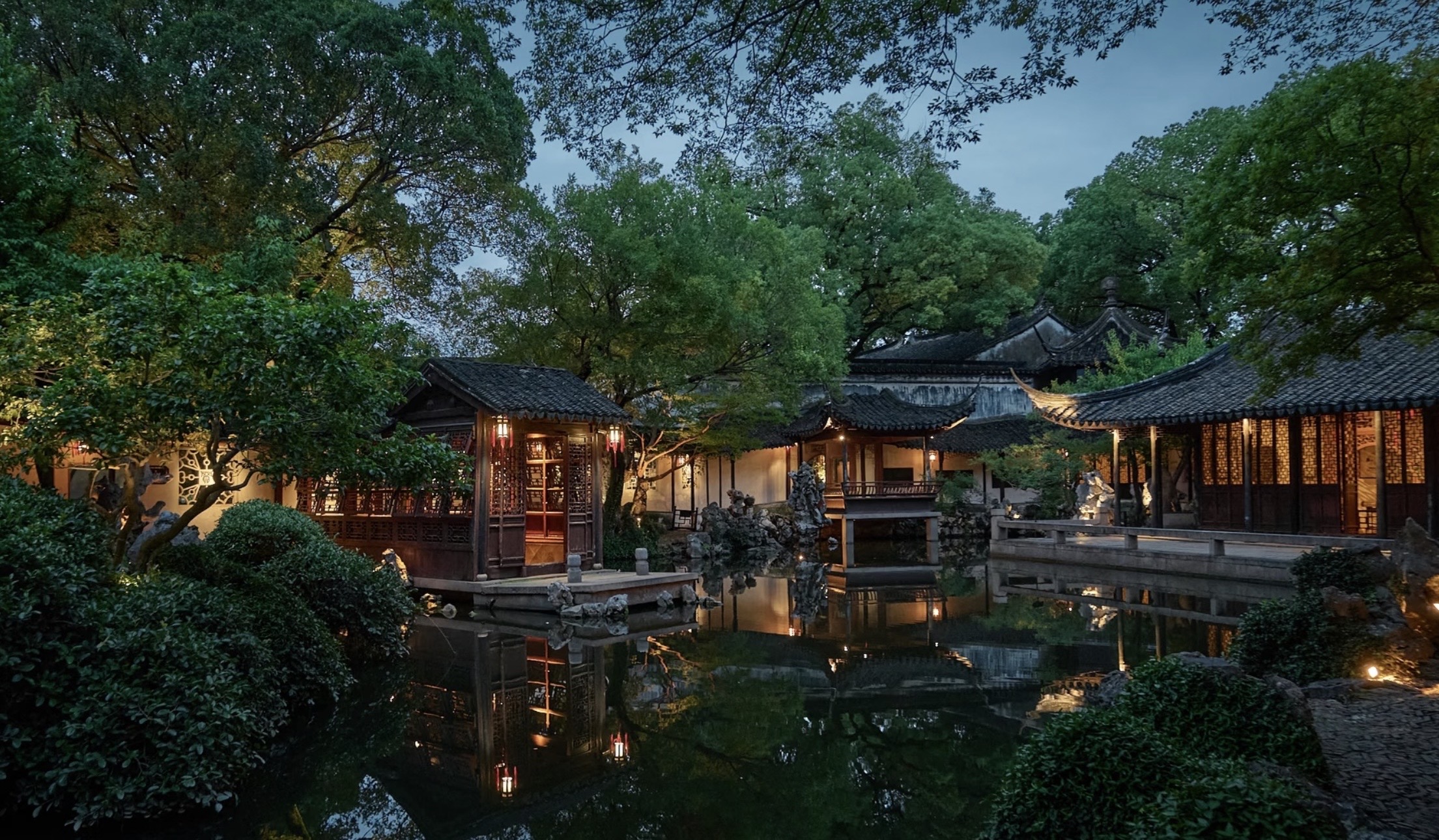
Tuisi Thatched Hall occupies the central position of the garden section, backing against the compound wall to the north and facing the water to the south—the heart of the entire garden. The hall's name directly expresses the garden's theme: "Tuisi" (Retreat and Reflection) reflects both the garden's name and the inner state of Ren Lansheng, who sought self-examination and self-improvement after his demotion. The hall spans three bays with a single-eave gable-and-hip roof and an unadorned exterior without painted decoration; calling it a "thatched hall" heightens the sense of reclusion. A spacious terrace before the hall projects over the water, offering the finest vantage point. From here, the pond, Shuixiang Pavilion, Red Boat, Sky Bridge, and other scenes unfold in a single panorama. The interior is simply furnished with a writing desk, zither table, and armchairs, with calligraphy and paintings on the walls. The owner once read, played the zither, entertained friends, savored tea, and observed the changing seasons here.

Shuixiang Pavilion (Water Fragrance Pavilion) · 水香榭

🎧 In app
Shuixiang Pavilion (Water Fragrance Pavilion)

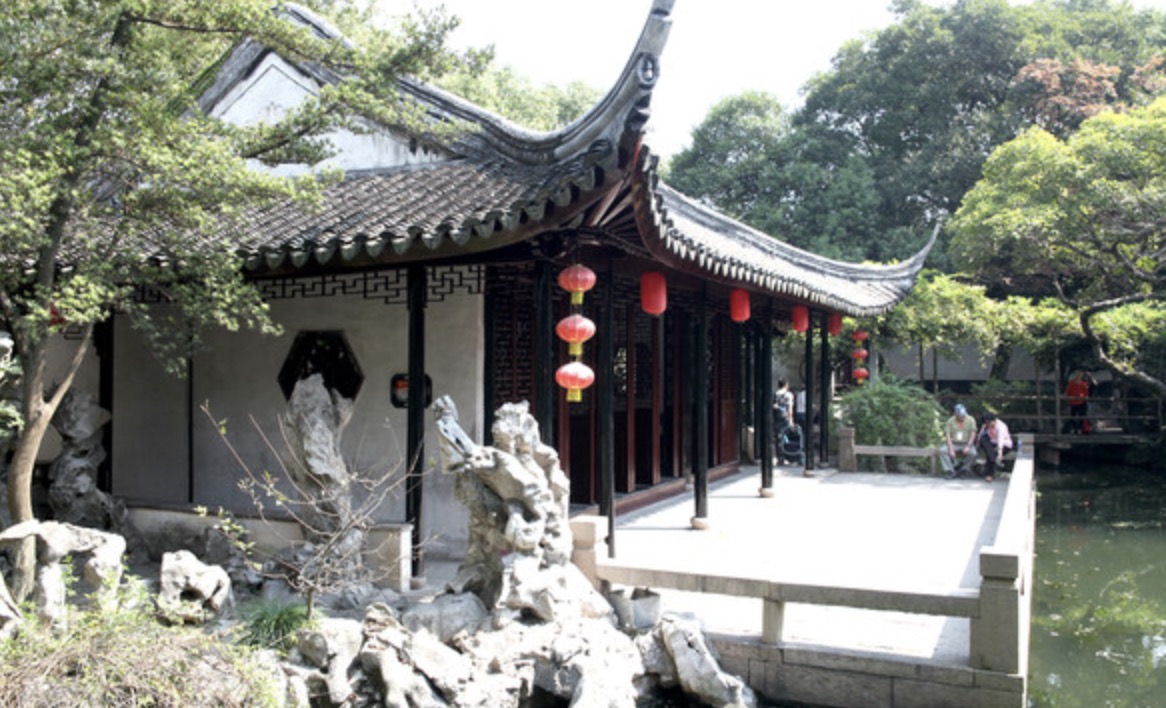
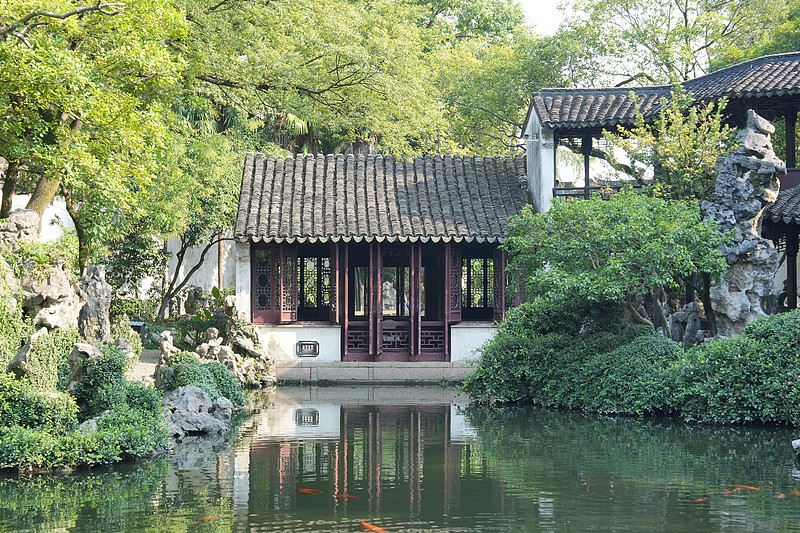
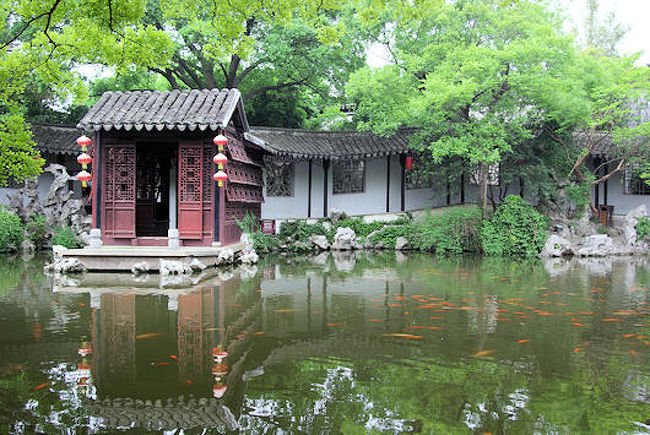
Shuixiang Pavilion stands at the southeast corner of Tuisi Garden's central pond, a square structure half-cantilevered over the water. The name "Shuixiang" (Water Fragrance) evokes the scent of lotus blossoms drifting across the water in summer. The pavilion is light and airy, open on three sides with only one walled side featuring hexagonal latticed windows. The floor sits nearly flush with the water surface—seated inside, one feels suspended above the ripples. This is the finest spot for summer lotus viewing: the pond is planted with lotus, and in midsummer green leaves stretch to the horizon and pink blooms catch the sun, while a breeze carries the fragrance inward. Golden koi dart beneath, their reflections forming living pictures. Tuisi Garden is renowned for "hugging the water," and Shuixiang Pavilion embodies this feature at its purest—the distance between architecture and water reduced to a minimum, merging human and nature into one.

Qin Room (Zither Room) and Mianyun Pavilion (Cloud-Resting Pavilion) · 琴房与眠云亭

🎧 In app
Qin Room (Zither Room) and Mianyun Pavilion (Cloud-Resting Pavilion)

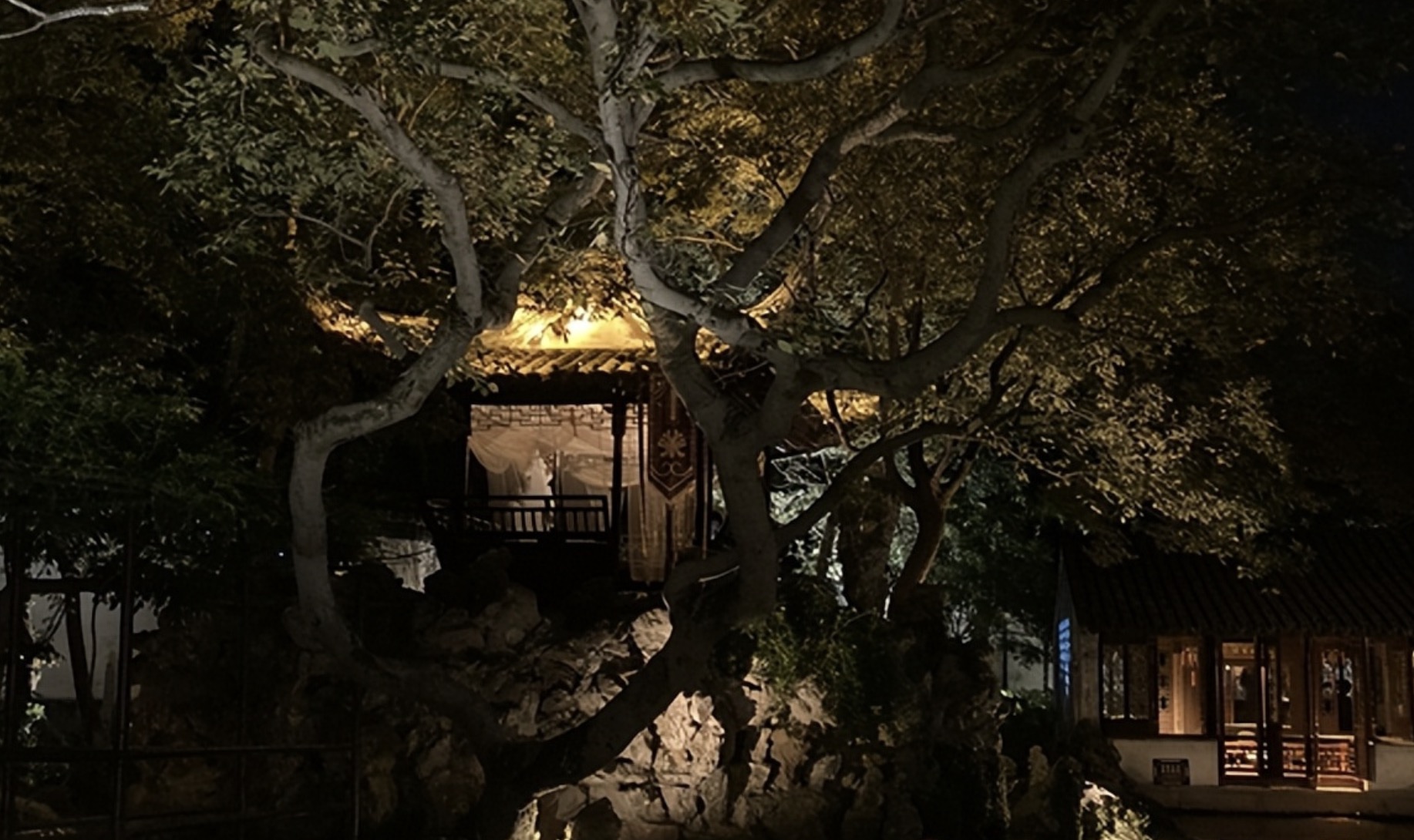
The Qin Room and Mianyun Pavilion are located in the northwest corner of Tuisi Garden, a pair of structures that ingeniously exploit the terrain's height difference. The Qin Room sits at the lower level—a small chamber facing the water where the owner played the zither and savored tea. The interior is secluded; across the water from Tuisi Thatched Hall, zither music could travel across the pond surface, lingering in the air. Mianyun Pavilion crowns a stone terrace above, reached by stone steps. "Mianyun" (Cloud-Resting) derives from the classical line "lying down to watch clouds rise," suggesting a restful spot as if reclining among clouds. The diminutive pavilion has walls on three sides and a window on the fourth; from here one can overlook the entire garden. The two structures—one low and one high, one at the water's edge and one against the hill—create rich spatial layering. Gazing up from the Qin Room, Mianyun Pavilion appears as a pavilion in the clouds; looking down from the pavilion, the Qin Room seems a waterside thatched hut—motion and stillness in perfect harmony.

Guyu Shengliang (Coolness from Rain on Water Bamboo) · 菰雨生凉

🎧 In app
Guyu Shengliang (Coolness from Rain on Water Bamboo)

Guyu Shengliang stands on the western shore of the pond, a small waterside chamber built flush with the surface. "Gu" refers to water bamboo (Zizania caduciflora), a common waterside plant; "yu sheng liang" depicts the coolness that comes when rain strikes the broad leaves and a breeze ripples across the pond. The chamber opens to the water on three sides with one wall behind, its low roof and eaves nearly touching the surface. On summer days, cool breezes sweep through off the water while water bamboo sways and lotus leaves glisten, instantly dispelling the heat. In gentle rain, droplets striking the leaves and water create a crystalline murmur—a natural symphony that deepens the sense of coolness. A calligraphic plaque inscribed "Gu Yu Sheng Liang" hangs within. This scene fuses sight, sound, and touch—watching green bamboo sway, hearing rain on rippling water, feeling cool wind on the skin—representing the ultimate expression of Tuisi Garden's art of atmosphere and a paradigm of the Chinese garden principle of "scene evoking emotion, emotion entering realm."

Sky Bridge and Xintai (Xin Terrace) · 天桥与辛台

🎧 In app
Sky Bridge and Xintai (Xin Terrace)

Sky Bridge and Xintai are located in the northeast of Tuisi Garden, an ingenious three-dimensional architectural composition. Sky Bridge is a covered corridor built against the wall, spanning above the pond to connect Tuisi Thatched Hall with Xintai. The bridge is slender with low railings; walking across it feels like skimming over the water, offering views of koi and lotus below. Xintai stands at the bridge's northern end—a small square pavilion raised above the surrounding level, where the owner read and reflected. The character "Xin" connotes "hardship" and "diligence," echoing the garden's theme of "retreating to reflect on one's faults," reminding the owner to persevere even in reclusion. The bridge and pavilion—one horizontal and one vertical, one in motion and one still—generate rich spatial layering within the compact garden. From the bridge, Xintai appears as a pavilion atop a mountain; from Xintai, the bridge resembles a rainbow skimming the water, lending the small garden the feel of vast mountains and forests within a limited space.

Naohong Yige (Red Boat) and Nine-Turn Winding Corridor · 闹红一舸与九曲回廊

🎧 In app
Naohong Yige (Red Boat) and Nine-Turn Winding Corridor

Naohong Yige and the Nine-Turn Corridor are situated around Tuisi Garden's central pond, forming the garden's most picturesque composition. "Naohong Yige" is a stone boat-shaped pavilion with its bow pointing toward the center of the pond, as if a skiff were about to glide into a lotus thicket. "Naohong" (Bustling Red) derives from the image of "a touch of red among ten thousand greens," depicting the lively scene of red lotus blooming in a summer pond. The boat is built of stone with a small cabin above where one can sit and enjoy the water views. The Nine-Turn Corridor winds along the eastern shore of the pond, connecting Tuisi Thatched Hall with various scenic spots. The corridor follows the terrain and shoreline through nine bends, hence its name. Its walls are embedded with calligraphic stone tablets and latticed windows, offering ever-changing views at every step. Walking through the corridor, one moment you lean over the water to watch fish, the next you peer through a window at a framed vista—a richly varied spatial experience. The "movement" of the boat and the "winding" of the corridor complement each other, generating boundless pleasure of exploration within a finite space.

Get the app

The tool solved one problem. The app handles the whole trip.

Per-trip visa judgements, audio guides, prep checklists, and a real human concierge — offline-ready, in your language.

Download for iPhoneFree to download · No OTA upsells