← Suzhou

Suzhou · 艺圃

Arts Garden / Yi Pu

🎫 Ticket Not free; flat rate 10 RMB/person; same price for peak and off-season;Adult: 10 RMB; can be purchased on-site or reserved via "Jun Dao Suzhou" mini-program; reservation not mandatory;Half price (5 RMB): Ages 6–18, full-time students, seniors 60–69 with valid ID
🕘 Opening Hours - Peak season (March 1 – October 31): 07:30–17:30 (ticket sales and entry stop at 17:00) - Off-season (November 1 – February 28): 07:30–17:00 (ticket sales and entry stop at 16:30)
🚇 Metro Line 1 Yangyuxiang Station Exit 3, walk about 10 minutes (preferred)
🚇 Metro Alternative: Line 2 Shilu Station, walk about 10–12 minutes
📍 Address No. 5 Wenya Lane, inside Changmen, Gusu District, Suzhou, Jiangsu Province, China Map ↗
🎧 10 audio walking guides for Arts Garden / Yi Pu — listen on the spot in the YOLO HAPPY app. →

Inside Arts Garden / Yi Pu

Entrance Gate · 入口宅门

🎧 In app
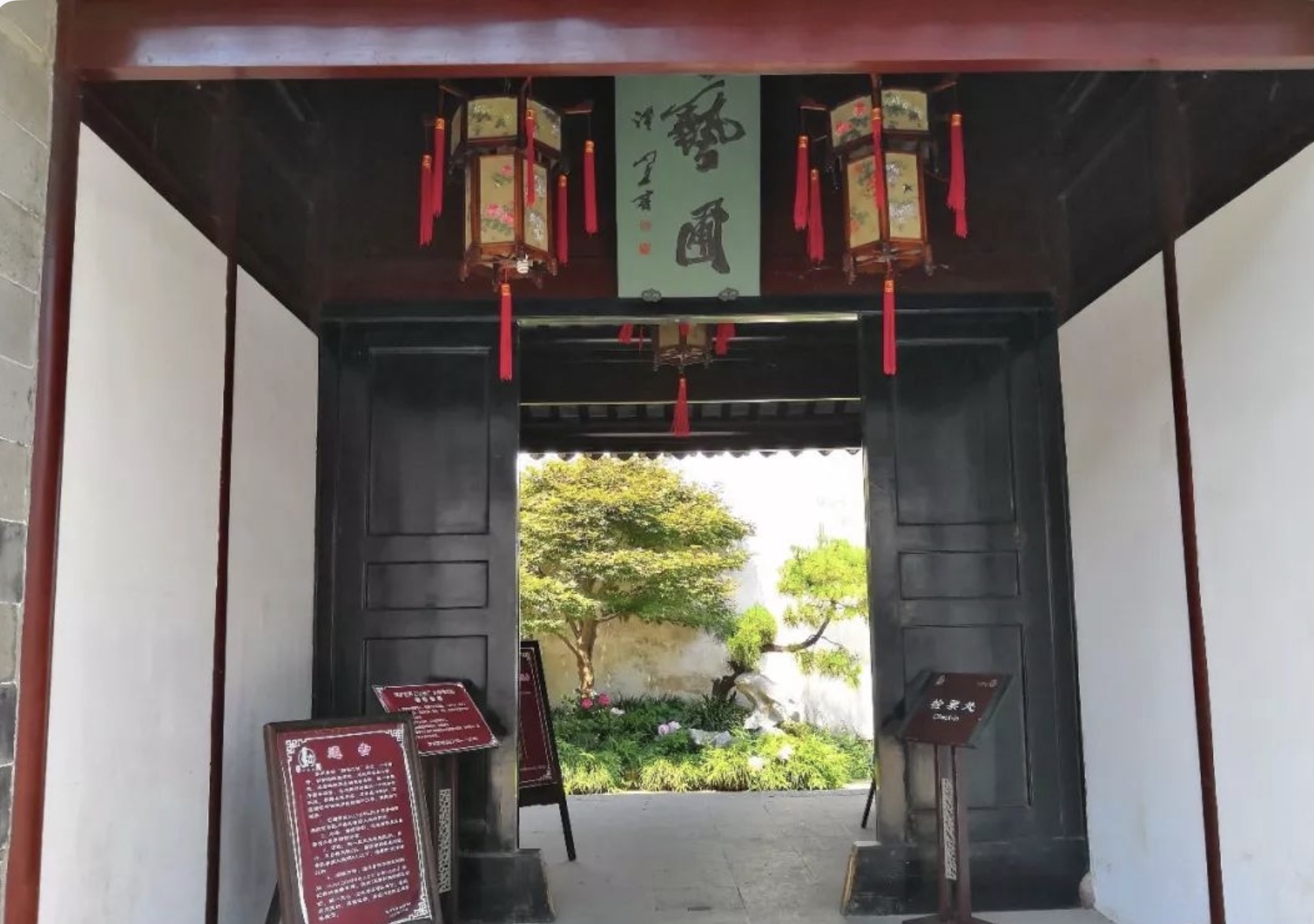
Entrance Gate

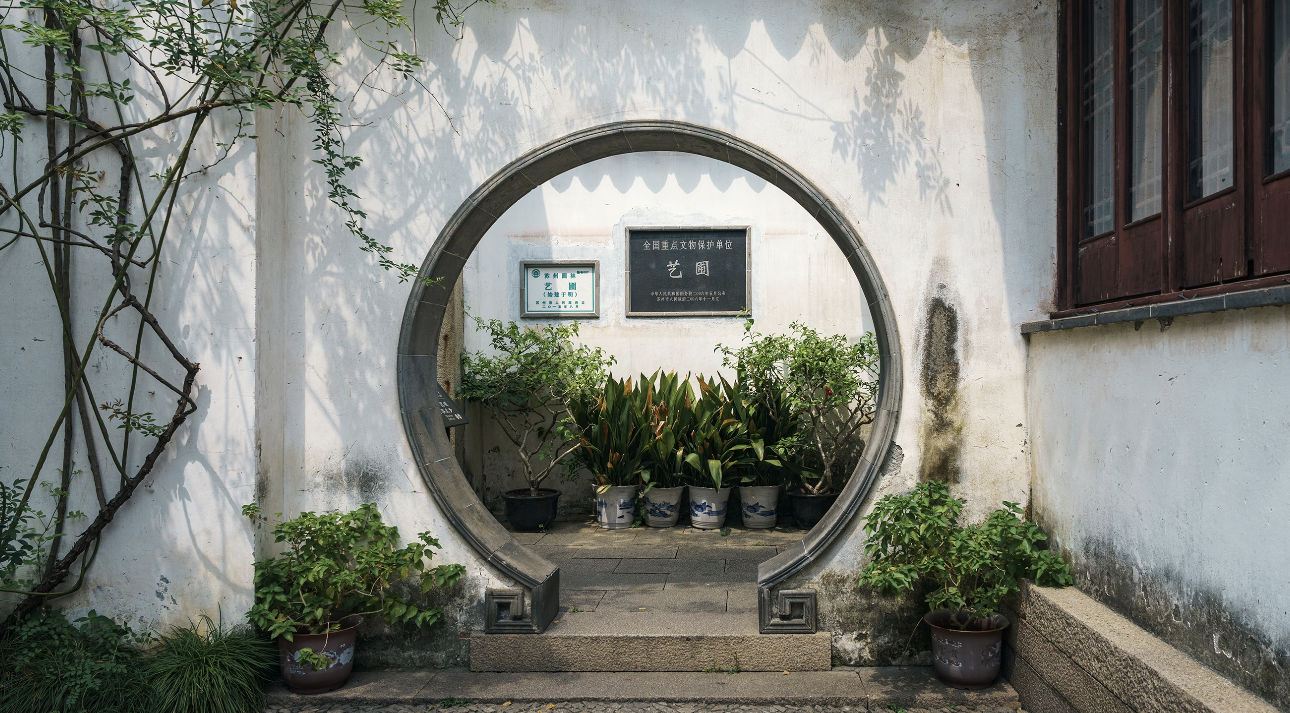
The entrance to Yipu Garden is deliberately inconspicuous, tucked away at the far end of Wenya Lane — a narrow, winding alleyway in Suzhou's old city. This "hidden within the city" approach is characteristic of Suzhou's literati gardens, which favor understatement over grandeur. The gate itself is a traditional stone-framed doorway with grey brick and dark tiles, virtually indistinguishable from neighboring residences. First-time visitors can easily walk past without realizing that a UNESCO World Heritage garden lies within. Stepping through the gate, the noise of the city falls away instantly, replaced by a serene courtyard — a spatial transition from bustle to tranquility that is Yipu's first gift to every guest.
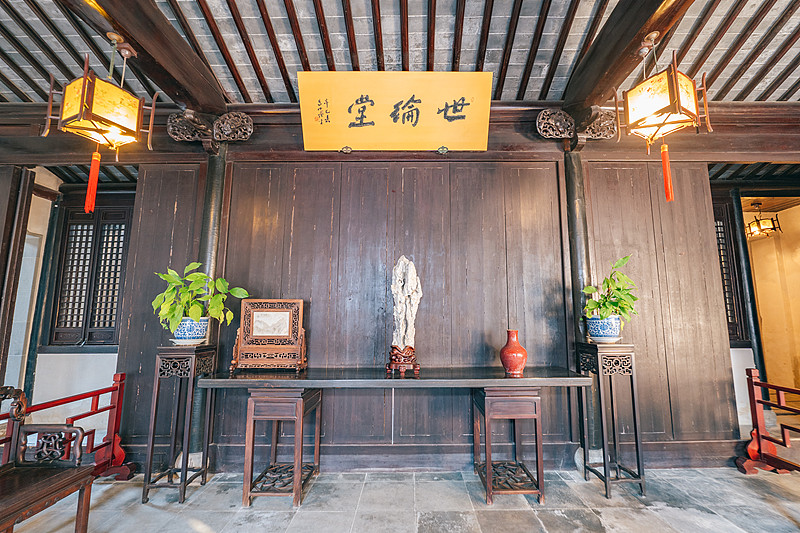
Shilun Hall · 世纶堂

🎧 In app
Shilun Hall

Shilun Hall is the first main hall along Yipu Garden's central axis, facing south with three bays. Its architectural style is plain and dignified — no painted beams, no gilded columns — preserving the hallmark simplicity of Ming Dynasty construction. The name "Shilun" derives from "经纶世务," reflecting the owner's aspiration to engage meaningfully with worldly affairs. A stone-paved courtyard precedes the hall, graced by an old tree whose dappled shade plays against whitewashed walls and dark tiles. Originally adorned with calligraphic plaques, the hall served as a gathering place for receiving guests, sipping tea, and scholarly discussion. The intimate scale and absence of ostentation embody the Ming-era literati ideal: "seek not grandeur, but refinement and cleanliness."

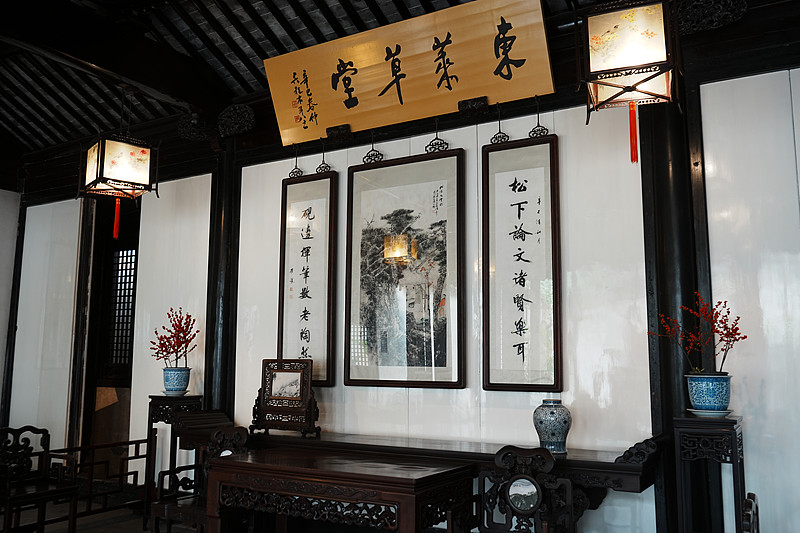
Donglai Thatched Cottage · 东莱草堂

🎧 In app
Donglai Thatched Cottage

Situated behind Shilun Hall, Donglai Thatched Cottage is the second building along the garden's central axis. The name "Donglai" is believed to reference the garden owner's ancestral homeland, carrying a note of nostalgia, while "thatched cottage" (草堂) is a humble term Chinese scholars have long favored to signal a life of reclusion, free from worldly ambition. The interior is simply furnished — a writing desk, calligraphy brushes, and inkstones neatly arranged. Light filters through latticed windows where bamboo shadows sway, creating a serene reading environment. This is where the garden owner spent his days reading, entertaining close friends, and composing poetry. From the cottage window, the central pond and rockery unfold in full view — a perfect demonstration of the Suzhou gardening principle of "seeing the universe within a small space."

Sishi Pavilion · 思嗜轩

🎧 In app
Sishi Pavilion

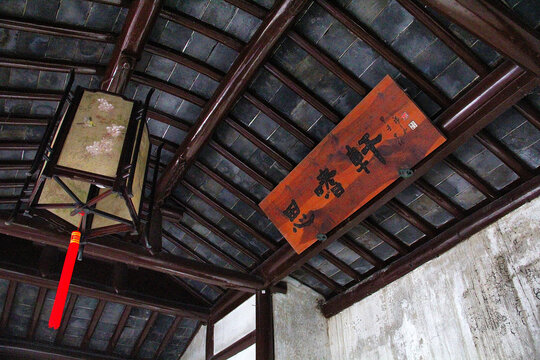
Sishi Pavilion sits on the southern bank of Yipu's central pond — a delicately proportioned waterside structure. The name "Sishi" means "to reflect upon one's passions and loves," revealing the garden owner's devotion to a particular way of life and spiritual pursuit. The pavilion opens directly onto the water, offering sweeping views of Yanguang Pavilion, rockeries, and waterside towers to the north — making it one of the finest vantage points in the garden. Inside, a single table and chair suffice; the minimalism perfectly suits the literati ideal of solitary contemplation. On misty mornings or golden-hour evenings, when warm light bathes the whitewashed walls, this corner becomes the most poetic spot in the entire garden — a place to brew tea, open a book, listen to leaping fish, and watch blossoms unfold and fall.

Ruyu Pool · 乳鱼池

🎧 In app
Ruyu Pool

Ruyu Pool is the heart of Yipu Garden's landscape — a central pond of just over one mu (roughly 670 square meters) that, though modest in size, offers richly layered views. The name "Ruyu" (literally "nursling fish") is poetically drawn from a classical verse describing tiny fish moving across the water's surface like freshly formed ice marks — a delicate, almost imperceptible animation. The water is clear, with koi gliding lazily beneath the surface. The pond's irregular shoreline is edged with yellow stones laid in a naturalistic style. To the south, Sishi Pavilion rises at the water's edge; to the north, Yanguang Pavilion stretches along the shore; rockeries and towers frame the east and west — together forming the classic garden layout of "water at the center, architecture encircling." Standing at the pond's edge, sky and clouds reflect in the water, dissolving the boundary between reality and reflection, and the world beyond seems to vanish.

Yanguang Pavilion · 延光阁

🎧 In app
Yanguang Pavilion

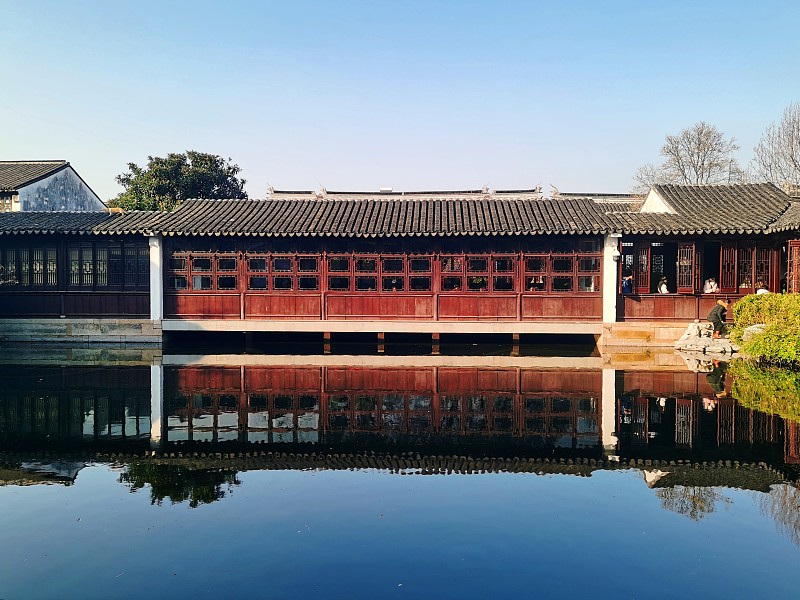
Yanguang Pavilion is Yipu Garden's most iconic structure, perched on the northern shore of Ruyu Pool. Five bays wide with a single-eave gable roof, it is one of the largest waterside pavilions in all of Suzhou's classical gardens. The name "Yanguang" means "extending light" — drawing sunlight and scenery into the interior. True to its name, the building opens on three sides to the water, with latticed windows on the south facade that, when fully opened, frame the entire garden panorama as if the whole landscape were gathered into one's embrace. The interior is paved with square tiles and simply furnished; today it serves as a tea room where visitors can rest and sip tea. Seated inside with a cup of Biluochun green tea, watching the pond's reflections tremble in the breeze and listening to raindrops tap the eaves, one truly understands the ancient wisdom that "a room need not be grand to be elegant." Yanguang Pavilion is also the finest vantage point for the garden's seasonal pageant: tender green in spring, lotus breezes in summer, crimson leaves in autumn, and silent snow in winter.

Chaoshuang Pavilion · 朝爽亭

🎧 In app
Chaoshuang Pavilion

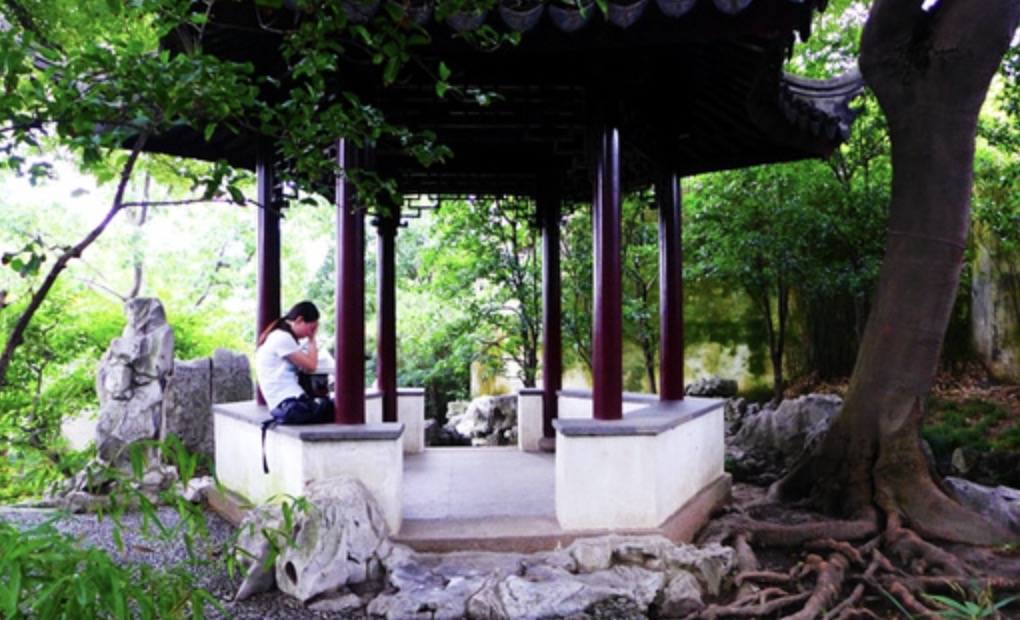
Chaoshuang Pavilion crowns the summit of the rockery on the eastern side of Ruyu Pool — a small, open-sided square pavilion. The name "Chaoshuang" is drawn from a classical phrase meaning "the crisp, refreshing air that comes with morning," signaling that this is the place to ascend, gaze afar, and breathe in the pure mountain-like breeze. Though modest in size, the pavilion is the highest point in the garden. Ascending the winding stone steps and pausing at the top, visitors enjoy a sweeping panorama: the pond, architecture, and plantings of the entire garden spread below like a three-dimensional landscape painting — a masterful demonstration of "seeing the vast within the small." A couplet hangs on the pavilion columns; the roof is simple and unornamented, in keeping with the garden's unified aesthetic of restrained antiquity. The finest moments to climb are at dawn and dusk: in the early morning, mist clings to the garden like ink wash on paper; at sunset, golden light carpets the water and the pavilion's silhouette turns into a painting.

Bilang Pavilion · 碧浪亭

🎧 In app
Bilang Pavilion

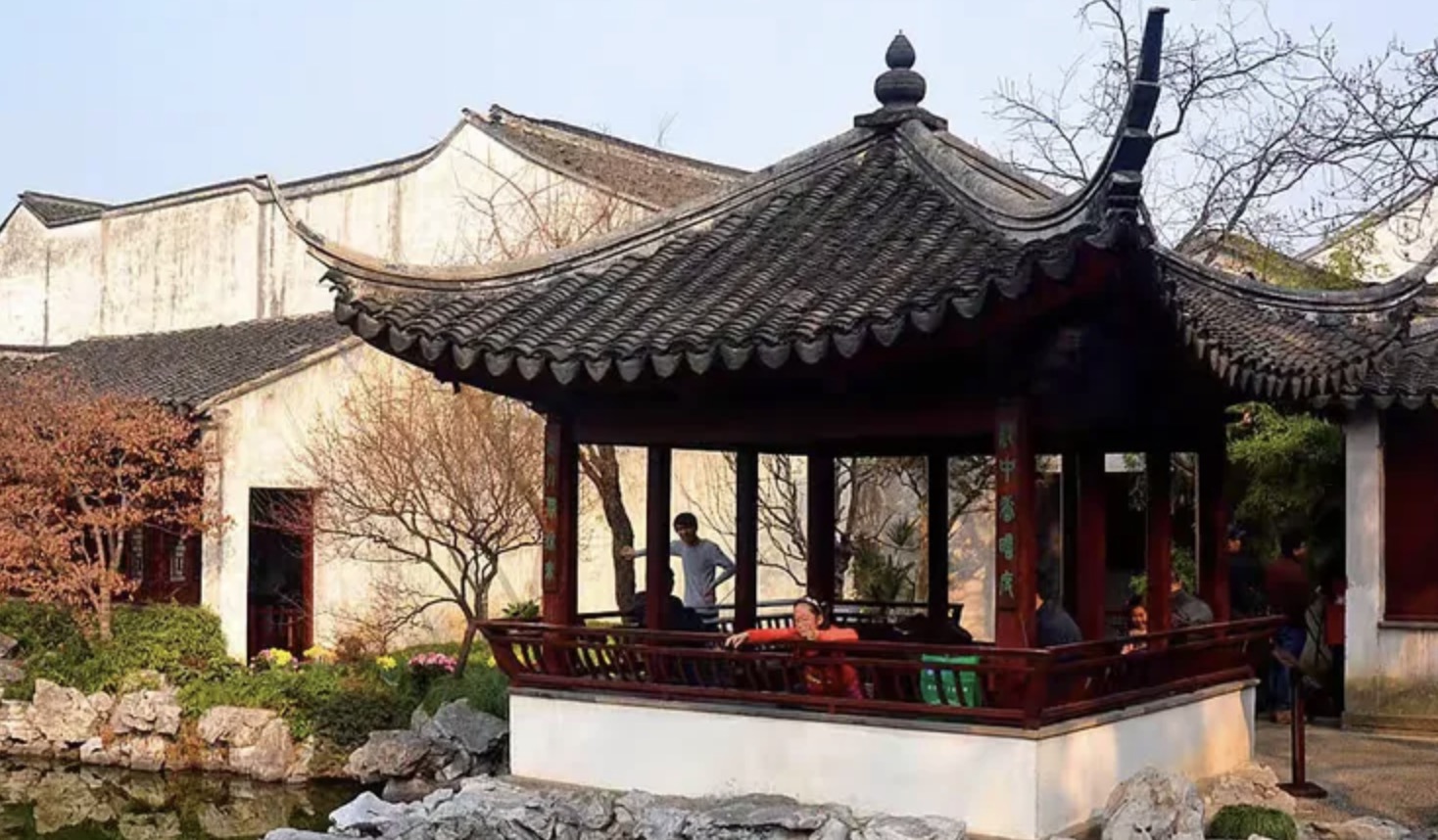
Bilang Pavilion occupies the southeastern corner of Ruyu Pool — a slender hexagonal structure with gracefully proportioned eaves. The name "Bilang" (literally "emerald waves") evokes the green ripples that shimmer across the pond when a breeze passes over, so that the pavilion's name is itself a living picture. Three sides of the pavilion face the water; the fourth connects to the shore. Standing inside, one can look down to see the clear, shallow pond and fish darting among lotus leaves; looking up, Yanguang Pavilion's flying eaves and Chaoshuang Pavilion atop the rockery create a layered composition of near and far, high and low. Old trees grow beside the pavilion, their branches dipping into the water, swaying gently, mirrored in the pond below. This is the garden's best spot for simply "sitting still" — not rushing to the next site, not fumbling with a camera, just quietly feeling the breeze and listening to birdsong, experiencing the complete aesthetic of Suzhou gardens where one can roam, dwell, and sit in equal measure.

Qinlu Hermitage · 芹庐

🎧 In app
Qinlu Hermitage

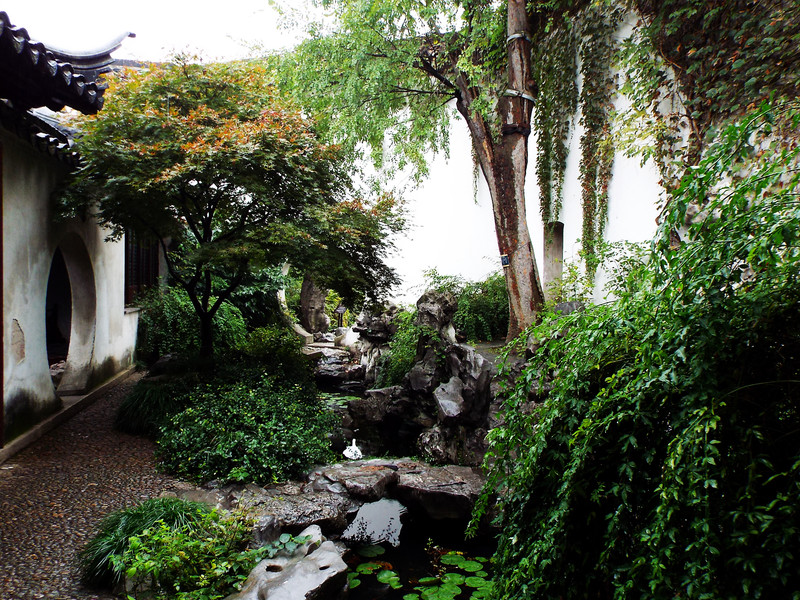
Qinlu Hermitage lies in the western section of Yipu Garden — a small courtyard set apart from the main scenic area, accessible only through a winding corridor, making it the most secluded corner of the entire garden. The character "芹" (celery/water dropwort) comes from the Book of Odes: "By the joyful waters of Pan, I gather the water celery." Since ancient times, "offering celery" has been a scholar's humble metaphor — the gift may be meager, but the sincerity is genuine. Naming this retreat "Qinlu" reveals the garden owner's contentment with simplicity and his celebration of the unadorned. Within the courtyard stand a few stalks of bamboo, an old plum tree, and one or two scholar's rocks set against whitewashed walls — a natural literati painting. Though tiny, the courtyard embodies the Buddhist principle of "a mustard seed holding Mount Sumeru" — the universe within a square inch. This was the owner's retreat for reading and meditation, and even today, far from the flow of visitors in the main garden, it retains the purest breath of antiquity.

Boya Hall · 博雅堂

🎧 In app
Boya Hall

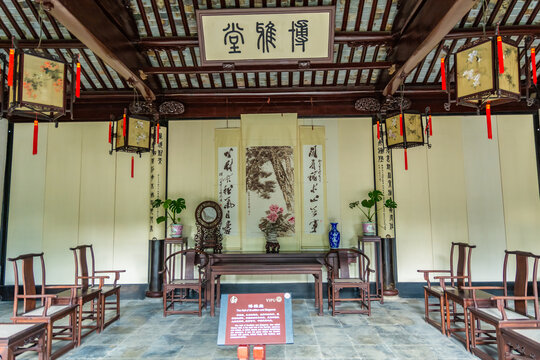
Boya Hall stands at the far northern end of Yipu Garden's architectural sequence — the deepest hall in the entire compound. The name "Boya" means "broadly learned and upright in heart," reflecting the Confucian ideal of scholarly depth paired with moral integrity. A courtyard precedes the hall, planted with banana palms and heavenly bamboo that change character with each season. The interior is spacious and bright; it originally housed the owner's collection of rare books, calligraphy, paintings, and bronze-and-stone antiquities, and served as a venue for scholarly gatherings and the connoisseurship of art. The architectural style continues the garden's signature plainness — unpainted beams, whitewashed walls, square-tile floors — relying on the natural grain of the wood and the purity of line for its quiet authority. As the final stop on the visitor's route, Boya Hall serves as the coda to a well-crafted book: looking back along the path just walked, the pond, pavilions, rockeries, and flora rise in sequence, leaving a lingering aftertaste and a deepened reverence for this "ultimate expression of the small garden."

Get the app

The tool solved one problem. The app handles the whole trip.

Per-trip visa judgements, audio guides, prep checklists, and a real human concierge — offline-ready, in your language.

Download for iPhoneFree to download · No OTA upsells