← Suzhou

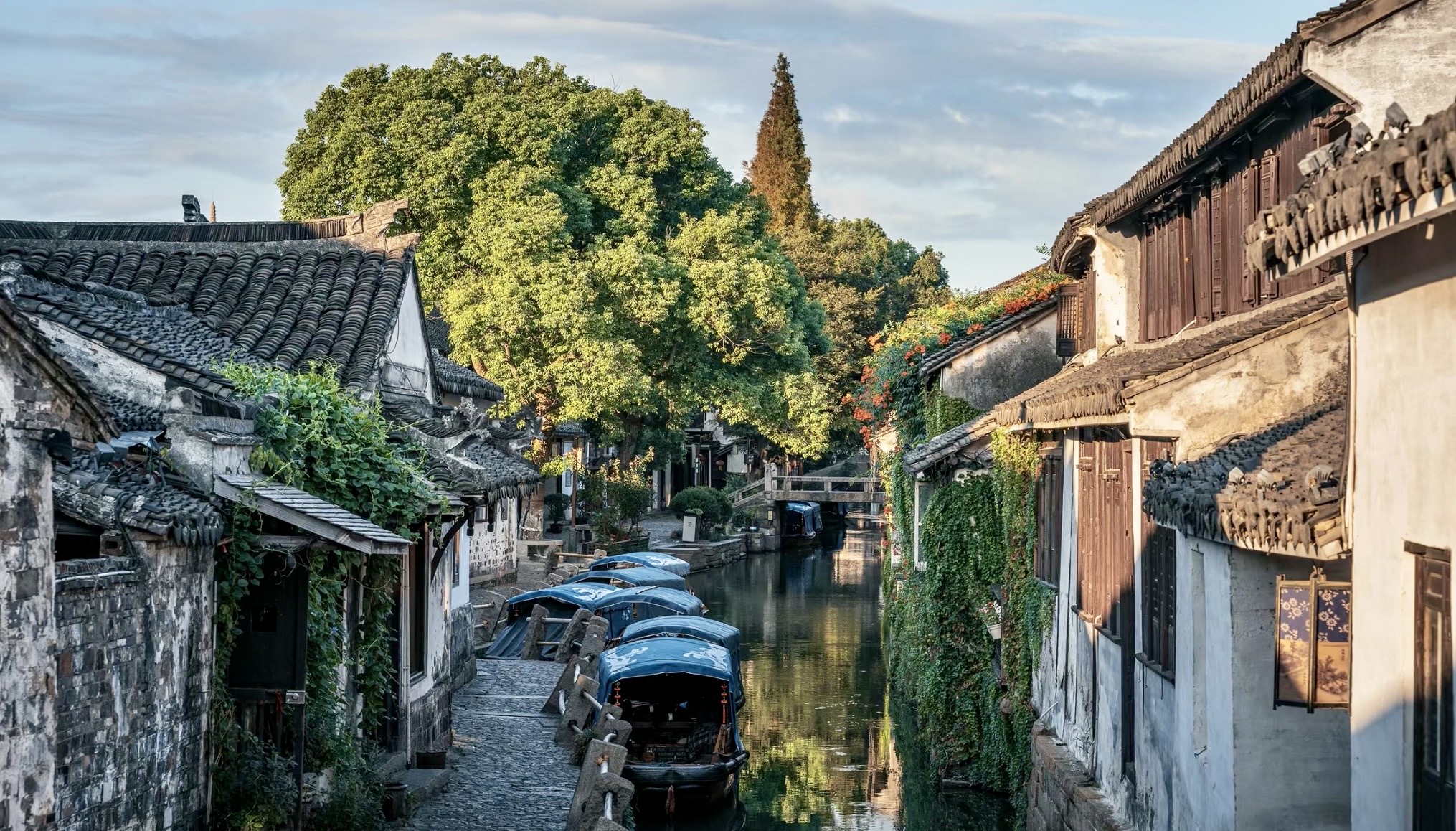
Suzhou · 周庄古镇

Zhouzhuang Ancient Town

🎫 Ticket Adult full-price ticket: 100 RMB (valid for 3 days, includes 15 attractions such as Shen Hall, Zhang Hall, etc.);
🎫 Ticket Online approximately 88 RMB; weekday special 50 RMB; night tour ticket (after 16:00) approximately 80 RMB (summer promotion from July: 80 RMB/all time slots)
🕘 Opening Hours - Scenic area: 08:00–21:00 - Ticket sales: 08:00–17:00 - Opening hours of individual attractions vary; check on-site notices - Night tours are subject to official announcements
🕘 Opening Hours Indoor attractions (Shen Hall / Zhang Hall, etc.): 07:30–17:00 (last admission at 16:45);
🕘 Opening Hours Shops & night tour: approximately 09:00–21:00 (night view 16:30–21:00)
🚇 Metro From Suzhou direction: Line 4 "Tongli Station" Exit 2 → Transfer to Route 758/C10 bus; or Line 11 "Baimajing Road Station" transfer to cultural tourism shuttle
🚇 Metro From Shanghai direction: Line 11 "Huaqiao Station" → Tourist Route 7 / Zhouzhuang Express; or high-speed rail to Kunshan South Station then transfer to Route 133 bus
📍 Address No. 43 Quanfu Road, Zhouzhuang Town, Kunshan City, Suzhou, Jiangsu Province, China Map ↗
🎧 10 audio walking guides for Zhouzhuang Ancient Town — listen on the spot in the YOLO HAPPY app. →

Inside Zhouzhuang Ancient Town

Ancient Stage · 古戏台

🎧 In app
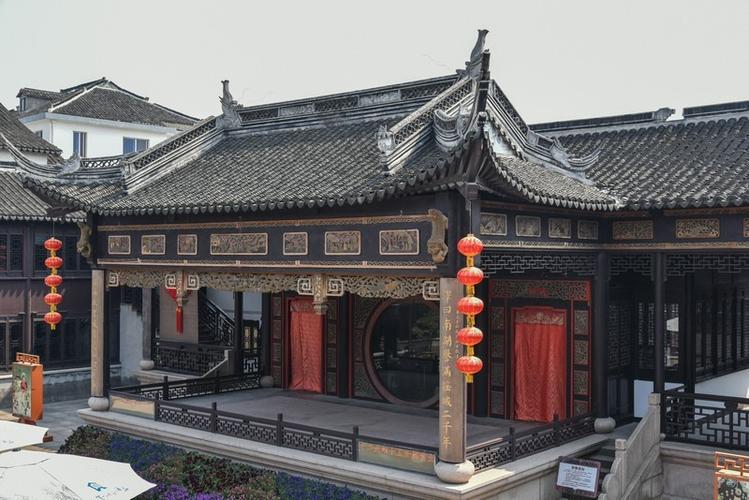
Ancient Stage

The Ancient Stage is located near the entrance of Zhouzhuang and is a classic example of a traditional Jiangnan theatrical stage. First built during the Qing Dynasty and later restored, it retains its original timber-frame structure. The stage faces north, with its back to the water. The front stage features a gable-and-hip roof with upturned flying eaves, while the backstage dressing area is separated from the front by a wooden screen. The stone-pillar foundation raises the stage about one meter above ground, allowing viewing from all four sides. Wood carvings adorn the beams, brackets, and lintels — depicting opera scenes and auspicious motifs with exquisite craftsmanship, making this stage an important artifact for the study of Jiangnan folk carving art. In centuries past, opera troupes were invited to perform Kunqu, Yueju, and Xiju during festivals, with townsfolk gathering at the water's edge to watch — a cherished memory of Zhouzhuang's cultural life. Today, the stage still hosts regular performances of Kunqu and other traditional operas, open to all visitors at no additional charge.
Twin Bridges · 双桥

🎧 In app
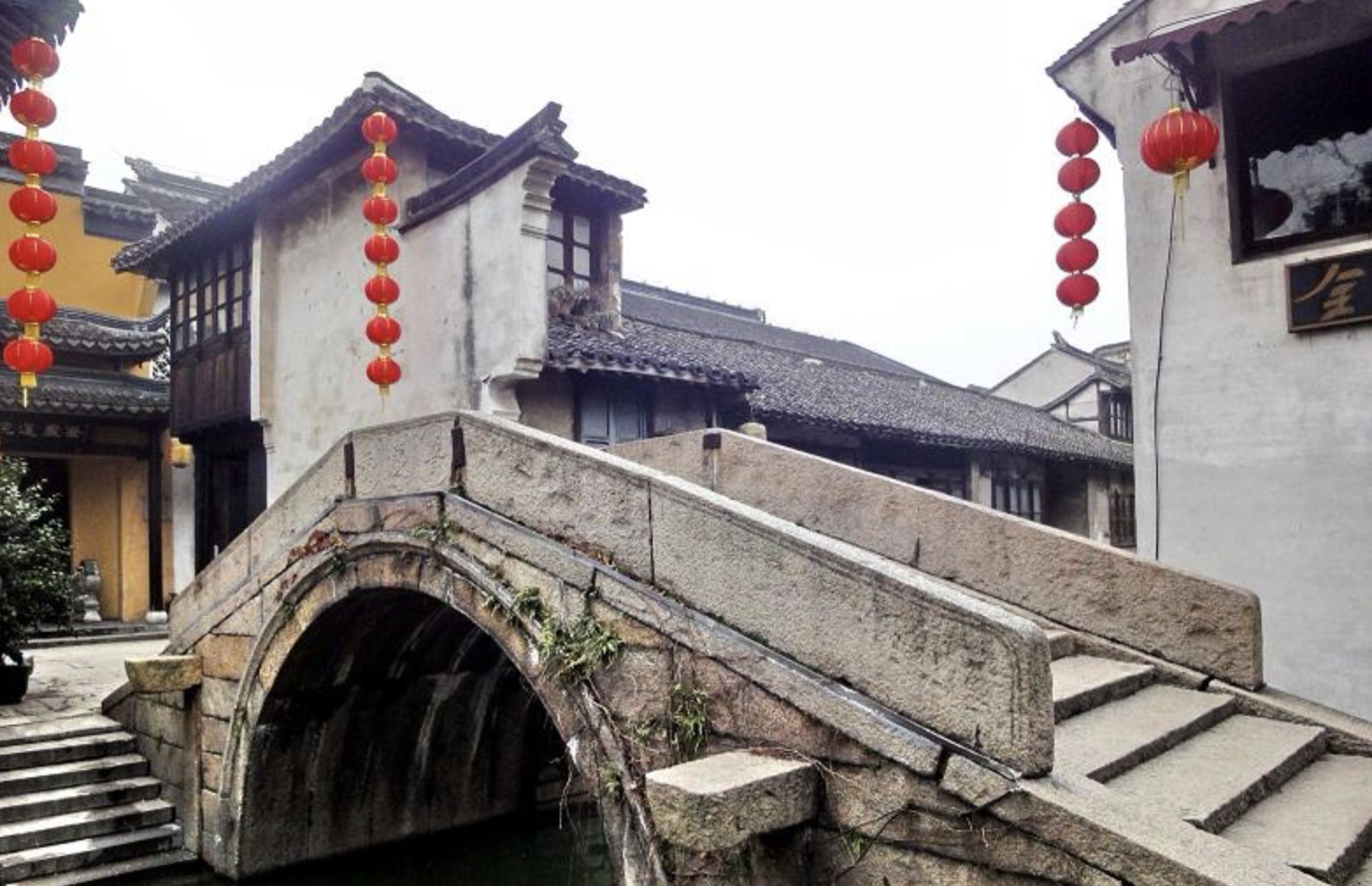
Twin Bridges

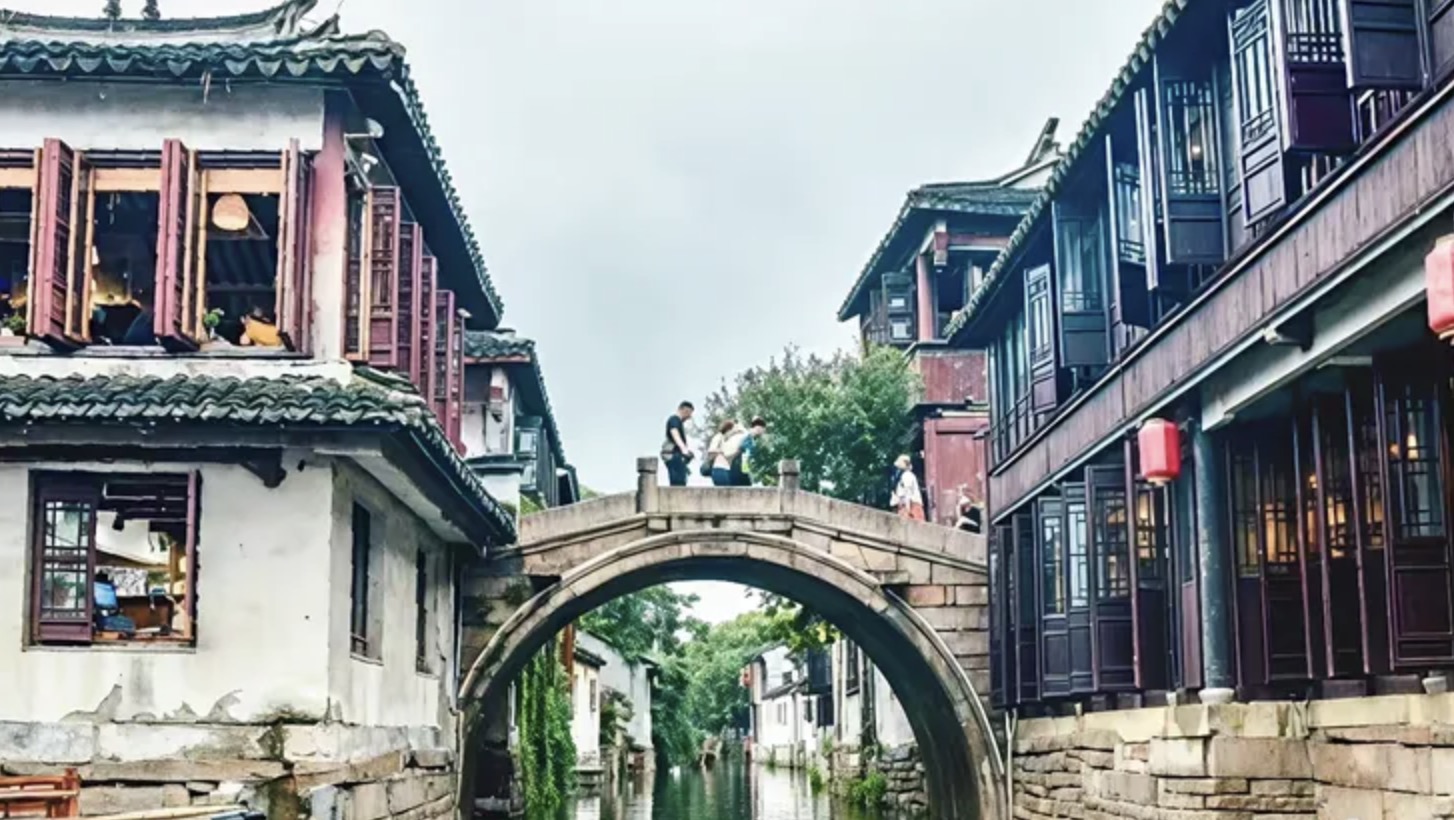
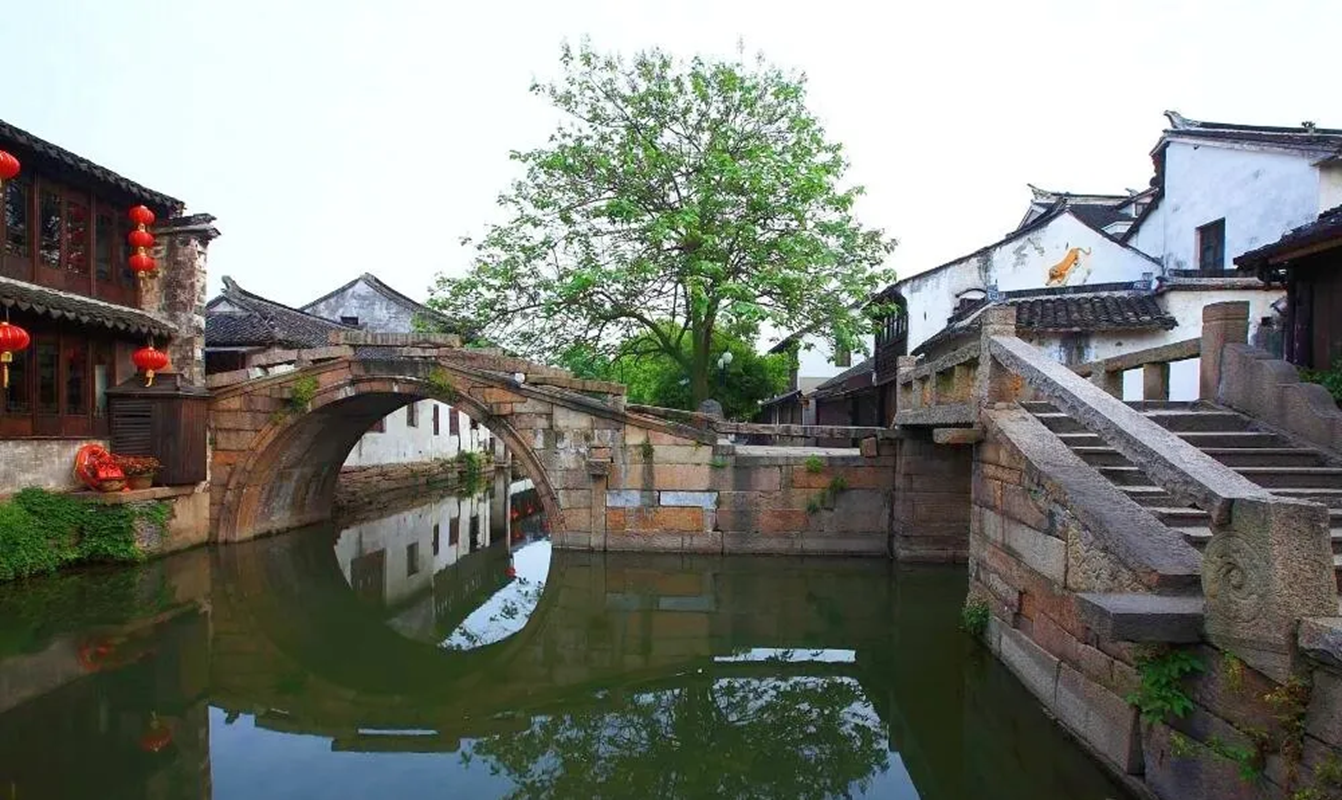
The Twin Bridges — Shide Bridge and Yong'an Bridge — are so named because they intersect at right angles, one arched and one straight, together resembling an ancient Chinese key. Hence they are also called "Key Bridge" (钥匙桥). Shide Bridge is a stone arch bridge built during the Wanli era of the Ming Dynasty (1573–1620); Yong'an Bridge, a stone beam bridge, dates from the same period. The two bridges span the confluence of Yinzi Stream and the North-South River. Water murmurs below; whitewashed houses with dark-tiled roofs line the banks, their reflections creating a natural ink-wash painting. In 1984, the renowned painter Chen Yifei created the oil painting "Memory of Hometown" featuring the Twin Bridges. Recommended by Armand Hammer, the painting was selected by the United Nations for a first-day cover — launching Zhouzhuang onto the world stage and making the Twin Bridges the most recognizable cultural symbol of Jiangnan water towns. At dawn, when mist rises from the river, or at dusk, when golden light floods the scene, the Twin Bridges reveal their most breathtaking beauty — an unmissable subject for photographers.

Shen Hall · 沈厅

🎧 In app
Shen Hall

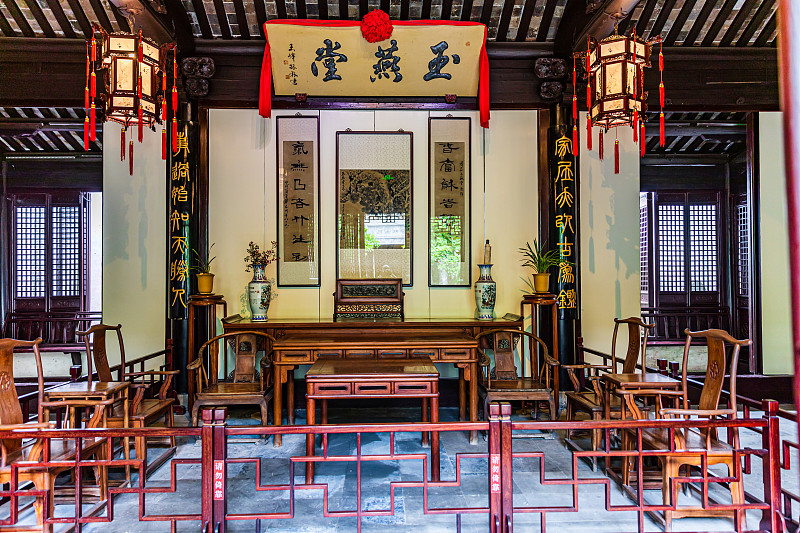
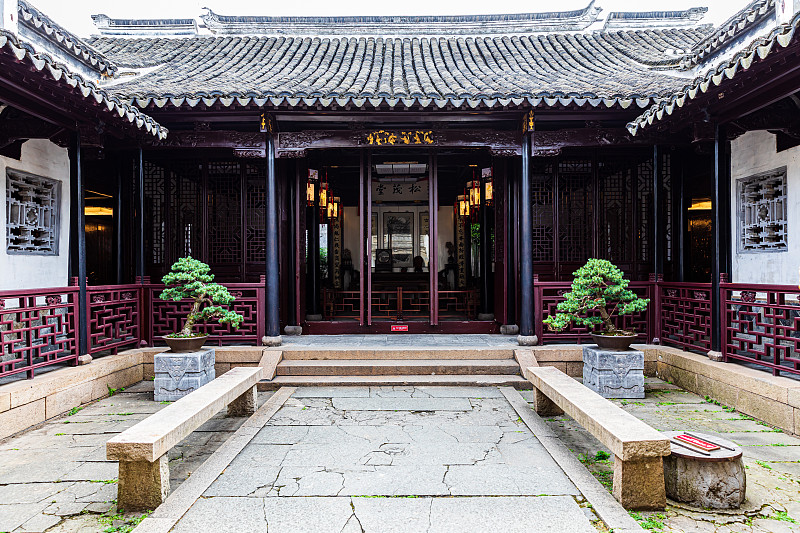
Shen Hall is the largest private residence in Zhouzhuang, built in 1742 (the seventh year of the Qianlong reign) by Shen Benren, a descendant of the legendary "richest man in Jiangnan" — Shen Wansan. Covering over 2,000 square meters with more than 100 rooms, the complex faces west and comprises seven courtyards with five gateways along a central axis — front hall, main hall, rear hall, and more — flanked by side chambers and connecting corridors in a rigorously ordered layout. The main hall, "Songmao Hall," spans five bays with massive beams and columns. Its nanmu-wood carved floor-to-ceiling latticed windows are works of art, and the brick carvings on the gateways — depicting scenes from "Dream of the Red Chamber" and "Romance of the Western Chamber" — are masterpieces of Jiangnan residential brick sculpture. The layout reflects the classic merchant-family pattern of "shop in front, residence in the middle, garden behind," offering a vital window into the rise and fall of Ming-Qing commercial dynasties. Today, the hall houses an exhibition on Shen Wansan's life, telling the dramatic story of this legendary merchant.

Zhang Hall · 张厅

🎧 In app
Zhang Hall

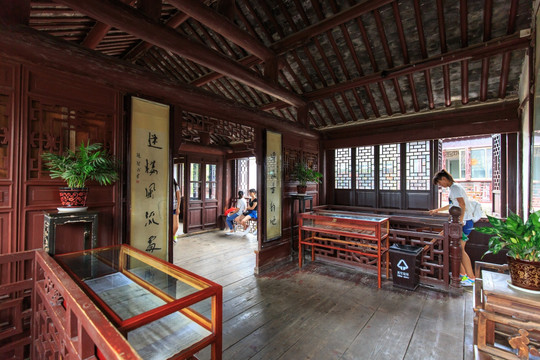
Zhang Hall, originally named "Yuyan Hall," was built during the Zhengtong era of the Ming Dynasty (1436–1449) by descendants of Xu Mengqing, brother of the Prince of Zhongshan, Xu Da. It later passed to the Zhang family, hence its current name. The residence faces west, with six courtyards, over 1,000 square meters of floor area, and more than 70 rooms. Its most distinctive feature is that the Mingjing River — a canal running through the town — flows directly through the courtyard, complete with a private mooring where boats could dock. This spatial arrangement, in which "sedans enter through the front gate and boats pass through the house," is one of the most representative layouts of Jiangnan water-town residences. Inside, nanmu-wood columns and intricately carved window lattices remain well preserved. The rear courtyard contains a miniature water garden with banana palms and bamboo — combining the dignity of an official's mansion with the warmth and vitality of a riverside home. Visiting Zhang Hall is the best way to understand the centuries-old wisdom of "living by the water."

Fu'an Bridge · 富安桥

🎧 In app
Fu'an Bridge

First built during the Zhizheng era of the Yuan Dynasty (1341–1368), Fu'an Bridge was funded by Shen Wansi, the younger brother of the legendary merchant Shen Wansan. After multiple restorations, it is one of the oldest surviving stone arch bridges in Zhouzhuang. The bridge spans the North-South River in a single arch, about 17 meters long, with a gently arched deck paved in granite slabs. Its most distinctive feature is the four corner buildings — "bridge towers" — that rise from the bridge's four corners, creating the rare architectural form of "bridge and building as one." The bridge deck remains a thoroughfare, while the towers house shops and teahouses — a design that fuses transportation and commerce, exceedingly rare among Jiangnan water-town bridges. The towers' upturned eaves reflect in the water; from a distance, they look like pavilions floating on the river. Legend has it that Shen Wansan ran a small stall near the bridge before his fortune was made, and "Fu'an" (literally "wealth and peace") commemorates his rise. Standing on the bridge, one sees the staggered riverside dwellings along both banks, with awning boats gliding slowly beneath the arch — a quintessential water-town tableau.

Milou (Labyrinth Tower) · 迷楼

🎧 In app
Milou (Labyrinth Tower)

Milou was originally a small riverside tavern called "Deji Wine House," built in the late Qing or early Republican era — a modest two-story building by the water. In 1920, poets of the Southern Society (南社), including Liu Yazi, Ye Chucang, and Wang Dajue, gathered here to drink and compose poetry. Ye Chucang later published his poems from this gathering as the collection "Milou Ji" (Labyrinth Tower Collection), and the tavern became widely known — henceforth called "Milou." The character "迷" (lost/bewitched) conveys both the intoxication of wine and the poets' bewilderment and lament over the turbulent times. The interior is small, with a steep, narrow wooden staircase; the second floor has windows overlooking the canal. Today, Milou displays reproductions of the Southern Society poets' biographies and handwritten works, recreating the spiritual world of early Republican-era Jiangnan literati who expressed their patriotism and sorrow through wine and verse. Though not the largest attraction in Zhouzhuang, its literary depth makes it a must-visit for lovers of literature and history.

Zhouzhuang Museum · 周庄博物馆

🎧 In app
Zhouzhuang Museum

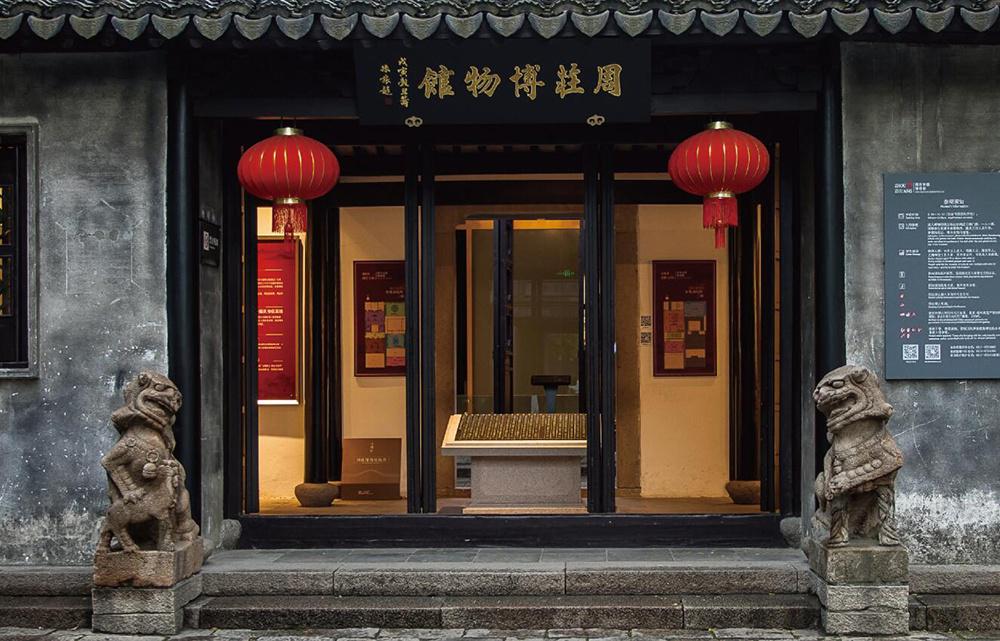
Zhouzhuang Museum is located within the historic Zhu family residence — a comprehensive museum dedicated to the local history and culture of Zhouzhuang. The building itself is a typical Jiangnan residence with a Qing Dynasty layout: whitewashed walls, dark tiles, courtyards, and sky-wells. Multiple exhibition halls cover the town's founding, commercial development, folk customs, and notable figures. The collection includes precious Ming and Qing-era contracts, land deeds, merchant account books, ancient coins, and folk implements — with the richest materials relating to Shen Wansan and traditional water-town daily life. Models, photographs, and multimedia displays vividly illustrate how Zhouzhuang grew "from water into a town, and from commerce into prosperity." Visiting the museum is the ideal starting point for understanding Zhouzhuang: build a historical framework here first, then explore the town's sights — and the experience will be transformed.

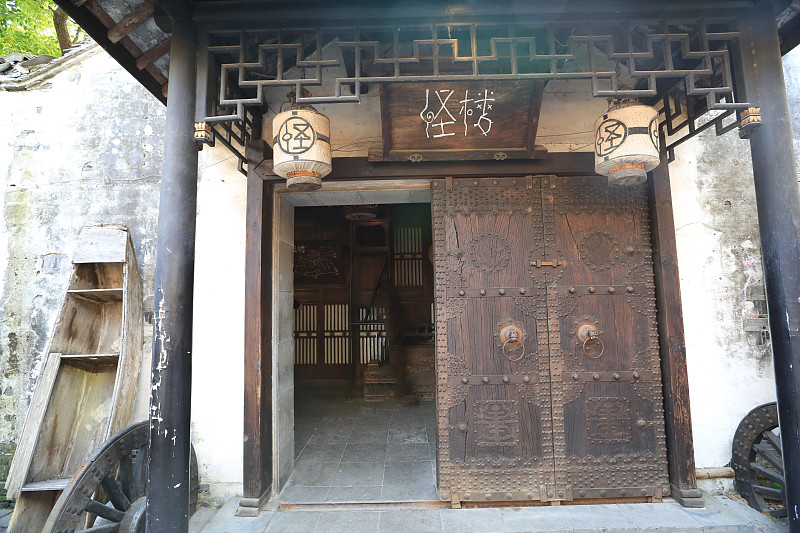
Guailou (Strange Tower) · 怪楼

🎧 In app
Guailou (Strange Tower)

Guailou is a distinctive attraction within Zhouzhuang themed around optical illusions and interactive experiences. Standing three stories tall, its exterior already differs subtly from the surrounding traditional buildings, hinting at the novelty within. Multiple themed rooms inside use principles of optics, geometry, and perspective to create astonishing visual effects: one room has a sloping floor with level walls, producing a sensation of weightlessness; another uses mirrors and lighting to simulate infinite space; yet another employs 3D murals that make visitors feel they have stepped into a painting. Each space encourages hands-on experience and creative photography, making it tremendous fun. Guailou injects a splash of modern artistic vibrancy into this thousand-year-old town, where tradition and creativity collide to delightful effect. It is especially popular with younger visitors and families — a lighthearted counterpoint to the town's historical sights.

Zhenfeng Bridge · 贞丰桥

🎧 In app
Zhenfeng Bridge

Zhenfeng Bridge is a single-arch stone bridge spanning the Zhongshi River. Its date of original construction is unknown; the current structure dates from a Qing Dynasty rebuilding. "Zhenfeng" derives from Zhouzhuang's ancient name — "Zhenfeng Li." During the Yuanyou era of the Song Dynasty (1086), a local official named Zhou Digonglang established a manor here and donated farmland to Quanfu Temple. The grateful residents renamed the place "Zhouzhuang" in his honor. The name "Zhenfeng Bridge" is a living fossil of this thousand-year-old renaming. The bridge is modest in length, with an elegant arch, plain stone railings, and stone steps at both ends. Riverside houses rise directly from the water; willows dip their branches toward the river; an occasional sculling boat drifts past with a rhythmic creak of the oar, complementing the ancient bridge's quiet charm. Fewer tourists gather here than at the Twin Bridges or Fu'an Bridge, making Zhenfeng Bridge a serene spot to sit, slow down, and savor the unhurried rhythms of water-town life. A teahouse once stood by the bridge, and it is said that Southern Society poets gathered here to compose verse, adding a literary luster to its stones.

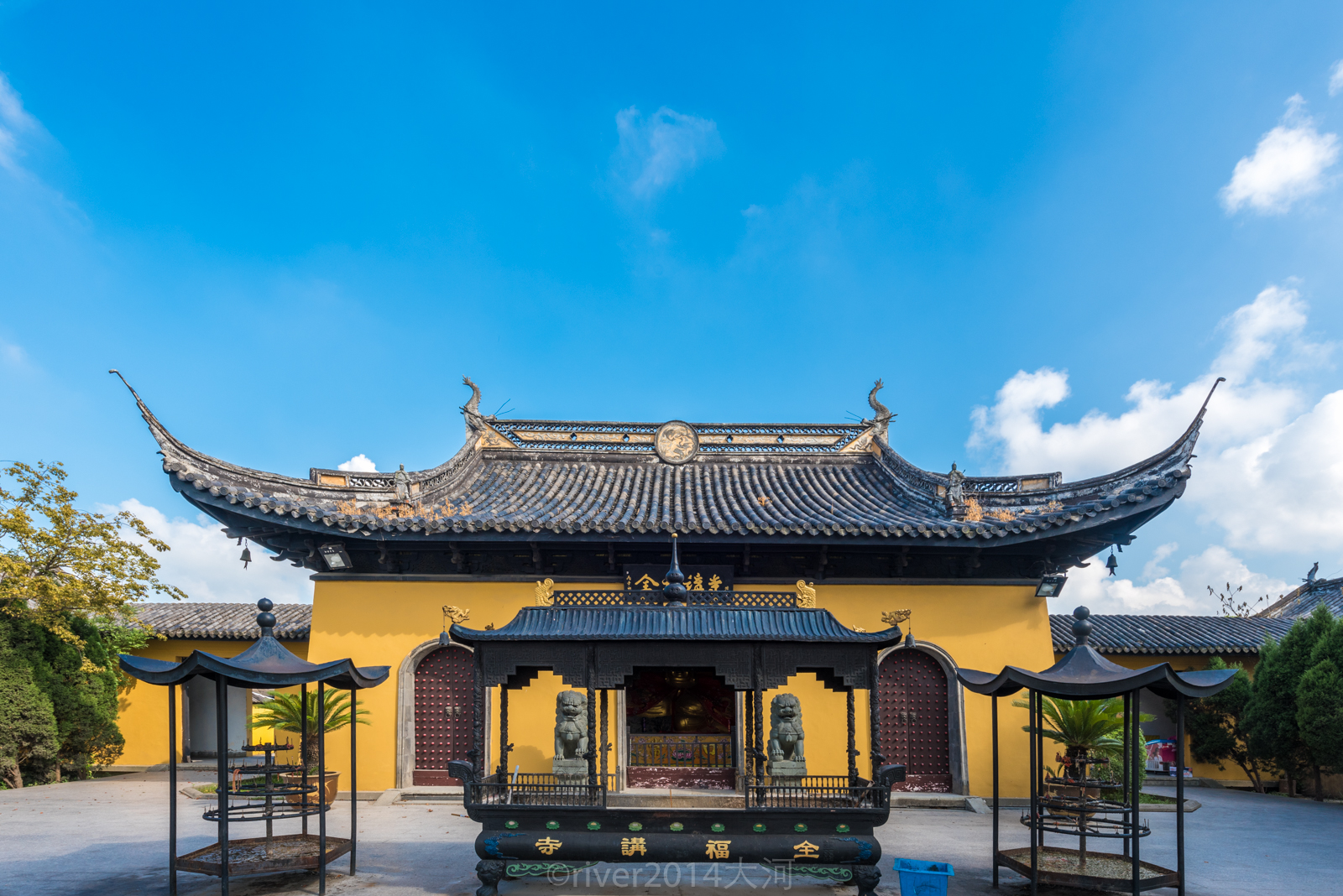
Quanfu Temple · 全福讲寺

🎧 In app
Quanfu Temple

Quanfu Temple stands on the shore of Lake Bianxian, south of Zhouzhuang Old Town. Founded in 1086 during the Song Dynasty's Yuanyou era — built on land donated by Zhou Digonglang — it is the oldest Buddhist temple in Zhouzhuang. The temple rises directly from the lake, with its main halls standing at the water's edge. From a distance, the halls and pavilions appear to float upon the water, earning it the name "Buddhist Kingdom on Water" (水中佛国). The complex faces south, with a gate, main hall, and scripture repository along its central axis. The architecture is grand and solemn — golden walls, dark tiles, layered flying eaves — striking against the blue water and sky. The temple once housed a Song Dynasty bronze bell whose peal carried for miles; "Quanfu Dawn Bell" was one of the historic Eight Scenes of Zhouzhuang. Destroyed and rebuilt multiple times, the current structures are modern reconstructions that nonetheless preserve the layout and dignity of a traditional Buddhist monastery. At dawn, the temple bell rings across the misty lake, its sound blending with the water's shimmer to instill a deep tranquility. From the upper floors of the scripture repository, one looks out over the vast expanse of Lake Bianxian, with Zhouzhuang's water-town panorama spread below — one of the few elevated vantage points in the town.

Get the app

The tool solved one problem. The app handles the whole trip.

Per-trip visa judgements, audio guides, prep checklists, and a real human concierge — offline-ready, in your language.

Download for iPhoneFree to download · No OTA upsells